Psalm 51:17, Sacrifices…broken spirit…contrite heart. Broken is the Hebrew word shobar meaning “to burst, break (down, off, in pieces, up), bring to birth, breach” and refers to a one’s personal spirit that YHVH has broken into or breached. This is necessary if there is to be a breakthrough in one’s spiritual life.
The fallow ground of one’s heart must be broken up or tilled for righteousness to occur as one seeks YHVH (Hos 10:12).
The hard and carnal heart of each person must be circumcised (Deut 10:16; 30:6; Jer 4:4; Col 2:11). This occurs through repentance from sin as this psalm explains.
It is then that not only one receives salvation, but joy comes with that salvation (v. 12) along with gladness (v. 8). Why? Because YHVH has lovingly purged and cleansed us of our sins and blotted our past sins out (vv. 1, 2, 9) and the guilt therefrom (v. 14) and has us whiter than snow (v. 7).
When does this happen? Only when we acknowledge our sins (v. 3), and not until then. This freedom from sin and spiritual heart, mind, and emotional cleansing only occurs when we humble ourselves, allow the light of YHVH’s truth (v. 6) to shine into deep and dark areas of our lives, and to expose the sin that lies therein (v. 3b).
This process all starts when we allow YHVH to break open the fallow ground of our hard, stoney and sinful hearts (v. 17). When this happens, the good seed of his Word can fall onto the fertile soil of our lives like rain on parched ground resulting in a rich harvest (Matt 13:23) of spiritual fruit (Gal 5:22–25). So repent of sin!
Hebrews 7:12, Priesthood being changed…a change also of the law [Torah]. The Greek words for being changed and a change are respectively metatithemi (a verb) and metathesis (a noun). The the verb means “to transpose, to transfer, to go or pass over, to fall away or desert from one person or thing to another.” Many people interpret this verse to mean that YHVH’s Torah-law was changed (i.e. has been invalidated or annulled) by the new covenant, but is this what the author is saying here?
Before going further in our discussion, let’s lay out some basic truths of the Scriptures.
YHVH doesn’t change (Mal 3:6; Heb 13:8; Jas 1:17). The word torah [in English, translated as law] means “instructions, principles, teachings” and came directly from YHVH to his people. The Torah teaches men how to love YHVH and love one’s fellow man. It is YHVH’s instructions in righteousness and reflects his very character and nature. Who YHVH is doesn’t change.
It is a sin (a violation of the Torah) to change the Torah (Deut 4:2; 12:32).
So in this light, what is this verse really saying? It declares that the priesthood was changed. The Levitical priesthood that was temporarily and parenthetically inserted into the Melchizedek priesthood (both priesthoods are revealed in the Torah, see Exod 19:2, 4 cp. 28:1; 32:29). In the former priesthood, a father acted as the priest over his family interceding for them before Elohim via sacrifices and offerings (Gen 8:20; 12:7, 8; 13:18; 22:9; 26:25; 33:20; 35:1, 3, 7; Exod 17:15; Job 1:5). In the latter priesthood, YHVH designated the descendants of Aaron as priests over Israel replacing the heads of each home as the priest of each family (Exod 30:31).
The writer of Hebrews reveals to us that with the coming of Yeshua, the Aaronic or Levitical priesthood was replaced by the original order of Melchizedek with Yeshua as its High Priest. This makes sense when we realize that Yeshua is not only the builder of his spiritual house, the church (Heb 3:3), but also the head of it, for he is the High Priest over the spiritual house of Elohim (Heb 10:21), which is comprised of the saints who are living stones and are apart of that house (1 Pet 2:5) and temple (1 Cor 3:16; 2 Cor 6:16; Eph 2:21–22) with Yeshua as the chief corner stone and the apostles and prophets the foundation (Eph 2:20). The saints are currently a part of this original Melchizedek priesthood, which has attained to the higher spiritual level through Yeshua, regardless of their tribal lineage (1 Pet 2:9; Rev 1:6; 5:10; 20:6).
Is the “once saved always saved” doctrine of the Protestant reformer John Calvin biblically accurate? Apparently not everyone in Christendom since that time thought so. Jacobus Arminius didn’t. Neither did John Wesley and Charles Finney. Some notable biblical personalities didn’t subscribe to this doctrine either including Yeshua the Messiah, Paul and the writer of the Epistle to the Hebrews.
The Bible clearly indicates in several places that one can lose one’s salvation.
For it is impossible for those who were once enlightened, and have tasted the heavenly gift, and have become partakers of the Holy Spirit, and have tasted the good word of God and the powers of the age to come, if they fall away [or apostatize], to renew them again to repentance, since they crucify again for themselves the Son of God, and put Him to an open shame. (Heb 6:4–6)
For if we sin willfully after we have received the knowledge of the truth, there no longer remains a sacrifice for sins… (Heb 10:26)
In the Parable of the Sower, Yeshua teaches that when the good seed of the Word of Elohim is sown onto the ground, three-fourths of the seed begins to germinate, but eventually dies. Only one-fourth of the seed actually falls onto good soil and produces fruit (Matt 13:1–9). He then goes on to explain that many people who receive the word of Elohim can and will eventually fall away due to a variety of factors (vv. 18–23).
Paul specifically mentions two people who became believers, but whose faith become shipwrecked and they lost their salvation.
This charge I commit to you, son Timothy, according to the prophecies previously made concerning you, that by them you may wage the good warfare, having faith and a good conscience, which some having rejected, concerning the faith have suffered shipwreck, of whom are Hymenaeus and Alexander, whom I delivered to Satan that they may learn not to blaspheme. (1 Tim 1:18–20)
The Book of Acts gives the account of Simon the Samaritan (who is well known in early Christian historical accounts as Simon the Sorcerer and who became an enemy of the gospel) who was saved and even received the Spirit of Elohim, but because of his evil heart, lost his salvation (Acts 8:14–23).
Paul even suggests that he could lose his own salvation.
But I discipline my body and bring it into subjection, lest, when I have preached to others, I myself should become disqualified [or become a castaway, KJV]. 1 Cor 9:27)
Paul warns the saints that they could lose their salvation, and even includes himself in this warning.
Examine yourselves as to whether you are in the faith. Test yourselves. Do you not know yourselves, that Jesus Christ is in you?—unless indeed you are disqualified. But I trust that you will know that we are not disqualified [Greek, unapproved, rejected, reprobate]. ( 2 Cor 13:5–6)
New believers are especially vulnerable to losing their salvation, since they are like young and tender plants that are not deeply rooted spiritually. Once one has walked in the faith for a long time, had their faith tested, passed the tests, and has repeatedly overcome the pulls of the world, the flesh and the devil, assuredly they are less likely to lose their salvation. In fact, in several places the Bible talks about being sealed by the Spirit of Elohim (John 6:27; 2 Cor 1:22; Eph 1:13; 4:30; 2 Tim 2:19). This seems to indicate that at some point, one either can’t or is less likely to lose one’s salvation because they have established a proven track record of faithfulness to Elohim, and they would die before turning from their faith.
However, Paul, the might apostle of Elohim, in humility, never assumed that about himself. He erred on the side of caution in assuming that he could lose his salvation. Maintaining such a mental disposition assured that he would always stay alert, keep up his defenses and his guard against anything that could imperil his salvation. The wise saint will follow Paul’s example.
Deuteronomy 26:11, You shall rejoice.Bringing one’s tithes and offerings to YHVH is to be a joyful event since it is a reflection of our gratitude to him for abundantly blessing us. (Compare this verse with 2 Corinthians 9:6–11.) Giving to YHVH is a form of worship since it allows us to put our treasure where our heart is (Luke 12:34). Please join me in praying this prayer:
Father, help us to give to you out of the abundance of our hearts joyfully and with gratitude for your blessings and bounty in our lives. Help me not to be a fair-weather giver only, but to give out of obedience, even sacrificially, that we may learn to have faith in your promises of provision and to obey you no matter the circumstances. Amein.
(For a brief study on tithing and giving, please see my teaching entitled, “Is Tithing for Us Today?” which is available on our ministry website at http://www.hoshanarabbah.org/pdfs/tithing.pdf.)
Hundreds of people read this blog every day. For the several of you who appreciate the spiritual food and fresh manna that we provide here free of charge and who express that gratitude by giving financially, we give you our heartfelt thanks.
As some of you know, the tithes and offerings that come into this ministry do not go into my personal pocket (unless the giver specifically specifies that their gift is for me personally, which happens rarely). Rather, they go to help pay for ministry expenses, which are substantial. Web sites cost money to own and maintain, and my wife and I appreciate those who recognize this and contribute toward this activity.
For those who follow the biblical command to give financially to those who are feeding you spiritually, we pray that YHVH will richly bless you for your gifts, and thank you for considering this ministry to be fruitful ground in which to sow your financial seed!
Deuteronomy26:13–15, Prayer offered when giving. This is the prayer that the tithe-payer is to pray upon bringing his tithe to YHVH. Tithing leads to prosperity, but for whom? Just the individual? Notice in verse 15 the wording: “bless your people Israel…” The tithe-payer is praying for blessings not just upon himself, but upon the entire nation. What can we draw from this? Is there room for selfish prayers here? What happens when the whole community is tithing and everyone is praying for everyone else’s well-being and blessing?
Here is the prayer:
When you have finished laying aside all the tithe of your increase in the third year—the year of tithing—and have given it to the Levite, the stranger, the fatherless, and the widow, so that they may eat within your gates and be filled, then you shall say before YHVH your Elohim: ‘I have removed the holy tithe from my house, and also have given them to the Levite, the stranger, the fatherless, and the widow, according to all Your commandments which You have commanded me; I have not transgressed Your commandments, nor have I forgotten them. I have not eaten any of it when in mourning, nor have I removed any of it for an unclean use, nor given any of it for the dead. I have obeyed the voice of YHVH my Elohim, and have done according to all that You have commanded me. Look down from Your holy habitation, from heaven, and bless Your people Israel and the land which You have given us, just as You swore to our fathers, “a land flowing with milk and honey. (Deut 26:12–15)
It is time to start preparing for the fall biblical festivals of Trumpets (Yom Teruah), Atonement (Yom Kippur), the Feast of Tabernacles (Sukkot) and the Eighth Day (Shemini Atzeret). These fall biblical festivals prophetically represent the events surrounding the second coming of Yeshua the Messiah and the establishment of his eternal kingdom on this earth. The feasts are the steps in the plan of redemption, salvation, sanctification and the glorification of man. When Yeshua returns, he will bring spiritual rewards with him including the reward of eternal life for his righteous saints. Are you ready to meet him?
As we head into the fall festival season, it is time to take serious stock of our lives and to eliminate the sin therein.
We are currently in the sixth month of the biblical year, which is the time to prepare for the seventh month when the fall feasts occur. Preparing involves repenting of sin. Repentance is not a popular subject, and therefore is not taught about much in the modern church. So what is true biblical repentance? The article below will answer this question.
There is no salvation without true repentance!
What would you hear if you were to ask the average Christian to summarize the basic gospel message in one sentence? You might hear something like “Jesus loves you and has wonderful plan for your life.” Or you might hear, “Jesus died for your sins, so that you might go to heaven.” Some of the more “modern and progressive” or so-called “seeker friendly” Christians might say, “Come to Jesus and he’ll improve your self-esteem,” or “If you want good health and lots of wealth, come to Jesus.” But how does the Bible summarize the gospel message? That’s a question that almost nobody asks and no one knows or preaches about, even though the answer should be obvious to anyone who has read the Gospels. The truth is shocking and radically different from what most modern Christians think!
Matthew in his Gospel after describing the circumstances around the birth of Yeshua the Messiah, opens up by introducing the ministry of John the Baptist, the anointed prophet from heaven who came to prepare the way for the Messiah. The Gospel writers summarizes the preaching of John as “Repent, for the kingdom of heaven is at hand” (Matt 3:2). In the next chapter after his brief introduction to John’s ministry, Matthew then brings Yeshua the Messiah onto the scene. After Yeshua’s temptation in the wilderness, Matthew records, “From that time Yeshua began to preach and to say, ‘Repent, for the kingdom of heaven is at hand’” (Matt 4:17). Mark in his gospel records the same event as follows: “Now after John was put in prison, Yeshua came to Galilee, preaching the gospel of the kingdom of Elohim, and saying, ‘The time is fulfilled, and the kingdom of Elohim is at hand. Repent, and believe in the gospel’” (Mark 1:14–15). Finally, on the day of Pentecost after being pricked in their hearts byu Peter’s convicting sermon, the crowd asked the apostle what they should do next. His answer was, “Repent, and let every one of you be baptized in the name of Yeshua the Messiah for the remission of sins; and you shall receive the gift of the Holy Spirit” (Acts 2:38). A central and recurring theme in all of these passages is the idea of repentance from sin—a biblical concept that is understood by few modern Christians, and a message that is seldom preached in modern pulpits anymore. All of this is in spite of the fact that the writer of the Epistle to the Hebrews refers to “repentance from dead works” as “one of the [six] elementary principles of Messiah [or the gospel message]” (Heb 6:1-3).
So what is repentance? How does Scripture define repentance? It is a Hebraic concept, so we must go back to the Hebrew Scriptures to discover the answer.
Hebrew Word Definitions
There are two biblical Hebrew words that together present the complete picture of what true biblical-based repentance is. The first word is nacham meaning “to be sorry, console oneself, repent, regret, comfort, be comforted.” According to The Theological Dictionary of the Old Testament (The TWOT), the origin of the root of this word seems to reflect the idea of “breathing deeply,” hence the physical display of one’s feelings, usually sorrow, compassion, or comfort. The root occurs in the Ugaritic … and is found in Old Testament (OT or Tanakh) proper names such as Nehemiah, Nahum and Menehem. The Greek Septuagint (or lxx) translates the Hebrew word nacham by the two Greek words metanoeo and metamelomai. The Greek word metanoeo means “to change one’s mind, that is, to repent or to change one’s mind for better, heartily to amend with abhorrence of one’s past sins.” Wilson’s Old Testament Word Studies says this of nacham:
Most of this week’s blog discussion points will be on these passages. If you have general comments or questions on the weekly Scripture readings not addressed in a blog post, here’s a place for you to post those. Just use the “leave a reply” link or the “share your thoughts” box below.
The full “Read Through The Scriptures In A Year” schedule, broken down by each day, can be found on the right sidebar under “Helpful Links.” There are 4 sections of scripture to read each day: one each from the Torah, the Prophets, the Writings, and from the Testimony of Yeshua. Each week, the Torah and haftarah readings will follow the traditional one-year reading cycle.
*Verse numbers in parenthesis refer to the verse number in Christian English Bibles when they differ from Hebrew Bibles or the Tanakh.
Weekly Blog Scripture Readings for 9/15/19 through 9/21/19.
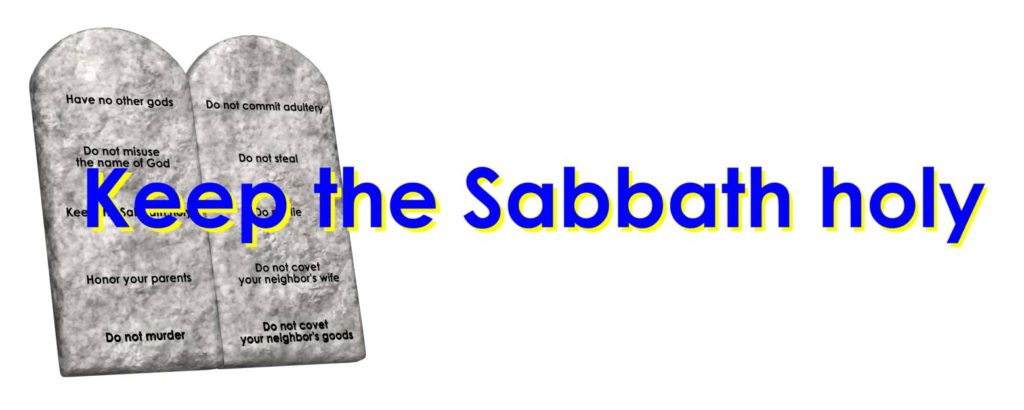
Hebrews 4:9–10, Rest. The Greek word sabbatismos means “a keeping of the Sabbath” and is derived from the Hebrew word sabbaton meaning “the seventh day or Sabbath.” In Hebrew the word for Sabbath is shabbat, which originates from the root verb shabat meaning “to cease, desist, rest.” Those who have entered into the Sabbath rest do so by following the example of YHVH the Creator who not only rested spiritually, but literally rested on the seventh day after the creation. He set this as an example for man to follow.
Some people see this verse in Hebrews only as a mandate to rest from their spiritual works by putting their faith in Yeshua. This is only partial rest. We must follow the example of YHVH who literally rested on the seventh day as well.
Yeshua in his preincarnate state was YHVH the Creator (Heb 1:10; John 1:3, 10). He kept the Sabbath as YHVH the Creator, and as Yeshua the Messiah as well. (If Yeshua didn’t keep the Sabbath, then he was a sinner in that he violated the law, and is not our perfect, sin-free Savior! If he kept the Sabbath, and the Gospels record that he did do so, we are to imitate him as his obedient disciples and imitators by doing what he did (1 Cor 11:1; 1 John 2:6.)
Some deceptive Christian “teachers” will state that Yeshua broke the Sabbath by quoting John 5:18. First, again if Yeshua had broken the fourth commandments, he would have become a sinner (1 John 3:4), but we know that he was sinless (Heb 4:15), so this was not the case. Second, John records that it was the misguided Jews who were accusing Yeshua of sin, even though he had done nothing to break any of the Torah’s laws regarding the Sabbath. Third, the word “break” as used in John 5:18 is the Greek word luo, which in its primary definition means “to loosen literally or figuratively.” Yeshua was “breaking” or “loosening” the man-made, extra-biblical laws or constraints that the Pharisees had put on people with regard to how to keep the Sabbath. Yeshua was brushing aside or “breaking” or “loosening” some of these non-biblical and man-made restrictions to bring people back to a Sabbath observance that was less burdensome and restrictive. He in no way was violating the Torah, which would have made him a sinner.
When we rest both physically and spiritually, we’re walking out a higher level of truth by walking out both the letter and the spirit of YHVH’s Torah-law as Yeshua taught us to do in his Sermon on the Mount (Matt 5:17–48), and as such, we’ve positioned ourselves before YHVH to receive more divine revelation from him.
In other words, the more we obey him faithfully in love, the more truth he can entrust us with for safekeeping, for he knows we won’t take for granted or trample his precious truth nuggets. To those who are faithful in much, YHVH gives more. That’s how it works in his spiritual economy.
To this day, many of the religious keep the Sabbath by physically resting on this day, but they have missed the revelation of spiritual rest in Yeshua, while the mainstream Christians have rejected the physical Sabbath rest but they accepted the spiritual rest in the Messiah. Both sides have half the truth. Let’s put the two halves together and walk out the full truth—both the physical and the spiritual side of the Sabbath as Yeshua and his disciples did!
Keeping the seventh day Sabbath with this fuller understanding is another way of connecting the gospel message to its Hebraic, pro-Torah roots.