We’re all a lot like Lot (and his wife)!

Almost every year, I post my commentary on Lot and his famous pillar-of-salt wife. Why? Is because I’ve run out of commentary articles to post? YHVH knows this isn’t the case. I have several thousand pages of commentary notes and articles that I have written on the Bible. There is no possible way I can publish this all on this blog! No. The reason I keep publishing this article each year is because the longer I live, the more I realize that I am a lot like Lot and his wife—and so are you if you’re honest. You see, both of these biblical characters are symbolic of the human condition including the struggles against the influences of the world, the flesh and the devil that we face daily. That’s why we need to be constantly reminded of this story, for in it, again if we’re honest, we will gain a better perspective on the true nature of our own spiritual condition, and in so doing, perhaps it will help us to be better overcomers. — Natan

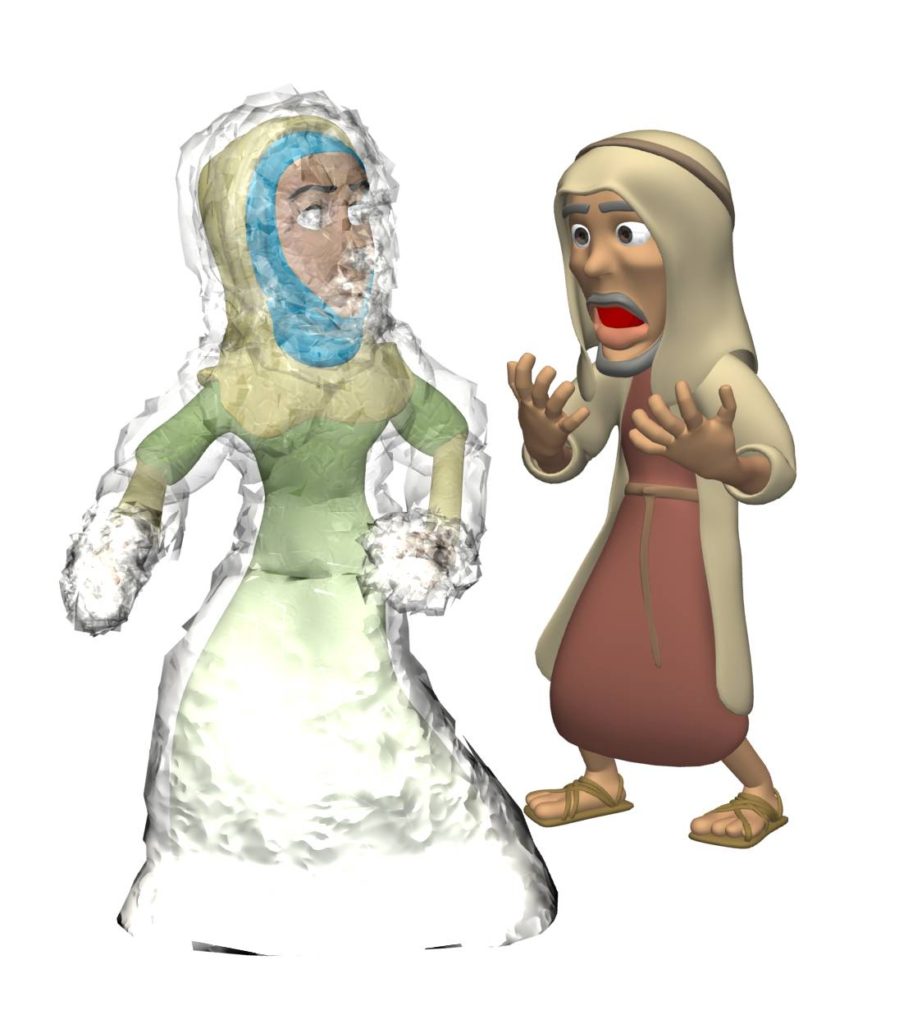
Genesis 19:1ff, Lot sat in the gate of Sodom. In the end times, YHVH tells his saints to flee spiritual Babylon (Rev 18:4) in order to escape the plagues that will come upon her because of her sin. Lot was secure in wicked Sodom to the point that he had become a city leader (he sat in the gate of the city) and was now trying to appease his friends, the Sodomites, by giving them his virgin daughters for sexual exploitation. There is peril in complacent security. Lot barely escaped Sodom with his life from the fires of Elohim’s judgment. His wife did not make it. What can we learn from Sodom and could there ever come a time when we will have to flee the spiritual Sodom in which we find ourselves? Is it possible to flee our “Sodom” without physically leaving it?

Genesis 19:2, No.The lamed in lo (no) contains a small dagesh, which implies a harsh, rather than gentle, manner of speech. The angel was irritated and snapped harshly (not courteously), “No!” to Lot’s request for them to come to his home. Lot not being totally righteous did not merit such dignified visitors to come under his roof. But by their refusal and his persistence, he increased his merit and righteousness in Elohom’s eyes, such that was deemed to be a righteous man in the eyes of the apostolic writers (2 Pet 2:7).

Genesis 19:14, Sons-in-law. If Lot had three sons-in-law, then with the his married daughter and his two daughters and wife at home there would have been ten possible righteous people in Sodom, thus preventing divine judgment from falling on that wicked city as per Abraham’s request. The fact that Lot’s married daughters refused to leave Sodom with him possibly speaks to his failure in properly raising them in the fear of YHVH and his standards of righteousness. Lot had already set them a bad example of spiritual compromise and acquiescing to the world for personal and financial gain, and his children followed this example of spiritual compromise to the point where they had little or no faith in Elohim whatsoever. Though Scripture later calls Lot a righteous man, he was only righteous compared to the wicked inhabitants of Sodom, which may or may not be saying much. 

Genesis 19:17, In the plain. Not only was the city destroyed, but the area around it as well. To this day, the entire area around where ancient Sodom was is barren, desolate and covered in gypsum (hydrated calcium sulfate) and sulfur balls. Verse 28 mentions “all the land of the plain” being destroyed as well.

Genesis 19:23, Then YHVH rained brimstone…from YHVH out of heaven. YHVH in heaven is the Father and YHVH on earth was the Son — the preincarnate Yeshua. At Yeshua’s second coming, he will bring judgment on the earth in accordance with the will of his Father in heaven.

Genesis 19:33, The word is to be understood as if the letter were not there. The dot over the vav in uvkumah (complete spelling for her getting up) as opposed to the vav missing in v. 35 (defective spelling of the same word) indicates that Lot was somewhat blameworthy the second night in that he knew that his drunkenness had led him down the wrong path and that he shouldn’t have allowed himself to drink wine the next day (Tikkun, p. 39).

“Remember Lot’s Wife!”—A Man Called Lot: What We Can Learn from His Life

In Luke 17 32, Yeshua warns end times believers to “Remember Lot’s wife.” What did he mean by this pointed warning? Is Lot not a picture of the typical Western saint whether Christian or Hebraic roots oriented saint? I believe so. In saying this, as a pastor and having been a watchman on the spiritual wall for many years, I see very little if any difference (broadly speaking) between Christians and most Torah-keepers, for the spiritual condition of both groups is fundamentally the same. 

Continue reading →
 

The “Keys of the Kingdom”, Binding and Loosing Explained

Matthew 16:17–19, Keys of the kingdom…bind … loose. Yeshua is here giving his disciples the authority of Elohim on earth to judge and make ecclesiastical decisions.

Bind…loose. Here, Yeshua clearly gave the ecclesiastical authority of the Sanhedrin (the ruling body of Jewish leaders in Yeshua’s day) over to his disciples. No longer do we need to look to the authority of the Jewish leaders for determining how to obey YHVH, or for making rulings pertaining to religious service.

First of all, there is no Sanhedrin today to tell us these things.

Secondly, in Matthew 16:17–19, Yeshua clearly transferred to his apostles—the church leaders of that time—the authority of the Sanhedrin to make binding ruling and decisions about spiritual matters pertaining to his kahal (congregation or church).

This authority would include making determinations about the biblical calendars. No longer, does the congregation or kahal of Yeshua have to wait for a Jewish Sanhedrin to form to tell them how to follow the Word of Elohim with regard to the biblical calendar or any other subjects for that matter.

Yeshua here permits and empowers the spiritual leaders of the saints to simply teach and do what the Bible says, and heaven will honor or endorse their decisions (called “binding” and “loosing”)! That’s what Yeshua says in Matthew 16:19, and this is exactly what his apostolic leaders did in Acts 15 at the first apostolic counsel.

Yeshua gave his disciples the authority over his church to bind (to prohibit, forbid) and loose (to permit), and he said that heaven would respect their decisions (Matt 16:17–19). They, in fact, exercised this divine authority in Acts chapter 15 at the first Jerusalem counsel.

Bind as used in the Matt 16:19 and Matt 18:18 is the Greek word deo meaning “to bind tie, fasten, to bind, fasten with chains, to throw into chains, being bound by Satan or his demons, put under obligation of the law, to be bound to one, a wife, a husband, to forbid, prohibit, declare to be illicit.” The counterpart to binding is loosing, which is the Greek word luo meaning “to loose any person (or thing) tied or fastened, to loose one bound (i.e. to unbind, release from bonds, set free), to loosen, undo, dissolve, anything bound, tied, or compacted together.

The concept of binding and loosing was also a first century Jewish colloquial expressions relating to correctly or incorrectly interpreting the Torah. If the Jewish legal scholars believed that a person was incorrectly interpreting the meaning of a Torah law or one of the traditions of the elders, they accused him of breaking or loosening (luo) the law or making it less binding or less strict (deo). This was the case when Yeshua picked some grain to eat on the Sabbath in John 5:18. The NKJV and most English translations of this verse incorrectly state that “he broke the Sabbath.” This is a misleading, faulty and unfortunate translation of the Greek word luo. It is unthinkable and unscriptural that the perfect Yeshua actually sinned by violating the fourth commandment. In reality, he loosened the Jewish extra-biblical legal restrictions that forbad anyone from picking a handful of grain on the Sabbath to eat—something the Torah doesn’t consider work (as opposed to harvesting a field of grain), and thus doesn’t forbid. Luo in this sense may possibly be read into Matt 5:19, John 7:23, and 10:35 as well. 


The Gates of Hell Explained

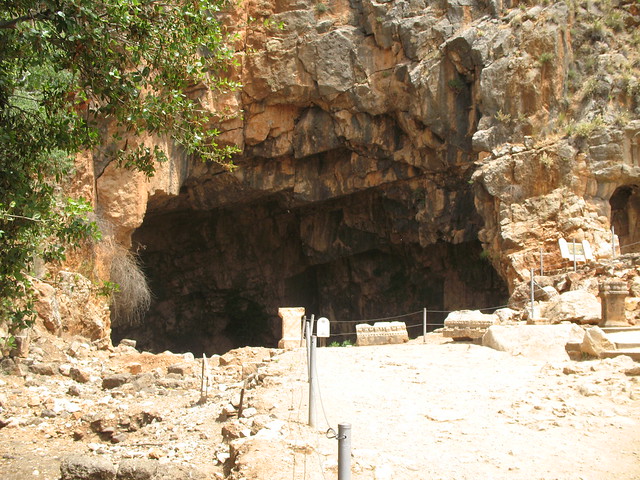
Matthew 16:13, 18, Caesarea Philippi…gates of hell. This Roman city (also known as Caesarea Paneas) was located at the southwest base of Mount Hermon. After the death of Herod, and during the rule of the Roman procurators and up to the time of the Jewish revolt, Caesarea became the capital and residence of the rulers (Golden Jerusalem, by Menashe Har-El, p. 52). It was here that the ancients built temples to various deities. The heathens typically built altars and temples on high places, which they considered to be gateways or portals to heaven, and Mount Hermon was the highest high place in the entire region with an elevation of 9,232 feet above sea level. At this place, the Greeks worshipped their god Pan. In the same area at the base of Hermon, the Canaanites worshipped Baalgad (Josh 13:5; cp. Josh 11:17).

It is interesting to note that according to the modern Book of Enoch touting to be the one referred to in the Bible, purportedly 200 fallen angels descended upon Mount Hermon and there made a pact to seduce the beautiful daughters of men the result of which, allegedly, were the nephilim or giants (Enoch 7:1–11), thus corrupting the genetics of the human race. These hybrids were destroyed in the flood. These demons apparently taught their offspring sorcery and incantations (v. 10).

It is at Caesarea Philippi that Yeshua proclaimed his messiahship, as a prophetic declaration of war or a form of spiritual warfare against Satan and his demons at the very spot the heathen demon worshippers venerated as their highest high place. 

Moreover, some biblical scholars believe that Yeshua’s transfiguration occurred on Mount Hermon, since the account of this event occurs immediately afterwards in Matthew chapter 17. At that event, the three disciples with Yeshua received a vision of his glorious appearance, which was another finger in the eye of the devil. HIs second coming is when Yeshua will destroy the devil’s kingdom and and capture him and confine him in chains to the abyss.

The tribe of Dan settled at the foot of Mount Hermon in the area of Tel Dan where they erected a pagan temple dedicated to golden calf worship. Jacob in his final prophecy to his sons connects Dan to a serpent (a biblical metaphor for Satan). Additionally, Moses prophesies that Dan would be a lions whelp or offspring who would inhabit Bashan, which is an area to Mount Hermon in the north (Deut 33:22; see notes on this verse). Some Bible researchers speculate that when these two prophecies are combined, it is revealed that Dan will be the serpents seed and from him will come the false, demon-inspired antichrist who claims to be the lion of Judah. Perhaps this is why the tribe of Dan isn’t mentioned in Rev 7, since this tribe has defected to Satan.

It is also interesting to note that at this spot Yeshua proclaimed that the gates of hell would not prevail against his saints (v. 18). If Caesarea Philippi was or is a portal to the demonic underworld, as at least one noted Bible scholar claims (see Reversing Hermon—Enoch, the Watchers and Forgotten Mission of Jesus Christ, pp. 94–96, by Dr. Michael S. Heiser; https://bible-history.com/biblestudy/ancient-caesarea-philippi cp. https://en.wikipedia.org/wiki/Banias), then this could be a portal through which the end time demons will emerge from the bottomless pit in the last days to torment men as part of YHVH’s end time judgments as John writes about in Rev 9:1–11. Whatever the case may be, it is encouraging to have Yeshua’s assurance that the end times saints will have nothing to fear from the hellish demonic spirits that will be roaming the earth seeking to kill, steel and destroy just before his second coming. Moreover, YHVH promises in Revelation 9:4 that his saints who have his seal on their foreheads will be protected from the unleased demonic hordes that will torment the earth in the end times.


We are Sodom¡ (where everything that is good has been turned upside down)

Genesis 18:20, Their sin [Sodom and Gomorrah’s] is very grievous.What was the sin of Sodom? Genesis 19:5 gives us the answer. The men of Sodom were so morally perverted that Paul says of such a human condition in Romans 1:24–29,

Wherefore Elohim also gave them up to uncleanness through the lusts of their own hearts, to dishonor their own bodies between themselves: who changed the truth of Elohim into a lie, and worshipped and served the creature more than the Creator, who is blessed forever. Amen. For this cause Elohim gave them up unto vile affections: for even their women did change the natural use into that which is against nature, and likewise also the men, leaving the natural use of the woman, burned in their lust one toward another; men with men working that which is unseemly, and receiving in themselves that recompense of their error which was meet. And even as they did not like to retain Elohim in their knowledge, Elohim gave them over to a reprobate mind, to do those things which are not convenient; being filled with all unrighteousness, fornication, wickedness, covetousness …

Ezekiel 16:49–50 speaks of the symptoms of a society that has given itself over to a spirit of sodomy (homosexuality) because it has become abundantly wealthy, proud and obsessed with idleness (entertainment and pleasure). As a result it has become inwardly focused and self-absorbed, which leads to an obsession with self-gratification, self-worship and homosexuality instead of helping the poor and needy. 

In this light, it shouldn’t be hard to see the parallels between Sodom’s society before it was judged and the moral and spiritual decline we see occurring in America and the rest of the western world. America, for example, has become obsessed with the concept of pride—especially since September 11, 2001. Notice, for example, the many car bumper stickers that expressed the idea of national “pride” since 9/11? Not only that, our culture has also become obsessed with promoting “gay” (homosexual or sodomite) rights and agendas calling it “gay pride.” It’s Sodom and Gomorrah all over again!


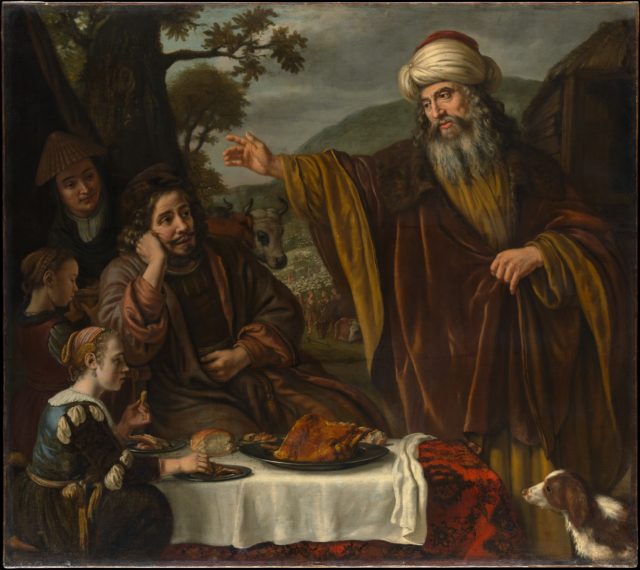
Who appeared to Abraham?

Genesis 18:1, Then YHVH appeared to him. 

YHVH Calls Abraham

And YHVH appeared [ra’ah the common Hebrew word meaning “to see, look, behold, show, appear, observe, have vision, present oneself, be seen”] unto Abram, and said, Unto thy seed will I give this land: and there built he an altar unto YHVH, who appeared unto him. (adapted from the KJV)

There God became visible to Abram and said … (as translated in S. R. Hirsch’s Genesis commentary)

How and in what form did YHVH appear to Abraham? This is the question the Jewish sages have been pondering for two thousand years. On the one hand, the language of Scripture is clear and seems literal enough: “YHVH appeared unto Abram … and said …” Yet let’s now note what some of the most notable Jewish sages have to say about this verse.

Rashi, the greatest Jewish Torah commentator of the modern era, has nothing to say about this verse in his commentary. Baal HaTurim, another notable Jewish commentator, in his Torah commentary, does not discuss the nature of the appearance. The Soncino Edition of the Pentateuch has no comments on verse seven. The ArtScroll Bereishis/Genesis Commentary states the following:

And [YHVH] made Himself visible to Abram: The stress is strongly on this visibility. The expression states that, not only was the Voice of God heard, but God Himself, so to speak, appeared, emerging from invisibility to visibility; revealing Himself. This is of far reaching importance because the Torah thereby specifically refutes the view of those who deny actual revelations and consider them products of human imagination and ecstasy. The means by which God spoke to human beings is an eternal mystery. It is enough to recognize that He did indeed speak and reveal Himself to them in some tangible way. (Hirsch, p. 439; emphasis added)

Samson Raphael Hirsch, the great nineteenth orthodox Jewish scholar, in his commentary states,

God made himself visible to Abraham, and said etc. The whole stress lies on this visibility … Far from wishing to give even the very slightest idea of how God spoke to Abraham and to those chosen men to whom He revealed Himself, we still have to note what is actually told us here. The expression used says that not only was the Voice of God heard … but [He was] made visible to Abraham. (Genesis, p. 231)

Here the Jewish sages agree that YHVH literally appeared and spoke to the patriarch Abraham. If he could do this here, then why could he not send a “part” or “extension” of himself” (if you will) in the Person of Yeshua the Messiah?

YHVH—Yeshua Appears to Abraham and Sarah and Promises Them a Son

Continue reading →
 

Blog Scripture Readings for 11-10 Through 11-16-19

Aside

Parashat Vayera — Genesis 18:1 – 22:24
Haftarah — 2 Kings 4:1-37
Prophets — Joshua 22:1 – 24:33; Judges 1:1 – 4:24
Writings — Psalms 26:1 – 33:22
Testimony — Matthew 16:1 – 21:22

Our new annual Scripture Reading Schedule for 2019-2020 with daily readings is available to download and print. If you are still working through 2018-2019’s Scripture Reading Schedule, the link will still be available on the right sidebar under “Helpful Links”. If you are using a mobile device or tablet, the link may be below, meaning you’ll need to scroll down instead.

Most of this week’s blog discussion points will be on these passages. If you have general comments or questions on the weekly Scripture readings not addressed in a blog post, here’s a place for you to post those. Just use the “leave a reply” link or the “share your thoughts” box below.

The full “Read Through The Scriptures In A Year” schedule, broken down by each day, can be found on the right sidebar under “Helpful Links.” There are 4 sections of scripture to read each day: one each from the Torah, the Prophets, the Writings, and from the Testimony of Yeshua. Each week, the Torah and haftarah readings will follow the traditional one-year reading cycle.

Weekly Blog Scripture Readings for 11/10/19 through 11/16/19.


Why We Don’t Unquestioningly Follow Rabbinic Tradition

Matthew 15:2, Tradition of the elders. These were Jewish traditions or legal regulations not found in the Torah, may of which violated the letter and spirit of the Torah as Yeshua goes on to teach in the next few verses.

Why do thy disciples transgress the tradition of the elders? (Matt 15:2)

Many folks coming to the Hebraic roots of the Christian faith stumble have the same question. They reason that, since the Christian church purports to be anti-Torah and since the Jewish Torah sages purport to be pro-Torah, we need to follow these Jewish elders and scholars, since, ostensibly, they have been faithful to the Torah for all these millennia and we can learn from them and need to follow their example. 

On the surface, this seems like a reasonable proposition. The problem is that as one digs below the surface veneer and gets to the truth of the matter, neither of these propositions is correct. In fact, the Jews have veered from the Torah as much as the Christians by their non-biblical traditions. In fact, Christians, in most cases, are better off than the Jews. Why is this? At least a solid Bible-believing Christian has received the basic gospel message of Yeshua the Messiah being the mankind’s Savior and Redeemer. A religious Jew probably has not. Moreover, Christians one the one hand while purporting that the Torah-law was “annulled”, “done away with”, “nailed to the cross” or “fulfilled” actually follow much of the Torah (which they call the moral law [e.g. don’t lie, steal, murder, commit adultery, covet, etc.). They just stumble over the dietary laws, the Sabbath and the biblical feasts and a few other minor Torah laws. These are the facts. 

Now let’s address the issue as to why a disciple of Yeshua cannot follow rabbinic tradition lock, stock and barrel, or hook, line and sinker, as they say. If you think that we are to do so, then please give me chapter and verse in Scripture that states that Yeshua or his apostles affirmed ALL of Jewish tradition? You can’t find one, for there are none. On the contrary, Yeshua told the Jewish leaders of his day, “By your traditions, you make of no effect the Word of Elohim” (Mark 7:6–13; Matt 15:3–9), and then in Matthew chapter five, he goes on to elaborate and condemn certain traditions of the elders that had in fact nullified the laws of Elohim. Moreover, Paul was a Pharisee of the Pharisees at the highest level and was trained by Gamaliel, the grandson of Hillel the Great, yet Paul counted the Jewish traditions all as dung (Phil 3:8). Does this bother you and go against your theology? If so, your problem is not with this author, but with Yeshua and Paul—with the Word of Elohim!

Moreover, the very Jewish leadership of the first century who purported, as some suggest, to have the truth that we need to follow, told the disciples to stop preaching the gospel in the name of Yeshua, which they refused to do (Acts 6:33–42). This begs the question: Why should we follow those who hated and still hate Yeshua to this day? 

Continue reading →