Blog Scripture Readings for 10/20 through 10/26/13

Aside

Parashat Chayei Sarah — Genesis 23:1 – 25:18
Haftarah — 1 Kings 1:1 – 1:31
Prophets — Judges 5:1 – 10:18
Writings — Psalm 28:1 – 34:22
Testimony — Matthew 18:21 – 21:46

Most of this week’s blog discussion points will be on these passages. If you have general comments or questions on the weekly Scripture readings not addressed in a blog post, here’s a place for you to post those. Just use the “leave a reply” link below.

The full “Read Through The Scriptures In A Year” schedule, broken down by each day, can be found on the right sidebar under “Helpful Links.” There are 4 sections of scripture to read each day. One each from the Torah, the Prophets, the Writings, and from the Testimony of Yeshua. Each week, the Torah and haftarah readings will follow the traditional one-year reading cycle.

Weekly Blog Scripture Readings for 10/20 through 10/26/13.


Growing Up in Messiah: Offense Versus Sin — Are You a Spiritual Pouter?

Matthew 18:15, When your brother sins. Yeshua says that when your brother sins against you, you ‘re to follow certain protocols to correct him in effort to restore him to spiritual relationship. Many people read this verse to mean that when your brother offends you or hurts your feelings, you’re to go to him. This is not what Yeshua is saying here. He says, if your brother sins against you. By biblical definition, sin is the violation of the law or Torah of Elohim (1 John 3:4). Therefore, if your brother lies to you, steals from you, or sexually violates your wife, you are to go to him, and possibly the church leaders — not if your brother offends you (hurts your feelings) in word or in deed. In this case, Yeshua instructs us elsewhere that we’re to turn the other cheek, pray for our enemies, bless and not curse, and do good to them.

36820848

Here’s something my wife Sandi wrote that deals in more detail with this issue of offense among brothers.

By Sandi Lawrence

Have you heard someone say that they are claiming their Matthew 18 rights because they have been offended by this or that person? It’s actually quite common and is often what is taught as how to handle offenses between brothers. Continue reading →


Binding, Loosing and the Biblical Calendar

Matthew 16:17–19, Bind…loose. Here, Yeshua clearly gave the authority of the Sanhedrin (the ruling body of Jewish leaders in Yeshua’s day) over to his disciples. No longer do we need to look to the authority of the Jewish leaders for determining how to obey YHVH, or for making rulings pertaining to religious service.

16169762

First of all, there is no Sanhedrin today to tell us these things.

Secondly, in Matthew 16:17–19, Yeshua clearly transferred to his apostles — the church leaders of that time — the authority of the Sanhedrin to make binding ruling and decisions about spiritual matters pertaining to his kahal (congregation or church).

This authority would include making determinations about the biblical calendars. No longer, does the kahal of Yeshua have to wait for a Jewish Sanhedrin to form to tell them how to follow the Word of Elohim with regard to the biblical calendar or any other subjects for that matter.

Yeshua here permits and empowers the spiritual leaders of the saints to simply teach and do what the Bible says, and heaven will honor or endorse their decisions (called “binding” and “loosing”)! That’s what Yeshua says in Matthew 16:19, and this is exactly what his apostolic leaders did in Acts 15 at the first apostolic counsel.

For more information on the biblical calendar, please go to http://hoshanarabbah.org/teaching.html#feast where you will find several short teaching articles on the subject.

For a free biblical, printable calendar, go to http://hoshanarabbah.org/calendars.html.


Is the Church a Something or a Someone?

Matthew 16:18, The church. This is the first place the word church is found in the Testimony of Yeshua. This causes us to ask several questions. Did the first-century followers of Yeshua call themselves a church or meet in a church? Emphatically, no! In the Testimony of Yeshua, the Greek word translated in our English Bibles as church is the word ecclesia which means “a gathering of people called out from their homes to either a secular or a religious gathering in a public place.” It does not mean “a building,” but rather “a group of people.” So accordingly, the saints don’t meet in a church or go to church — they are the church!
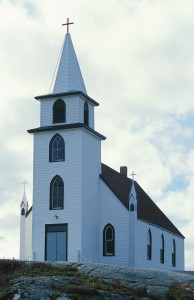
church

In our modern vernacular, the word church not only refers to the building where the saints meet, but to the group of saints that meets in the building. The first definition is biblically incorrect, while the second definition is biblically correct.

But even the modern term church while referring to a group of people has, by in large, lost its spiritual potency. It now simply means a group of religious people — normally Christians — that have formed a group. In reality, behind the word church (as used in the Testimony of Yeshua) is the Greek word ecclesia meaning “the called out ones.” Called out from what? The saints are called by Elohim out from the world and a secular or heathen lifestyle. Sadly, most church-goers while failing to understand the true meaning of the word also fail to live up to its stringent definition — to come out spiritually and to be separate from the pagan culture around them and to adopt a biblical congruent world view and lifestyle.

Even the derivation of English word church is antithetical to how the term ecclesia is used in the Testimony of Yeshua. Ironically, according to the dictionary the word church originates from the German word kirche and the Old English word circe. Circe is of Greek origination and is the name of the sorceress and enchantress goddess daughter of Sol or Helios, the pagan sun god. Some historians claim that Circe and Kirche were the same individual who was the Babylonian moon goddess. The word circe is related to the common words circle, circus and circumference. Just as the sun is circular, and the Romans worshipped their sun-god in circular arenas called circuses where horse races and other athletic competitions occurred in honor of the sun god, so today many well-meaning individuals worship today in churches on Sun-day. (Information sources: Encyclopedia Britannica, eleventh edition; The Final Restoration, by C.J. Koster; Websters Encyclopedic Unabridged Dictionary of the English Language, Random House, 1983.)


 

The Sin of Sodom and Gay Pride

Genesis 18:20, Their sin [Sodom and Gomorrah’s] is very grievous. What was the sin of Sodom? Genesis 19:5 gives us the answer. The men of Sodom were so morally perverted that Paul says of such a human condition in Romans 1:24–29,

Wherefore Elohim also gave them up to uncleanness through the lusts of their own hearts, to dishonor their own bodies between themselves: who changed the truth of Elohim into a lie, and worshipped and served the creature more than the Creator, who is blessed forever. Amen. For this cause Elohim gave them up unto vile affections: for even their women did change the natural use into that which is against nature, and likewise also the men, leaving the natural use of the woman, burned in their lust one toward another; men with men working that which is unseemly, and receiving in themselves that recompense of their error which was meet. And even as they did not like to retain Elohim in their knowledge, Elohim gave them over to a reprobate mind, to do those things which are not convenient; being filled with all unrighteousness, fornication, wickedness, covetousness …

21486386

Ezekiel 16:49–50 speaks of the symptoms of a society that has given itself over to a spirit of sodomy (homosexuality) because it has become abundantly wealthy, proud and obsessed with idleness (entertainment and pleasure). As a result it has become inwardly focused and self-absorbed, which leads to an obsession with self-gratification instead of helping the poor and needy.

It shouldn’t be hard to see parallels between Sodom’s society before it was judged and the moral and spiritual decline we see occurring in America and the rest of the western world. America, for example, has become obsessed with the concept of pride—especially since September 11, 2001. Notice, for example, the many car bumper stickers expressing the idea of national “pride” since 9/11? Not only that, our culture has also become obsessed with promoting “gay” (homosexual or sodomite) rights and agendas calling it “gay pride.” It’s Sodom all over again! This begs the question: Is America and the rest of the western world ripe for Elohim’s judgment?


An Example of Torah-Obedience Before Moses

Genesis 18:19, Shall keep the way of YHVH…do justice and judgment. To what is YHVH referring here? He is referring to the Torah, something some Christian Bible teachers say did not exist before Moses and Mount Sinai (see also Gen 26:5). Let’s now see how the Scriptures define these terms and how they relate to the Torah. Genesis 18:19 says,

“For I [YHVH] know him [Abraham], that he will command his children and his household after him, and they shall keep the way of YHVH, to do justice and judgment; that YHVH may bring upon Abraham that which he hath spoken.” (emphasis added)

Let’s define the three highlighted words above in the larger context of the Scriptures.

Moses 10 Cs 2

“The way” is the Hebrew word derech (Strong’s H1870) and is used in the following places:

  • Blessed are the undefiled in the way [derech], who walk in the law [Torah] of YHVH. (Ps 119:1)
  • I will run the way [derech] of the commandments … (Ps 119:32)
  • Teach me, O YHVH, the way [derech] of thy statutes … (Ps 119:33)

“Justice” is the Hebrew word tsedaqah (Strong’s H6666) meaning “righteousness.” Here is an example of its usage:

  • … for all thy commandments are righteousness … (Ps 119:172)

“Judgments” is the Hebrew word mishpatim (Strong’s H4941) meaning “ordinances” referring to YHVH’s moral and ethical laws as embodied in the last six of the ten commandments, which teach righteousness in one’s business and personal relationships.

  •  …[YHVH’s] righteous judgments [mishpat]. (Ps 119:7)
  • I have chosen the way [derech] of truth: thy judgments [mishpat] have I laid before me. (Ps 119:30)
  • Thy word is true from the beginning; and every one of thy righteous judgments [mishpat] endures forever. (Ps 119:160)

Can there be any doubt, if we’re to believe what the Scriptures say literally that Abraham was Torah observant hundreds of years before Moses (Abraham’s great, great, great grandson) was born?


Prophetic Implications of the Miracle of the Five Loaves and Two Fishes

Matthew 14:13–21 explained:

(An excerpt rom Natan’s yet unpublished commentary on the Gospels.)

This account appears to be an allegory pertaining to end-time events—specifically, the regathering of the Israelite exiles, and is another allusion to the final redemption.
John the Immerser (Baptist), who came in the spirit of Elijah to prepare the way for Messiah, had just been killed by the politico-religious system of his day. (Similarly, it is interesting to note that the two end time witnesses or prophets who will come in the spirit of Elijah will be martyred in Jerusalem just prior to the return of Yeshua [Rev 11:1–13].) In response to John’s murder at the hands of Herod, Yeshua and his disciples left the area to escape any possible backlash of the wrath of Herod (who allegorically represents the devil). This seems to be a picture of what is prophesied to occur to the bride (the saints) of Messiah during the great tribulation just prior to the return of Yeshua (Rev 12:12–17). The boat seems to metaphorically represent the eagle’s wings of Revelation 12:14 that carried the woman into the wilderness, which is a place of protection and safety during the great tribulation.

33398287 Once in the wilderness, “when the day was far spent … and now the time is far passed” (a prophetic reference to the end of the age just prior to the return of Yeshua), Yeshua fed the multitude five loaves and two fishes provided by a young boy. The five loaves speak of the five books of YHVH’s Torah (since the number five alludes to Torah in Hebraic thought and bread or manna is symbolic of the Word of Elohim [Matt 4:4]. This points to Yeshua who, spiritually speaking, is the Bread of Life and Torah-Word of Elohim made flesh [John 1:1, 14; 6:32–58]). The two fish could either refer to Continue reading →