Understanding the Mysteries of Abraham’s Vision

A Vision of the Renewed Covenant

In Genesis 15:17–18fp, we read,

And it came to pass, that, when the sun went down, and it was dark, behold a smoking furnace, and a burning lamp that passed between those pieces. In the same day YHVH made a covenant with Abram …
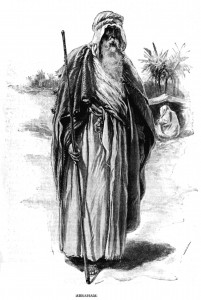
Abraham

What is the meaning of this? This is nothing other than YHVH giving Abraham a prophetic vision of Yeshua the Redeemer of Israel dying on the cross paying for the sins of Abraham’s descendants who would break that very covenant that YHVH made with Abraham on that day. Both Jewish and Christian biblical commentators recognize aspects of this truth.

Let’s first establish that YHVH passed through the pieces of sacrificed animal. Rashi, the medieval Jewish Torah scholar, recognizes that the Divine Presence was the one who passed through the pieces of animal while Abraham slept (Rashi’s commentary on Gen. 15:10). Furthermore, The ArtScroll Tanach Series Bereishis/Genesis Commentary, vol 1a, states, “The smoke [which rose up into the thick darkness (Radak)] was the ‘Cloud and thick darkness’ which appeared at the revelation of the Torah and the torch in its midst was ‘the fire’ which appeared at Sinai [see Exod. 19:18; Deut. 5:4]”…. [Elohim] caused His Presence, symbolized by the fire, to pass through and conclude the Covenant.… [T]he culmination of this vision was that the fire consumed the pieces, causing their smoke to ascend to heaven…” (pp. 534–535). Christian commentators Keil and Delitzsch in their commentary on this passage state, “In this symbol [i.e., the smoking pot and the fiery torch], Jehovah manifested Himself to Abram, just as He afterwards did to the people of Israel in the pillar of cloud and fire” (Hendrickson, p. 138). So both notable Jewish and Christian scholars relate the smoke and the fire Abraham saw pass between the pieces of meat to YHVH’s Presence in the cloud and pillar of fire that led Israel in the wilderness. We read in Exodus 13:21,

And YHVH went before them by day in a pillar of a cloud, to lead them the way; and by night in a pillar of fire, to give them light; to go by day and night.

Then in Exodus 14:19 it is written:

And the angel of Elohim, which went before the camp of Israel, removed and went behind them; and the pillar of the cloud went from before their face, and stood behind them.

Who is this “Angel” of Elohim (in other places: he is called “the Angel” of YHVH)? Continue reading →


Bless the Food or Bless Elohim the Maker of the Food?

Genesis 14:19–20, He blessed him. According to Jewish tradition based on Genesis 14:18–20 and the example of Yeshua in the Testimony of Yeshua, we are to bless YHVH before partaking of a meal (Mark 8:7), and according to YHVH’s Torah instructions, his people are to thank him for the food after a meal is completed (Deut 8:10).

21181197The B’rakhah is a traditional Jewish blessing which is recited or sung before a meal involving the blessing and breaking of the bread of fellowship followed by the blessing of and the drinking of the fruit of the vine.


If Yeshua Is Lord of the Sabbath, Did He Break It?

Matthew 12:1–14, On the Sabbath. (See also Mark 2:23–28; also see note on John 5:18.) From this passage, many Christians reason that since Yeshua is the Lord of the Sabbath, it was therefore permissible for him to break it. Does this passage substantiate this line of reasoning from Hebraic thought? Let’s examine this issue.

Sabbath 3 33398107 This scripture teaches us that there are levels of Torah laws, and some laws take precedence over others. For example, the priests technically violated the Sabbath during the tabernacle and temple service, but were guiltless because Torah commanded them to do certain things on the Shabbat that otherwise would have been forbidden. The Talmud explains this by saying that whenever a positive commandment and a negative commandment contradict, the positive commandment takes precedence over or supersedes the negative one (b. Shabbat 133a). What Yeshua is teaching in this passage is that the temple service trumps the Sabbath, and human need or saving life (the ox-in-the-ditch scenario) trumps the temple service. This view is confirmed by the Jewish sages (b. Yoma 85b). In verse six, when Yeshua said, Continue reading →


Elohim Relates to Men Through Covenants

The Abrahamic and Mosaic Covenants Are Subsections of the Torah Covenant (or the Old Covenant)

The Torah, the first five books of the Bible, is the chronicle of YHVH giving man instructions to follow, and of his entering into covenantal relationships with men and men either keeping those agreements or breaking them.

Contract form–21599635

The word Torah means “instructions, teaching or precepts; specifically in biblical context: the teachings or instructions of YHVH to lead men into a righteous relationship with him through covenantal agreement.” The Torah is a giant b’rit or covenant. The Torah in a number of places even refers to itself by the Hebrew word b’rit or covenant. We see this in the following passages:

Exodus 34:27, And YHVH said unto Moses, Write you these words: for after the tenor of these words I have made a covenant with thee and with Israel.

Deuteronomy 29:1, These are the words of the covenant, which YHVH commanded Moses to make with the children of Israel in the land of Moab, beside the covenant which he made with them in Horeb.

The Torah is not unlike an instruction manual that one might receive from the manufacturer of an automobile, computer or some such device to help the buyer to operate his new purchase in a manner that allows him to receive years of trouble-free service. The Torah is YHVH’s instruction manual to help man to live in a way that brings life and blessing; it helps man to enter into a loving relationship with his Creator and to have a trouble-free relationship with his fellow man.

Within the first five books of the Torah-covenant are several smaller covenantal subdivisions such as the Abrahamic and the Sinaitic or Mosaic Covenants. Continue reading →


Blog Scripture Readings for 10/6 through 10/12/13

Aside

Parashat Lekh L’kha — Genesis 12:1 – 17:27
Haftarah — Isaiah 40:27 – 41:16
Prophets — Joshua 15:1 – 21:45
Writings — Psalm 15:1 – 20:9
Testimony — Matthew 10:27 – 13:58

Most of this week’s blog discussion points will be on these passages. If you have general comments or questions on the weekly Scripture readings not addressed in a blog post, here’s a place for you to post those. Just use the “leave a reply” link below.

The full “Read Through The Scriptures In A Year” schedule, broken down by each day, can be found on the right sidebar under “Helpful Links.” There are 4 sections of scripture to read each day. One each from the Torah, the Prophets, the Writings, and from the Testimony of Yeshua. Each week, the Torah and haftarah readings will follow the traditional one-year reading cycle.

Weekly Blog Scripture Readings for 10/6 through 10/12/13.


A New Spiritual Identity and a New Name

Genesis 11:29, Iscah. According to rabbinical commentary, Iscah is another name for Sarah, Abraham’s wife. It was not uncommon in ancient and Hebraic culture to have more than one name. We find this to be the case in the Scriptures in many instances.

20474058For example, Jethro (Yitro, Exod 3:1), the father-in-law of Moses, was known by two other names: Hobab (Num 10:29; Judg 4:11) and Reuel (Exod 2:18). Sometimes a person’s name would reflect exploits or achievements accomplished in that person’s life, one’s character traits or one’s destiny. Often when one was given a new mission or calling in life a new name was given to that person to reflect their new destiny. Examples of this would be Abram (“exalted father”) becoming Abraham (“father of a multitude”), Sarai (princess) becoming Sarah (“noblewoman, queen”), Jacob (“prevailer, heelcatcher”) becoming Israel (“El prevails, prince of El”), or Hoshea (“savior, deliverer”) becoming Joshua/Yehoshua (“Yah saves/delivers”). It is not uncommon for redeemed believers returning to the Hebrew roots of the Christian faith to take a new name to reflect their new spiritual journey, mission, destiny or identity. Some may think this a strange thing to do, but in Hebraic culture this was a very acceptable practice. Often Elohim did the renaming as in all the examples given above.

Interestingly, YHVH promises a new name as part of their spiritual inheritance to those saints who overcome the world, the flesh and the devil (Rev 2:17; 3:12). Do you have your new name yet?


Yeshua’s Commissioning the Twelve…and YOU?

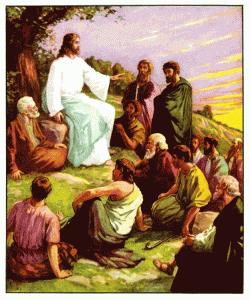
Matthew 10:5ff, Yeshua sent out. The Commissioning of the Twelve Disciples.

  • There are several notable aspects to consider when Yeshua commissioned his disciples. As modern-day disciples of Yeshua, we need to take these into consideration when assuming a ministry role. These are the requirements of his laborers who will work in his harvest field (see Matt 9:37 for context).
  • Yeshua calls one into the ministry (Matt 10:1). Some go into the ministry as a career like any other job. This is unbiblical. Involvement in Yeshua’s ministry is by his invitation only.
  • 25479441After calling one into the ministry, there is a time of training. This is the biblical norm. For some, it was five years (e.g., the Levites), or forty years (Moses and Joshua). David had a period of training before becoming king, as did Paul the apostle and Elisha. For Yeshua’s disciples, it was three-and-one-half years. The Matthew ten account is part of the disciples’ training program.
  • After calling them, Yeshua gives his disciples their marching orders by telling them where to go and not to go (Matt 10:5–6). They were to go to the lost sheep of the house of Israel and to bypass the Gentiles (for now).
  • Yeshua then instructs them what their ministry was to be (Matt 10:7–8). They were to do exactly as Yeshua himself did: preach the gospel of repentance and the kingdom of Elohim, and to heal the sick.
  • He then gives them instructions pertaining to travel arrangements — what they were to take on their journey, where they were to stay, and how to act when encountering resistance (Matt 10:9–15). This includes lodging, food and financial remuneration. On the latter point, today many itinerant  evangelists flagrantly violate Yeshua’s strictures in this regard and have become nothing more than travelling salesmen and peddlers.
  • Next, Yeshua warns his disciples against persecution (Matt 10:16–26). He assumes that persecution will be a natural result of preaching the gospel. Conversely, it could be assumed that something is out of spiritual order when one preaches the gospel and persecution doesn’t occur.
  • Yeshua then instructs his disciples about fear — who to fear and not to fear. They are to fear YHVH, not men (Matt 10:27–31). This is an important point, since preaching the gospel to the lost can be intimidating, which is why so few do it. Yeshua promises divine protection for his disciples who preach the gospel as he has instructed (Matt 10:29–30).
  • The workman is worthy of his hire. Yeshua promises spiritual rewards to those who preach the gospel (Matt 10:32–33).
  • For those who are called into Yeshua’s ministry, he demands total commitment. One must put Yeshua first above all other human relationships. For this, expect rejection from family and friends (Matt 10:34–39).
  • Again, Yeshua holds out the promise of spiritual rewards for those who heed his call to become a disciple who works in his spiritual harvest field (Matt 10:39 cp. Matt 9:37).