What is passing away—the Torah or the covenant?

2 Corinthians 3:11, Passing away. This is not a reference to the Torah-law itself, but to the old or former covenant (i.e., the agreement or contract YHVH and Israel made with each other) as it phases into the new or renewed covenant.

Yeshua initiated the new covenant at his last supper, but it will be finalized with the two houses of Israel (see Jer 31:31, 33 and Heb 8:8) at his second coming when the two sticks or houses of Israel are reunited (see Ezek 37:15–27) at which time he will finalize the new covenant with a reunited Israel (v. 26; see also Isa 54:10; 55:3; 59:21; Ezek 34:25; Jer 32:40; 50:5; Hos 2:18–23).

We are presently in the intermediate phase between the two covenants. To view it from a different perspective, Yeshua betrothed himself to his spiritual bride (redeemed Israel, spiritual Israel or the Israel of Elohim, see Gal 6:16) at his last supper, but will marry her at his second coming. The saints who are now in Yeshua are under the new covenant as the betrothed bride of Yeshua, but all Israel will be brought into the new covenant at his second coming at which time he will finalize the covenant that he initiated with his disciples before his death.


Are you as sick of gospel peddlers as I am?

Young pastor with money on gray background

2 Corinthians 2:17, Peddling the word of Elohim. Are you as sick and fed up with peddlers of the Word of Elohim as I am? It’s everywhere you go—people standing along the highways of biblical religion with their hands out panhandling. Even in Paul’s day as in our, the ministry of the gospel has “many” gospel peddlers.

Show me just about any big name in Christianity, Messianic, the Hebrew Roots Movement and, in most cases, I’ll show you someone who has built their ministry on shameless self promotion, hype, glitz, corporate marketing techniques and their ability to cleverly woo people to their book seller’s table or website that is chalk full of wares that promise to fill your head with the latest prophetic insights, esoteric biblical head knowledge, pop-psychological, self-help, humanistic, new-age, ear-tickling pap. It’s all yours, if you’ll only plunk down some of your hard-earned cash.

Well, I’m not the only one who’s fed up with these modern-day merchandizers of the gospel. The Apostle Paul was too. Evidently it was rampant in his day as well as we have seen in the scripture verse quoted above: “For we are not, as so many, peddling the word of Elohim…” The word peddling there means “to be a retailer, to make money by selling anything, to get sordid gain by dealing in anything, to do a thing for base gain, to trade in the word of God, to try to get base gain by teaching divine truth, to corrupt, to adulterate, peddlers were in the habit of adulterating their commodities for the sake of gain.”

These guys don’t need to bother knocking on the door of the congregation I pastor, nor at the events our ministry sponsors. The welcome mat isn’t out for them!

Haven’t these spiritual beggars read the word of Elohim? Don’t those who support them Continue reading


“The Lord told me…” are often the words of a lying manipulator

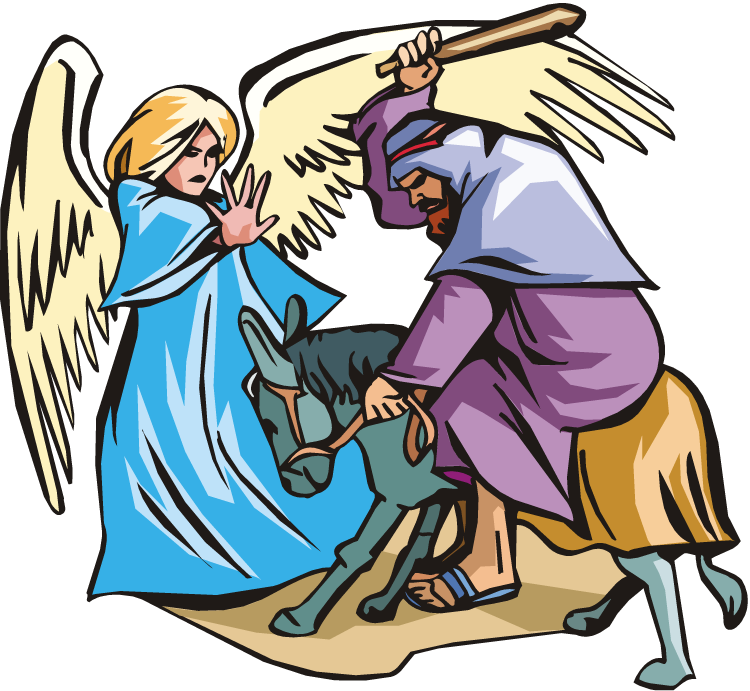
Numbers 22:38, The word that Elohim puts in my mouth. Balaam claimed to hear the voice of YHVH, yet his claims and the reality of the facts were two different things. YHVH makes a mockery of Balaam’s claims in front of the Moabite delegation when the lowly she-donkey is able to discern the presence of the Messenger of YHVH and Balaam is not (at least until YHVH opens his eyes).

How many times have you encountered people who claim to hear from “the LORD,” yet on closer examination they have not heard from YHVH, for the fruits of their lives and ministry do not verify their claims?

Be wary of such people who announce to others their super-spirituality and make great claims about their supposed inside track with YHVH.

Ask yourself: what do these people really want and what are their hidden agendas? What are they trying to gain for themselves or trying to cover up? Are they possibly, like Balaam, trying to control and influence others through supposed “words from the Lord” for their own selfish motives?


Man is the liar, NOT Elohim!

Lying preachers!

Lying preachers!

Numbers 23:19, El is not a man that he should lie. Read the rest of this verse, which speaks about the immutable character of Elohim. (Also see Mal 3:6; Heb 13:8.)

From the beginning in the Garden of Eden (thanks to the lies of Satan the serpent, see Gen 3:1–4), man has been under the spiritual delusion that Elohim changes his word, laws or commandments and that he doesn’t really mean what he says. That is to say, when YHVH gives a command, later on he may change his mind and his commands are no longer applicable to subsequent generations or people-groups.

Down through the ages, church leaders have bought in to this lie of the enemy with regard to validity of the Torah as pertaining to the life of the redeemed believer. But by saying that the Torah is “done away with,” “has been nailed to the cross” “has been fulfilled in Jesus” meaning “he did it for us so that we don’t have to do it,” isn’t this really calling Elohim a liar?

Now consider the numerous places throughout the Bible, the Word of Elohim, where the Torah is revealed as YHVH’s unalterable standard of righteousness for all time and for all people everywhere. (In this regard, read the following scriptures: Ps 119:44, 142, 144, 160, 172; Matt 4:4; 5:18–19; Rom 3:31; 7:12.)

Who is really the liar? Man or Elohim?


Lessons from Balaam, the Selfish, Willful Manipulator

Balaam's ass 3

Numbers 22:21–22, A willful, selfish manipulator. Balaam was willful, greedy, arrogant, rebellious and presumptuous in the face of YHVH’s revealed will. Balaam was attempting to manipulate YHVH through soulish means for his personal gain.

But the moral of the story is that YHVH is sovereign over the affairs of men regardless of men’s machinations. The will of YHVH cannot be manipulated or bent to accommodate men’s selfish ambitions. After all, how can man—a created being—hope to play mind games with the Sovereign Creator of the universe and win? In the end, man will be humbled and YHVH will be exalted as was the case with Balaam—an arrogant and internationally acclaimed “prophet.” He was made to look like a fool through a talking donkey and all this occurred in front of the accompanying delegation of Moabite leaders.

It was evident to all that Balaam was but a pawn in the hands of YHVH, and that if YHVH could make a brute beast speak, then he was certainly capable of putting his words into the mouth of mortal man, albeit a sorcerer.

What lessons can we learn here? Is it wise to toy with or tempt Elohim or try to manipulate him to fit our will? How often do we attempt to bend his will to fit our own? How often do we have our own carnal and selfish agendas and then attempt to convince ourselves and others that it is the will of YHVH? What are the end results? How many people go through life on this basis and never grow in their walk since they have never learned to distinguish between their will and that of the Almighty?

When we finally submit to YHVH and let go of our own selfish agendas, it is then that we start to have the breakthroughs in our lives and begin to experience his joy, shalom and victory not to mention an intimate relationship with our Heavenly Father.


How to Shield Yourself from Curses

Men and shield

Numbers 22:11–12, Dealing with curses from the enemy. Make no mistake about it, false prophets are neither the friends of YHVH nor his people. They are grievous wolves who hate YHVH’s people and want their total destruction.

For example, in verse 11 Balak asks Balaam to pronounce a mild curse (arah) on Israel that would result simply in their being driven away, not on their being destroyed. But then notice in verse 17 how Balak employs a much stronger Hebrew expression (kavah) to curse Israel implying their total destruction, thus indicating Balaam’s hatred for Israel (and his contempt for YHVH). In verse 12, YHVH uses the milder term to let Balaam know that even the mildest curse would not prevail against his people (The ArtScroll Stone Edition Chumash, p. 858).

Do you walk so closely to YHVH in relationship with Yeshua and in his righteousness that you are protected from even the mildest curse directed at your from the enemy? Do you stay under the blood of Yeshua so that no spiritual darts of Satan can pierce your spiritual armor (Eph 6:16; Rev 12:11)? Do you take refuge perpetually under the shadow of the wings of the Almighty (Ps 91:1, 4)? How does the child of YHVH do this every day? Proverbs 26:2 states, “As the bird by wandering, as the swallow by flying, so the curse causeless shall not come.” Do you have any “spiritual doors” open so that the Evil One has “legal” entrance into your life to attack you?

The solution to the problem is to repent by turning from sin and then turn to Yeshua! Obey his Word so that you do not open yourself up to the curses for disobedience as mentioned in Deuteronomy 28.


Are you in “the wilderness of the peoples”?

Red 3d Person Out From Crowd. Individuality Leadership Concept

Ezekiel 20:33–38, I will bring you out. This prophecy has never been fulfilled. In the end times, YHVH will begin to regather his scattered people (the 12 tribes of Israel) with his mighty, sovereign hand in the midst of his last days fury or judgments that he will pour out upon the earth just prior to Yeshua’s second coming.

As an intermediate step before returning his people to their inheritance in the Promised Land, he will bring them into the “wilderness of the peoples.”

This is the only place this term is found in the Bible. It appears to be a spiritual wilderness (not a literal one) in the midst of the Gentile nations where YHVH’s people find themselves.

Presently, there are many saints who have answered YHVH’s call to come out of the spiritual Babylon of the church system. They presently find themselves alone in a spiritual wilderness where YHVH is teaching them about the Torah and Hebraic roots of their faith.

This wilderness is a time to testing for YHVH’s people for him to determine who will love him by keeping is commandments or not (v. 37).

This period will be similar to the that of Israel in Goshen, Egypt (v. 36). At that time, YHVH tested the children of Israel by allowing them to go through the first three plagues, but he protected them from the last seven plagues. This is how he refined them spiritually and, at the same time, got their attention focused on him and off of Egypt.

YHVH will make all to pass under the rod of his judgment and separation (v. 37). He will purge out from is flock those who refuse to follow his Torah (the rebels and transgressors) and they won’t be allowed into the Promised Land (v. 38).

Ezekiel 20:35–36, Wilderness [Heb. midbar] of the peoples [Heb. am, not goy]. This wilderness is like the “wilderness” of Goshen in Egypt. This prophecy doesn’t seem to be referring to a wilderness outside of Egypt, but one that is in Egypt prior to the Exodus.

In end times Babylon the Great, this could be a prophetic reference to a spiritual wilderness experience YHVH will force believers to endure to test whether they will be obedient to his Torah or not (vv. 37–38) to determine whether they’re worthy candidates to come into the Promised Land as Yeshua’s warrior bride at his second coming.

This wilderness of the peoples seems to be a wilderness in the midst of the heathen people in which believers find themselves as opposed the wilderness of Rev 12:14 that YHVH will carry his end times persecuted remnant into for three-and-a-half years.