Are You Ready for Yom Kippur?

What is the spiritual significance of the biblical holiday of Yom Kippur? How does it relate to the life of the redeemed believer? What is its significance with regards to end-times Bible prophecy as it relates to the second coming of Yeshua? How do you celebrate Yom Kippur? To help to prepare you to celebrate this important appointed time (moed), read Natan’s article on the subject at http://www.hoshanarabbah.org/pdfs/yom_kippur.pdf

On the biblical calendar Yeshua and his disciples used, Yom Kippur occurs this year on Thursday, Sept. 27. The rabbinic Jews will celebrate Yom Kippur on Wednesday, Sept. 26 (in accordance with the Hillel 2 calendar from ca. 360 AD; for more information on this subject, go to http://www.hoshanarabbah.org/pdfs/new_moons.pdf).


Joyous Yom Teruah!

Yom Teruah—The Beginning of the Fall (End-Time) Harvest

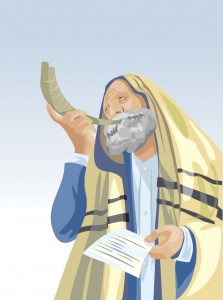
Yom Teruah or the Day of Shouting; the Shofar Blasts or the Awakening Blast (commonly called “Rosh Hashana”) occurs at the end of the summer months and marked the beginning of the fall harvest or festival season for the ancient Hebrews. Prophetically, the summer months between the spring feast of Shavuot/Weeks (Pentecost) and the fall feast of Yom Teruah is a spiritual picture of what is often called the “Church Age,” which is the period of time from the Feast of Pentecost in Acts 2 until the return of Yeshua the Messiah at the end of the age and lasting for approximately 2000 years. For many, especially those living in hotter climes, summer is a time of leisure, vacation, weariness and fatigue due to the excessive heat. Likewise, many Bible believers have fallen asleep growing spiritually weary while waiting for the return of the Messiah. Yeshua discusses this issue in the Parable of the Ten Virgins (Matt 25) who all grew weary and fell asleep awaiting the coming of the Bridegroom (Yeshua).
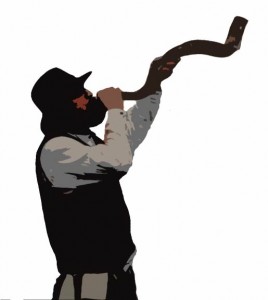
This all changes on the first day of the seventh month of the biblical Hebrew calendar when off in the distance the sound of a shofar blast suddenly pierces the atmosphere and registers in the eardrums of those who have fallen asleep. Not only does this shofar blast signal the beginning of the seventh month when the new crescent moon is sighted, but it announces the return of the Bridegroom (Yeshua) coming for his bride (the virgin saints). As in the Parable of the Ten Virgins, the cry went forth that the bridegroom was coming and all awoke from their slumber to prepare for his arrival. In these end days, that cry is going forth even now for all to hear, to awake and to prepare for the arrival of Yeshua the Messiah.

In the biblical calendar, the visible sighting of the crescent new moon always marks the beginning of the month and is announced by the shofar blast (Ps 81:3). Likewise, on the first day of the seventh month of the biblical calendar, the arrival of the new moon (called Rosh Chodesh) when the shofar sounds marks the beginning of Yom Teruah. This is the first day of the fall (festival) harvest season and is the time when the call goes out for the spiritual drowsy to awake, and to hear the voice of YHVH, to be invigorated by the breath or voice of the shofar, which is symbolic of YHVH’s prophetic word or oracle going forth across the earth in the last days.

Furthermore, the ram’s horn shofar is bent into a curved shape to represent the contrite heart of both the blower and the hearer. This is the season for the righteous to bend their hearts in humility and contrition before YHVH and repent of spiritual lassitude and lukewarmness and to awake to spiritual action and preparation, for the fall feasts point to awesome end time events that will occur at some point in time in the near future. It is a time to be refreshed by the breath of YHVH, and a time of new beginnings. Let YHVH breathe on you, revive you and empower you as you enter into the fall biblical festival season, and as you prepare to meet your King and Redeemer, Yeshua, in the air.

Yom Teruah also begins a season that prophetically speaks of war and battle, for in ancient times the shofar was a weapon of warfare in Israel, and it will be used again as such in the end times. It was used to call Israel to battle, to defeat her enemies with the help of YHVH. The shofar was then used to proclaim victory after the battle was won and to worship YHVH who had given them the victory. The battle against Israel’s enemies still rages on—even in the end times. Today, the enemies of the redeemed Israelites are mostly spiritual. They are the world, the flesh and the devil (Jas 3:15; Eph 2:2–3). Through faith in Yeshua the Messiah who defeated death, hell and the grave, we can have victory over mortality, sin, the devil and this world (1 Cor 15:51–57; Rom 8:27; 1 John 4:4; 5:4; Rev 12:11). As we hear the sound of the shofar calling us to arise from spiritual slumber, YHVH is telling his people to become overcomers so that they may be worthy to partake of the glories of his eternal kingdom (Rev 2:7,11,17,26; 3:5,12,21).

Yom Teruah is also the time of the reaping of the summer harvest. Spiritually speaking, this period will be the time of the reaping of the righteous to their reward (Rev 14:4) and the harvest of the wicked to the great winepress of Elohim’s wrath (Rev 14:14-20). It is the time of the resurrection of the dead in Messiah Yeshua at the end of the tribulation (Matt 24:29) and the beginning of Elohim’s wrath being poured out upon the nations (see Joel 3:11-13). This begins the Wrath of Elohim time pictured by Yom Kippur (the Day of Atonement, which occurs ten days after Yom Teruah) before which time the dead saints will have been resurrected and given their spiritual, glorified, second Adam bodies.

To learn more about Yom Teruah (the Day of Shofar Blowing/Shouting), which is the fifth of YHVH’s seven biblical feasts, go to http://www.hoshanarabbah.org/pdfs/yom_teruah.pdf. Enjoy!

 

Happy 1st Day of the 6th Month! “Say what?”

It’s time to get ready for the coming of the Lord! 

The new moon was sighted in Jerusalem last night marking the first day of the sixth month on the biblical calendar. Why is this important to know? Paul the apostle gives us a hint in the following Bible passage:

But of the times and the seasons, brethren, ye have no need that I write unto you. For yourselves know perfectly that the day of the Lord so cometh as a thief in the night. For when they shall say, Peace and safety; then sudden destruction cometh upon them, as travail upon a woman with child; and they shall not escape. But ye, brethren, are not in darkness, that that day should overtake you as a thief. Ye are all the children of light, and the children of the day: we are not of the night, nor of darkness. (1 Thess 5:1–5)

The times and seasons to which Paul makes reference can refer to the biblical festivals—especially the fall feasts, which relate to the second coming of our Master, Yeshua the Messiah, also known as the day of the Lord.

While the fall feasts of Yom Teruah (the Day of Shofar Blowing), Yom Kippur (the Day of Atonement), Chag Sukkot (the Feast of Tabernacles), and Shemeni Atzeret (the Eighth Day) commence in the seventh month of the biblical calendar (in our Sept-Oct), the first day of the sixth month is significant as well. Why? It marks the time when YHVH’s people begin to prepare their hearts and minds spiritually for these fall festivals that prefigure the second coming of the Messiah. One of these days, the Messiah will come. Will you be ready? If not now, then when?

Continue reading


Understanding the Feast of Weeks (Shavuot)

Shavuot is the third of the seven festivals (after Passover and the Feast of Unleavened Bread) of YHVH and occurs in the late spring of the year.

Passover pictures coming out of one’s spiritual Egypt or the world, putting faith in Yeshua the Messiah, and having one’s sins covered by the blood of Yeshua the Lamb of Elohim. As one comes out of the world and turns one’s life over to lordship of Yeshua, one turns from a life of sin and turns to loving and obeying the commands of Yeshua (John 14:15). In other words, one must leave one’s sin (as pictured by leavening in bread) in Egypt, and live a new sin-free life under Yeshua. The Feast of Unleavened Bread pictures this process of de-leavening one’s life of sin, and “eating” the unleavened bread of YHVH’s Word.

However, humans are not able to remove sin from their own lives by their own efforts anymore than one can pull oneself up by the ­bootstraps. Sin is too much a part of our mind, will and emotions that we need the working and enabling power of YHVH’s Set-Apart Spirit (Ruach HaKodesh) in our lives to bring sin to light and to empower us to overcome it. This happens as we begin to feed upon the Word of YHVH-Yeshua (the Bible) and little-by-little our lives come into conformity with that Word and with the life of Yeshua. He is the Word of YHVH made flesh (John 1:14; Rom 8:29). This is pictured by the children of Israel receiving the words and instructions on how to live a set-apart and sanctified life (contained in the Torah-law) of YHVH Elohim at Mount Sinai during the Feast of Weeks. This was repeated during the apostolic era on the Day of Pentecost as Yeshua promised to send the Comforter to live inside of redeemed believers aiding them at arriving at the truth of YHVH (John 14:16, 26; 15:26; 16:7, 13). This promise was fulfilled on the Day of Pentecost (Acts 2).

In the Bible, Shavuot is also known as the Feast of the Harvest of the First Fruits (Exod 23:16), Day of First Fruits (Num 28:26) and the Feast of Weeks or Shavuot (which is Hebrew for weeks, Exod 34:22; Deut 16:10, 16; 2 Chr 8:13). Shavuot falls fifty days “from the day after the [weekly] Sabbath” (NKJV) that falls during the Days of Unleavened Bread, and hence the derivation of the name Pentecost (meaning “to count fifty”) as recorded in the Testimony of Yeshua (or New Testament/NT, Acts 2:16).

YHVH through his Torah (the law of Moses) instructed his people that Shavuot was…

  • a day of rest where laborious or servile work was prohibited (Lev 23:21)
  • a commanded assembly (Lev 23:21)
  • a time when the priests offered up offerings and sacrifices (Lev 23:18–20)
  • a time when all males were to bring the tithes of the increase of their income (Exod 23:14; Deut 16:16)
  • a time when the priests were to offer up as a wave offering to YHVH two loaves of leavened bread made of the freshly harvested wheat (Lev. 23:17–20)
  • to occur where YHVH would place his name and all were to go there to celebrate it (Deut 16:11)
  • a time of rejoicing (Deut 16:11)
  • to be forever (Lev 23:21)
  • The early first-century, Book of Acts believers celebrated Shavuot (or Pentecost) in Acts 2:1 as did Paul (Acts 20:16).

Happy Shavuot!