Our new annual Scripture Reading Schedule for 2021-2022 with daily readings is available to download and print. If you are still working through 2020-2021’s Scripture Reading Schedule, the link will still be available on the right sidebar under “Helpful Links”. If you are using a mobile device or tablet, the link may be below, meaning you’ll need to scroll down instead.
Most of this week’s blog discussion points will be on these passages. If you have general comments or questions on the weekly Scripture readings not addressed in a blog post, here’s a place for you to post those. Just use the “leave a reply” link or the “share your thoughts” box below.
The full “Read Through The Scriptures In A Year” schedule, broken down by each day, can be found on the right sidebar under “Helpful Links.” There are 4 sections of scripture to read each day: one each from the Torah, the Prophets, the Writings, and from the Testimony of Yeshua. Each week, the Torah and haftarah readings will follow the traditional one-year reading cycle.
Weekly Blog Scripture Readings for 10/10 through 10/16/2021.
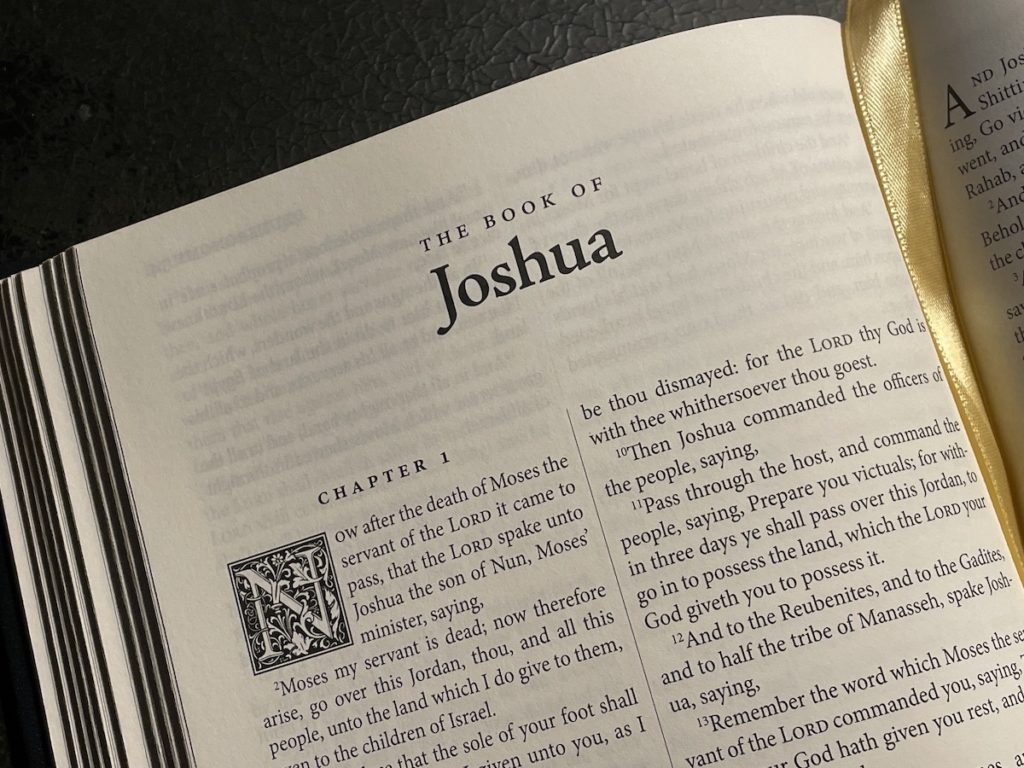
The children of Israel have come to the end of their forty year wilderness journey. Now YHVH’s people must go forward in possessing the land and the inheritance that he has for them. This is a new beginning for the Israelites. They must go forth and carry with them into the Promised Land YHVH’s teachings or instructions in righteousness—the Torah—as well as the lessons they have learned in their wilderness experience. This principle applies to us as much as it did to the ancient Israelites, for as Paul said, “these things happened to them for examples [or types] and they are written for our admonition upon whom the ends of the world [or ages] are come” (1 Cor 10:11).
The saga of YHVH dealing with Israel did not end with the death of Moses. Similarly, the life of a believer does not start and end at the work of Yeshua at his first coming (whom Moses foreshadowed, see Deut 18:15–18). No, as the death of Moses signaled a new beginning for Israel, so Yeshua’s death on the cross marks a new beginning for redeemed believers as they make their way into their spiritual Promised Land. As Joshua (in Hebrew, Yehoshua meaning “YHVH saves”) led Israel into their physical Promised Land, so Yeshua (the Hebrew word for salvation) at his second coming will lead the saints into the “Promised Land” of his millennial kingdom, and then eventually into the spiritual kingdom of the New Heaven and Earth and the New Jerusalem 1000 years later. Read Hebrews chapters three and four for insights and understanding into how Moses and Joshua were prophetic shadow pictures of Yeshua at his two advents.
Joshua 1:1,Joshua … Moses’ servant. For how long was Joshua Moses’ servant before he became the leader of Israel? What does this teach us about YHVH’s discipleship program? How many other servants of YHVH’s does Scripture reveal spent years in training for the ultimate mission YHVH had for them as leaders of his people? How long was Joseph, Moses, Samuel, David, the disciples of Yeshua and Paul in training, to name a few, before YHVH was ready to use them for his special purposes? As Matthew Henry says in his commentary on this verse, “Those are fittest to rule, who have learned to obey.”
Joshua 1:6, 7, 9, 18,Be strong and of a good courage. Four times in the first chapter YHVH encourages the Israelites with this phrase. Why the fourfold repetition of this admonition at this juncture in Israel’s sojourn? Be strong is the Hebrew word chazak/קזח meaning “to strengthen, prevail, harden, be strong, become strong, be courageous, be firm, grow firm, and be resolute.”According to The Theological Wordbook of the Old Testament, the majority of times chazak is used in Scripture it refers to “being strong in battle.”This word can also mean “to harden one’s heart”against YHVH’s purposes as was the case with Pharaoh twelve times between Exodus chapters 4 and 14. Good courage is the Hebrew word amats/ץמא meaning “to be strong, alert, courageous, brave, stout, bold, solid, hard.”The aspect of this word that means “to harden one’s heart” can have both a good and bad connotation. One can harden or secure one’s heart with the resolve to obey YHVH, or contrariwise, choose to disobey him with an obstinate heart as well. Examples in Scripture where amats is used in the negative sense are Deuteronomy 2:30 and Amos 2:14. These two words, chazak and amats almost appear to be synonyms. Why would YHVH use two words with only slight variation in meaning in admonishing the Israelites as they were about to enter the Promised Land? Was he trying to emphasize a point? Perhaps he anticipated that eventually they would grow faint and weary battling the onslaught of evil around them and succumb to the influences of the surrounding pagan nations leading to their apostasy. Perhaps the writer of the Epistle to the Hebrews had these two Hebrew words in mind when he wrote the following:
12 Take heed, brethren, lest there be in any of you an evil heart of unbelief, in departing from the living Elohim. 13 But exhort one another daily, while it is called today; lest any of you be hardened through the deceitfulness of sin. 14 For we are made partakers of Messiah, if we hold the beginning of our confidence steadfast unto the end; 15 While it is said, “Today if you will hear his voice, harden not your hearts, as in the provocation.” 16 For some, when they had heard, did provoke: howbeit not all that came out of Egypt by Moses. 17 But with whom was he grieved forty years? Was it not with them that had sinned, whose carcasses fell in the wilderness? 18 And to whom swore he that they should not enter into his rest, but to them that believed not? 19 So we see that they could not enter in because of unbelief. (Heb 3:12–19)
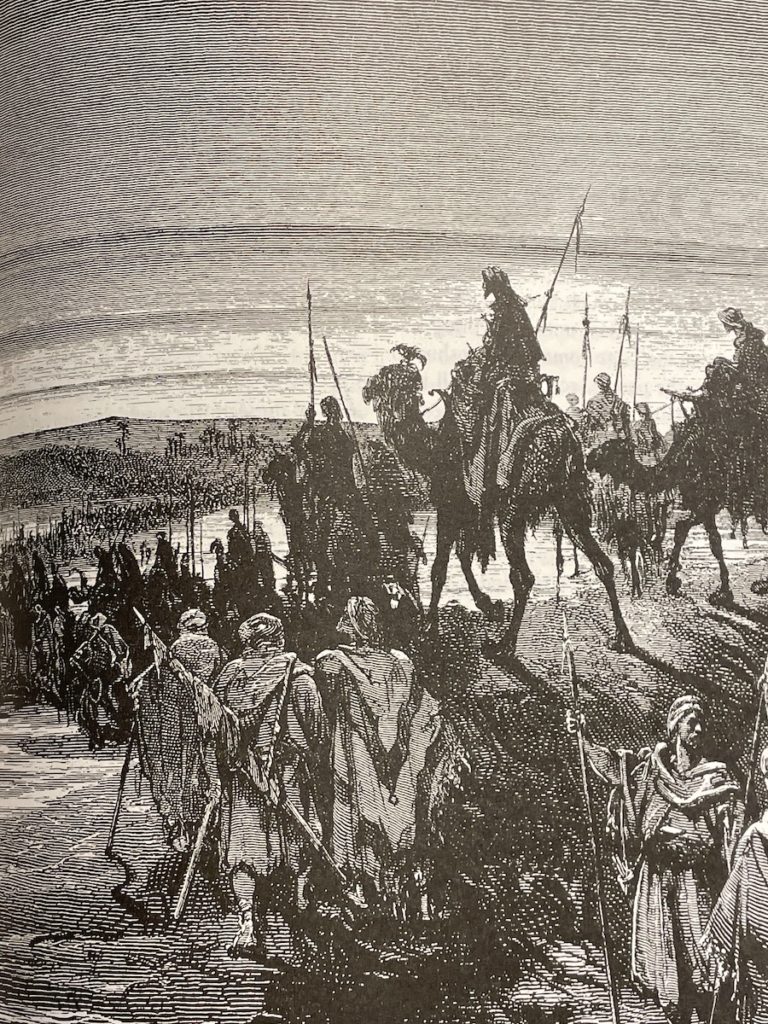
The Israelites crossing the Jordan into the Promised Land.
What can we learn from our ancient forefathers in this regard as we face the challenges of remaining faithful to YHVH in the midst of a crooked and perverse generation?
Joshua 1:8, Make your way prosperous…you shall have good [Heb. sakal] success.The expanded meaning of the word prosperous is literally “to press through, to break out”or “to accomplish satisfactorily what is intended” (according to The Theological Wordbook of the Old Testament). The TWOT continues, “Real prosperity results from the work of God in the life of one who seeks God with all his heart (2 Chr 31:21; Ps 1:3, vol. 2, p. 766). The word success literally means “understanding, prudence, good sense, insight, prosperity.” An alternate rendering of this last phrase of Joshua 1:8 reads, “Make your way successful, and then you will act wisely” (The ArtScroll Stone Edition Tanach).
But how is that prosperity and success achieved? The answer is to be found in the first part of verse eight where four keys to success are given. They are:
Our new annual Scripture Reading Schedule for 2021-2022 with daily readings is available to download and print. If you are still working through 2020-2021’s Scripture Reading Schedule, the link will still be available on the right sidebar under “Helpful Links”. If you are using a mobile device or tablet, the link may be below, meaning you’ll need to scroll down instead.
Most of this week’s blog discussion points will be on these passages. If you have general comments or questions on the weekly Scripture readings not addressed in a blog post, here’s a place for you to post those. Just use the “leave a reply” link or the “share your thoughts” box below.
The full “Read Through The Scriptures In A Year” schedule, broken down by each day, can be found on the right sidebar under “Helpful Links.” There are 4 sections of scripture to read each day: one each from the Torah, the Prophets, the Writings, and from the Testimony of Yeshua. Each week, the Torah and haftarah readings will follow the traditional one-year reading cycle.
Weekly Blog Scripture Readings for 10/3 through 10/9/2021.
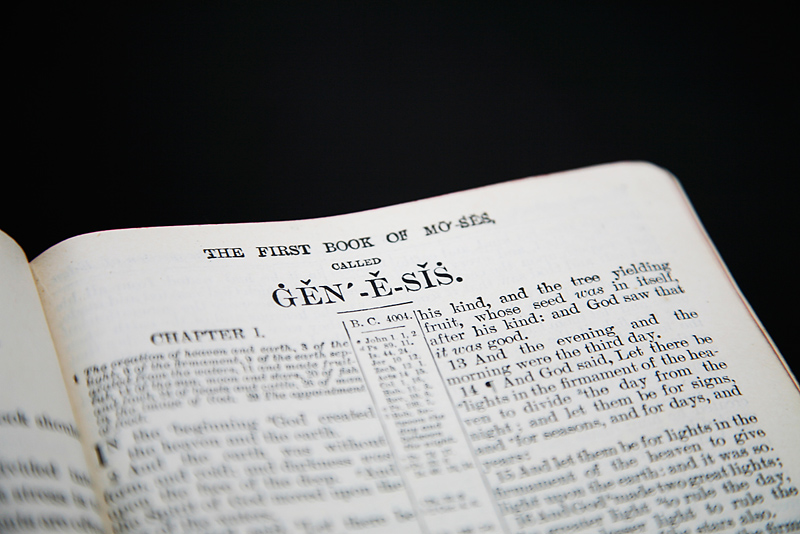
My commentary on the first five chapters of Genesis is 67 pages. There is no way this can be shared in a blog. So I will give you some hopefully salient snippets from my commentary.
Genesis 1
Genesis 1:1, Elohim created the heavens and the earth. The process of creation lasted for a literal six days as stated in Exodus 20:11.
Heavens. The Bible reveals that there are at least three heavens: the heaven of earth’s atmosphere, the heaven of the sun, moon, planets and stars, and the heaven of YHVH Elohim’s abode.
Genesis 1:16, Greater light…lesser light. Elohim made two great lights to shine in the darkness—the sun (the greater light) and the moon (the lesser light). The sun is a spiritual picture of Yeshua whom the Bible calls the Light of the world (John 1:9; 8:12), the Sun of Righteousness (Mal 4:2), whose face shines like the sun (Rev 1:16), and who will be the light of the New Jerusalem replacing the physical sun (Rev 21:23). But who does the moon represent in this spiritual picture? If the sun is a picture of Yeshua, the Light of the World, then who has been tasked with the responsibility of reflecting Yeshua’s light into the spiritual darkness of this world? Of course, this is the job of the saints who Yeshua called to be a like light on a hill (Matt 5:14), or a menorah lamp stand (Rev 2:1).
Now think about this. Although the moon is a quarter of a million miles from the earth, and because it has no atmosphere to absorb the sun’s light, it is able to reflect the sun’s light to this earth, so that a person is able to see in the darkness of night. The amazing thing is that the moon’s surface isn’t a polished mirror. Rather, it’s a dull rocky surface. Not only that, it’s not even flat. It’s pockmarked—covered with huge craters, mountains, valleys and canyons. With such an uneven, gray and nondescript surface, it seems miraculous that it’s even able to reflect any light at all, much less all the way to the earth! This speaks to the unimaginable power of the sun to throw its light such a great distance through space and then to ricochet it off the moon earthward even though the moon’s surface is anything but reflective.
The moon is a perfect picture of each of us. We are nondescript in appearance, possess rough natures, stoney hearts, gray dispositions, barren of spiritual fruit, possessing no power of our own, pockmarked by sin, covered by mountains of human pride, and etched with canyons of guilt and shame. In truth, YHVH has not chosen many wise or noble people to reflect the light of his Son, Yeshua, the Sun of Righteousness, but instead he has chosen the weak, foolish, despised and base things of this world to put to shame the things that are wise (1 Cor 1:26–28). As the lesser light, like the moon is to the sun, YHVH has called the saints to be his sons of light (Luke 16:8; John 12:36; Eph 5:8; 1 Pet 2:9) to shine the Light of Yeshua into the midst of crooked and perverse world (Phil 2:15).
Since Yeshua has called us out of spiritual darkness into his marvellous light, let us embrace and demonstrate the fact that he calls us a chosen generation, a royal priesthood, a holy nation and his own special people by being ready and quick to proclaim his praises to everyone everywhere every time (1 Pet 2:9)!
The Sun, Moon, the Feasts and the Saints. Genesis 1:14–16 reveals that the sun is the greater light and the moon is the lesser light. The Bible reveals that the sun is a spiritual metaphor for Yeshua who is the Sun of Righteousness (Mal 4:2), the Light of the World (John 8:12) and whose face shines like the sun (Rev 1:16). The saints, like the moon, are the lesser light that reflects the light of Yeshua into this dark world. One of the ways the saints do this is through observing and teaching about the seven biblical feasts, which are the seven steps of YHVH’s plan of salvation. Seeing the visible new moon is how we determine the beginning of the months and hence the dates of the feasts. In other words, by the light of the moon we determine the feasts. The visible new moon is a visible sign (Heb. owt, Gen 1:14) to point us toward YHVH’s seasons or moedim (i.e. the biblical feasts). In the same way, by our reflecting the light of Yeshua and the truth of his feasts into this dark world, we bring the light of the gospel to the world. This analogy breaks down if the month starts when the moon is dark in its conjunction.
Genesis 1:28, Dominion over the fish…birds…[the land animals]. Elohim gave man dominion over the animals. Elohim, however, never, however, gave man the authority to take dominion over other people, which is what Cain, Nimrod and their descendants did when they started cities, states and kingdoms.
YHVH’s government is patriarchal and tribal in nature and is built on the foundation of the family, which is something the devil and his servants have been attacking from time immemorial.
Yeshua echoes this same divine prohibition of man ruling other men in Matt 20:25–26 where he tells his disciples that the Gentiles rule each other through oppression, but that was not how the kingdom of Elohim was to operate. Government was to be based on servant-leadership.
Elohim created man to work the land and to live free, and he designed humans to be more or less self-sufficient and to help each other in loving service to one another when and where needed. The Scriptures decry and even pronounce woe upon those who form urban communities as they “join house to house,” so that people no longer “dwell alone in the midst of the land” on ten acre farms (Isa 5:8–10).
Men’s cities and the hierarchial Babylonian system of government they require to operate is opposed to Elohim’s system of family farms and patriarchal servant-leadership. This is because the urbanization of men results in the collectivization of humans by other humans ostensibly for the purpose of making life easier, but in reality, it enslave them to oppressive human-led governmental systems where humans are forced to look to human leaders for their sustenance and for handouts instead of relying on the Creator. This bondage is forcibly financed through legalized extortion called taxation, and enforced through draconian government regulations that control nearly every aspect of a person’s life.
This transferral from a rural to an urban-based society model not only reduces man’s freedom and self-sufficiency as he becomes increasingly dependent on government for his sustenance, but it also tends to facilitate spiritual apostasy, the breakdown of the family and the stratification or splitting apart of society. In other words, the rich get richer and the poor get poorer, class distinctions occur, which further divide and separate people causing racism and prejudice as men slide downward morally and spiritually away from Elohim. The family on the micro and macro levels fall apart and disintegrate.
Moreover, such a system promotes institutionalized religious systems and personally enriches those who are at the pinnacle of those systems. Out of this false, non-biblical system, religious construction projects such as temples, cathedrals and educational institutions abound allegedly to enhance the worship of Elohim, but in reality, they’re usually monuments, not unlike the ziggurat Tower of Babel, of men’s achievements as men are attempting to reach Elohim through their own humanistic efforts and turn themselves into their own self-promoting and self-adulating demigods. Elohim doesn’t require the construction of such projects for men to have a personal, spiritual relationship with him, as Paul states in his epistle to the Romans, which is a rephrasing of a passage from Deut 30, “But the righteousness of faith speaks in this way, ‘Do not say in your heart, “Who will ascend into heaven?’’’ (that is, to bring Messiah down from above) or,”, “Who will descend into the abyss?”’ (that is, to bring Messiah up from the dead). But what does it say? ‘The word is near you, in your mouth and in your heart’ (that is, the word of faith which we preach)” (Rom 30:6–8). The construction of denominations and buildings are primarily for the benefit of the ruling elite who have found a way to insert themselves as middlemen between man and his Creator largely for the purposes of money and power.
All of these things are a result of the man’s move from a rural to an urban living environment and taking dominion over one another instead of stewarding the earth and its animals and serving one another in love as Elohim originally instructed him to do.
Genesis 2
Genesis 2:2, The seventh day.Sabbath. Though this is not a direct command to keep the Sabbath (Heb. Shabbat), YHVH was leading his people by example when he sanctified the Sabbath and then rested from his work on this day. In Hebraic thought, one leads by example, without necessarily stating the command to do so. YHVH blessed the family first (Gen 1:28), then Sabbath next. Sabbath keeps the family together that keeps the Sabbath. The imperative command to keep the Sabbath is first found in Exodus 16–30 and then repeated in 20:8–11.
Genesis 2:4,The LORD/YHVH. This is the first mention in the Scriptures of the name of Elohim. He wants us to use his Hebrew names (YHVH, Elohim, Adonai and Yeshua). If not, then why is “YHVH” found in the Tanakh nearly 7000 times? True, we are not to use his Hebrew name carelessly as the third commandments teaches us (Exod 20:7). YHVH’s people have forgotten his name (Ps 44:20; Jer 23:27). His name will be restored and used again (Jer 23:6; 31:23; Ezek 39:7). His name was so precious to his people in ancient times that it was used in common greeting (Ruth 2:4; Ps 129:8; Jer 31:23). The Hebrew name YHVH will be applied to Yeshua at his second coming (Ps 118:26; Matt 23:39). The prohibition of the rabbinic Jews about using God’s Hebrew names is not supported biblically, but is a more recent man-made tradition. Therefore, I believe and teach that the sacred names are to be used.
This chapter is a prophecy pertaining to the second coming of Yeshua, the time of his wrath, and his defeat of his enemies and his installment and rule as King of kings during the millennial age.
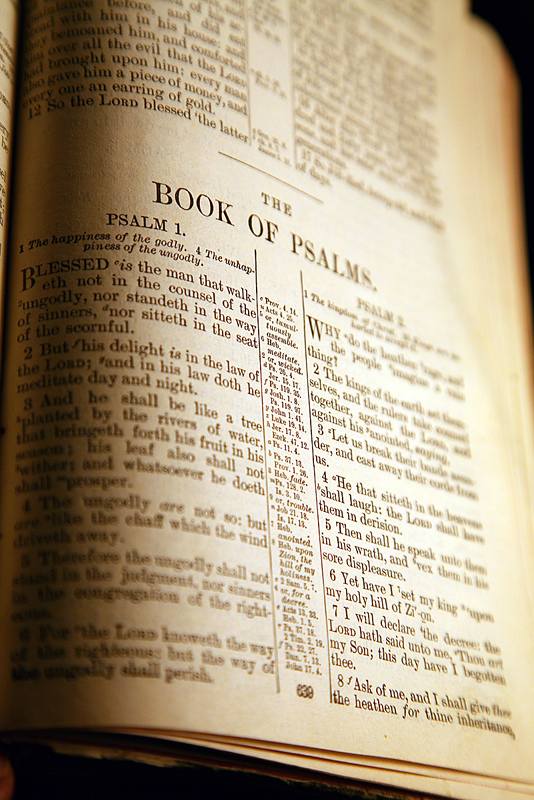
Psalm 2:7,You are my Son; this day have I begotten you [or brought you forth]. (See also Acts 13:33, Heb 1:5; 5:5). The word begotten is the Hebrew word yalad meaning “to beget, bare, to be born, bring forth or deliver”and refers to the action of giving birth. In this verse, Elohim is acting as a spiritual midwife delivering his son and then presenting it to the world. This is a prophecy where at some time in the future, YHVH Elohim will officially present his anointed Son, the Messiah, to the world. This prophecy was fulfilled in Luke 3:22 at Yeshua’s baptism and the subsequent announcement from heaven as to who Yeshua was. Yeshua did not become Elohim’s son at his baptism; rather, he was simply presented to the world.
Yalad is the same word used in Isaiah 7:14, “Behold the virgin shall conceive and bear [yalad] a son … ” andusually refers to a literal childbirth but can be used in a figurative sense as well. Its usage occurs 498 times in the Hebrew Scriptures, so its uses are rich and varied.
We believe Psalm 2:7 is yet another clear reference to the incarnation and virgin birth of the Messiah at the hands of Elohim just as this concept is echoed numerous times in Testimony of Yeshua:
John 1:14, And the Word was made flesh, and dwelt among us, (and we beheld his glory, the glory as of the only begotten of the Father,) full of grace and truth.
John 1:18, No man hath seen Elohim at any time; the only begotten Son, which is in the bosom of the Father, he hath declared him.
John 3:16, For Elohim so loved the world, that he gave his only begotten Son, that whosoever believeth in him should not perish, but have everlasting life.
John 3:18, He that believeth on him is not condemned: but he that believeth not is condemned already, because he hath not believed in the name of the only begotten Son of Elohim.
Acts 13:33, Elohim hath fulfilled the same unto us their children, in that he hath raised up Yeshua again; as it is also written in the second psalm, Thou art my Son, this day have I begotten thee.
Hebrews 1:5, For unto which of the angels said he at any time, Thou art my Son, this day have I begotten thee? And again, I will be to him a Father, and he shall be to me a Son?
Hebrews 5:5, So also Messiah glorified not himself to be made an high priest; but he that said unto him, Thou art my Son, to day have I begotten thee.
Hebrews 11:17, By faith Abraham, when he was tried, offered up Isaac: and he that had received the promises offered up his only begotten son,
1 John 4:9, In this was manifested the love of Elohim toward us, because that Elohim sent his only begotten Son into the world, that we might live through him.
In an to divert attention away from Yeshua the Messiah, modern rabbinic scholars have purged this verse of Messianic meaning referring its fulfillment instead to king David (See ArtScroll Schottenstein Edition Tehilim, p. 4, explanatory footnotes). But this has not always been the case in rabbinic circles. According to Santala, the ancient Jewish sages as well as medieval Jewish scholars such as Rashi, Rambam and Ibn Ezra all viewed Psalm 2 in a Messianic light (Santala, pp. 68-69, 117-119). As proof he quotes the Jewish Midrash (commentary on Psalms) stating this (ibid.).
Psalm 2:12,Kiss [nashaq] the son. Or “kiss the feet of the son” as an act of homage and as was the ancient Near Eastern when a subject came before his king (according to The TWOT).
Psalm 4
Psalm 4:4,Meditate/commune. Heb. amar. This verb, primitive root, means “to say” and, beyond its basic definition, has a wide range of meanings including “answer, appoint, avouch, bid, boast self, call, certify, challenge or charge.” This verse speaks of saying within one’s heart or the act of talking to oneself or, in other words, meditating on or thinking about something. In the process of engaging in this activity, one may receive divine insights or inspiration from Elohim. In another psalm, this is referred to as receiving an oracle within one’s heart (Ps 36:1).
Meditate…on your bed…be still.When we are quiet and relaxed, not anxious or distracted is when we are more likely to hear from Elohim. As the psalmist stated elsewhere quoting Elohim, “Be still and know that I am Elohim” (Ps 46:10). Elijah found this out in the cave. Elohim was not in the wind, earthquake or the fire but in the solitude and silence when he heard the still small voice of his Maker (1 Kgs 19:11–12).
Psalm 4:6,Lift up the light of your countenance upon us.Countenance is Hebrew word paniym. Light is the Hebrew word ohr from which our English word aura ultimately derives. Light is a biblical metaphor meaning “truth” or “the ultimate, divinely revealed Truth (capital T) that comes only from YHVH Elohim as opposed to small T truth derived through natural, human observation.” Here, ohr is spelled non-defectively (rwa instead of ra) with the vav indicating “the full light of YHVH’s face or truth.”
Psalm 4:7–8,Gladness…lie down in peace…safety.When we have stilled our heart, meditated on YHVH and have heart his voice, and he has made the light of his face to shine upon us and has revealed his Truth to us, a sense of joy or gladness (Heb. simchah), peace (Heb. shalom spelled non-defectively as ~wlX meaning “ a full, divinely imparted peace as opposed to ~lX or a peace that is derived from physical or human emotional sources) and we will be able to dwell, rest or sleep with a complete sense of safety and security in him.
Psalm 4:7,More than in the season.The joy or simchah that comes to those who are recipients of YHVH’s favor and the light of his Truth far exceeds that of physical blessings including the joy of a bountiful harvest for the farmer whose life depends on such for his physical survival and flourishing. This reminds us of Yeshua’s command and promise that to those who seek first the kingdom of Elohim and his righteousness, all of the physical blessings of life will automatically accrue to such a person.
Psalm 5
Psalm 5:5,You hate.The idea of Elohim hating is anathema to the sensibilities of most Christians. After all, doesn’t the Bible declare that “Elohim is love” (1 John 4:8,16)? How could he also hate anything, much less people? Yet this is what this verse says, “[YHVH] hates all workers of iniquity.” Let’s explore this concept and try to understand how this could be so.
But first, let’s define the word hate. According to Webster’s New World Dictionary, hate means “to have a strong dislike or ill will for; to wish to avoid.” According to Strong’s Exhaustive Concordance, the word hate in the Tanakh (or Old Testament) means “to hate as an enemy or foe, to be utterly odious.” As used in the Testimony of Yeshua, hate means “to detest.”
Here are some examples of certain things that Elohim hates, and of Elohim commanding his people to hate certain things as well.
Your throne, O Elohim, is for ever and ever…. You love righteousness, and hate wickedness… (Ps 45:6–7)
Here we see that Elohim loves what is good and detests that which is evil or sinful (or Torahless).
The foolish shall not stand in your sight; you hate all workers of iniquity. (Ps 5:5)
Workers of iniquity is a biblical expression referring to “those who walk contrary to Torah.”
YHVH tries the righteous, but the wicked and him that loves violence his soul hates. (Ps 11:5)
These six things does YHVH hate, yes, seven are an abomination unto him: a proud look, a lying tongue, and hands that shed innocent blood, an heart that devises wicked imaginations, feet that be swift in running to mischief, a false witness that speaks lies, and he that sows discord among brethren. (Prov 6:16–19)
Elohim strongly dislikes or detests those things that are sinful (Torahless) or wicked—those things which hurt people and which cause pain and suffering. Even his hatred is out of a heart of love for the lost and a desire for them to repent and return to Torah.
For I, YHVH, love judgment, I hate robbery for burnt offering; and I will direct their work in truth, and I will make an everlasting covenant with them. (Isa 61:8)
YHVH hates religious hypocrisy, and those who plunder his people spiritually for their own personal gain.
Howbeit I sent unto you all my servants the prophets, rising early and sending them, saying, Oh, do not this abominable thing that I hate.”(Jer 44:4)
When people disobey the Word of Elohim, YHVH hates this and calls it “an abominable thing.”
Seek good, and not evil, that you may live, and so YHVH, the Elohim of Hosts, shall be with you, as you have spoken. Hate the evil, and love the good, and establish judgment in the gate; it may be that YHVH Elohim of Hosts will be gracious unto the remnant of Joseph. (Amos 5:14–15)
Here Elohim commands his people to hate evil and to love good even as he does.
The fear of YHVH is to hate evil: pride, and arrogance, and the evil way, and the froward mouth, do I hate. (Prov 8:13)
Elsewhere we read that “the fear of Elohim is the beginning of wisdom” (Prov 1:7). Therefore, we can conclude that an aspect of godly wisdom is to hate evil even as Elohim hates evil. Wisdom is a biblical Hebraism meaning “Torah.”
These are the things that you shall do: speak you every man the truth to his neighbor; execute the judgment of truth and peace in your gates, and let none of you imagine evil in your hearts against his neighbor; and love no false oath, for all these are things that I hate, says YHVH. (Zech 8:16–17).
All their wickedness is in Gilgal, for there I hated them, for the wickedness of their doings I will drive them out of mine house, I will love them no more; all their princes are revolters. (Hos 9:15)
Elohim hated the house of Israel (Ephraim) because of their rebellion against him and their wickedness (or Torahlessness), because they had turned away from Torah (Hos 8:1,12), and because they had become morally and sexually corrupt (Hos 9:9).
But this you have, that you hate the deeds of the Nicolaitans, which I also hate. (Rev 2:6).
Here YHVH commends these early first century believers for hating the sinful (Torahless) deeds of the heretics called the Nicolaitans, even as he (YHVH) hated them. Here YHVH teaches us that we are to hate the actions of false teachers who come into the congregation or the spiritual body of Yeshua. We also learn that we’re not to hate the sinner, but to hate the sin. We are also to hate the things that Elohim hates.
From the above study, hopefully we can learn several things. When studying these verses of the Scriptures in the context of the rest of the Bible, we should see that while Elohim is a God of love, and he loves humans so much that he sent Yeshua, his Son, to die for us, he is, at the same time, an Elohim of justices, righteousness and holiness. He abhors the sinful (Torahless) deeds of wicked and rebellious men, for sin and evil destroy that which he loves. He desires that all men turn from the sin (Torahlessness) that will not only hurt them and others now, but will damn them to the lake of fire for eternity. In brief, he hates those things which destroy or make impossible a loving relationship with him—our Heavenly Father (see 1 John 1:9–2:2).
Should we hate the workers of iniquity as YHVH does?
There are levels and degrees of sin and sinfulness. We must love the things Yah loves and hates the things he hates. The problem is knowing when and how to hate not only the sin but also the sinner. It’s not that these are to be separated, but how do we separate them in our minds without falling into sin ourself—the sin of pride, the sin of thinking we’re better than the next guy, the sin of hypocritical judgmentalism, the sin of hating someone when we should be loving them? So as not unwittingly to fall into these sin traps, it is safer for us, in most cases, to love the sinner and hate the sin.
When Yah hates the workers of iniquity, this is a class of people who are so sold out to sin that they have become reprobate. They are hell-bent,and there’s no stopping them. Most people aren’t that far gone spiritually and there is still hope for them the repent. If we hate all sinners, then how are we to have the right perspective and heart attitude to be able to love them into the truth?
John 3:16 says that YHVH so loved the world…. That means, in a general sense, he loves everyone—even the sinners, which is why he sent Yeshua. He loved us while we were yet sinners (Rom 5:8). So he loves everyone, but he hates those who, again, are so sold out to sin, like Satan, that they are beyond redemption.
David talks about hating with a perfect hatred (Ps 139:22). This involves hating those who hate YHVH. Most people don’t really hate YHVH, but some do. This is the hatred with which Yah hates. It’s a hatred that is not sinful. I don’t know that we’re capable of that in most cases without ourselves falling into sin. That’s why, in most cases, it’s better to stay on safer ground and to hate the sin and not the sinner.
Psalm 7
Psalm 7:1,Shiggaion. From the verb shagah meaning “to reel about through drink.” The plural form, shigionoth, is found in Hab. 3:1. The word denotes “a lyrical poem composed under strong mental emotion; a song of impassioned imagination accompanied with suitable music; a dithyrambic ode.”
Psalm 7:8,My righteousness. YHVH will judge humans according to their righteousness. Righteousness is based on one obedience to YHVH’s Torah as well as the righteuosness of Yeshua that is imputed to each saint to make up for each person’s own lack of righteousness. Our own righteousness can’t save us, but it will determine our rewards in the afterlife (Matt 5:19).
Shalom dear ones in Yeshua. Sandi and I are back from celebrating Sukkot 2021 in the mountains and high desert of Central Oregon not too far from where we live. Our children and a couple of close friends gathered around us as we camped in our travel trailer. While out of “Babylon,” we did not have access to the internet, so I was not able to upload any blog posts. Now it is time to play catch up.
Here are a few phots from our sukkah-ing in the wilderness en route to the Promised Land of our spiritual inheritance. Please enjoy.
This is an early morning view of a foggy meadow not far from our campsite in Western Oregon where we spent the first part of Sukkot before we escaped to the high desert country of Central Oregon (about 200 miles SE of our home.
The following pictures are from along the river a few minutes walk from our campsite.
An early morning view of the river with frost on everything.Another morning from the same spot on the river. I took these photos during my early morning prayer walks.The high desert in bloom.A 100 foot tall waterfall we viewed while on a hike in the mountains.Nathan with the Cascade mountains in the background. I have climbed almost all those those mountains in my younger days.Nathan with Kaeli, our youngest daughter, who came out from North Dakota to spend Sukkot with Sandi and I along with our other children.Nathan looking through a hole in a rotten trunk of a large maple tree.
Today we begin our new annual Scripture readings and study. If you are just joining us as we read through, study and discuss all of Scripture in a year, welcome! Our new annual Scripture Reading Schedule for 2021-2022 with daily readings is available to download and print. If you are still working through 2020-2021’s Scripture Reading Schedule, the link will still be available on the right sidebar under “Helpful Links”. If you are using a mobile device or tablet, the link may be below, meaning you’ll need to scroll down instead.
Most of this week’s blog discussion points will be on these passages. If you have general comments or questions on the weekly Scripture readings not addressed in a blog post, here’s a place for you to post those. Just use the “leave a reply” link or the “share your thoughts” box below.
The full “Read Through The Scriptures In A Year” schedule, broken down by each day, can be found on the right sidebar under “Helpful Links.” There are 4 sections of scripture to read each day: one each from the Torah, the Prophets, the Writings, and from the Testimony of Yeshua. Each week, the Torah and haftarah readings will follow the traditional one-year reading cycle.
Weekly Blog Scripture Readings for 9/26 through 10/2/2021.