
Some Nuggets from B’reisheet

Genesis 1:1, In. In Hebrew, the preposition in is written as the letter bet (corresponding to our letter b). This is the first word in the Torah. Interesting, the last word in the Torah is Israel (Deut 34:12). In the Hebrew language, the letter bet is a picture of a house (or a tent) with the front door open. From this, some commentators have correctly reasoned that the Torah was written to the house of Israel whose spiritual doors are wide open for all nations to enter therein in order to enter into a spiritual relationship with the Elohim of Israel.
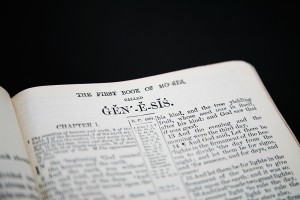
Genesis 2:2, The seventh day. Sabbath. Though this is not a direct command to keep the Sabbath (Heb. Shabbat), YHVH was leading his people by example when he sanctified the Sabbath and then rested from his work on this day. In Hebraic thought, one leads by example, without necessarily stating the command to do so. YHVH blessed the family first, then Sabbath next. Sabbath keeps the family together that keeps the Sabbath. The imperative command to keep the Sabbath is first found in Exodus 16–30 and then repeated in Exodus 20:8–11.

Genesis 2:3, All his work which he had made. Setting man an example of how to rest on the Sabbath, Elohim ceased all his work, workmanship, occupation, or business (Heb. melawkaw) and that which he did, produced, prepared or made (Heb. asah).

Genesis 3:23, To till/work [Heb. abad] the ground [Heb. adamah] from which he was taken. Adam means “man, mankind, ground, land, and is a cognate to adom meaning “red,” and relates to the ruddiness of man’s complexion. According to the TWOT, this word has to do with the man as being created in Elohim’s image, the crown of his creation. In this verse, Elohim commissioned Adam to work or to serve the earth/adamah. In a homiletic sense, this command of YHVH could be construed to mean that Adam/man who is spiritually rough and ruddy, yet who is created in the image of Elohim, has been commissioned to work on himself to work on and to conquer his [base] sin nature and to bring himself into conformity with the image of YHVH. Another facet of this idea could be that through the experiences and struggles of hard work, man will learn to overcome his fallen sin nature and rise to the higher calling of becoming like Elohim in nature. In a sense, hard work is part of man’s redemption process.

Genesis 4:10, Cries unto me from the ground. The earth not only witnesses against man because of his sins, but reacts adversely in judgment against man (Gen 4:12 and 3:17–19; Lev 26:19; Deut 28:23). If a man obeys YHVH, then the earth will bless man (Lev 26:4; Deut 11:14; 28:12; Isa 30:23; Joel 2:22–24). If man fails to praise YHVH, then even the stones will cry out (Luke 19:40). See also 1 John 5:8 where the earth along with the water and the Spirit bears witness to YHVH’s plan of redemption for men.

The earth has also acted as a witness against Israel when they have sworn a covenant with Elohim (Deut 4:26; 30:19; 31:28; 32:1).

Because the earth has been a witness to so much sin and bloodshed, and to Israel’s unfaithfulness to YHVH, this is why the earth has to be first cleansed (by the blood of wicked men to atone for their sins, Rev 14:20) and then by fire (2 Pet 3:7,12), and a new heaven and earth will arrive that has not been a witness to man’s sin and rebellion.


Edom in the White House?

Very interesting!

OBAMA’S RING: ‘THERE IS NO GOD BUT ALLAH’

http://www.wnd.com/2012/10/obamas-ring-there-is-no-god-but-allah/

WERE OBAMA ‘ALLAH RING’ IMAGES PHOTOSHOPPED?

http://www.wnd.com/2012/10/were-obama-allah-ring-images-photoshopped/

…And of course, you’ve probably already seen this one by now (along with 8.5 million other people):

Obama Admits He Is A Muslim


Reminder About New Bible Reading Schedule

A new scripture reading schedule for 2012-13 to read through all the scriptures in a year is now available. We have desired to follow the traditional one-year Torah readings cycle and to do that, we need to stop the current one before completing it to make the move to the Sukkot-to-Sukkot cycle. This new schedule begins 10/7/12. (If you desire to complete the current year using the previous schedule, it will still be available through the end of the calendar year here.)

This new reading schedule has several unique features that we hope will make your daily Bible reading habit a joyous breeze:

  • First, our Torah reading schedule now corresponds with the traditional Jewish weekly Torah parashah reading schedule, except that we have broken each weekly parashah reading into daily, bite-sized pieces following the aliyah reading breakdown.
  • Second, as you read through the weekly Torah readings, you can also use either or both of Hoshana Rabbah’s (adult or youth) Torah study guides to help you to understand the Torah in the full light of the gospel message as presented in the Testimony of Yeshua (New Testament).
  • Third, each day of the schedule gives you a reading from each of the four sections of the Bible: the Law (Torah), the Prophets (Neviim), the Writings (Ketuvim), and the Testimony of Yeshua (NT). This way, each day, you get a balanced dose of YHVH’s Word as you read through the Bible, beginning to end. We have also arranged the books of the Bible in their original, inspired order.

If you’d like to midrash with us during the week, join me on this blog. Each week’s scripture readings are posted on the blog on the first day of the week. Then let each of us bring to YHVH’s banqueting table the sweet tidbits, truffles, bonbons, and priceless nuggets and pearls that we discover in his word for our mutual delight by posting your comments or questions. On this blog, you can also sign up as a subscriber, so that each fresh scriptural insight that I post will automatically be sent to you.


Back from Sukkot—More Photos

Yesterday our family traveled across the high desert wilderness, and down from the mountains of Central Oregon where we had celebrated Sukkot NW 2012. We arrived back at our home last evening, which is in a valley that is slightly higher than sea-level. Kind of a prophetic journey, if you will, like descending from mountains of Jerusalem to the Valley of the Dead Sea.

Please allow me to share with you some more photos from our Sukkot celebration. This time, I’m not sitting in my truck in the parking lot of the Best Western trying to upload this blog post. Rather, I’m back in the comforts of my converted chicken house office.

Perhaps we’ll have the honor of spending Sukkot with you next year in Oregon???

Enjoy the photos!

Our praise and worship team.

Some of our kids having fun in YHVH’s outdoors. May our children become like the tree of a righteous man who is planted by YHVH Yeshua, who is our River of Life and is the Written and Living Torah-Word of Elohim (Ps 2 and John 1:1,14).

My youngest son Jared next to Oregon’s largest ponderosa pine tree.

Heidi rejoicing at Sukkot during the “season of our joy.”

Bill and Luzvim renew their wedding vows in the wedding chupah.

Twelve-year-old Caleb from Washington State worshipping in the Sukkah.


Blog Scripture Readings for 10/7 through 10/13/12

Aside

Parashat B’reisheet — Genesis 1:1 – 6:8
10/07/12 Genesis 1:1–2:3 Joshua 1 Psalms 1 Matthew 1
10/08/12 Genesis 2:4–19 Joshua 2 Psalms 2 Matthew 2
10/09/12 Genesis 2:20–3:21 Joshua 3 Psalms 3 Matthew 3
10/10/12 Genesis 3:22–4:18 Joshua 4 Psalms 4 Matthew 4
10/11/12 Genesis 4:19–22 Joshua 5 Psalms 5 Matthew 5:1-26
10/12/12 Genesis 4:23–5:24 Joshua 6, 7 Psalms 6 Matthew 5:27-48
10/13/12 Genesis 5:25–6:8 Joshua 8 Psalms 7 Matthew 6:1-15
Haftarah — Isaiah 42:5 – 43:10

Most of this week’s blog discussion points will be on these passages.

There are 4 sections of scripture to read each day. One each from the Torah, the Prophets, the Writings, and from the Testimony of Yeshua. Each week, the Torah reading will follow the traditional one-year reading cycle as well as the haftarah. By reading all the scriptures on this schedule each day, you will have read all scriptures from Genesis to Revelation by the end of next Sukkot (2013)!

The new Bible Reading Schedule can be found on the right sidebar under “Helpful Links.”

If you have general comments or questions on the weekly Scripture readings not addressed in a blog post, here’s a place for you to post those. Just use the “leave a reply” link below.

Weekly Blog Scripture Readings for 10/7 through 10/13/2012


Wish You Were Here!

Greetings from Sukkot Northwest 2012  in La Pine Oregon!

The blog has been quiet for the last week or so, since my family and I have been in Central Oregon where we, along with our congregation, host a regional Sukkot celebration. This is our tenth anniversary of hosting Sukkot NW.

Internet reception is spotty in this intermountain region, and I am presently sitting in the parking lot of the local Best Western hotel and hooking into their wi-fi to upload these photos of our Sukkot celebration that I took on my I-Phone.

Enjoy!


Welcome in through the wedding chupah to our Sukkot celebration, which pictures the wedding supper of the Lamb during the Millennium.


The Sukkah—a place of prayer, worship and the anointing.


The praise and worship team.


Dancing for joy.


Tammi from Texas fulfilling the Torah command to wave lulavim during Sukkot.


Tambourine Heidi from Oregon worshipping YHVH.


Preacher Dr. Joe teaching the Word of Elohim.


Brother Bill calling redeemed Israel to worship her king—Messiah Yeshua.


Welcoming in the Shabbat during erev Shabbat dinner.

May all that we do be as sweet-smelling incense to our Father in heaven!


Weekly Blog Scripture Readings for 9/30 thru 10/6/12

Aside

Leviticus 2–8; 2 Chronicles 33–36; Acts 1–10; Matthew 28; and Mark 1–6

Most of this week’s blog discussion points will be on these passages.

Please note:
This will be the final week for this Bible Reading Schedule as we are beginning a new reading schedule that follows the Torah Portion readings, beginning with Parashat B’reisheet (Genesis 1:1–6:8). In order to be in sync with the parashiyot readings, we will end this one early.

There are 4 sections of scripture to read each day. One each from the Torah, the Prophets, the Writings, and from the Testimony of Yeshua. Each week, the Torah reading will follow the traditional one-year reading cycle as well as the haftarah. By reading all the scriptures on this schedule each day, you will have read all scriptures from Genesis to Revelation by the end of next Sukkot (2013)!

The new Bible Reading Schedule can be found on the right sidebar under “Helpful Links.”

If you have general comments or questions on the weekly Scripture readings not addressed in a blog post, here’s a place for you to post those. Just use the “leave a reply” link below.

Weekly Blog Scripture Readings for 9/30 through 10/6/2012