

Exodus 27:20, Pure oil of pressed [or beaten] olives.
The Making of Pure Olive Oil , the Menorah and the Believer’s Life
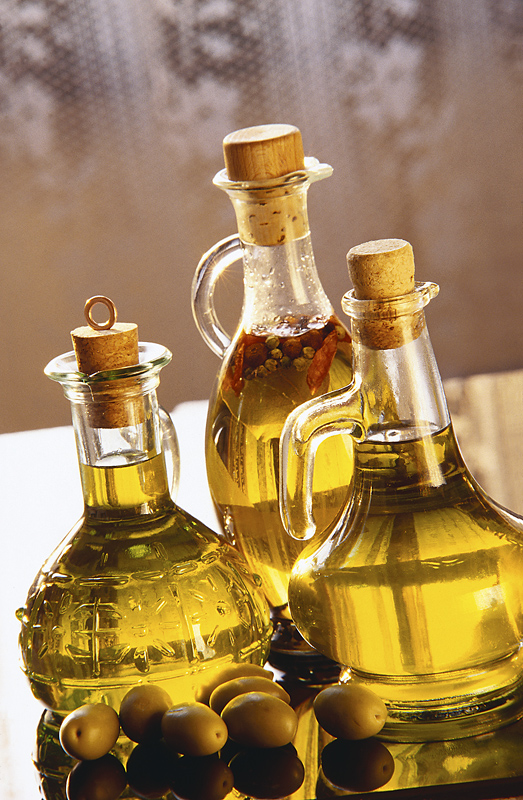
Let’s now discover how olives are processed to produce pure, golden oil. This involved process is instructive to the disciple of Yeshua and is curiously analogous to the spiritual refinement to which YHVH Elohim requires his begotten children to go through during their lifetime in order to become his glorified and immortalized, adopted children into his heavenly family.
The production of olive oil by crushing and pressing ripe olives. Whole olive fruit consists of 10 to 40 percent oil, and the fruit pulp is 60 to 80 percent oil. Producers use hydraulic presses to squeeze the oil out of the fruit under low pressure. This technique, called cold pressing, generates little heat, and so the oil retains its flavor, color, and nutritional value.
Cold-pressing commonly is carried out in several stages with only some of the oil being extracted at each stage. The process remains basically the same throughout, but the quality of the oil declines with each pressing. In most cases, olives are cold-pressed at 40 °F (4 °C).
The first pressing gives the highest quality oil, which is usually called virgin olive oil. Virgin olive oil is more expensive than other vegetable oils, so it often is considered a gourmet food item. The lower-quality oils from later pressings are often blended in small amounts with other refined oils such as soybean or cottonseed oil. Olive oil that comes from the final pressing is inedible. This oil, called olive residue or olive foots, is used in cosmetics, detergents, soap, medicines and textiles.
The olive fruit may be oval or oblong. As it matures, it turns from green to yellow to red to a purple-blackish color. It has a smooth skin, and its flesh surrounds a hard pit. Both the flesh and the seed in the pit contain oil, which makes up 10 to 40 percent of the mature fresh fruit’s weight. Fresh olives contain oleuropein, a bitter substance that makes them unpleasant to eat before processing. During processing, this substance is largely or entirely removed.
The olive tree’s bark and leaves are a soft gray-green, and its trunk becomes gnarled as it ages. Olive trees live longer than most other fruit trees. Olive trees are common in the land of Israel with some being more than 2,000 years old.
A mature olive tree may have as many as 500,000 small flowers. Most of the flowers are imperfect, and fruit cannot grow from them. They give off pollen, which is usually carried from flower to flower by the wind. Most varieties of olive trees bear a large crop one season and a small crop the next as they renew their energy in the off-years.
Cultivation of new olive trees occurs through taking cuttings off from an olive tree and rooting them. The trees will grow in many types of soil but need good drainage. To produce large fruit, the grower must irrigate and prune the trees, and thin the fruit. Fertilizers that add nitrogen to the soil can increase yields. The olive tree will grow where the climate is hot and dry. But for bearing good fruit, the tree needs a moderate supply of water. The fruit matures from October to January, and is injured if the temperature falls below 26 °F (-3 °C).
Harvesting olives requires careful handling. Olives grown for their oil may be mechanically harvested. Olives grown for eating must be picked by hand. Workers place the fruit in small boxes and haul it to the processing plant.
Most green olives are prepared by the Spanish process. This involvers placing unripe, yellowish-green olives are placed in lye solution, which removes most of the bitter taste of the oleuropein. The olives are washed and then fermented in brine.
Adam Clarke, in his biblical commentary, says regarding Exodus 27:20 that the very ripe and oil-filled olives, after having been picked, when slightly bruised or pressed (before being crushed by mortar stones in a mill) will express the purest, most flavorful and highest quality oil. This oil that flows spontaneously with little or no application of force is called the mother drop.
According to The Stone Edition Chumash, only the purest of the pure oil could be used for the menorah in the Tabernacle of Moses. This was obtained by slightly pressing the very ripe olives, but without crushing them. A minute quantity of oil would be squeezed out—only a drop or so—from each olive. This oil was more pure than any of the other oil subsequently obtained via crushing.
The process of producing oil from olives bears amazing parallels to that which YHVH Elohim requires his human children to go through to become his spiritual children.
The olive in its natural state is useless and bitter, but when that bitterness is destroyed, or when the olive is crushed to extract the oil it becomes a source of life (becomes edible) and light. Is this not the case with men? To become useful to him, Elohim needs to crush or refine each of us so to squeeze out of us the bitter residue of our sinful nature, so that the spiritually regenerated person, which is the image of Messiah—the Living Torah, may radiate and flow from each of us to the glory of Elohim and the advancement of his kingdom on earth.
Here are some other parallels between an olive tree and its oil and a child of YHVH:
In their unrefined state both the olive fruit and man are initially bitter. Olives are bitter because of a substance called oleuropein; man is bitter because of his indigenous sin nature. Olives need to be washed with lye (the main cleansing ingredient in soap) to be palatable to the eater; man needs to repent of his sin and be washed in Yeshua’s blood to be acceptable to Elohim.
Both the olive tree and man are difficult to grow and temperamental when it comes to producing fruit, and great care must be exercised on the part of the cultivator to ensure a good crop yield. Similarly, as if we were his personal garden, YHVH carefully cultivates each of us over our lifetime, nurturing his garden and removing the weeds of sin therein, so that we will bear the fruit of his Spirit and be formed into the image of his dear Son.
The olive fruit and man needs to be crushed to bring out the precious oil. A stone mortar or mill was used in times past to crush olives to produce oil. Similarly, Scripture likens Messiah to a stone who has to crush all who come to him (Luke 20:18; Matt 21:44), so that they will become useful to YHVH.
Our time on earth is but a proving ground where Elohim is trying, testing, crushing, refining and purifying his chosen vessels in preparation for them to be his kings and priests to rule with him during his earthly, millennial kingdom, and then to live with him for eternity as his glorified adopted, god-like children (1 John 3:1–3 cp. Rom 8:15, 23; Gal 4:5). This process involves the crucifixion of the flesh, dying to self with its lust, pride, covetousness, fear, hatred, envying, bitterness, strife, selfishness and everything else that is of the world, flesh and the devil and that is contrary to the character, nature and Spirit of YHVH.
Matthew Henry says in his biblical commentary on Exodus 27:20 that the pure oil signifies the gifts and fruits of the Holy Spirit, which all believers receive from the Messiah (Heb. Mashiach meaning “one smeared with [olive] oil or the anointed one”), who is literally the oil Anointed One. The Messiah is the vine to which the saints are attached, for we are the arms and branches (John 15:1–2), which are attached to the sustenance-carrying vascular system of the main trunk (as pictured by the hollow-tubed seven-branched gold menorah in the Tabernacle of Moses). Only when this occurs will one be Messiah’s spiritual lights shining into the darkness of men’s lives as Yeshua commanded. He likened his followers to menorahs on a hill shining in the surrounding darkness (Matt 5:14).
The ArtScroll Stone Edition Chumash goes on to say about Exodus 27:20 and the following verses that the instructions regarding the oil is followed by YHVH choosing Aaron’s sons to minister as priests in the mishkan of Tabernacle of Moeses. This underscores the fact that the priests were to be absolutely pure and without admixture of any foreign substance, and were to remain pure and separate from the rest of the nation; they were reserved for YHVH’s very special and holy service.
With regard to the pressing of the olives to produce the purest oil, our Heavenly Father prefers to use a light touch or hand on us rather than a heavy one, to motivate us to do his will and to achieve our highest potential and fruitfulness in his kingdom. For example, a loving parent doesn’t spank their children the moment they do something wrong when a quiet word of correction will suffice. However, if they fail to obey the parent’s gentle correction, then it may be necessary use a stronger form of discipline. Our Father in heaven uses the same approach (Ps 32:8–9; Isa 30:21). If, for example, a slight pressing or crushing of the olive fails to express pure, fine olive oil for which our the farmer is looking, then he will be forced to begin crushing the olives more vigorously including the pits, skins and all. This is analogous to YHVH be forced “to crush” us more vigorously (our whole spirit, soul and body) to bring out the pure oil of his divine nature in us (1 Cor 5:5; Heb 12:23 cp. 2 Pet 1:4; Rom 8:28–29). The oil from this full crushing will contain some sediments, which will later have to be filtered out (through the trials, adversities and refining fires of life). Though still olive oil, it will be of a lesser quality. (Pray and meditate on 2 Cor 4:6–18; Col 3:1–10; 1 Cor 3:9–15.)
Exodus 27:20–21, They shall bring pure oil.
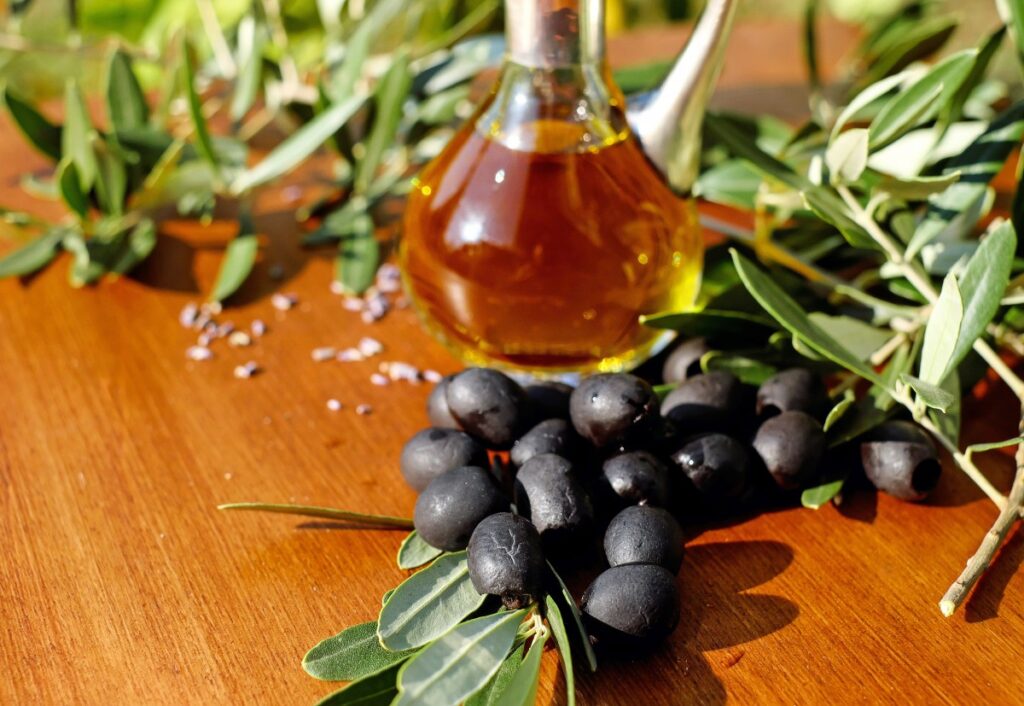
Olives, olive oil and the olive tree are very significant ancient biblical symbols. Most notably, olive oil was used for anointing and for burning in the seven-branched menorah, and is a symbolic metaphor of redeemed Israelite saints comprising of many different congregations down through the ages (Rev 1:12–13). Olive oil as used in the Tabernacle of Moses was pure and the olives were beaten or pressed to produce oil for light (Exod 27:20). This is a graphic symbolic picture the sanctification process that saint will be going through during the physical life to qualify to be a child of Elohim for eternity.
More specifically, pure olive oil a symbol of the believer’s life, so that one can be the light of the world that Yeshua commanded them to be.
“You are the light of the world. A city that is set on a hill cannot be hidden. Nor do they light a lamp and put it under a basket, but on a lampstand, and it gives light to all who are in the house. Let your light so shine before men, that they may see your good works and glorify your Father in heaven. (Matt 5:14–16)
But before olive becomes ready for use as pure oil, must endure a refining process involving extreme crushing and pressing to squeeze out the oil. Then the acid must be removed from the oil must. This is not unlike the spiritual refining process that each saint is required to go through in this life to develop the pure, undefiled and sin-free, holy and righteous character of the Holy Spirit-led inner person that will then shine as a light to the world. This process of refinement is neither an easy one nor is it a popular, comfortable subject for Christians who have been lulled to sleep by a ear tickling, user-friendly, easy-believism Sunday sermons. On the contrary, persecution and suffering for their faith was typically the norm for the early disciples of Yeshua.
Remember the word that I said to you, “A servant is not greater than his master.” If they persecuted Me, they will also persecute you. If they kept My word, they will keep yours also. (John 15:20)
And when they had preached the gospel to that city and made many disciples, they returned to Lystra, Iconium, and Antioch, strengthening the souls of the disciples, exhorting them to continue in the faith, and saying, “We must through many tribulations enter the kingdom of Elohim. (Acts 14:21–22)
Yes, and all who desire to live godly in Messiah Yeshua will suffer persecution. (2 Tim 3:12)
Why does YHVH allow his children to go through the rigors of hardships? Like the olive having to endure the hardships of the press, their is a higher goal in view with the end results worth the refining process.
Blessed are those who are persecuted for righteousness’ sake, For theirs is the kingdom of heaven. Blessed are you when they revile and persecute you, and say all kinds of evil against you falsely for My sake. Rejoice and be exceedingly glad, for great is your reward in heaven, for so they persecuted the prophets who were before you. (Matt 5:10–11)
My brethren, count it all joy when you fall into various trials, knowing that the testing of your faith produces patience. (Jas 1:2–3)
The Spirit Himself bears witness with our spirit that we are children of Elohim, and if children, then heirs—heirs of Elohim and joint heirs with Messiah, if indeed we suffer with Him, that we may also be glorified together. (Rom 8:17)
Beloved, do not think it strange concerning the fiery trial which is to try you, as though some strange thing happened to you; but rejoice to the extent that you partake of Messiah’s sufferings, that when His glory is revealed, you may also be glad with exceeding joy. If you are reproached for the name of Messiah, blessed are you, for the Spirit of glory and of Elohim rests upon you. On their part He is blasphemed, but on your part He is glorified. (1 Pet 4:12–14)
Once the pure olive oil was placed in the tabernacle’s menorah, the priests attended to the golden lamp. They had to keep it burning continually from evening until morning. This reminds us of Yeshua’s Parable of the Ten Virgins (Matt 25:1–13), where Yeshua’s exhorted his disciples to be like the wise virgins who kept their lamps trimmed and full of oil as they were watching and waiting for their bridegroom to come, whereas as the foolish virgins were lacking sufficient oil to keep their lamps burning through the night.
In the Parable of the Ten Virgins, the level of oil in each virgin’s lamp was the factor that determined whether they would be allowed entrance into the bridegroom’s wedding or not. Therefore, what is the significance of olive oil (i.e., the fuel for the lamps) scripturally? There are several.
Continue reading