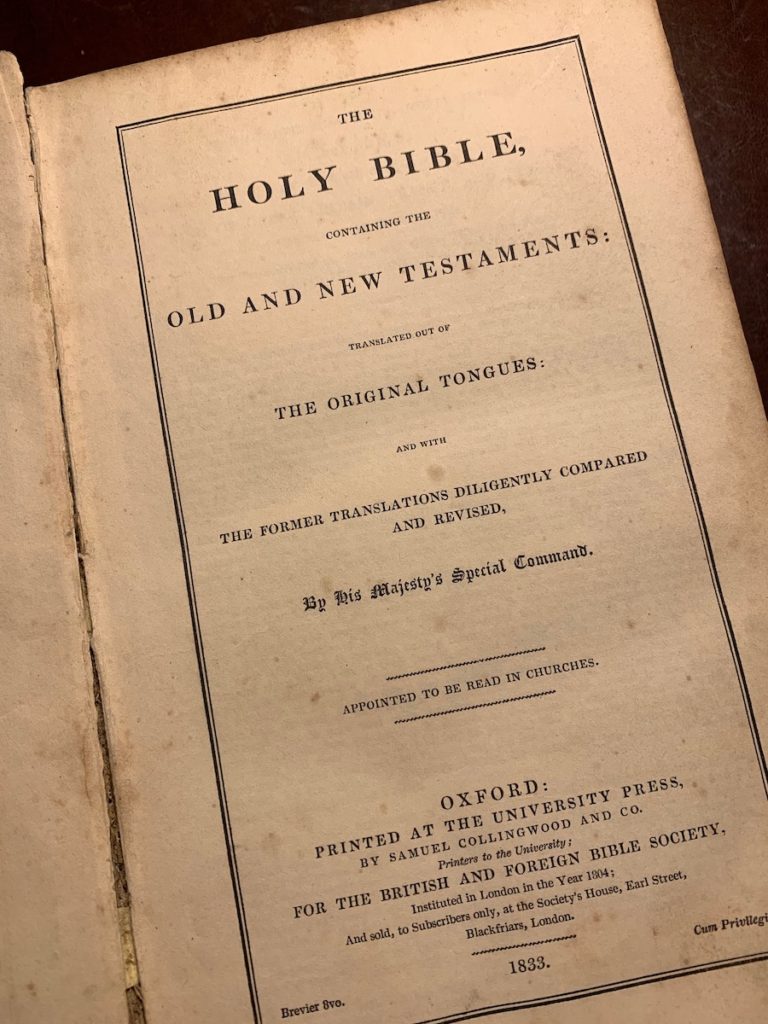
Yeshua the Messiah in the Every Book of the Bible

  • In Genesis, Yeshua is the eternal Torah-light of the world, the breath of life and the seed of the woman.
  • In Exodus, he is the Passover lamb, the Torah-Word of Elohim, and the way to the Father in the tabernacle.
  • In Leviticus, he is our atoning sacrifice and our high priest.
  • In Numbers, he is the pillar of cloud by day and pillar of fire by night.
  • In Deuteronomy, he is the prophet like unto Moses.
  • In Joshua, he is the captain of our salvation who leads us into the kingdom of Elohim.
  • In Judges, he is our judge and lawgiver.
  • In Ruth, he is our kinsman redeemer.
  • In 1 and 2 Samuel, he is our trusted prophet.
  • In Kings and Chronicles, he is our reigning king.
  • In Ezra, he is the builder of our temple, which houses the Spirit of Elohim.
  • In Nehemiah, he is the rebuilder of the broken down walls of human life.
  • In Esther, he is our Mordechai who saves us from those who would kill, steal and destroy us.
  • In Job, he is our ever-living Redeemer.
  • In Psalms, he is our shepherd to lead us in the ways of Torah-life.
  • In Proverbs and Ecclesiastes, he is our wisdom.
  • In Song of Solomon, he is our Loving Bridegroom.
  • In Isaiah, he is the Suffering Servant who bears our sins, the Repairer of the Breach between the two houses of Israel, and the Prince of Peace.
  • In Jeremiah, he is our Righteous Branch.
  • In Lamentations, he is the weeping prophet.
  • In Ezekiel, he is the one who rejoins the two sticks of Israel bringing them to worship Elohim together his temple.
  • In Daniel, he is the fourth man in life’s fiery furnace and our Ancient of Day.
  • In Hosea, he is the faithful husband forever married to the backslider.
  • In Joel, he is the baptize of the Holy Spirit.
  • In Amos, he is our burden bearer.
  • In Obadiah, he is mighty to save.
  • In Jonah, he is our great foreign missionary.
  • In Micah, he is the messenger of beautiful feet.
  • In Nahum, he is our strength and shield, and the avenger of Elohim’s elect.
  • In Habakkuk, he is Elohim’s evangelist crying, “Revive thy works in the midsts of the years.”
  • In Zephaniah, he is our Savior.
  • In Haggai, he is the restorer of Elohim’s lost heritage.
  • In Zechariah, he is a fountain opened up in the house of David for sin and uncleanliness.
  • In Malachi, he is the Sun of Righteousness arising with healing in his wings.
  • In Matthew, Yeshua the Messiah is the King of the Jews.
  • In Mark, he is the servant.
  • In Luke, he is the Son of Man, feeling what you feel.
  • In John, he is the Son of Elohim.
  • In Acts, he is the Savior of the world.
  • In Romans, he is the righteousness of Elohim.
  • In 1 Corinthians, he is the Rock, the Father of Israel.
  • In 2 Corinthians, he is the triumphant one giving victory.
  • In Galatians, he is your liberty. He set you free.
  • In Ephesians, he is the head of his spiritual body.
  • In Philippians, he is your joy.
  • In Colossians, he is your completeness.
  • In 1 and 2 Thessalonians, he is your hope.
  • In 1 Timothy, he is your faith.
  • In 2 Timothy, he is your stability.
  • In Titus, he is truth.
  • In Philemon, he is your benefactor.
  • In Hebrews, he is your perfection.
  • In James, he is the power behind your faith.
  • In 1 Peter, he is your example.
  • In 2 Peter, he is your purity.
  • In 1 John, he is your life.
  • In 2 John, he is your pattern.
  • In 3 John, he is your motivation.
  • In Jude, he is the foundation of your faith.
  • In Revelation, he is the Righteous Judge of the world, the Avenger of the saints, your coming King, your First and Last, the Beginning and the End, the Keeper of creation, the Creator of all, the Architect of the universe and the Manager of all times. He always was, he always is and always will be. He’s unmoved, unchanged, undefeated, and never undone. He was bruised and brought healing. He was pierced to heal our pain. He was persecuted and brought freedom. He was dead and brought life. He is risen and brings power. He reigns and brings peace. The world can’t understand him, the armies can’t defeat him, the public schools can’t kick him out and the leaders can’t ignore him. Herod couldn’t kill him, the Pharisees couldn’t confuse him, the people couldn’t hold him, Nero couldn’t crush him, Hitler couldn’t silence him, the communists can’t destroy him, the atheists can’t explain him away, and the New Age can’t replace him. He is life, love, longevity and Lord. He is goodness, kindness, gentleness and Elohim. He is holy, righteous, mighty, powerful and pure. His ways are right, his word is eternal, his will is unchanging, and his eyes are on me. He is my Redeemer, he is my Savior, he is my Guide, he is my peace, he is my joy, he is my comfort, he is my Lord, and HE RULES MY LIFE!

Author Unknown, edited by Natan Lawrence


22 Not 39 Books in the Tanakh or Old Testament

The Number of the Books of the Bible

The first point in determining the symmetry of the Scriptures is to realize that originally the Tanakh (Old Testament) was subdivided into 22 books, not the 39 in our present Bible. There was no difference in the content between then and now but only in how the books were categorized. The Book of Jubilees, a Jewish pseudepigraphic work dating to the second century b.c., attests to the fact (Jubilees 2:23) of there originally being 22 books in the Tanakh, as does Josephus in his Contra Apion (Book 1.8), and as do many early Church fathers and other early Christian scholars (In Restoring the Original Bible, Ernest L. Martin references 22 such early Christian writers, including Eusebius’ Ecclesiastical History, 4.26.14, Martin, pp. 58–60). 

It is believed that Ezra the scribe originally arranged the books of the Old Testament in this manner. Thus, books such as Samuel, Kings and Chronicles were combined into one book each and the 12 Minor Prophets were combined into one book as well. We will discuss the significance of the number 22 in the Scriptures momentarily, but for now, how did the Tanakh get expanded from 22 to 39 books? According to Martin, the Jewish translators of the Greek version of the Tanakh (the Septuagint) in the second and third century b.c. subdivided the books of the Tanakh into the pattern we have today. There were, however, no Hebrew manuscripts that followed the Greek version (Martin, p. 65). Sometime in the last part of the first century or beginning of the second century a.d. Jewish authorities decided to re-divide the Tanakh into 24 books rather than to maintain the 22 (Martin, pp. 67–68). Eventually the Jews adopted the Christian numbering system of the books of the Tanakh found in the modern Protestant Christian Bible.

“There may well have been political and religious reasons why the Jewish authorities made the change when they did. When the New Testament books were being accepted as divine literature by great numbers of people within the Roman world, all could see that the 27 New Testament books added to the original 22 of the Old Testament reached the significant number 49 [7 x 7]. This was a powerful indication that the world now had the complete revelation from God with the inclusion of those New Testament (the Testimony of Yeshua) books. Since Jewish officials were powerless to do anything with the New Testament, the only recourse they saw possible was to alter the traditional numbering” (Martin, p. 68).

The Significance of the Number 22 in Hebrew Thought

Martin next draws our attention to the ancient Jewish Book of Jubilees which mentions the significance of the number 22 in Hebraic biblical thought. Annotated to the restored text of Jubilees 2:23 is the remark that Elohim made 22 things on the six days of creation with man being the twenty-second created thing—the crowning achievement of YHVH’s creative activities. These 22 events paralleled the 22 generations from Adam to Jacob (i.e. the Israelite nation being the crowning achievement of YHVH’s work among the nations of the world with Israel being the vehicle through which redemption would occur), the 22 letters of the Hebrew alphabet, and the 22 books of the Holy Scriptures (Martin, p. 57).

The 22 numbering is most interesting and fits in well with the literary and symbolic meaning of “completion” as understood by early Jews. The Book of Jubilees put forth that this number represented the “final” and “complete” creation of Elohim. Adam was the last creation of Elohim (being the 22nd). Jacob, whose name was changed to Israel, was the 22nd generation from Adam; and Jacob was acknowledged as the father of the spiritual nation of Elohim. Also the Hebrew language became the means by which Elohim communicated his divine will to mankind. It had an alphabet of 22 letters. And, finally, when Elohim wished to give his complete Old Testament revelation to humanity, that divine canon was presented in 22 authorized books. The medieval Jewish scholar Sixtus Senensis explained the significance of this matter (Martin, pp. 57–58).

As with the Hebrew there are twenty-two letters, in which all that can be said and written is comprehended, so there are twenty-two books in which are contained all that can be known and uttered of divine things.


Back from the wilderness…

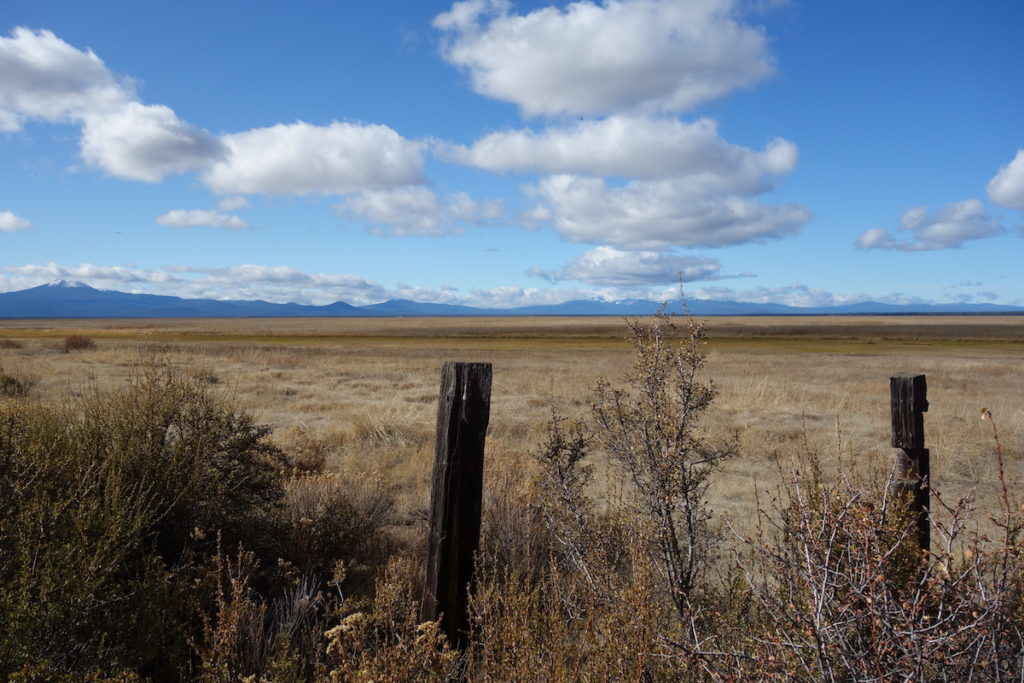
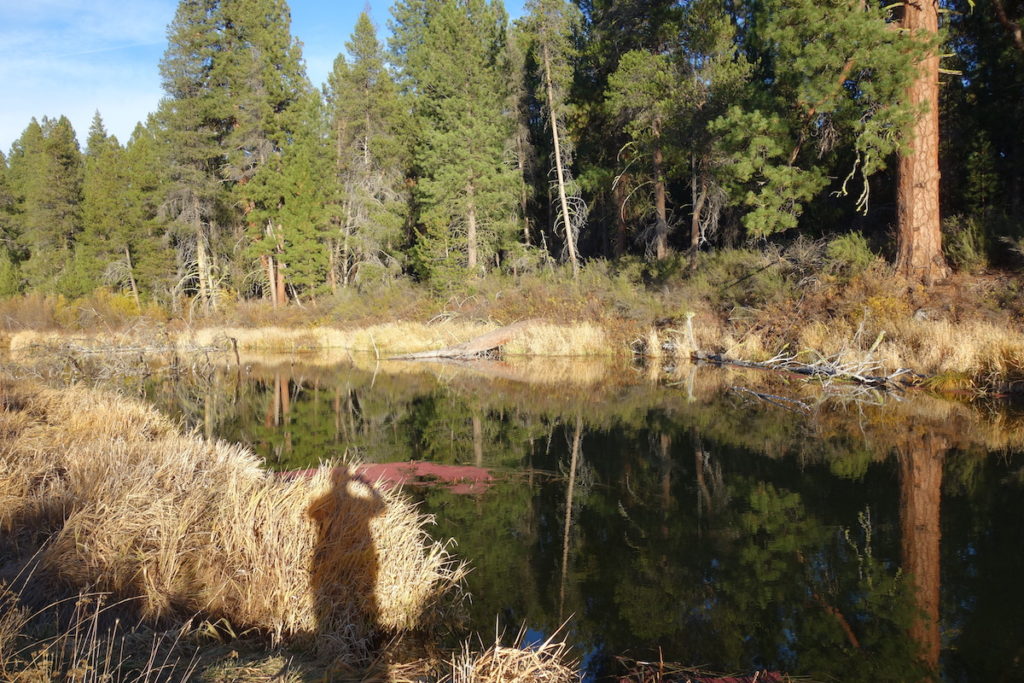
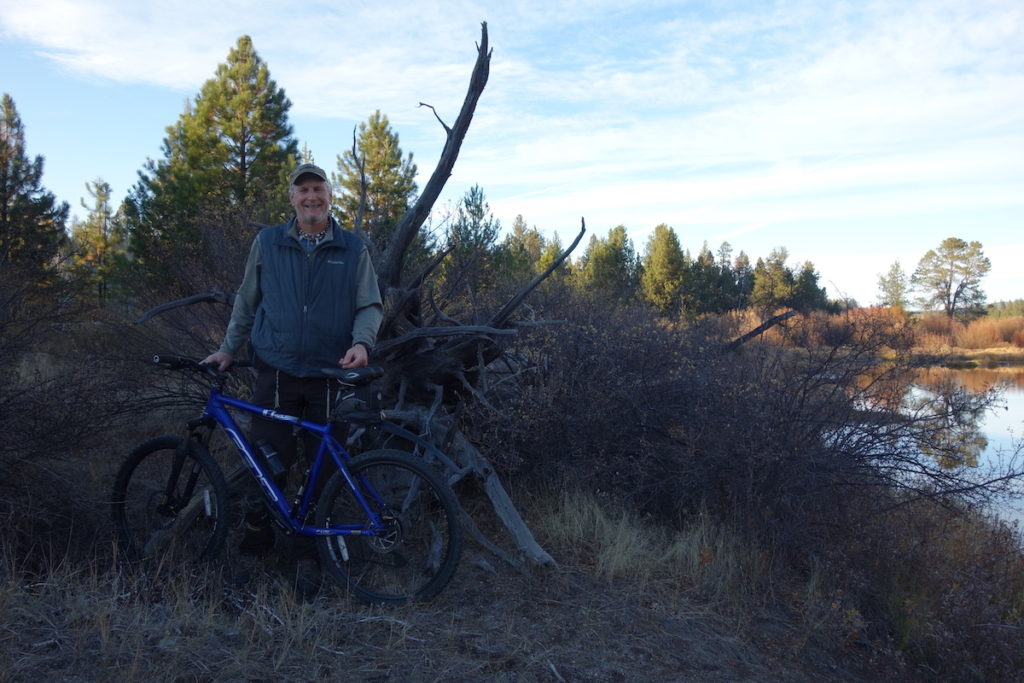
My bride, Sandi, and I are back from Sukkoting alone in the wilderness of western, central and southern Oregon with each other for the first time in 20 years. Since 1998, we have spent Sukkot with other people—both large and small groups. All but two of those years, we were the event coordinators and spiritual leaders of our ministry’s regional Sukkot gathering. This year, however, YHVH spoke to my heart and told me to come away with my bride into the wilderness to refresh, renew and regroup. So that’s what we did.

I spent my time away from spiritual Babylon rejoicing, resting, walking and praying, taking photos, working on my new book that I hope to have published soon, doing pen and ink drawings of trees, cooking over a campfire, studying a college textbook on botanical biology and otherwise hanging out with and thoroughly enjoying my wife of nearly 29 years, who is my best friend and life partner and the mother of our four children.

Here are some photos I took…

 Rise up, my love, my fair one, and come away!  O my dove, in the clefts of the rock, In the secret places of the cliff, let me see your face, let me hear your voice; for your voice is sweet, and your face is lovely.” (Song 2:13–14)

For waters shall burst forth in the wilderness, and streams in the desert. (Isa 35:6)

The voice of my beloved! Behold, he comes Leaping upon the mountains, skipping upon the hills. My beloved is like a gazelle or a young stag. Behold, he stands behind our wall; He is looking through the windows, Gazing through the lattice. My beloved spoke, and said to me: “Rise up, my love, my fair one, and come away.” (Song 2:8–10)

Make Your face shine upon Your servant; Save me for Your mercies’ sake. (Ps 31:16)

He leads me beside the still waters. (Ps 23:2)

Blessed is the man Who walks not in the counsel of the ungodly, nor stands in the path of sinners, nor sits in the seat of the scornful; but his delight is in the law of Yehovah, and in His Torah he meditates day and night. He shall be like a tree planted by the rivers of water, that brings forth its fruit in its season, whose leaf also shall not wither; and whatever he does shall prosper. (Ps 1:1–3)

Natan geeking out on another BIG tree.
 

Blog Scripture Readings for 10-20 Through 10-26-19

Aside

Parashat B’reisheet — Genesis 1:1 – 6:8
Haftarah — Isaiah 42:5 – 43:10
Prophets — Joshua 1:1 – 7:26
Writings — Psalms 1:1 – 10:18
Testimony — Matthew 1:1 – 6:34

Today we begin our new annual Scripture readings. Welcome if you are just joining us as we read through all of Scripture in a year! Our new annual Scripture Reading Schedule for 2019-2020 with daily readings is available to download and print. If you are still working through 2018-2019’s Scripture Reading Schedule, the link will still be available on the right sidebar under “Helpful Links”. If you are using a mobile device or tablet, the link may be below so you’ll need to scroll down instead.

Most of this week’s blog discussion points will be on these passages. If you have general comments or questions on the weekly Scripture readings not addressed in a blog post, here’s a place for you to post those. Just use the “leave a reply” link or the “share your thoughts” box below.

The full “Read Through The Scriptures In A Year” schedule, broken down by each day, can be found on the right sidebar under “Helpful Links.” There are 4 sections of scripture to read each day: one each from the Torah, the Prophets, the Writings, and from the Testimony of Yeshua. Each week, the Torah and haftarah readings will follow the traditional one-year reading cycle.

Weekly Blog Scripture Readings for 10/20/19 through 10/26/19.


BIDEN, WARREN PLEDGE TO ‘CODIFY’ ROE V. WADE INTO FEDERAL LAW

Please earnestly pray that YHVH Elohim, the Just, Righteous and Holy Judge of the universe, will bring judgement against and bring to naught the presidential campaigns of these two wicked and murder-promoting evil-doers as well as any other political candidates, politicians, judges or anyone else who agrees with them! Those who support abortion are motivated by the Satanic spirit of murder and are, whether they realize it or not, are worshippers of the ancient Canaanite demon-gods of Baal and Moloch who promoted child sacrifice as a way of gaining the favor of devil. Make no mistake, by their words and actions, these people are devil-worshippers. One cannot be a Christian and also be pro-abortion. Moreover, it’s doubtful that one can support a political party that promotes the murder of children and expect to make it into the kingdom of heaven (see 1 For 6:9–10; Rev 21:8; 22:15). If you are a registered Democrat, get out of that party, NOW! If you don’t like what I’ve said, too bad. You’re out of synch with the Word of Elohim! Your problem isn’t with me, it’s with Elohim and his Word.— Natan

Who will rise up for me against the evildoers? or who will stand up for me against the workers of iniquity? (Psalm 94:16)

From the Christian Headlines at https://www.christianheadlines.com/contributors/michael-foust/biden-warren-pledge-to-codify-roe-v-wade-into-federal-law.html?utm_source=Jeeng

Michael Foust | ChristianHeadlines.com Contributor | Wednesday, October 16, 2019

Biden, Warren Pledge to ‘Codify’ Roe v. Wade into Federal Law

The two leading Democratic presidential candidates pledged during Tuesday’s debate to codify legalized abortion into federal law, thus ensuring it remains the law of the land if the Supreme Court overturns Roe v. Wade. 

Former Vice President Joe Biden and U.S. Sen. Elizabeth Warren (Mass.) said Congress should pass a law supporting legalizing abortion because Roe is threatened. Roe and its accompanying decisions legalized abortion nationwide through all nine months of pregnancy.  

“I would make sure that … we codify Roe v. Wade,” Biden said. “The public is already there. Things have changed. … Reproductive rights are a constitutional right. And, in fact, every woman should have that right.”

Biden leads Warren in the RealClear Politics nationwide polling average, although Warren has led him in several recent surveys. 

“We now have support across this country,” Warren said. “Three out of four Americans believe in the rule of Roe v. Wade. When you’ve got three out of four Americans supporting it, we should be able to get that passed through Congress.”

Continue reading →
 

Blog Scripture Readings for 10-13 Through 10-19-19

Aside

Parashat V’zot HaBerachah — Deuteronomy 33:1 – 34:12***
Haftarah — Joshua 1:1-18
Prophets — Zechariah 12:1 – 14:21; Malachi 1:1 – 4:6
Writings — 2 Chronicles 30:1 – 36:23
Testimony — Revelation 18:1 – 22:21

Most of this week’s blog discussion points will be on these passages. If you have general comments or questions on the weekly Scripture readings not addressed in a blog post, here’s a place for you to post those. Just use the “leave a reply” link or the “share your thoughts” box below.

The full “Read Through The Scriptures In A Year” schedule, broken down by each day, can be found on the right sidebar under “Helpful Links.” There are 4 sections of scripture to read each day: one each from the Torah, the Prophets, the Writings, and from the Testimony of Yeshua. Each week, the Torah and haftarah readings will follow the traditional one-year reading cycle.

*** Usually read on Simchat Torah

Weekly Blog Scripture Readings for 10/13/19 through 10/19/19.

Chag Sameach from HoshanaRabbah.org

Chag Sameach! May you have a blessed Feast of Tabernacles and Shemini Atzeret! On 10-20-19 we begin our new Blog Reading Schedule for 2019-2020 to Read Through the Scriptures in a Year that is available to download now.


How to Celebrate Sukkot and the Eighth Day by Yourself

Regularly for years I talk to people from all over the world who are alone and without a local fellowship or congregation. Many times I am asked how it is possible celebrate the biblical feasts when alone and disconnected from the greater body of Messiah. Here are some suggestions on how to celebrate the upcoming Feast of Tabernacles (or Sukkot) if you are alone or are only a part of a small group of people.

The first things to keep in mind is that YHVH expected his people to keep the biblical feasts forever wherever their dwelling place happened to be whether inside or outside of the physical land of Israel. I have given proof of this in more details elsewhere, but below are a few Bible verses that state this truth succinctly.

The weekly Sabbath and the seven biblical feasts are for YHVH’s people to celebrate forever and wherever they may be living whether in our out of the land of Israel. The Torah instructs the saints to celebrate the feasts in you dwelling places (d) forever (f)

  • The seventh-day Sabbath (Exod 31:17f; Lev 23:3d)
  • Passover (Exod 12:24 f)
  • Feast of Unleavened Bread (Exod 12:17f, 20d)
  • Feast of Week/Pentecost (Lev 23:21df)
  • Atonement (Lev 16:29f; 23:31, df)
  • Feast of Tabernacles (Lev 23:41f)

Here are the biblical commands relating to Sukkot and how you can fulfil them if you are by yourself or with just a small group of people.

  • Live in a temporary dwelling for eight days  (Lev 23:42). Some people live in a literal sukkah made of tree branches. This is may not always be practical for people living in colder climates. In the past during Sukkot, I have lived in a tent, a tent trailer, a rented house and a motel room. For the past several years, my wife and I have lived in our travel trailer during Sukkot. We will do so again this year in a campground in the mountains.
  • You shall celebrate and rejoice before YHVH Elohim (Lev 23:41; Deut 16:14).
  • Wave lulavim (Lev 23:40). Every year, my wife and I purchase a four-species lulavim from Israel consisting of an etrog (or a citron, which is lemon-like fruit), a willow branch, a palm branch and a myrtle branch. You can make your own lulavim by taking some tree branches and fruit from your local area.
  • Keep the High Sabbaths by ceasing your occupational work (Lev 23:35, 36).
  • Drink wine and strong drink (Deut 14:26).
  • Use your feast tithe to buy whatever your heart desires (Deut 14:22–27).
  • Meet together and fellowship with others on the first day of Sukkot and on the Eighth Day (Lev 23:35, 36)via phone, Skype, Facetime, social media.
  • Give a feast offering to those who minister the word of Elohim to you (Deut 16:16–17).
  • Read the Torah (Deut 31:9–13).
  • Sound the shofar (Ps 81:3).
  • Beyond that, when the saints come together, or you are by yourself, we are to read and study the Bible, pray, fellowship with others as we are able, eat good food, praise and praise and worship YHVH Elohim (Acts 2:42, 47; 1 Tim 4:13; Col 3:16; Eph 5:18–19), and allow the gifts of the Spirit to flow (1 Cor 14:26).
  • Here are some free Hoshana Rabbah resources to help you to celebrate the Feast of Tabernacles (or Sukkot):

Teaching articles on Sukkot: https://www.hoshanarabbah.org/teaching.html#feast

YouTube videos on Sukkot: https://www.youtube.com/playlist?list=PL5EzE5DQnrHfWWbczzkRo6IOnglxhbRfM

Hoshana Rabbah blog articles on Sukkot: https://hoshanarabbah.org/blog/?s=Sukkot&submit=Search

Printable biblical calendars to know when to celebrate the biblical feasts: https://www.hoshanarabbah.org/calendars.html

Have a joyous Sukkot wherever you may be around the world, and we’ll talk to you when my wife and I return from practicing what we’ve just preached above!