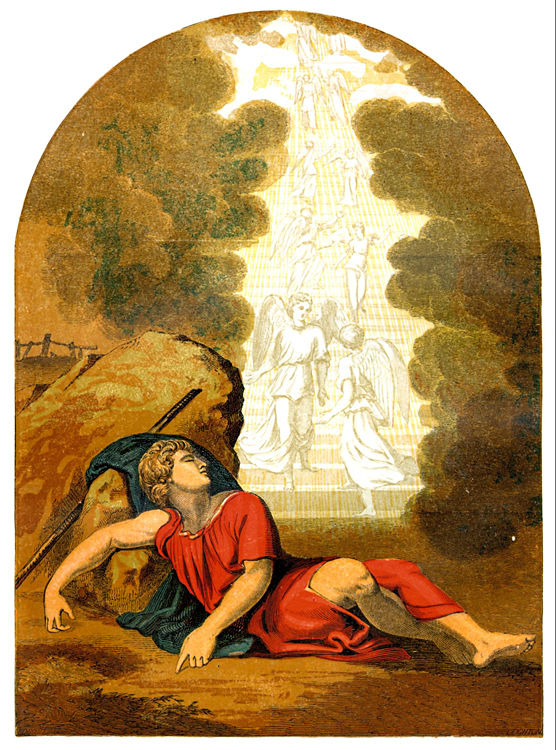
Genesis 44:18, And Judah came near. There is much to learn about the prophetic significance of Judah coming near to Joseph. The modern Jewish people are the descendants of Judah. The the children of Judah or the Jews became the Southern Kingdom of Israel, and Joseph’s sons Ephraim and Manasseh became the Northern Kingdom or house of Israel and eventually the “lost sheep of the house of Israel” as we have discussed previously and written about and proven extensively elsewhere from both the Scriptures and secular non-biblical sources.
Prophetically-speaking, every Christian who is minimally familiar with the Bible knows who the most notable descendant of the tribe of Judah is? The Lion of the Tribe of Judah and the Root of Jesse is, of course, Yeshua the Messiah. Rev 5:5). When you came to faith in Yeshua, did he seek you or did you seek him when you were lost? He called everyone of us to himself, and we simply responded to that call! (See Matt 20:16; Rom 8:28, 30; 1 Cor 1:9, 26; 7:17, 20; 2 Thes 2:12; 2 Tim 1:9; 1 Pet 2:9 cp.Rom 5:8; Luke 19:10; Matt 18:11.)
Why is Judah coming near to Joseph (who he does not yet recognize as Joseph)? He was motivated out of love for his father Jacob (See Gen 44:18–34). Similarly, Yeshua was motivated to come near to us out of love for his Father as well (See John 8:28; chapter 17).
Judah offered to lay down his life as a ransom for his youngest brother (Gen 44:33). Who does this point to prophetically? Yeshua freely gave his life as a substitute for his each one of us (Mark 10:45; Matt 20:28; 1 Tim 2:5; John 10:11, 15, 17–18; 1 John 3:16).
Please note that Judah is an antetype (prophetic forerunner) of Yeshua the Messiah.
Both sought to please their fathers.
Both acted out of unconditional love for their younger brother.
Both stood to gain nothing personally, but rather stood to lose much, if their plan did not work. Judah, a prince, would become a slave in Egypt; Yeshua would become a slave to death and hell, if he sinned.
It is interesting to note that classic Christian commentator Matthew Henry draws a similar analogy between Judah’s actions here and Messiah Yeshua as well (A Commentary On the Whole Bible, vol. 1, p. 243, by Matthew Henry).
Judah’s love for his father and Benjamin and his willingness to lay down his life as a ransom to become a slave in Egypt to Joseph is analogous to Messiah Yeshua’s love for the lost sheep of the house of Israel to whom he directed his outreach ministry and to ransom them in order to bring them back into the fold of Israel (John 10:15–16; Matt 10:6; 15:24).
Paul carried the same burden for his fellow Israelites as did Yeshua (Rom 9:1–5). Who does Paul later go on to talk about and extend his heart burden to in Romans 9:23–24? Remember that the term Gentile simply means “ethnic or people groups, or the people of the nations.” When Paul uses the term Gentiles here, he is specifically referring to the lost sheep of the house of Israel who were the descendants of Joseph. Paul had the same intense love for his Jewish brethren as he did for those “people groups of the nations” whom he equates with the lost, adulterous and apostate house of Israel (the Northern Kingdom of the ten tribes of Israel). Compare Romans 9:25 with Hosea 2:23 (the former being a direct quote from the latter) in context with the whole Book of Hosea, which is addressed particularly to the apostate house of Israel and who had become “lost” among the nations, of which Joseph in Egypt is a prophetic antetype.
Genesis 44:32–34,Became surety for the lad. On this passage Christian commentator Matthew Henry states, “Judah’s faithful cleaving to Benjamin, now, in his distress, was recompensed long afterwards by the tribe of Benjamin keeping with the tribe of Judah, when the other tribes deserted it” (Matthew Henry Concise Commentary on the Whole Bible, p. 56). This is a small piece of biblical trivia that had historical ramifications for hundreds of years later.
It is amazing that some 800 years later the fraternal love between these two brothers remained in their collective psyches such that the tribe of Benjamin remained loyal to the tribe of Judah.
What does this say about generational blessings (and curses) or attitudes that are passed on down to one’s descendants? If curses can be passed on down to the third or fourth generation (Exod 20:5), how much more so blessings? The Book of Proverbs states that, “Death and life are in the power of the tongue, and those who love it will eat its fruit,” (Prov 18:21) and that, “A wholesome tongue is a tree of life, but perverseness in it breaks the spirit,” (Prov 15:4).
Generations of our descendants can be affected positively or negatively by the inclination of our hearts and the words of our mouth.
It had been Judah’s original idea to sell Joseph to slave traders. Since that time, Judah’s heart had changed, so that now he was willing to lay down his life for his brother, Benjamin, Joseph’s only full brother. This change of heart on Judah’s part and the resulting outpouring of love for his youngest brother had lasting positive results.
Did Judah did not first recognize Joseph; Joseph had to reveal himself to Judah and his other brothers (Gen 45:1–4). Judah was “blinded” to Joseph’s identity. This a prophetic picture of the Jews’ future spiritual blindness to who the “Gentiles” were and are (Rom 11:25). As we have seen in previous studies, Joseph was a type of the Messiah as well as the father of Ephraim and Manasseh, the dominate tribes of the Northern Kingdom of Israel, who went apostate and became as “lost sheep” among the nations of the world (Hos 7:8; 8:8; Ezek 34:16 and numerous other Scriptures). Therefore, Joseph is a prophetic picture of the “lost sheep of the house of Israel” and the Messiah who would come to seek out those lost sheep (Matt 15:24; 10:6). And whom does Judah represent? Judah is a prophetic antetype of the Lion of the Tribe of Judah who would later come as the Messiah to redeem his “brother,” who would be lost in the spiritual Egypt of this world. He also represent the Jews of Southern Kingdom of the house of Judah most of whom would be “blind” to their Jewish Messiah. Thus in this story, it appears that Judah is a prophetic picture of both the Jewish people and the Jewish Messiah.
This dual role that Judah to which Judah seems to prophetically point has been a head scratcher for the ancient Jewish sages. They have seen in the story of Joseph, the Suffering Servant, a Messiah Son of Joseph figure who they saw would be a descendant of Ephraim, and who would come to redeem the lost sheep or exiles of the house of Israel in preparation for a second Messiah to come whom they refer to as the Conquering King or Messiah the Son of David, (Mesorah PublicationsTheArtScroll Bereishis,vol. 1b, pp. 2121–2122). They see these Messiahs as two separate individuals. Yet in our story of Joseph and Judah we see the antetypes of these two Messiahs acting out their roles at the same time. Judah and Joseph point to both comings of Messiah Yeshua. At his first coming, Yeshua came as the Suffering Servant to redeem a remnant of lost Judah in addition to a much larger portion of “the lost sheep of the house of Israel.” Yet at his second coming, this same Messiah Son of Joseph will come back as the Lion of Judah to be revealed to his Jewish brothers (the modern day Jewish people) who had previously rejected him (Zech 12:10).
Genesis 45
Genesis 45:1–15,Then Joseph. Joseph, as an antetype of Yeshua, had mercy on the penitent sinners who had formerly wronged him. Joseph wept for joy and embraced his brothers when being reconciled to them (verse 14). Past hurts and wrongs were forgiven. Can you not see yourself in this story coming to Yeshua, your Savior and Redeemer, with a repentant heart and him warmly embracing you and welcoming you into his spiritual family and kingdom? (Read Ezek 18:27–32 and Ps 103:10–18.) As we progress in our spiritual walk, how easy it is to take for granted YHVH’s love and compassion that initially saved us and at the same time continues to sustain us in his grace. (Selah. Pause and reflect.)
Genesis 45:5, 7, 8,Elohim sent me.Joseph was sold into slavery at age 17, was freed from prison and made ruler of Egypt at age 30. After that, seven years of plenty followed, and then two years of famine had passed by the time he was reunited with is brothers. Only after 22 years in Egypt did Joseph finally figure out Elohim’s grand and wonderful plan for his life, and how it involved the saving of his family.
Had Joseph lost faith along the way, become embittered over his multiple misfortunes, and turned away from Elohim, the nation of Israel may have never been preserved.
There is a lesson for the disciple of Yeshua in the story of Joseph’s long travail as YHVH worked out the detail of his life to fulfill heaven’s larger plans and purposes (Rom 8:28). Along the way, Joseph’s patient endurance and faith was stretched and enlarged (Jas 1:2, 12). Keeping one’s eyes on YHVH Elohim, and refusing to lose faith during the dark times of one’s life can yield some amazingly triumphant outcomes, as we learn from the life of Joseph. This is because YHVH watches over those who place their trust in him and who obey him the best they can. Their lives are in his hands, and the circumstances of their lives are under his guidance (Rom 8:28–29). Because of his love for his children, and because of the good plans he has for them, whatever he allows to happen to them will be for their ultimate good. So let us find the blessing in everything that occurs in our life and may our love and faith in our Creator be strengthened.
Genesis 45:8,A father to Pharaoh. See notes at Gen 41:9–10.
Genesis 45:13–26,Becoming bond servants.During the remaining years of the famine, all of the Egyptians became indebted to Joseph as he judiciously doled out the stored wheat to those in need. In order to save their lives, the inhabitants of the famine-ravished land gave their lives and land to be servants of Joseph (who was a type of Yeshua) in exchange for food (Gen 47:23). Yeshua, likewise, has bought us with the price of his blood (1 Cor 6:20; 1 Pet 1:18–19; Rev 5:9). Are we not called to be his bondservants—a term that the apostles apply to themselves numerous times (Rom 1:1; Gal 1:1; Phil 2:7; Col 4:12; Tit 1:1; Jas 1:1; 2 Pet 1:1; Jude 1:1)? What does that mean in practical terms in your life? Many people accept Yeshua as their Savior, but few really accept him as their Lord and Master.
Genesis 45:24,Fall not out by the way (or do not become troubled along the way, NKJV; do not quarrel on the journey, NAS) or “Do not be agitated on the journey” (The Schoken Bible). Joseph dismissed his brothers with the warning not to quarrel with each other on the journey back to Canaan, as brothers can be prone to do. They had reconciled with Joseph, their savior who was a prophetic foreshadow of Yeshua, our Savior and Redeemer, but they still had a long foot-journey ahead of them of many dry and dusty miles. Joseph in his wisdom knew that as the miles dragged on, the fatigue of the flesh would begin to rise to the surface, tensions between the brothers would likely occur resulting in quarreling with each other. This is a common occurrence among the saints as they await Yeshua’s coming. Yeshua addressed this tendency among brethren believers in his final admonitions to his disciples before his crucifixion in this regard. He stressed the paramount importance of loving each other as we trek toward the promised land of our spiritual inheritance (John 13:34–35; 14:27; 15:12–13). How much energy do we as redeemed believers waste quarreling with one another instead of advancing the kingdom of Elohim? How would your life improve if you were to just forgive those who have offended you or those who want to hurt you or your ministry, and instead determine to walk away in love, and focus your attention on the job your Heavenly Father has given you to do in his kingdom?
Genesis 41:9–10,The chief butler spoke. Here the chief butler is recounting the events to Pharaoh of how he ended up in prison as if Pharaoh weren’t aware of these facts. It is quite possible that this was a new Pharaoh, and the Pharaoh who had put the butler in prison was now dead. If so, then this new Pharaoh was very young, since in Genesis 45:8 Joseph, who by now would have been at least in his late 30s, refers to himself as “a father to Pharaoh.”
YHVH’s timing was perfect for his larger plans to be fulfilled in Joseph’s life. Do you have the trust in YHVH to believe the same for your life? Had the chief butler remembered Joseph prior to this time, it is likely that YHVH’s plans for Joseph may not have worked out to his benefit. Would he have had the chance to interpret Pharaoh’s dream? Would he have returned to Canaan? How would the history of the nation of Israel been different?
Genesis 41:16, Elohim. By this time, Joseph had endured multiple false accusations, murder attempts, enslavement and imprisonment on false charges. A man of lesser spiritual stature than Joseph might have lost his faith in Elohim along the way. What can we learn from Joseph about enduring and overcoming faith in our Maker in the face of adverse circumstances in life?
In this verse, what is the evidence that he hadn’t given up hope in his Heavenly Father, and that he had not lost sight of the prophetic promises that YHVH had made to him many years earlier? Simply this. Even though Joseph was standing before a king, who had the power of life and death over him, he still had faith that Elohim would give him the interpretation to the king’s dream. Not only did Joseph believe this, but openly declared his faith to Pharaoh. What does this teach us about boldly proclaiming our faith even in the face of possible death? In Revelation 12:11, we learn that the end time saints will overcome the Evil One by the word of their testimony and that they will not love their lives the death. Elsewhere Yeshua declared to his disciples, “Whosoever therefore shall confess me before men, him will I confess also before my Father which is in heaven” (Matt 10:32). Now is the time to start putting our faith to work in the small areas, so that we will pass the larger tests that will inevitably come our way later.
As a form of witnessing to those around you, do you give honor to YHVH whenever you can—even to strangers and potential enemies as Joseph did?
The fact that Joseph was able to proclaim his faith in Elohim in front of one of the most powerful monarchs of his day is evidence of his strong and abiding faith in and fear of YHVH even in spite of years of mistreatment and false accusations. Joseph is a powerful and encouraging example to the down-trodden saints of the world, who have been persecuted for the their faith. Joseph is proof that it is possible to maintain faith in YHVH even in spite of dire, even life threatening circumstances.
Genesis 41:38, A man in whom the Spirit of Elohim is. Would this be the testimony of those heathens around you about you? If not, why? What changes in your life can and should you make to insure that it would be?
Genesis 41:45, Poti-phera.Apparently, this was none other than Potiphar, Joseph’s former slave master and the one who wrongfully imprisoned Joseph. Joseph being permitted to marry Potiphar’s daughter was YHVH’s way of vindicating him in the eyes of the Egyptians (The ArtScroll Stone Edition Chumash, p. 299; The ArtScroll Tanach Series Bereishis/Genesis Commentary, vol 1b., p. 1665).
Genesis 41:46, Thirty years old. Joseph was in Egypt as a slave and a prisoner from roughly from age 17 (Gen 37:2) to age 30. Despite being falsely accused of sins he had not committed, during this time, he still did not lose faith in Elohim.
Genesis 41:50–52, To Joseph were born. Joseph was blessed in Egypt with an Egyptian wife and two sons. Therefore, his sons were not full-blooded Israelites. This was prophetic. Eventually Joseph’s descendants went into captivity into foreign nations, as happened to Joseph himself, where they would mix their seed with those of non-Israelite blood resulting in mixed children racially (Hos 7:8 and 8:8.) Prophetically, YHVH accept would accept these children of mixed race marriages to be grafted in to the olive tree of Israel to become full citizens with equal standing and rights as full-blooded Israelites (Rom 11:13–24). Who does Paul say these Gentiles who were grafted into the olive tree of Israel? Please read Romans 9:25–26 and then read the Hosea passage Paul is quoting from Hosea 2:23. Paul refers to these people as Israelites and literal offspring of Abraham (Eph 2:11–19; Rom 4:16; 9:8, 11; and Gal 3:7, 9, 14, 28, 29)!
Genesis 42
Genesis 42–46 Two Brothers and the Two Houses of Israel in End-Time Prophecy
Biblical Types and Antetypes
A major key to understanding biblical prophecy is to recognize the relationship between types and antetypes in the Scriptures of which there are a plethora. This means that an event or a series of events occurred once, was recorded in the Scriptures, and then at a later time a similitude of the event repeats itself sometimes more than once, but with different characters and scene. The Jewish sages have long recognize the phenomenon of biblical cycles that repeat themselves over the millennia.
More specifically, an antetype is an event that occurs before the main event to which it prophetically points actually occurs (sometimes incorrectly referred to as an antitype, which means “an opposite type” rather than “a prior type”). In other words, the first event predicts or points prophetically to the future event. This is a way for the Creator to give clues and hints about future events that will come to pass. Those who are ardent students of YHVH’s word and “who have (spiritual) ears to hear” will pick up on these clues and gain a sense of what the Creator is going to do at some future date. In this way, those who diligently seek him are rewarded with understanding or “inside information” about what he is planning to do in the future. At the same time, his divine plans and purposes will be obscured from those who don’t have a diligent heart to seek him and his truth, and who could then possibly misuse the truth, if they were to discover it, for self serving or malevolent purposes.
Similarly, the Gospels record that Yeshua explained deep spiritual truths via parables not to make the meaning clear to the general public, but rather to obscure it. His teachings were meant to be understood only by those whom he had called that they might know the mysteries or secrets of the kingdom of Elohim (Matt 13:10–11; Luke 8:9–10).
For thousands of years, the prophets of the Bible, as well as biblical students, scholars and sages have understood the concept of antetypes and types and it has helped them to understand Bible prophecy and future events.
Biblical antetypes are identified in three ways. First, the Scriptures themselves identify events as being antetypical. Examples would be:
The life of Moses pointed to Yeshua (Deut 18:15–19; Heb 3:3–6).
The serpent on the pole pointed to Yeshua’s crucifixion (John 3:14).
The rock from which the Israelites drank prefigures Yeshua (1 Cor 10:4).
The manna the Israelites ate prefigures the Word of Elohim or flesh of Yeshua (John 6:32, 48–51).
Aaron as the high priest was antetypical of Yeshua’s high priesthood (Heb 5, 7 and 8).
The sacrificial system pointed to Yeshua’s atoning death on the cross (Heb 9 and 10).
Jonah in the whale is a prophetic picture of Yeshua’s death and resurrection (Matt 12:40).
Melchizedek was an antetype of Yeshua (Heb 7).
The first exodus (or redemption of Israel out of Egypt) was prototypical of a second exodus or redemption of Israel out of the world in the end times (Isa 11:11; Jer 23:7–8).
The Jewish sages from antiquity have also identified antetypes. Examples would be:
The difficulties surrounding Jacob’s return to the Promised Land after 20 years of exile in Babylon (under Laban, Gen 31–33) is antetypical of the difficulties surrounding the return of Jacob’s descendants to the land of Israel in the last days, which the Scriptures call “Jacob’s Trouble” (Jer 30:7).
The life of Joseph prefigured that of a Messiah Son of Joseph, the Suffering Servant.
The life of David prefigured that of a Messiah Son of David, the Conquering King.
The seven-day week is antetypical of the seven thousand years of man’s tenure on this earth.
Christian Bible teachers have identified antetypes in the Scriptures as well. Examples would be:
The Passover lamb was antetypical of Yeshua’s crucifixion.
Isaac’s near sacrifice and the ram caught in the thicket in Genesis 22 was antetypical of Yeshua’s death.
The tabernacle of Moses pointed in all aspects to the ministry of Yeshua as Savior and Redeemer.
Finally, some Hebraic-Christian Bible teachers have identified antetypes in the Scriptures. Examples would be:
The biblical feasts point to the steps in YHVH’s plan of salvation for mankind centering around the first and second comings of Messiah.
The stages of the biblical wedding point to YHVH’s plan of salvation for mankind.
YHVH’s judgments on Egypt point prophetically to his judgments on Babylon the Great in the last days.
In like manner, the story of Joseph’s interacting with his brothers (starting in Genesis chapter 37 through 46) is antetypical of future events that are to happen on a national level with the children of the patriarchs.
In this study, we will examine the events of Joseph and Judah in Egypt to see how they relate to the houses of Joseph or Ephraim (broadly speaking, the Christians) and Judah (broadly speaking, the Jews) in the last days. Remember that although the events and details of antetypes and types correlate, they do not match each other perfectly in every detail. There should, however, be enough similarities between the two that to the rational and biblically astute mind the juxtaposition of the two is not a logical stretch. Some of these parallels the writers of Scripture tell us about, while others we must arrive at through our own diligent and careful analysis of the Scriptures.
Joseph and Judah (the Two Houses of Israel)
In what follows, we will see several types and shadows that point to the end-time reunification of the two houses of Israel (Joseph, Ephraim or the Christian church and Judah or the religious Jews), and to Yeshua the Messiah whose role it would be to regather and reunite the two houses of Israel by laying his life down as a ransom or substitute for his brothers. In this study, we will discuss the following themes:
reuniting lost family members
reconciliation and healing of wounds and offenses between families
forgiveness of past wrongs, offenses and misunderstandings
prophetic shadows of Yeshua the Messiah
Let’s now analyze the events in the life of Joseph (and to a lesser degree that of Judah as well) as they occurred chronologically to see how they pointed forward to events that would occur in the future including the end times.
Joseph Taken as Captive to a Gentile Nation (Gen 37)
Genesis 37:3, Israel loved Joseph more. Parent’s who show demonstrable favoritism toward some of their children over their other children are not wise, for it invariably produce rivalry and jealousy among siblings (v. 4). True, a parent may secretly prefer one child over another, but it is wise to keep that to oneself, for fear of alienating one’s other children. Granted, it is natural for a godly parent to have a kindred spirit with a godly child more than he does for a child who is a rebellious sinner and ambivalent if not apathetic toward Elohim. Similarly, it is true that even though our Father in heaven loves the whole world (John 3:16), nevertheless he loves his own saintly children differently and in a deeper manner. This why Scripture declares the YHVH loved Jacob and hated Esau who was a wicked and carnal man (Mal 1:3).
Tunic [coat] of many colors.The Hebrew here indicates a tunic—a long undergarment with long sleeves (the same word is used in 2 Sam 13:18). The working class usually wore a short-sleeved tunic, while the upper class wore a tunic similar to what Jacob made for Joseph. This tunic distinguished Joseph above his brothers thus inciting their jealousy toward him (Manners and Customs, p. 92).
Genesis 37:5,Joseph had a dream. Joseph was a prophetic child (like Samuel) and YHVH communicated with him, even has he had with his father, grandfather and great grandfather. Sometimes, prophetic gifts transfer generationally. The same can be said of demonic spirits that transfer down through family lineages. As the blessings from YHVH for obedience to him can be passed on down through successive generations, so can the curses of sin resulting from demonic influences.
And told it to his brothers. Just because one receives a prophetic word from Elohim does not mean that he has given us permission to share it with others! A word from heaven may be for one’s own personal benefit alone, and it may not be beneficial for others to hear it as Joseph found out the hard way.
To often prophetic people want to share everything they have heard from Elohim. Often the motives for doing this are carnal as if one were saying, “Look at me. Look what Elohim has revealed to me. Look how special I am.” Anything done out of impetuosity, assumption, much less arrogance and for self-aggrandizement purposes is never a good thing. It is better to wait patiently for instructions from above before proceeding!
Genesis 37:12,Shechem. Upon coming into the Promised Land from Haran, Jacob had previously bought land in Shechem from the Canaanites (Gen 33:19), but then had to move from that area to Bethel for his safety (Gen 35:1) after the Shechem and Dinah affair. Jacob later moved further south to Hebron (Gen 37:14). It was likely to Jacob’s property in Shechem, where Joseph’s brother were pasturing their flocks, that Jacob sent Joseph to check on his brothers.
Genesis 37:18,Let us now kill him. Nowadays, carnal people may not necessarily kill one who brings the word of Elohim to him, but they will murder with their mouths through mockery, scorn, ridicule, character assassination, libel, slander or malicious gossip. People are no different now than they were then; they do not want their evil deeds brought to the light lest their sins be exposed. Instead of repenting of sin, they attack the one bringing the light of truth. Isn’t this the same treatment that Yeshua and all of the prophets experienced at the hands of the people to whom they were sent?
Genesis 37:25, 27, 28, 36,Ishmaelites…Midianites.To whom did Joseph’s brothers sell him: to the Ishmaelites or the Midianites? Some disparagers of the Bible view this passage as proof that Scripture contradicts itself and cannot be trusted as being divinely inspired. So what is really going on here? Why the seeming disparity in the facts?
The explanation is not difficult. Keil and Delitzsch in their commentaries point out these people-groups were referred to in ancient cultures as Arabs due to the geographical proximity of their two countries and were easily confounded by outsiders not only due to their close association socially and culturally, but due to their resemblance, and due to the fact that the Midianites and Ishmaelites shared a common ancestry as descendants of Abraham. This is because likely the traders in this story were in a caravan comprised of different tribes or ethnics groups (e.g., Ishmaelites and Midianites), as Adam Clarke suggests in his commentary, and were traveling together for safety. That two nationalities would unite in their journey to Egypt is not far-fetched, since the land of Midian and Edom (the country of Ishmael) were contiguous—the former was located south of the latter. The Midianites would have had to travel northward toward Edom to get around the Gulf of Aqaba in order to traverse the Sinai Peninsula en route to Egypt. Therefore, it is not inconceivable that these two groups of traders could have converged and joined together in their trek to Egypt. Thus the apparent discrepancies in this story neither invalidates the correctness of the Bible nor proves that this narrative derives from the convergence of two separate oral traditions that were later written down as some modern biblical scholars suggest (e.g., The Language and Imagery in the Old Testament, pp. 38–39, by J.C.L. Gibson).
Genesis 37:28,Twenty shekels of silver.This was the price that Moses later fixed to the value of a boy between the ages of five and twenty (Lev 27:5), while the average price for a male adult slave was 50 shekels of silver (Exod 21:32). An adult female was valued at 30 shekels of silver (Lev 27:4). This price was based on the value of work an individual could produce in a year. To slave owners, humans slaves were a mere commodity.
Genesis 38
The story of Judah and Tamar is inserted here likely to show the background and origins of the kingly Jewish lineage that produced the Yeshua the Messiah.
Genesis 38:10,The thing which he did. Onan refused to perform his levirate responsibilities likely because of greed. As second of three sons, he would have received only one fourth of Judah’s inheritance with the double portion going to the firstborn son. With the first born son dead, Onan stood to receive two thirds of the inheritance, since now he was the firstborn son. However, by raising up a son to take Er’s place, this would have given that son one-half of Judah’s inheritance and dropped Onan back down to one fourth of the inheritance again. Onan stood to gain financially by not performing his levirate responsibilities and rasing up a son to his older, deceased brother. Therefore, it appears that Onan spilled his seed on the ground because of greed, which is the real reason YHVH killed him. Bluntly speaking, YHVH did not kill him because he masturbated as is often supposed. Rather, he withdrew himself during coitus and ejaculated on the ground. That is to say, he enjoyed the sensual pleasure of sex without fulfilling his responsibility—a totally selfish, self-serving act, and therefore an illegal act of fornication.
Judah and Tamar
Genesis 38:16–19,The power of the sex drive in men causing them to act foolishly. The desire (or need) for sexual fulfillment is a powerful force in men that must be mastered, channelled or contained. It not, then unscrupulous women can use it to their advantage as Tamar did here, and as Solomon warns men against in the first few chapters of the Book of Proverbs. The need for sex can cause men to do foolish things and allow them to slip into compromising situations even resulting in their being blackmailed, as was the case with Tamar vis-à-vis Judah. It was foolish of him to give his personal items to an unknown stranger, yet he acquiesced to this unwise act due to his inability to control his sex drive. Instead of him ruling it, it ruled him. He failed to follow the advise that Elohim gave to Cain in Genesis 4:7. “And if you do not do well, sin lies at the door. And its desire is for you, but you should rule over it.” Wise men will immediately flee youthful lusts (2 Tim 2:22)!
Genesis 32:10, I am not worthy/I have been diminished [Heb. kato-n’tey]. “In some Bible versions, in the word kato-n’tey ,the letter tet is written smaller or diminished to show the utter humility and sense of unworthiness Jacob felt toward YHVH as he prayed for mercy and protection from Esau (The Wisdom in the Hebrew Alphabet, p. 123 by Michael Munk).
Genesis 32:13–15,Present for Esau his brother. This was a generous gift of great value. Possibly, Jacob out of righteousness, felt the need to make restitution to his brother for having “stolen” the birthright. This demonstrates the need for saintly people to right their wrongs in order to maintain a good witness to their unsaved or heathen neighbors. Of course, Jacob’s motives were not totally based on making restitution for past wrong. He was also trying “to save his skin,” so to speak, by appeasing his brother who wanted to murder him (v. 20).
Genesis 32:28, Israel.
The Meaning of the Name “Israel”
According to the top Hebrew lexicons, the words making up the name Israel can have several meanings:
He rule (as) El (God).
He contends with El.
El persists, perseveres.
Let El persist or contend
To prevail or have power with El.
The name Israel is comprised of two Hebrew words: sarah and el.
Sarah (is a primitive verb root meaning “to prevail.”
El means “God” and is the short form of the word Elohim (God).
Interestingly, the name Israel contains a couple of other Hebrew words although the lexicons do not indicate any lexical connection between them and the name Israel. These words are:
Yashar meaning “straight or upright.
Sar meaning “a head person, captain, ruler, chief, master or prince.” Sar is used in the famous Prince of Peace passage in Isaiah 9:6—a notable prophetic reference to Yeshua the Messiah.
Because of the similarities between the Hebrew words Israel and yashar and sar, some Bible students have taken the liberty to see within the name Israel some other meanings that the lexicons do not recognize. It is interesting to note these similarities, but whether there is a lexical connection between these words or not, we let the Hebrew language experts debate this issue.
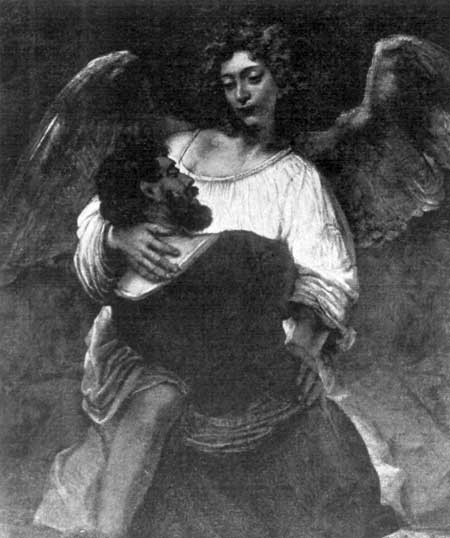
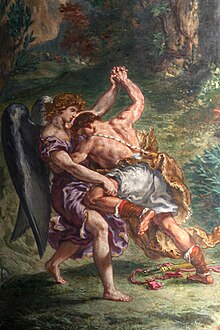
Genesis 32:24–32,Jacob wrestling with the Messenger of YHVH.
Who Did Jacob Wrestle With? An Angel or the Pre-Incarnate Yeshua?
It is one of the classic Old Testament Bible stories. Along with Noah’s ark, David and Goliath, Jonah and the big fish, every Sunday school student has heard of the story of the patriarch Jacob wrestling all night with an “angel.” But who was this heavenly being? Was he actually a stereotypical angel as the text in Genesis 32 suggests, are is there more to this story? This is where Christians and Jews differ in their conclusions. Let’s explore this classic Old Testament story a little deeper. The truth may astound you and will likely help to deepen your faith!
And Jacob was left alone; and there wrestled with a man [Heb. iysh] or heavenly messenger [i.e., Heb. malak]. (KJV; cp. Hos 12:4)
In the following passages, we see that this man was Elohim.
You have power with Elohim and with men, and have prevailed. (verse 28, based on the KJV)
…for you have striven with the Divine [lit. Elohim] and with man and have overcome. (verse 28, The ArtScroll Stone Edition Tanach and Chumash)
Then Jacob says that he has “seen [Elohim] face to face” (KJV, CJB and The Soncino Edition Pentateuch, second edition). The two standard Orthodox Jewish versions of the Torah, TheArtScroll Stone Edition Tanach and TheArtScroll Stone Edition Chumash, and Samson Raphael Hirsch’s Torah commentary The Pentateuch (by Judaica Press)all read, “For I have seen the Divine face to face.” Here they have incorrectly translated the Hebrew word Elohim as “the Divine”(OHBP OHVKT/Elohim panim).
Which translation of the word Elohim is the correct one? Before resorting to human sources to solve this dilemma, let’s allow the Word of Elohim itself to interpret this passage, thus giving us clarity as to its exact meaning. Hosea 12:2–5 is the Bible passage that sheds light on this issue.
[YHVH] hath also a controversy with Judah, and will punish Jacob according to his ways; according to his doings will he reward him. He took his brother by the heel in the womb, and by his strength he had strove with [Elohim]. He strove with an angel [Heb. malakorheavenly messenger in many instances referring to YHVH himself, as noted elsewhere in this work] and prevailed: he wept, and made supplication to him; he found him in Beth-El, and there he spoke with us; and [YHVH Elohim] of hosts; [YHVH] is his name. (based on the KJV)
The Stone Edition Tanach renders this passage as follows (starting in verse four):
In the womb he seized his brother’s heal, and with his strength he struggled with [an angel of] God; he struggled with an angel and prevailed; [the angel] wept and beseeched him: ‘In Beth-el He will find us and there He will speak with us.’ HASHEM is the God of Legions; HASHEM is His remembrance. (bracketed supplied word are in the original)
So which translation is correct? The first one indicates Jacob was wrestling with a Heavenly Messenger, who was none other than YHVH Elohim, while the second translation is cast in such a light as to imply that Jacob was wrestling merely with an angel.
The Hebrew word Elohim does not mean “the Divine.” Rather it means “God.” It is interesting to note that in the Authorised Version (or KJV) the word Elohim appears 2606 times in the Tanakh. It is translated as God 2346 times, god 244 times and as several other words less than five times each (e.g., judge, goddess, great, mighty, angels). As in all cases with a word which can have several meanings, the context of the Scripture passage will determine a word’s meaning and its subsequent translation from the original language into English. The word divine was not employed in the 1611 (KJV) Authorized Version in reference to Elohim anywhere in the Tanakh, since the word had a pejorative connotation (as in divination or one who divines the future). This is not the case in our modern parlance as the modern Webster’s New Collegiate Dictionary defines divine in its primary definition as “relating to, or proceeding directly from God, being a deity, directed to deity.” All standard English (Christian ) versions (e.g., NKJV, NAS, NIV, NRSV) translate this passage as “God face to face” and none use the term “the Divine face.” The New Brown-Driver-Briggs-Gesinius Hebrew-English Lexicon defines Elohim (in those Scripture passages where it is a clear reference to deity, as opposed to a goddess or a human judge) as “the true God, Yahweh is (the) God.” Never does this Hebrew lexicon define Elohim as “the Divine.” Similarly, nowhere does the The TWOT in defining the word Elohim suggest that the Divine could be an appropriate substitute for the title of YHVH. So we must ask, why do the two Jewish translations of this passage (noted above) run cross grain to a plethora of other translations, both Jewish and Christian, as well as to noted lexicographers to translate it as they do? This likely a case of translation bias, where translating Elohim panim as Elohim face to face as so many other translators do would be a tacit admission that Elohim can appear as a man, hence giving credence to the Christian assertion that Yeshua was Elohim in the flesh. But before jumping to conclusions, let us examine other passages in the Tanakh where Elohim and man come face to face. Let’s see how the non-Yeshua believing Jewish translators treat these passages, and discover how their commentaries explain these difficult passages.
The following are what some leading rabbinic Jewish commentaries say about these passages where Elohim appears in humanesque form.
TheStone Edition Chumash (pages 176–177): This commentary states that the man with whom Jacob wrestled was an angel (no doubt based on the passage found in Hosea 12:4), yet the fact that the malak was an angel in the common meaning of the word, is an assumption, since, as we have already noted, malak literally means “messenger,”and in this context heavenly messenger meaning “angel”is but one type of heavenly messenger. Furthermore, the Chumash defines the word malak as “Divine.” What is the terminology here supposed to imply, based on the meaning of the word divine? Was the angel deity or not? At the very least, the reasons given for explaining away the idea that Jacob was wrestling with Elohim are ambiguous if not totally misleading or even deceptive.
The Soncino Edition Pentateuch (p. 124) commenting on Genesis 32:29 and Hosea 12:4 states, “We have here another instance of ‘God’ interchanging with ‘angel of God’, as in [Genesis] 16:7 [and] 31:11.” On verse 31 other Jewish commentators states, The Targum (the Aramaic translation of the Pentateuch made in the second-century) “was in response to the spread of Christianity, when proponents of the new religion began to interpret certain passages to accord with their own doctrines” (The Encyclopedia of the Jewish Religion, p. 376). This then supposedly gives justification to why the modern Jewish scholars understand these verses to mean “I have seen angels of God face to face” (The Soncino Edition Pentateuch, p. 124). One can only wonder if the Targum’s translation of this passage and the subsequent rabbinic interpretations of the same is not an example of these translators and commentators redacting these Bible passage in an attempt to steer their readers away from the fact that YHVH appeared to Jacob in the form of a man (as a plain reading of the text indicates)—a conclusion that could then pave the way for the Christian belief that Yeshua the Messiah was YHVH incarnate (in the flesh) as per John 1:1 and 14 (and other both Old and New Testament passages).
The ArtScroll Bereishis/Genesis commentary postulates a total different explanation as to who Jacob wrestled with. Was it Elohim, an angel or something else. These commentators state, “The ‘man’ who struggled with Jacob was not a human being, nor was he an ordinary angel. As Rashi comments, the ‘man’ was Samael, the guardian angel of Esau” (p. 1397) who was the angel of evil (ibid.p. 1437). The commentary goes on to say that not all Jewish sages agreed with Rashi’s assertion. Tanchuma suggests that this was the angel Michael, while R. Bachya “perceives this as symbolizing the righteous person’s inner struggle against the forces of evil.” Rambam “regards this incident as a prophetic vision (just as he regards Abraham’s vision of the three angels in [Genesis] 18:2f). Ramban…challenges this vigorously, posing many questions (for example: If Jacob’s wrestling was only a vision, why did he limp when he awoke? Abarbanel cites Ralbag who in defense of Rambam, holds that Jacob’s hip injury might have been caused by autosuggestion, an aftermath of the prophetic vision” (ibid.). And the debate between the rabbinic Jewish scholars continues on and on without any resolution as to the nature of the angel with whom Jacob wrestled, when the plain meaning of the literal words of the text clear state that Jacob wrestled with Elohim!
As these quotes have been provided (and there are more to come) to show the reader that there are some things that the Jewish sages, for all their learning, brilliance, respectability and passion for Torah, simply cannot figure out. Some will even contrive fantastical scenarios and explanations in an attempt to explain a passage in a certain way, while leaving out some of the more obvious conclusions.
To the sages’ credit, they have in mind the passage in Exodus 33:20, which states that, “You cannot see my face, for no man shall see me and live.” This, the reader will recall, is the occasion where Moses requested to see the glory (or splendor) of YHVH Elohim (verse 18). Indeed, it is obvious that no man can look into the glorious face of the One who made the Sun, which is the smallest of billions of stars, and expect to live. Yet is it possible for the same YHVH to place all his glory “on the proverbial shelf,” so to speak, and to appear to man without his full glory? Obviously, YHVH being all powerful, can do anything he pleases. If this is possible, then can Jacob have seen the face of Elohim temporarily without his glory and Exodus 33:20 still be valid? After all, the sages have numerous reasons, and some very creative ones, to explain why Elohim is actually an angel in Genesis 32, when a simple explanation, based on the literal meaning of the text, could easily suffice to explain why the Being Jacob encountered really was Elohim, as the Scriptures so plainly states.
Rashi (Shelomoh Yitzhaki, 1040–1105), considered by some to be the most notable Orthodox Jewish Torah commentary of the modern era, should have some notable comments on verses 28 and 30 (The Sapirstein Edition Rashi, The Torah) regarding Jacob’s the nature of the being with whom Jacob was wrestling. Was it Elohim, an angel, or something else? In fact, he has no comments at all in his venerable commentary (pp. 371–372). It must be noted at this point that not only can one learn much from what the Jewish sages say, but one can learn as much by what they do not say—especially when they comment voluminously on the Biblical passages preceding and proceeding a certain troublesome verse, but say little or nothing on a particular, especially controversial, passage.
As noted above, Rashi does cite certain rabbinic traditions equating the man Jacob wrestled with to the ministering angel of Esau (p. 370). He also notes, as further discussed below, that the phrase in verse 24, “a man wrestled” can mean, “and a man became dusted” because, according to the meaning of the Hebrew words, this phrase can literally mean, “because they raised dust with their feet through their movement” as they wrestled (p. 370).
Let us now turn our attention to the comments of noted nineteenth-century German rabbinic scholar and founder of neo-Orthodoxy, Samson Raphael Hirsch (1808–1888). On verse 30, Hirsch admits that “Jacob recognized in his opponent, something divine, something justified, appointed by God.” Then Hirsch pens a fictional conversation that Jacob and the Heavenly Messenger might have had where the Messenger states that he is a Messenger of God, created of Elohim, yet neither an ordinary angel nor deity (The Pentateuch—Genesis, vol. 1,p. 507). This idea is similar to that expressed by other rabbinic writers that this was Samael, the guardian angel of Esau, “a man who climaxed the Patriarchal tradition” (The ArtScroll Bereishis/Genesis commentary, p. 1397)
What does another eminent Jewish Torah scholar state in his commentary regarding who Jacob wrestled with in Genesis 32? Let us now analyze what Jacob ben Asher (c. 1270–c. 1343), who is known as Baal HaTurim (The Davis Edition Baal HaTurim Chumash—Bereishis), says in his commentary. Virtually nothing! He simply refers to the man with whom Jacob wrestled as “the angel” and fails to comment on the fact as stated in verses 28 and 30 that this individual was Elohim in human form (p. 307). Again, we can learn much from the silence of the rabbinic Jewish sages.
Baal HaTurim does have some interesting comments on verse 24 which says, “And Jacob was left alone; and there wrestled a man with him until the breaking of the day.” Here Baal HaTurim says that the gematria (the letter-number valuation of the Hebrew letters) of the phrase, “a man wrestled” is 118, which equals that of the phrase, “the throne of glory” (The Talmud, Challin 91a). The phrase “a man wrestled” can also mean “he covered with dust” or “he raised dust” in reference to the fact that during the wrestling match the two men stirred the dust of the ground as they entangled. Baal HaTurim gives a fanciful explanation of this wording. He states that as they wrestled they raised dust heavenward to the throne of glory (ibid., p. 305). This must have been quite the dual!
So regarding the rabbinic Jewish commentary regarding the identity of the individual with whom Jacob wrestled, what is the bottom line? Simply this. They refuse to admit that Jacob was wrestling with Elohim, even though the Torah clear states otherwise. Moreover, and even worse is that these Jewish scholars are prone to concoct fanciful, non-biblical explanations as to why this being was not Elohim. They state that he was an angel, some divine being, no ordinary angel, or Samael, the demon-guardian angel of Esau. They debate and argue and sometimes contradict each other and themselves as to who this Being was. There is much confusion and uncertainty. But one thing about which they can all agree: he was not Elohim in human form. On this point the honest inquirer is compelled to ask, “Why?” Is it because the sages refuse to admit what the Christians have been saying all along, that the Being with whom Jacob wrestled was a preincarante appearance of Yeshua the Messiah?
Now consider this. As noted above from the Jewish sages’ own writings, the meaning of the Hebrew text, “a man wrestled” (verse 24) can signify “a man covered with dust” or “raised dust to the throne of glory.” If Jacob saw the “face of Elohim” as verse 30 states, and Yeshua in the Gospels clearly declares that no one has seen the face of the Father (John 1:18), then how do we reconcile these two passages without breaking the Scriptures (John 10:35)? Was Jacob indeed wrestling with Yeshua in his preincarnate state? Is this preposterous? The sages have no clear answers to this difficult passage—only numerous reasons why it cannot be so, when all they lack is one good reason why it could be so, especially when confronted with the plain meaning of the Scriptures, which states that Jacob was wrestling with Elohim.
If this was Yeshua in his preincarnate state, could the rabbinical “covered-in-dust” actually be a cryptic metaphor for Elohim being clothed in humanity—a concept that confirms the New Testament’s claims about the incarnation of Yeshua, as well as the Christian belief that the pre-incarnate Yeshua appeared on a number of occasions in the Tanakh in human form (called theophanies or christophanies)? Could this not be a picture of Elohim condescending himself to come to earth in human form from the throne of glory covered in the clay dust of human flesh (see Phil 2:5–8) wrestling with the carnal, prideful and devious nature (of which Jacob, the heel snatcher or supplanter, was a type), breaking the stubborn will of man, wounding the flesh (Jacob left the dual wounded in the hip), and left with a new name and identity (Israel meaning “prince, power, strength and prevailer of El”)? We believe so.
In the end, Jacob left this spiritual encounter with YHVH a new, changed, humbled and wounded-in-the-flesh man ready to encounter Edom (representing the spiritual enemies that the saint will face as he treks through the wilderness of life before entering the “Promised Land” of YHVH’s kingdom) and overcome his enemies no longer in his own human strength, but with the spiritual power and blessing of YHVH at work in his life. Jacob was now ready to enter Beth-el (House of El) of the Promised Land as a spiritually resurrected new man in Yeshua the resurrected God-man.
Genesis 32:24–32,A Man. This is the account of Jacob wrestling with someone, but who? In verse 24, who does it say Jacob wrestled with? Let’s read Hosea 12:3–4 for a fuller comprehension of who this divine individual was. Hosea the prophet informs us that the “angel” with whom Jacob strove was none other than Elohim himself. The Hebrew word for angel is malak, which means “messenger” whether human, angelic or divine. Thus by definition, an “angel” in the Bible can be the stereotypical angel, a human messenger or a member of the actual Godhead acting as a divine messenger to humans. In Genesis 32:30, Jacob names the spot where he wrestled with the “angel” Beth-El or House of El. Obviously, in Jacob’s mind, he had encountered Eohim, not your stereotypical angel.
So why does Scripture use a term for the Being with whom Jacob wrestled that can mean “a man, a messenger and Elohim”? Isn’t this ambiguous or confusing? Or, on the other hand, is there Someone that the Bible reveals who fits all three of these definitions, or stated otherwise, Who is the only One in all of Scripture that fits all three of these descriptions? So with whom did Jacob really wrestle? Who is the One who blessed Jacob and made covenants with him and with his father and grandfather? We find the answer turn in Isaiah chapter 53, which is the chapter that speaks about the Suffering Servant Messiah who would come to redeem man from his sins through his atoning death. Of the Messiah, in verse one we read,
Who hath given credence to that which we heard? And the arm of Jehovah, On whom hath it been revealed?
Who is the “arm of YHVH” that now sits at the right hand of YHVH in heaven (1 Pet 3:22)? If you are still not sure, read the rest of Isaiah 53 for the answer. It is none other than Yeshua the Messiah! He is the same One who led the children of Israel through the wilderness (for further proof see Acts 7:37–38 and 1 Cor 10:4 cp. John 8:58).
Genesis 32:24,Wrestled with him. Why did Elohim wrestle all night with Jacob? Why not just wound him early on and save the time and trouble? This teach us much about the long-suffering nature of Elohim, who will continue to strive with us and our carnal weaknesses and self-reliances, until we finally submit to him and recognize that only through him can we have real strength and victory, though we might end up physically lame in the process. Why the wrestling all night“till the breaking of the day”? Biblically night and breaking of day can metaphorically represent the struggles, trials and difficulties that humans often experience in their lives. Jacob’s night-long struggle teaches us much about faith, the struggles of this life and about not giving up until the very end when the blessings and dawning of a new day are about to break forth. Jacob’s struggle is an inspiring example about prevailing faith in Elohim and not giving up despite the spiritual darkness that surrounds us and the struggles that we face in life.
At the end of his struggle, Jacob received the new name of Israel (verse 28). Through this struggle, he took a quantum leap spiritually and became a new man with a new identity. Has this ever happened to you? Don’t we progress spiritually only out of crisis? “There is no gain where there is no pain,” as the saying goes.
What were the positive results of Jacob’s struggle? Verse 32 says of Jacob, “as he passed over Penuel the sun rose upon him, and he limped upon his thigh.” The Hebrew word penuel means “faces of El.” Taking a little poetic license (at the drash, allegorical or third level of Hebraic biblical interpretation) here, we could paraphrase this verse as follows: “As Jacob emerged out of the darkness of self-reliance, the face of Elohim shined favorably upon him as he no longer relied on the flesh.” Pause to reflect on this for a moment and take quick stock of your own spiritual walk in the light of these words.
Who are some other notable Biblical characters besides Jacob who struggled with trying to achieve their divine mission through human means? The most notable example is the patriarch Abraham who tried to fulfill YHVH’s will through his sexual relations with his mistress Hagar. Moses attempted to deliver his fellow Israelites from the hands of their enslavers when he murdered the Egyptian. Peter when he cut off the ear of the high priest’s servant in an attempt to deliver Yeshua from the hands of his captors. What did these biblical figures learn from their mistakes about walking in the Spirit versus walking in the flesh?
Now consider your own life. Have you ever struggled between doing your will versus submitting to the will and ways of Elohim? How did it go? What lessons did you learn?
Sadly most people clueless about the spiritual battle that is occurring in their lives; they just live their lives reacting impulsively to life’s situations without considering the consequences of their actions or critiquing themselves with an eye on self improvement. This is because they are unaware that there is a higher way to walk instead of simply following the natural impulses of their human nature, which is a downward spiraling slippery slope.
The only way to know that there is higher way is to walk in the Spirit of Elohim through a spiritual relationship with Yeshua the Messiah, and to learn about the heart, mind and will of the Creator. How do we accomplish this? Like Jacob, by acknowledging the fact that our ways haven’t worked out so well for us and that we need help from above. This involves repenting of our sin (i.e., going against the ways of Elohim), receiving Yeshua as our Lord and Savior, and then studying the words, ways and will of Elohim in the Bible, and by studying the lives and examples, both the failure and successes, of the people written about therein, and then by conforming our lives to the truth of the Bible. In this manner, we will begin to emerge from the darkness of sin and carnality and will become a child of the light (1 Thess 5:1–5) of YHVH’s Truth with a new awareness, a new identity as an overcomer, a conqueror, and child or prince of El, like Jacob becoming Israel.
Genesis 32:28, Jacob but Israel.Jacob/Ya’acov means “heel snatcher/holder or supplanter,”while Israel/Yisra’el means “Prince of El or El Prevails/Prevailer with El.” What can we learn about the change of Jacob’s character as reflected in the changing of his name? Who is the focal point of the name and the initiator of the action in the first name…in the second name? Now apply these principles to your own life as you learn from the lessons of Jacob’s life
Genesis 32:32,The muscle that shrank. Please notice that the sinew, representing the strength of Jacob’s, flesh only shrank. It was not removed. What does this signify spiritually with regard to the redeemed man’s old sin nature? Simply this. At the point in one’s spiritual journey when one is regenerated by the Spirit of Elohim, a person doesn’t lose their identity, personality or soul (i.e., his mind, will and emotions). Rather, they become a new man with a new spiritual identity and a new upward orientation.
In the process of dying to oneself, what then happens to a person’s soul? It must be transformed and renewed by the Spirit of Elohim to be conformed to YHVH’s perfect will (Rom 12:2). One’s soul (their mind, will and emotions or personality) will still try to assert dominance over their personal spirit that resides inside of them, but one must learn to submit their soul and spirit to the Spirit of Elohim, that is, to the mind, will, ways and Word of Elohim, their Creator.
Paul discusses the struggle between the soul and the spirit in Romans 7:14–25. This is the same struggle that Jacob faced in his dark night of the soul when wrestled not only with his own carnal limitations, but with the preincarnate Yeshua the Messiah. There he died to his own will and finally submitted totally to that of his Heavenly King. There Yeshua not only became his Savior but also his Lord and Master. Jacob’s struggle is the same struggle that each of us faces. Will we overcome and become a new person with a new spiritual identity and receive heaven’s blessing, or will we hang on to our old ways and keep beating our heads aimlessly and pointlessly against the wall of our own limitations? The choice is ours.
Genesis 33
Genesis 33:9,I have enough.
Esau—A Picture of Materialistic, Carnal and Laodicean Christian
Genesis 28:11, 16, 17, 19, That place…this place. Heb. hamakom. Explained above in verse 11.
Genesis 28:19, Bethel.In Hebrew Bethel means “house of El.” Although there were at least two towns by this name in the land of Israel, this is not the name of a town, but rather a prophetic designation for Mount Moriah as “the house of El,” which is where the future Solomon’s temple or House of El (as it came to be known, see 2 Chron 3:3; 4:11, etc.) was eventually built on the present Temple Mount in Jerusalem. That this location was in Jerusalem and near Bethlehem (or Ephrath, as it is also known, which is only five miles south of Jerusalem) is suggested in Genesis 35:16 and 19. Bethel was also a city 12 miles northeast of Jerusalem, which may be referenced in Genesis 12:8 and 13:3. Christian scholars believe this to be the spot where Jacob had his ladder to heaven dream (Gen 28), while Jewish tradition places the spot of Jacob’s dream on the present Temple Mount. Another Bethel (or possibly the Bethul of Josh 19:4) or Bethuel (1 Chron 4:30) was located in the territory of Simeon (1 Sam 30:27).
Genesis 28:22,I will surely give the tenth. To whom would Jacob ultimately tithe? We don’t know, but Jacob may have been making a prophecy about his descendants bringing their tithes and offerings to the house of El or the temple that would eventually be built on that exact spot.
Jacob’s dream in Genesis 28 was his first, life-changing personal encounter with the Elohim of his fathers (Gen 28:10ff). What was his response? It was to serve YHVH and to worship him by giving him one-tenth (a tithe) of his increase (verse 22). What prompted this response on Jacob’s part? Why was such a response appropriate? Let’s answer this question with a question. When did you have your first encounter with your Heavenly Father and Master? In following the example of Jacob, have you faithfully used the first fruits of your increase to honor, worship and express your gratitude to him ever since? If not, why not? Scripture calls not tithing “robbing Elohim” and that as a result a curse may be on one’s finances (see Mal 3:8–11). Proverbs 3:9 lays out a solid truth about how tithing is a form of worshipping the Creator. “Honour [glorify] YHVH with thy substance, and with the first fruits of all thine increase, so shall thy barns be filled with plenty, and thy presses shall burst out with new wine.”
The Scriptures reveal the importance of the spiritual law of reciprocity; namely, you reap what you sow (Gen 8:22; Gal 6:7–9). If you don’t sow you will not reap. If you sow evil or good you will reap the same. Jacob had to learn this law the hard way. In Job 4:8 we read, “Even as I have seen, they that plow iniquity, and sow wickedness, reap the same.” Jacob gained the birthright through posing as Esau (a deception) and Laban in turn deceives Jacob by putting Leah under the veil posing as Rachel in Jacob’s marriage bed. It is very easy to see the principle of reaping and sowing in others’ lives, but it is extremely difficult to see this principle at work on our lives. We are prone to concoct every excuse and argument imaginable to justify our sinful actions and then blame the results on others. In psychological terms this is known as projection. Prayerfully take a long and hard look at your life, examine hardships and trials, and then honestly ask yourself the question: Am I reaping what I have sown? It is never too late to repent and make a course correction—to bring your life into agreement with YHVH’s Word and will, so you can start reaping Elohim’s blessings.
Honesty, patience and submission to authority are fruits of righteousness. What did YHVH have to teach Jacob about these fruits of the Spirit? Jacob was impatient in submitting to YHVH’s will and waiting for the birthright to come to him in a righteous way. How did YHVH use Laban to correct these character flaws in Jacob? Jacob had to go into the Babylonian world for a season in order to be refined before being ready to be a patriarch worthy of honor and an example of righteousness as the father of the twelve tribes of Israel. What is YHVH allowing you to go through to refine you of character flaws and defects to prepare you for the future mission he has for you? Are you submitting to his refining fires that are burning the wood, hay and stubble out of your life (1 Cor 3:12–15), or are you resisting him thereby forcing him to “turn up the heat” of his discipline to help you “to get the point” and learn your lesson? (Read Heb 12:5–15.)
Jacob was forced to go east (toward Babylon) as a form of exile and punishment for his sins. After serving as almost a bondservant to Laban for 20 years, he returned westward to Canaan, the land of promise. This eastward-westward movement was a pattern followed by Jacob’s descendants later on several occasions. Even Abraham left Babylon and went west to Canaan. What are the prophetic implications of this in the end times when YHVH is calling his people to “come out” of spiritual Babylon (Rev 18:4)? Yes, YHVH is calling his people to leave the Babylon of this world and spiritually to cross over the Jordan River and back into his holy land of righteousness and obedience to him, so that his blessings can flow in our direction.
While in Babylonia, Jacob builds a complete family in “exile” consisting of twelve tribal leaders. To return to the Promised Land of Canaan, he had to encounter Esau (or Edom), who is the father of many of the modern day Arab peoples. This is this a prophetic picture of what? Indeed, history repeated itself hundreds of years later when the Jewish exilic remnant again encountered Esau’s descendants when they come back from Babylon under Ezra and Nehemiah. Is this not happening again in our time as the exiled Jews return to Israel—their ancestral and Elohim-given homeland? Who currently is opposing their return and is openly vowing to annihilate them? Yes! The modern spiritual and biological descendants of Edom! Consider Edom’s opposition to Jacob past, present and future. What (or who) is really behind this opposition to Israel’s (Jacob’s) inheriting his birthright that includes a land inheritance whose borders are from Egypt to the Euphrates River in modern Iraq?
Jacob vowing to tithe to Elohim was his acknowledging his submission to Elohim and to his will—that Elohim was the Lord over his life. Complete submission to Elohim came hard for Jacob. The same is true for us, and when we tithe, this is an act of worship of Elohim and acknowledgement that we have come to a higher place of surrender in our lives and are back living in his holy land, so to speak.
Genesis 28:1–22 and 29:1,Jacob’s journeys. Jacob was fleeing from his spiritual home, Beth-el or House of El, and was heading east some 500 miles on foot as a lone traveler and fugitive en route to Babylonia (definitely not the House of El). What is the spiritual and prophetic significance of this? What is there for us to learn? As prodigals, when we stray from Elohim, sometimes we, like Jacob, have to spend a season in bondage in the pig pen Babylon of this world. Once we have been disciplined, learned a few hard lessons and come to our senses, our loving Father in heaven will bring us back to our spiritual roots and back into relationship with him as Jacob learned the hard way. Today we refer to this process as “learning via the school of hard knocks.”
Elsewhere the Scriptures refer prophetically to Babylon as “the habitation of devils and the hold of every foul spirit, and a cage of every unclean and hateful bird” (Rev 18:2). Through his own human effort, Jacob had connived to procure the birthright blessing and in so doing had stepped out of the will of YHVH by trusting in himself instead of having faith in divine Providence to bring about YHVH’s perfect and blessed will for his life. Out of the YHVH’s perfect will, Jacob, like the prodigal son, found himself in spiritual filth and pig pen of Babylon. But YHVH is gracious and often blesses us in spite of our human foibles and weaknesses. For example, YHVH had been gracious to Isaac earlier when he stepped out of YHVH’s perfect will for his life in attempting to flee Canaan for Egypt. YHVH graciously comforted him and redirected his steps back to a more favorable spot (Gen 26:1–6). Likewise, YHVH met the lonely Jacob and encouraged him at the outset of his long journey, for in Genesis 29:1 we read, “Jacob lifted up his feet and came into the land of the people of the east” (KJV, marginal reference).
What can we learn about the ways of YHVH from these examples? May we learn to be in tune with YHVH’s methods of operation in our lives. The more we study the word of YHVH, and the examples of the lives of those showcased therein, the more we will learn about our own lives. So study the recorded events about the lives of YHVH’s servants of old to learn wisdom for your daily life and spiritual walk. In so doing, we will learn how to stay in YHVH’s perfect will for our life, and when we happen to stray off of his path, if we open our eyes and hearts, we will see him mercifully and graciously attempting to redirect us back to him.
Genesis 29–30
The meanings of the names of the 12 patriarchs of the 12 tribes of Israel are instructive and pregnant with prophetic meaning.
Genesis 29:32–35:18,The birth of the Jacob’s twelve sons and the meaning of their names. The Scriptures record that the gospel message was preached not only to the first century believers in Yeshua the Messiah, but also to ancient Israel (Heb 4:2), and to the Patriarchs (Gal 3:8). Before us is yet another example of this in the meanings of the names of the twelve sons of Jacob. His twelve sons were Reuben, Simeon, Levi, Judah, Dan, Naphtali, Gad, Asher, Issachar, Zebulun, Joseph and Benjamin (who was not born until Gen 35:18). The meanings of their names and the statements the Bible attaches to those meanings reveal YHVH’s glorious plan of salvation for mankind. The Scriptures call this message “the good news” or “gospel.”
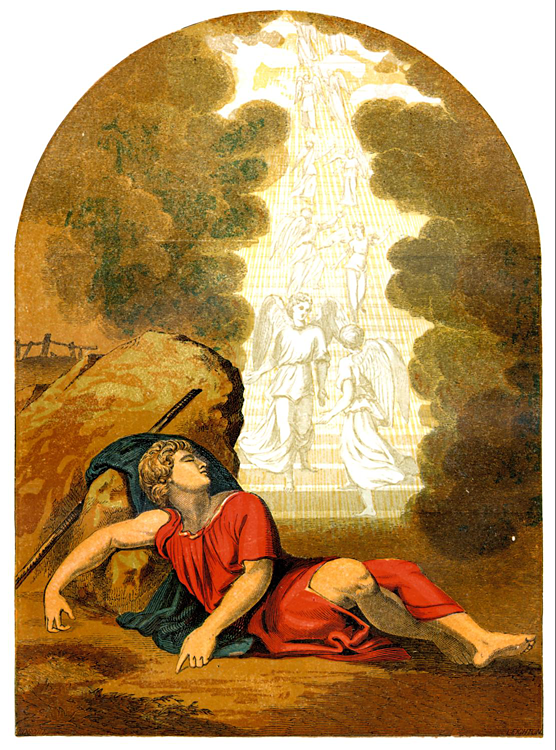
Jacob’s vision of a ladder to heaven is one of those enigmatic scriptural passages which has befuddled the keen intellects of many Bible scholars down through the ages. Perhaps the deeper elucidations of Jacob’s vision has escaped the reader as well. If so, you are not alone, for even well-known Christian commentators such as Matthew Henry and Adam Clarke struggled to find the deeper meaning of this allegorical dream but fell short of an adequate explanation. They realized that it had something to do with the Person of Yeshua the Messiah and his heaven-ordained ministry to reconcile earth’s inhabitants to their Heavenly Father and Creator but had little more to say on the matter. Keil and Delitzsch don’t even connect Jacob’s dream to the Person of Yeshua. Other than vague explanations as to the dream’s interpretations, these esteemed scholars have nothing more to proffer the reader. Little if anything is said of the allegorical meaning of the ladder, the dust, the stones (plural) becoming a stone (singular) or of the significance of “the place.” Even the unusually insightful biblical scholar Arthur W. Pink in his book, Gleanings In Genesis,though he draws 101 parallels between Joseph and Yeshua the Messiah, gives the reader no more insights into the spiritual and prophetic implications of Jacob’s ladder than do Henry and Clarke. This is some of the best that Christian scholars have to offer on this subject. As we are about to discover, below the tip of this gigantic biblical iceberg there is a vast revelation of truth in Jacob’s prophetic and allegorical dream that is waiting to be explored.
But before delving into the prophetic and symbolic significance of Jacob’s ladder dream, perhaps Jewish Torah scholars have something to offer us. It goes without saying that the traditional Jewish interpretations will be devoid of any references to Yeshua the Messiah, but otherwise, perhaps we glean some pearls of understanding from them anyway. After all, these sages have been studying this passage for more than 3800 years! Curiously, Shlomo Yitzchaki known by his rabbinic acronym as Rashi and viewed by many Jews as the greatest Torah expositor of the last 1000 years, has little to add to our understanding as does Samson Raphael Hirsch, the great nineteenth-century rabbinic Torah scholar. The Baal HaTurim in his Torah commentary adds some interesting insights relating to the subsurface or hidden meaning of some of the Hebrew words used in the text that not only confirm the simple or plain meaning of the text, but add depth to it as well on an allegorical or prophetic level. We will cite a number of other Jewish scholars who between them contribute greatly to our understanding of the text. But for all their collective wisdom, these Jewish scholars, not surprisingly, fail to connect the meaning of the ladder to YHVH’s plan of redemption and salvation for Israel and ultimately for all of mankind. They fail to see the big picture and master plan involving the Messiah, the Living Word of Elohim, sent from heaven to redeem lost mankind. Yet as we will discover, this revelation and much more besides is to be found in this dream that takes up only one verse in the Bible!
Both the Christian scholars and the Jewish sages are blind in part to the truth behind Jacob’s dream, since both have rejected half of the key to unlocking the full depth and panoramic understanding of this vision. The former has, to one degree or another, rejected its Jewish or Hebraic roots and the relevance of YHVH’s written Torah, while the latter has rejected Yeshua, Living Word or Living Torah sent from Heaven to give us wisdom, understanding, redemption and salvation. Each side is spiritually blind in part to one-half of YHVH’s truth (Rom 11:25). Both have stumbled over the stone of stumbling and the rock of offence (Isa 8:14). The Christians have rejected much of the truth of the written Torah, while the Jews have rejected the spirit of prophecy and YHVH’s plan of salvation as revealed through Yeshua, the Living Torah (Rev 19:20). To understand the heart of the Father as revealed in his written word, Yeshua said that it would take both spirit and truth (John 4:23–24). With these realities in mind, let us proceed to understand the vision of Jacob in its full spirit and truth, panoramic scope.
The Text
Let’s now read the text in Genesis 28:10–22 pertaining to Jacob and his dream of the ladder to heaven. The bolded words are defined below under the “Word Definitions” section of this teaching.
10 And Jacob went out from Beersheba, and went toward Haran.
11 And he encountered/interceded/prayed at theplace, and spent the night there, because the sun had set; and he took of the stones of the place which he arranged around his head, and lay down in theplace to sleep.
12 And he dreamed, and behold a ladderset up earthward/on the earth, and the top of it reached to heaven: and behold the angels of Elohim ascending and descending on it.
13 And, behold, YHVH stood above it, and said, I am YHVH, Elohim of Abraham your father, and the Elohim of Isaac: the ground upon which you are lying, to you will I give it, and to your seed/descendants;
14 And your seed/descendants shall be as the dust of the earth, and you shall spread out powerfully to the west, and to the east, and to the north, and to the south: and in you and in your seed/descendants shall all the families of the earth be blessed.
15 And, behold, I am with you, and will guard you in all places wherever you go, and will bring you again into this land; for I will not forsake you, until I have done what I have spoken about you.
16 And Jacob awoke out of his sleep, and he said, Surely YHVH is in this place; and I knew it not.
17 And he was afraid, and said, “How awesome is this place! This is none other but the house of Elohim, and this is the gate of heaven.
18 And Jacob rose up early in the morning, and took the stone that he placed around his head, and set it up for a pillar, and poured oil upon the top of it.
19 And he called the name of the place Bethel: but the name of that city was called Luz originally.
20 And Jacob vowed a vow, saying, “If Elohim will be with me, and will guard me in this way that I go, and will give me bread to eat, and clothes to wear,
21 So that I come again to my father’s house in peace; then shall YHVH be my Elohim:
22 And this stone, which I have set for a pillar, shall become a house of Elohim: and whatever you give me I shall repeatedly give a tenth/tithe to you.” (emphasis added)
Word Definitions
To understand this passage properly and to discover the deep spiritual mysteries contained therein, we must first define some of the words from a biblical, Hebraic perspective.
Verse 11,The place [haMakom]. In Jewish understanding, this Hebrew word is a reference to Mount Moriah, that is, the “Temple Mount” (The ArtScroll Stone Edition Chumash, p. 144, commentary on verse 11) where Isaac was “sacrificed” and the Jerusalem temple was eventually built. The imminent Jewish Torah scholar, Rashi (Solomon Yitzhaki, 1040–1105) in his definitive Torah commentary also identifies the place mentioned in this verse with Mount Moriah. In TheArtScrollBereishis, quoting Rashi,we read, “The Torah does not tell us which place. Instead it uses the definite article in the place, implying that the identity of the place was so well known that it need not be specified. This indicates that it refers to the site referred to elsewhere by the designation the place: Mount Moriah, of which it is said [in Gen 22:4 (see also Deut 16:16)]: ‘he saw the place from afar’” (p. 1219). The same commentary continues, “It cannot refer to any place other than Mount Moriah since the Torah itself refers to that holy site as makom, the place, in several places [Gen 22:4; and as Ralbag notes, the future Temple site on Mount Moria is also obliquely referred to in the Torah as the ‘place’ Hashem [YHVH] shall select (Deut 16:16 and frequently)] Accordingly, by its reference to place here, the allusion to Moriah is clear (Mizrachi)” (ibid.). Baal Ha Turim notes in his Torah commentary that in verse 11 the term the place appears three times “which is an allusion to the three pilgrimage [aliyot] festivals [i.e., Pesach/Passover and Chag haMatzot/the Feast of Unleavened Bread, Chag haShavuot/the Feast of Weeks or Pentecost and Chag haSukkot/the Feast of Tabernacles] at which times Jacob’s descendants would ascend to this place [i.e., the temple in Jerusalem].”
Verse 11, Encountered, interceded, prayed [Heb. paga]. According to The ArtScrollBereishis Commentary, the Jewish sages interprets the word paga, as used here and in Genesis 23:8 and Jeremiah 7:16 to denote prayer and intercession (p. 1219). If we realize that this place was Mount Moriah where the future temple would be built (explained below), then Jacob’s praying at this spot is symbolic and prophetic, since the temple was to be known later as a house of prayer (Isa 56:7; Matt 21:13; Mark 11:17; Luke 19:46), and became the place on earth where YHVH would hear the prayers of his people (2 Sam 7:27; 1 Kgs 8:29; 2 Chr 6:20, 29; 7:12).
Verses 11, 18, 22,Stone(s) is the Hebrew word ehben meaning “stone through the meaning to build” (from banah [meaning “to build, builder”]).
Examples of the usage of the word ehben elsewhere in the Tanakh (Old Testament) include the following:
Refers to the 10 Words (“Commandments”) on tablets of stone (ehben) (Deut 4:13; 5:22; Exod 24:12; 34:1, 4).
Refers to the Messiah who was the Stone (ehben) the builders (banah) rejected that eventually became the head of the corner (Ps 118:22).
Refers to the Messiah who was to become a stone (ehben) of stumbling and a rock of offence to both the houses of Israel (Isa 8:14).
Refers to the Messiah when YHVH through Isaiah prophesied, “Behold I lay in Zion for a foundation a stone [ehben], a tried stone [ehben], a sure foundation” (Isa 28:16).
A title for Elohim: the Stone (ehben) of Israel (Gen 49:24).
Verse 12,Ladder is the Hebrew word sulam meaning “staircase”(from salal [meaning “cast up, lift up, exalt”and according to TheTheological Wordbook of the Old Testament (TheTWOT) probably means “a highway or literally a road that is higher than the adjacent terrain.” The TWOT notes that this word is used by the prophets in the sense of “God’s [spiritual] highway” from which Israel had departed to follow false bypaths (Isa 57:14; 62:10]).
In Jewish mystical literature, this ladder is equivalent to a tree (Heb. etz)(e.g., as in the sephirotic tree in later Jewish mystical thought) and a tzelon Elohim; (i.e., a supernatural image of Elohim; Messiah Vol. 3, p. 149; by Avi Ben Mordechai).
On verse 12, Jewish sage Ya’acov Baal Ha Turim (born ca. AD 1269) in his Torah commentary notes several interesting facts about the word ladder (Heb. sulam). First he states that the word sulam is spelled defectively (with the kubutz vowel point replacing the vav after the letter samech). Therefore, sulam is spelled samech, lamed, mem or okx instead of samech, vav, lamed, mem or okux. What is the significance of this occurrence in the Torah? According to Michael Munk in his book, The Wisdom In the Hebrew Alphabet (pp.100–103) defective spelling of words occurs occasionally in other words in the Torah such as shalom/o`uKA(peace, well being) and owr/r~ut (light). When a word is spelled defectively, it signifies that the word should be understood to take on a diminished or defective meaning as opposed to the full expression of the word at its highest spiritual level. For example, in the first chapter of Genesis prior to verse 14 (when the physical luminaries were created) the light that shown prior to the fourth day was a supernatural or spiritual light emanating from Elohim himself, and therefore the Hebrew word for light, owr/r~ut,is spelled complete with the vav (r~ut) whereas the light that shone from the physical luminaries after the creation on the fourth day was a physical or low level of light, and therefore the word light is spelled defectively, without the vav (r~t). This occurs in the Tanakh with the word shalom/o`uKA as well. Spelled defectively (i.e., o`K{A) it refers to a physical, man-made peace, whereas spelled complete it represents the spiritual peace which comes only from Elohim. So what is the significance of the defective spelling of the word sulam (ladder) in our text? Hold this question in abeyance for the time being, for we shall answer it below.
Baal HaTurim also notes that the gematria (or numerical valuation of the Hebrew letters) for sulam is the same as that for the words wealth or money and poverty as well as for the words sound or voice. Keep this in mind also. Understanding these concepts are all part of unravelling the mystery of what (or who) the ladder represents!
Finally, Baal HaTurim has one other observation to make about the word sulam. The letters or consonants (S-L-M; Hebrew words generally consists of only consonants) are the same as the word for idol (S-M-L, pronounced seh-mehl). Based on this association, Baal HaTurim suggests that Elohim was showing Jacob a prophecy that his descendants would eventually fall into idolatry. We shall explore some other implications of the similarity between these two words later on.
Verse 12,Set up is the Hebrew word natsab meaning “to set up, put, place, stand firmly, fix, establish, to be planted”(Judg 9:6). Examples of usage of the word natsab elsewhere in the Tanakh include:
“YHVH stands in his congregation.” (Ps 82:1)
“I saw YHVH standing upon the altar.” (Amos 9:1)
Verse 12,Earthis the Hebrew word eretz or artzah meaning “to be firm, the earth, a land, country, ground, world.” Eretz throughout Scripture and in modern Hebrew is a colloquial expression denoting “the land of Israel.”
Verse 12,Topis the Hebrew word rosh meaning “head, beginning, captain, chief, first, height, highest part, summit or foremost.” Examples of the usage of the word rosh as found elsewhere in the Tanakh include:
The stone which the builders refused is become the head of the corner [i.e., the Messiah, Ps 118:22)
Matthew 21:42 quoting Psalm 118:22 referring to Yeshua.
Other Hebrew-speaking Jewish authors of the Testimony of Yeshua (New Testament) carry this same idea into their writings:
First Peter 2:7–8 speaks of the stone which the builder disallowed, the same is made the head of the corner, a stone of stumbling, and a rock of offense which stumble at the Word or Torah of Elohim (i.e., Yeshua, who is the Living Torah).
The saints are the house [Heb. bethel] of YHVH and are built on the foundation of the apostles and prophets, Yeshua the Messiah himself being the chief cornerstone in whom all the building fitly framed together grows into a set-apart [Heb. kadosh] temple in YHVH in whom you are also built together for a habitation of YHVH through the Spirit (Eph 2:20–27).
Baal Ha Turim in his Torah commentary on this verse notes that the numerical values of the words “a ladder set up or standing”is equivalent to the ramp leading up to the altar of the temple and the concept of the ladder “set up on the earth or earthward”is an allusion to the altar which in Exodus 20:24 is described as an “altar of earth.” The expression its “top or head reaching heavenward”is an allusion to the fragrance of the offerings, which ascended heavenward as a sweet savor to YHVH (Exod 29:18; 29:25; etc.). Below we will learn the spiritual significance of this to the redeemed believer in Yeshua.
Verse 14,Dust is the Hebrew word aphar meaning “pulverized earth, clay, dry, loose earth.” On the phrase in this verse, “Your descendants shall be as the dust of the earth,” The ArtScrollBereishisCommentary states that Sforno (a notable sixteenth-century Italian Jewish philosopher and Bible exegete) connects this phrase with the following one, rendering: Only after your offspring shall have become as degraded as the dust of the earth (see Isa 51:23) shall they spread out powerfully to the west, east, north, and south. For, as the Sages have taught, God’s future salvation [or, the Final Redemption which is to occur prior to and during the Messianic Age (or Millennial Age) will come only after Israel has experienced much degradation. R. Bachya (a late eleventh-century Jewish philosopher and moralist) interprets this word similarly. He notes that Elohim compared Israel to the dust of the earth rather than to the stars in heaven (as he did when he blessed Isaac in Gen 26:4) to intimate that Israel will become like dust in ways other than abundance. Dust has the connotation of lowliness inasmuch as Israel would be downtrodden like the dust while in exile. Also, like dust, however, they would endure everything and prevail, just as the earth survives all those who tread on it. As Isaiah foretold (Isa 26:5): He brings it to the dust, yet it is from the dust that Israel will be redeemed, as it is written (ibid. 52:2): Shake yourself from the dust, arise…O Jerusalem” (p. 1231). Here are several examples in the Tanakh of the Israelites being likened to dust trampled under the feet of the heathen:
YHVH to Abram: I will make your seed as the dust of the earth… (Gen 13:16)
Who can count the dust of Jacob, and the number of the fourth part of Israel? (Num 23:10)
Now, O YHVH Elohim, let thy promise unto David my father be established: for thou has made me king over a people like the dust of the earth in multitude. (2 Chron 1:9, emphasis added on all)
Verse 17,Gate (of heaven) is the Hebrew word shah-ar meaning “opening, gate, door.” According to The TWOT, the root idea of this word is “to split open, to break through.” The term gate in Scripture can sometimes be used as a metonymy where the gate represents the whole of the city (e.g., Gen 22:17; 24:60). In Genesis 28:17, it is a symbol of the means of access to heaven (ibid.). The ArtScrollBereishis Commentary says, “It is the gate through which prayers and sacrifices ascend to heaven [according to the Jewish sages, Rashi and Ramban]” (p. 1238).
This heavenly gate is literally a portal into the spirit or heavenly world beyond.This spot where the future temple was built was a portal or a gateway to heaven. Down through the ages, spiritist-type people are often looking for sacred spots where they believe portals exist in an effort to connect to the spirit world beyond in order to receive secret knowledge or to seek wisdom and understanding about the meaning of life. The wonderful thing for the saints is that Yeshua promised that his disciples would receive the Holy Spirit, who would live within them and through their human or personal spirit would connect them to the divine. Christians do not need sacred spots or portals, relics, magic rituals, incantations or psychotropic drugs to bring us into the throne room of the Creator. For the redeemed believer, Yeshua the Messiah is our portal, our gate to heaven, our way to the Father in heaven, the way, the truth and the life. If Yeshua is your Lord and Savior, rejoice, child of the Most High Elohim, for you are the temple of the Spirit of Elohim, who now lives in you because of your personal relationship with Yeshua the Messiah! Savor, treasure and abide in this divine Truth!
Verse 19,Beth El means “house of El.” Beth Elwas formerly Luz meaning “almond (tree), turn aside, depart.”
Jacob’s Dream Explained
Now that we have defined our terms, it is time to start putting the pieces of this allegorical and prophetic puzzle together. The Jewish sages know that this dream is prophetic when they state, “In general, the expositors [of the Torah] agree that the vision was a disclosure of the future of the Jewish nation” (The ArtScroll Bereishis Commentary, vol. 1(b), p. 1224).
Classical Christian commentator, Adam Clarke, in his commentary on Genesis, in grasping to comprehend the meaning of the dream, suppositions that the ladder “was probably a type of [Messiah], in whom both worlds meet, and in whom the divine and human nature are conjoined. The ladder was set up on the earth, was manifested in the flesh, and in him [Messiah Yeshua] dwelt all the fullness of the Godhead bodily. Nothing could be a more expressive emblem of the incarnation and its effects; [Yeshua the Messiah] is the grand connecting medium between heaven and earth, between God and man. By him God comes down to man, through him man ascends to God” (Clarkes Commentary, vol. 1, p. 176).
Genesis 25:21, Isaac pleaded. As with his father Abraham, the faith of Isaac was tried mightily. Rebekah was barren and Isaac entreated YHVH that his promises to Abraham might be fulfilled to him as well. YHVH at long last answered Isaac’s prayer with twins, Esau and Jacob. We learn from this that though the faith of the redeemed believer be tried, the promises of YHVH are always sure. What spiritual mountains have you been asking in faith for YHVH to remove from your life (Mark 11:23), or promises of YHVH to be fulfilled in your life (2 Cor 1:20), or prayers to be answered? Galatians 6:9 says, “And let us not be weary in well doing, for in due season we shall reap, if we faint not.” Remember this: Never cease praying and believing, and believing that you receive (Mark 11:24)! Doubts and fear will come, yet prevailing prayer and faith overcome all. (Read 1 John 5:4–5.)
Genesis 25:23, Two nations…one people shall be stronger than the other people; the elder shall serve the younger. We can see the fulfillment of this interesting prophecy in the subsequent interplay between the Jews and western Christians versus the Muslims to this day in numerous ways. With few exceptions, the Muslims nations have always played a subordinate role to the Jews and Christians. Recently, however, the balances are shifting slightly in favor of the Muslims, who are endeavoring to take over many Western nations through illegitimate means or by terrorist activities. As prophesied in the Scriptures, YHVH is allowing this as a disciplinary judgment against his people because they have largely forsaken him.
Genesis 25:27–28, Esau vs. Jacob. There are only two types of people on this earth: Esaus and Jacobs. Please reflect on this for a moment. The evidence of this fact is illustrated by those who hung on either side of Yeshua at his crucifixion: a believer or one who had faith in Yeshua, and one who did not. Let’s explore this idea.
Hanging on either side of Yeshua on the cross, spiritually speaking, there was a spiritual “Jacob” and an “Esau” (Matt 24:39–41; Luke 23:39–43). One of the thieves repented and accepted Yeshua as his Savior, and was blessed for it. The other thief only mocked and scorned Yeshua and, hence, died in his sins spiritually condemned forever.
So what type of person was Esau? The Bible describes him as a cunning hunter (Gen 25:25). Nimrod was the only other person in Scripture termed “a hunter” (Gen 10:9). What kind of person would a hunter have been then compared to the typical farmer or herdsman of the day like Isaac and Jacob? Think wild, violent, uncivilized and savage versus civilized and domesticated. Even the meaning of the name Esau meaning “hairy or rough”suggests what type of individual he was.
We are given a clue to Esau’s character when Scripture reveals that Esau was “a man of the field.” Field in Scripture can be a metaphor for the world (see Matt 13:38). This description seems to fit Esau, for he was a profane (unhallowed, worldly, ungodly) man (Heb 12:16). He had no esteem for things of spiritual and eternal value. That is why he sold his birthright—his spiritual inheritance. He lived for the moment and had no eye for, hope in, or faith toward the future. His eyes were on worldly gain, not on righteousness. He sought the instant gratification of his sensual nature. That is why he sold his birthright for a bowl of lentils in order to satiate his physical hunger at the moment; that is, his god was his belly and he lived for the moment without thinking of the future consequences of his actions. In so doing, he disdained and dishonored his family heritage and those things that were highly esteemed by his father and grandfather.
Moreover, in Genesis 26:34–35, we see, to the great grief of his parents, that Esau married one of the local, heathen Canaanite girls. He did not honor his parents or respect their wishes to marry someone of like spiritual faith and belief.
Do these traits describe some unbelievers that you know, and even some believers or their children who have abandoned the biblical faith in which they were raised, while preferring to follow the heathen and unbiblical values of the world around them? Perhaps you were even like this before you were saved.
Truly Esau was a prodigal son, who unlike the wayward son in Yeshua’s parable by the same name, sadly, left his father’s house and forsook the ways of righteousness for the temporal and temporary pleasures of the world.
Genesis 25:30,Esau…Edom. Eventually the descendants of Esau would settle in the area SE of the Dead Sea in what is now modern Jordan and north of the Gulf of Aqaba and the land of Midian. This area is referred to in the Bible as Edom or Mount Seir. However, several years after the fall of Jerusalem in 586 BC, and country of Edom was utterly destroyed either by the Babylonians or other neighboring peoples (see Keil and Delitzsch, JFB, Josephus Ant. 10.9.7). After the Babylonian captivity, the westward fleeing Edomites took refuge in southern Judah (in the area around Beersheba and encompassing the modern Gaza Strip), which became known as Idumea (Nelson’s Illustrated Bible Dictionary; The International Standard Bible Encyclopedia). According to Josephus, the Maccabean Jews subjugated the Edomites or Idumeans and forced them to convert to Judaism (Jospephus Ant. 13.9.1, 15.5). Subsequently, this paved the way for Herod the Edomite’s kingdom. Idumea is mentioned once in the Gospel of Mark, since people from that territory were among the multitudes who came to hear Yeshua (Mark 3:8).
Edom (the Spirit of Islam) Exposed
Many, if not most of the modern Moslems or Muslims (especially the Arabs) trace their lineage back if not biologically then spiritually to Ishmael, the son of Abraham by Hagar. Islam in its religious book, the Koran, claims that it was Abraham and Ishmael who built the Kaaba, which is the small building containing a stone that supposedly fell from heaven. This shrine is located in the midst of the Great Mosque in Mecca, Saudi Arabia.
In Genesis 16:11–12 YHVH prophesied the following concerning Ishmael and his descendants:
The angel of YHVH said to her further, “Behold, you are with child, And you shall bear a son; and you shall call his name Ishmael, because YHVH has given heed to your affliction. And he will be a wild donkey of a man, his hand will be against everyone, and everyone’s hand will be against him; and he will live to the east of all his brothers.”
More than two thousand years after Moses wrote the Book of Genesis which records YHVH Elohim initiating a covenant with Abraham (the Abrahamic Covenant) and then conferring the birthright and covental blessings upon Isaac, Abraham’s son, Mohammed, the founder of Islam, changed the story. Mohammed twisted the biblical account of Abraham’s giving the birthright blessing to Isaac and believe instead that Ishmael, Abraham’s son through Hagar, his concubine, was the promised son of blessing. Both Israelites and Arabs, therefore, believe that they have a right to the Promised Land of Canaan, and, hence, this disagreement is at the roots of the modern Arab-Israeli conflict.
Scripture further records that Esau, the disinherited son of Isaac, also had a jealous anger against his brother Jacob, who received the Abrahamaic, covenantal birthright promise instead of him. Scripture further records that Esau married the daughter of Ishmael (Gen 28:9). Thus in some of Esau’s descendants (he had more than one wife), the lineage of Esau and Ishmael were combined and both men had a jealous feud with the sons of Jacob, which has been passed down generationally to this day.
The Bible has more to say prophetically about the descendants of Edom (another name for Esau, Gen 31:6, 8) than about those of Ishmael. Edom is portrayed as an aggressive and bloodthirsty people who are opposed to Israel at every step. We will discover what Scripture has to say about this below.
In the mean time, let’s take a closer look at Edom or Esau.
Edom (meaning “red”) was Esau’s nickname (see Gen 25:25, 30; 36:1, 8–9, 19, 43).
Esau intermarried with the descendants of Ishmael (Gen 28:9).
Seir is another name for the land of Edom (Gen 32:3; 33:16; 36:8) which was historically located SE of the Dead Sea in what is now located in modern Jordan. Eventually, the Edomites were forced out of that area and moved westward into the area of southern Israel west of the Dead Sea. In the time of the Romans, this area was known as Idumea and overlapped into the modern area known today as the Gaza Strip. Thus, it is likely that some modern day Gazans, including the terrorist group Hamas, may be ancient descendents of Edom. If so, this may explain in part their murderous hatred for Israel and the Jews.
Esau intermarried with the people of Canaan (Gen 36:2). He intermarried with the Hittites, the Hivites, as well as the Ishmaelites.
His descendants included the Amalekites (Gen 36:12, 16), who fought against the children of Israel upon leaving Egypt and as soon as they entered the wilderness en route to the Promised Land (Exod 17:1).
Esau’s sons were dukes or chieftains (leaders of clans) and kings (Gen 36:15–16, 40–43).
Although Esau’s direct lineage was confined to the area of the traditional land of Edom, in modern-day Jordan, it is clear from the biblical record that he and his descendants intermarried with many of the neighboring nations, so that his descendants were scattered far and wide over the region that later became known as the Holy Land.
The entire one-chapter Book of Obadiahis a prophecy against Edom. Let’s note several key points in this prophecy that might help us to understand some things about Edom in light of end-time Bible prophecy and how this relates to the end-times Arab-Israeli conflict. When you think of Edom, think of the modern day Palestinians.
The Book of Obadiah has more to say about Edom:
Obadiah 1:2, The descendants of Edom are greatly despised (or scorned, held in contempt, disdained).
Obadiah 1:3, Though they dwell in the clefts (places of concealment, retreats) of the rocks, they are proud and view themselves as invincible.
Obadiah 1:4, YHVH promises to bring Edom down.
Obadiah 1:7, Esau has a confederacy (league, alliance) of nations, which include many of the modern Moslem and Arab nations.
Obadiah 1:11, Edom’s eyes are on Jerusalem. Edom, along with other foreign enemies of Israel, will cast lots for Jerusalem (seek to divide it among the nations or religions of the world as an international city under the control of the United Nations?).
Obadiah 1:13, Edom has entered into the gates of the land of Israel in the day of her calamity or disaster.
Obadiah 1:14, Edom will kill Jewish refugees trying to escape the land of Israel in her time of distress.
Obadiah 1:15, The time frame of the fulfillment of these prophecies is “near” the day of YHVH, when he will judge Edom and the other heathen nations.
Obadiah 1:16, Edom will be drinking (celebrating?) on the Temple Mount which is YHVH’s “holy mountain,” and as a result, they shall drink the cup of YHVH’s wrath.
Obadiah 1:17, The house of Jacob will eventually get the Temple Mount back!
When we read the Book of Obadiah, we see a graphic, prophetic descriptions of the modern Palestinian and other Islamo-terrorists who hate Israel, the Jews as well as Christians.
The Bible has much to say about who Jacob and his descendents represents in end-time prophecy. Now we also see who Jacob’s descendants’ arch-enemy will be, and who will attempt to prevent both the Jews and Christians from returning to the land of Israel in fulfillment of Bible prophecy. The return of the scattered descendents of Jacob (modern Jews and Christians) will begin to happen in the end times before the coming of the Messiah and continue after his return. The Bible is clear on this as we have written about elsewhere
As we noted, Edom’s hatred for Israel has its roots in the antagonism between Ishmael and Isaac, and then afterwards between Esau and Jacob. The hatred that Esau had for Israel has been passed on down to successive generations of Edomites. The biblical prophets discusses this murderous antagonism on Edom’s part as being carried down generation to generation to the very end times. Let’s review some of other biblical prophecies in this regard.
Ezekiel 36 speaks about the conflict between end-time Edom and end-time Israel. In verse two, we see that the enemies of Israel have regarded the “ancient high [or declared, promised] places” of Israel as “ours in possession.” This is a clear reference to the holy places in Israel (e.g., the Temple Mount for the Jews and Bethlehem and Nazareth for the Christians—only in recent years have the Palestinians taken Bethlehem and forced—out of persecution and intimidation—the majority of the large Christian population of that city to leave). “High places” can also refer to the militarily strategic high places such as the Golan Heights and the ridges surrounding the eastern shores of the Sea of Galilee.
Next, let’s look at Ezekiel 35, which is a prophecy against Edom. In verses four through five, we see that end-time Edom will be devastated because of its perpetual hatred for the children of Israel. They have killed their enemies by the power of the sword. This is how Muslim’s have traditionally spread their religion—by their curved scimitar sword which is displayed prominently on the flag of Saudi Arabia to this day. Historically, advancing Moslem armies would force their captives to leave, covert or die. According to verse five, this will be occurring at the time of the punishment (of the children of Israel?) at the time of the end (NAS) or the end of time (lit. Hebrew). This is another example of YHVH’s using Edom (Esau) to bring Ephraim and Judah to its knees and to repentance in the time of the end.
In verses six through nine of the same chapter, we see that YHVH will punish Edom for its blood-thirstiness against Israel and will devastate its cities and slay large numbers of its people. Other biblical prophecies indicate that the militaries of Judah and Ephraim will be the means by which YHVH accomplishes this.
Finally, in Ezekiel 35:10, Edom (Islam) wants to take over or possess the two countries or lands (Heb. eretz) of Israel or those of Judah and Ephraim (or the Jews and Christians), even though YHVH was there (in the lands of his people). Their anger and hatred against Israel is based on envy or jealousy (verse 11) of Israel.
The Koran, the religious book of Islam, has taken the historic and prophesied hatred of Edom and formed a religion around it. The Koran was written by Mohammed, a Jew and Christian hater, more than one thousand years after the prophecies of Ezekiel and Obadiah. Here are some quotes from the Koran that confirm the prophecies of the Bible with regard to Edom.
Make war upon those to whom the Scriptures have been given as believe not in God [Allah]…and who forbid not that which God and His Apostle [Mohammed] have forbidden, and who profess not the profession of the truth, until they pay tribute out of hand, and they be humbled. The Jews say, “Ezra is a son of God”; and the Christians say, “The Messiah is a son of God.” Such sayings in their mouths. They resemble the sayings of the infidels of old! God do battle with them! How they are misguided! (Sura 9:29–30)
When thy Lord spake unto the angels, “I will be with you: therefore stablish ye the faithful I will cast a dread into the heart of the infidels.” Strike off their heads then, and strike off from them every finger-tip. (Sura 8:12)
“O people of the Book!…Can I announce to you any retribution worse than that which awaiteth them with God? They whom God hath cursed and with whom He hath been angry—some of them hath he changed into apes and swine; and they who worship Thagout are in evil plight, and have gone far astray from the right path. (Sura 5:64–65)
Only recompense of those who war against God and His Apostle, and go about to commit disorders on the earth, shall be that they shall be slain and crucified, or have their alternate hands and feet cut off, or be banished from the land…(Sura 5:37)
Genesis 25:32,I am about to die. The implication here is not that Esau was about to die of hunger, but that he would die before seeing the fulfillment of the promises YHVH had made to Isaac and Abraham regarding possessing the land of Canaan. Remember that YHVH had told Abraham that it would be four hundred years before his descendents would inherit the land of Canaan (Gen 15:13), since “the sins of the iniquity of the Amorites is not yet complete” (Gen 15:16). So what good would his birthright be? He would see no material gain from this land inheritance in his lifetime.
Actually Esau was right—but only in the short term perspective; however, he was totally wrong in the long term perspective! Esau was only motivated by temporal and material gain, not spiritual, future rewards, which are possessed by faith, not by sight (Heb 11:1–2, 8–10, 39–40). Sadly, the vast majority of people on earth to this day operate under this shortsighted mentality.
Esau was a profane and secular man, and the Spirit and character of YHVH strive against and loathe such individuals (Mal 1:3; Rom 9:13), who prefer the present secular and sensual pleasures over pleasing YHVH. In reality, their god is their belly and they mind earthly things (Phil 3:19). This was the state of the Laodicean believers in Revelation 3:14–22.
Pause now and reflect. Do not pass over these admonitions lightly. Search your heart for the areas where you put the secular, material and sensual above YHVH, and then repent of faithlessness. Ask the Spirit of YHVH to open your eyes to the blind areas in your life and help you to acquire a more heavenly-mindless focus.
Genesis 26
Genesis 26:1–29,There was a famine in the land. At the well of Lachai-roi (or “the well of the Living One seeing me,” Gen 24:62), Isaac was fruitful. There he met his wife while in communion with YHVH (Gen 24:62–64). Isaac also dwelt in that area for 20 years, and there he entreated YHVH because of Rebekah’s barrenness (Gen 25:21), and YHVH answered Isaac’s prayer and Rebekah gave birth to twins (Gen 25:22).
But because of famine in the land, Isaac felt compelled to leave Canaan to seek relief in Egypt following the earlier footsteps of his father, Abraham. At this point, we must ask ourselves whether it is wise for the saints to rely on “Egypt” (a metaphor for the world) for their physical sustenance instead of trusting YHVH and believing that where he has planted us and blessed us is where we should stay? One needs to answer this question carefully and then and only then follow the leading of the Holy Spirit.
Evidently, YHVH didn’t want Isaac to go down to Egpty, for while en route to that land, he graciously redirected Isaac stay in Canaan and to sojourn in Gerar (temporarily), where he would continue to bless him and his posterity (Gen 26:2–4).
Isaac obeyed YHVH—more or less. Isaac ended up in Gerar located on the border between Canaan and Egypt and dwelt there a long time but not temporarily as YHVH had instructed him (Gen 26:6, 8). Instead of fully obeying YHVH, it was as if Isaac was hedging his bet between faith and fear, between Canaan, the land of promise, and Egypt, the land of comfort for the flesh man. How often do we vacillate between two opinions and then compromise between YHVH’s will and our own in matters where he has given us clear direction?
This place of spiritual indecision and weakness put Isaac in a compromising situation (Gen 26:7). He felt compelled to lie about his wife, thus repeating the sin of his father (Gen 20:1–2). Compromised obedience puts us in compromising situations where in order to “save our skin” we often have to compromise our moral values.
Though Isaac was not in YHVH’s perfect will, YHVH was still faithful to keep his promises that he had made to Isaac earlier (Gen 26:3–4). Isaac was blessed one hundred fold in his wealth (Gen 26:12–14).
Despite YHVH’s blessings, Isaac’s labors were not without difficulty and opposition from an enemy who was intent upon stealing the water wells that were rightfully his (Gen 26:12–15).
In the arid regions of the Holy Land, wells are essential for survival and prosperity. Wells are often a biblical metaphor for salvation, life, abundance and truth—things the enemy is intent on taking from YHVH’s servants (in this light, consider Isa 12:3; 55:1–3; Ps 36:9; John 4:7–14; 7:37–39; 10:10). Do not let the enemy steal from you that which YHVH has given to you.
Genesis 26:2–5,YHVH appeared to him. Like his father Abraham, Isaac was also a prophet in that YHVH spoke directly to him giving him instructions on what to do, where to go and revelation about what was to occur in the future.
Genesis 26:5,Because. (See notes at Gen 18:19.) Based on Paul’s teaching in Romans chapter four, we see that the Abrahamic Covenant is the model for salvation, which can be tersely stated as “salvation is by grace through faith leading to or resulting in good works or righteousness” (Eph 2:8–10). From this verse, it might appear that the Abrahamic Covenant was not a faith-based covenant at all, but a works based one. In other words, Abraham had to do something to be counted righteous or to come into good standing with Elohim—a concept which is commonly referred to as “earning one’s salvation through one’s good works.” The fact is that in the Abrahamic Covenant, Abraham only had to have faith and believe in YHVH to be justified or to be considered righteous by Elohim (Gen 15:6). It was on this basis that YHVH granted him “salvation.” But this initial step of faith on Abraham’s part and the righteousness Elohim attributed to him was but the first step in Abraham’s faith walk. From that point forward, he had to walk out his faith and continue trusting YHVH (see also Gen 19:5). The apostolic writers present the truth that the steps one takes while coming into a relationship with Elohim is a journey comprised of many steps, not a one time event that occurs at the beginning of that walk. Our faith-walk is more than just mental assent with a few emotion experiences thrown in for good measure. It is more than just following the golden rule about loving our neighbor in some nebulous sort of way. It involves faithfulness to YHVH’s instructions. James clearly states in his epistle that this is how one demonstrates the legitimacy of one’s faith when he declares that faith without works is dead (Jas 2:18, 20, 26; see vv. 12–26 for context). Abraham demonstrated his faithfulness by his obedience to YHVH’s Torah or YHVH’s Word or voice. Furthermore, as a result of this obedience, YHVH promised to bless him beyond simply being granted initial salvation or righteousness. This two-step approach or model still holds true in the Testimony of Yeshua. One is saved or delivered from the wages of their past sin (Rom 3:25), which is death (Rom 6:23), by their faith (or initial salvation), and then one ceases from that sin by continuing in the good works of Torah obedience (Eph 2:8–10). Moreover, Yeshua and the apostolic writers in numerous instances reveal that future rewards (both temporal and eternal rewards) come as a result of one’s good works (e.g., Matt 5:19). The ultimate reward and the outworking of one’s faith walk is being granted eternal life and inclusion in the family of Elohim.
Abraham obeyed [Heb. shema] my voice [Heb. kol], and kept [also: observe, preserve, guard; shamar, RNA] my charge [Heb. mishmereth], my commandments [Heb. mitzvot] my statutes [Heb. chuqqah], and my laws [Heb. toroti]. Some Bible teachers incorrectly state that the Torah-law does not predate Moses. Not only does this verse disprove this false notion, but it also shows that Abraham kept the Torah-law of Elohim. In a Hebrew lexicon or word dictionary, look up each of these words and study their meanings and how they are used contextually in the Scriptures. One will discover that the Torah is much more than just a set of dos and don’ts. Rather it reflects the very heart, character and righteousness of YHVH, who invites humans to take the requisite steps in coming into an eternal relationship with him by becoming like him through adherence to these high moral and spiritual standards. In a sense, the Torah is like a pathway or ladder to heaven, and Yeshua, who is the Living Torah-Word of Elohim (John 1:1, 14) is that ladder to the Father in heaven (John 1:51 cp. Gen 28:12; John 14:4).
My voice. This verse equates the voice of Elohim with his Torah commands. To obey the voice of Elohim is to obey his Torah instructions. The voice and Torah of Elohim are two ways of saying the same thing. YHVH’s servants were obeying his voice, the Torah, long before it was written down by Moses.
My laws [Torah]. The word Torah here is in the plural. The ancient Jewish sages teach that this is speaking of both the written and oral Torahs (the latter being Jewish oral tradition which then became the Talmud in the early part of the common era). Since Yeshua questioned the validity of the “tradition of the elders” (Mark 7:3, 5; Matt 15:2 also Matt 7:6; Mark 7:13), which was another name for the Jew’s oral Torah (which later became known much later as the Talmud), so should we not do the same? Instead of being a prophetic reference to the Talmud (which contains many Jewish fables and traditions that, in reality, violate the Written Torah [see Matt 15:6; Mark 7:7–13]), it is more likely that Moses (the author of Genesis), when using the plural form of the word Torah, was referring to the various subdivisions of the overall Torah contained in the first five books of the Bible. These subdivisions or aspects of the Torah (like facets of a diamond) could include historical narrative, prophecy, the universal principles or commandments of the Torah that are applicable to all men for all time, specific commandments that applied to Israel before the cross (e.g., the Levitical and sacrificial systems), and to the Torah that was given to Moses and was written down into a codified form (like a nation’s constitution) for the governing of the nation of Israel and was referred to in the Gospels as “the law of Moses.”
The primary meaning of the word Torah, according to TheTheological Wordbook of the Old Testament (TWOT) is “teaching”(and not “law”). Strong’s Concordance lists the meaning of Torah in this order: “a precept, a statute.” The New Brown-Driver-Briggs-Gesenius Hebrew-English Lexicon defines Torah as “direction, instruction, law”(in that order). According to Strong’s Expanded Exhaustive Concordance of the Bible, the word torah primarily signifies “direction, teaching, instruction” (Prov 13:14). It is derived from the verb yarah [VRH] [meaning] “to project, point out” and hence to point out or teach. The law of Elohim is that which points out or indicates his will to man. Seen against its background of the verb yarah, it becomes clear that Torah is much more than law or a set of rules. Torah is not restriction or hindrance, but instead the means whereby one can reach a goal or ideal.
TheTWOT similarly states,
The word Torah basically means “teaching” whether it is the wise man instructing his son or [Elohim] instructing Israel. The wise give insight into all aspects of life so that the young may know how to conduct themselves and to live a long blessed life (Prov 3:1f). So too [Elohim], motivated by love, reveals to man basic insights into how to live with each other and how to approach [Elohim]. Through the law [Elohim] shows his interest in all aspects of man’s life which is to be lived under his direction and care. Law of [Elohim] stands parallel to [the] word of [YHVH] to signify that law is the revelation of [Elohim’s] will (e.g., Isa 1:10).
As already noted, the word Torah originates from the root word yarah/VRH, which means “to flow as water, to lay or throw as in shooting an arrow; to point out as if aiming the finger to make a point, to teach.” Another cognate (related word) of the word Torah is the Hebrew word moreh, which means “teacher or archer (as in one who shoots at a target).” Moreh derives from the same Hebrew root word, yarah,as does Torah. Therefore, when one is walking according to the Torah of YHVH Elohim, one is walking in the light of YHVH’s truth, which is hitting the mark of righteousness. Likewise, YHVH’s teachings or instructions are a river of life flowing from his throne aimed at hitting the mark of truth and righteousness. By contrast, the Hebrew word for sin is chata which means “to miss the mark,” i.e., transgressing the Torah as 1 John 3:4 states, “Sin is the transgression of the Torah.”
Genesis 26:8, Sporting. This Hebrew word means “playing, laughing, being joyful with.” Marriage is a blessing from Elohim that should involve couples relishing each other’s company while joyfully laughing and playing together.
Genesis 26:9–10, Then Abimelech called. It is a sad affair when the heathen have a higher standard of integrity than the righteous and have to take the righteous to task for their falling short ethically as Abimelech did with Isaac. When this occurs, this ruins any positive witness a righteous person may have had in the eyes the heathen.
Genesis 26:17–22, And Isaac departed. To avoid potential conflict with his envious heathen neighbors (v. 14), Isaac the peacemaking, Elohim-fearing man, turned the other cheek and removed himself from the area of disputation. Even afterwards, the covetous Philistines kept stealing the wells that Isaac or his father, had dug. Even though Isaac was mightier than the Philistines according to their own king (v. 16), and likely could have defended the wells militarily, he chose to suffer lose and walk away. This is in line with the teachings of Yeshua, who instructed his disciples to love one’s enemies, to pray for them, to agree with one’s adversary when possible, to bless those that curse you and even, at times, to let others defraud you of your possessions (Matt 6:38–48). Similarly, the wise Solomon taught that there is a time to make war and to make peace (Eccl 3:8) with that latter, according to Yeshua, being the preferable option, if possible, in most cases.
Genesis 26:18–22, And Isaac dug again. Isaac redug the wells that belonged to his father in the land YHVH promised to him, yet the heathens opposed him and stole from him what was rightfully his. The wells’ names were Contention and Strife. How easy it is to allow fleshly or demonically motivated people to oppose and deter us from our divine destiny. What was Isaac’s response? He took the high road of peace refusing to be embroiled in carnal battles. His faith in YHVH was undaunted and at the third well he found, which he named spaciousness (Heb. Rehoboth) and contained a vast supply of water. Are you striving and contending with the spiritual Philistines in your life? Are they keeping you from moving onward spiritually into a place of fruitfulness where the river of life from YHVH’s throne flows? Following the example of Isaac, let’s learn to choose your battles carefully. It is not necessary to engage the enemy at every point of conflict. Sometimes we need to walk away. There is a time to walk away and a time to fight. A wise person will be led by the Spirit of Elohim as to the right course of action in any given situation. When you choose to fight, let YHVH fight your battles and you will progress onward and upward in your faith-walk.
Genesis 26:23–25, He went up…to Beersheba. Beersheba is some 30 miles SSE of Gerar. Isaac, tired of conflict with the heathens, removed himself completely out of the area. Upon retracing the steps of his father, Abraham, back into the land of promise in redigging the ancient wells ending up in Beer-sheba (Heb. “well of the covenant or seven-fold oath”), YHVH blessed Isaac with shalom. The moment Isaac returned back to the heart of Canaan—the future Promised Land, the heart and center of YHVH’s will for his life, what happened? YHVH began speaking to Isaac again (v. 24) as he had earlier (v. 4). Is YHVH calling you back to the ancient wells of your salvation? Similarly, YHVH is calling many of his end time people to retrace the steps of our father Abraham, the father of faith, to return to the ancient paths where a special blessing awaits us. (Read Mal 4:4–6 and Jer 6:16, 19; 18:15.)
Genesis 26:28, A covenant. This was, in effect, a military peace treaty or a nonaggression pact between two nations. The fear of YHVH was upon the enemies of Isaac.
Genesis 26:31, Peace. The Hebrew word shalom, which is here spelled in the undiminished manner containing the letter vav, suggests a deeper, lasting and more complete peace that comes from heaven. Now Isaac was a consummate peacemaker, who not only agreed with his adversaries, but in so doing, gained the favor of Elohim (Matt 5:22–25), and consequently obtained the peace from above that surpasses all understanding (Phil 4:17).
Genesis 26:34–35, Esau…took…the daughter of…the Hittite. At an early age, Esau evidenced his carnal and worldly proclivities in the fact that he despised the things of Elohim including his own spiritual heritage and birthright. His carnal demeanor to satisfy his fleshly desires manifested itself in his taking ungoldy, heathen wives, which was a sore grief to his righteous parents. All godly parent want their children to walk in the paths of righteousness, and when they do not, it brings them grief. Sadly, even though YHVH’s blessings and provision was evident in the lives of Esau’s parents, and such could have been his as well, Esau was so carnally bent, so drawn into the allurements of the secular world around him, that he rejected his spiritual heritage and upbringing and chose the ways of world instead.
Genesis 27
Genesis 27:1–32, Rebekah and Jacob’s scheming. How often do we take matters into our own hands to “help” YHVH out in fulfilling his promises for our life. This is what Rebekah and Jacob did. Where is the faith in that? (Read Psalm 37:3–7, 23–24, 34.) We all have the natural tendency to what to take matters into our own hands instead of waiting on YHVH. There are numerous scriptures that admonish the saint to wait on YHVH to work out his plans in our lives in his own timing (e.g., Ps 25:3, 5, 21; 27:14; 37:34; 59:9; 62:5; 69:6; 130:5; Prov 20:22; Isa 40:31). In the waiting, patience and trusting faith in YHVH and his timing is developed in the life of the saint. Analyze the actions of your life on the basis of these words. Consider the following concepts of faith:
Dynamic or Active Faith: A person with this kind of faith knows when to move ahead and when to wait.
Passive or Inactive Faith: A person with this kind of faith never moves, but tends to sits idly by waiting for things just to happen on their own.
Presumptuous or Impetuous Faith: A person with this kind of faith always moves and never waits.
Jacob and Rebekah demonstrated presumptuous or impetuous faith when engineering the acquisition of the birthright instead of waiting for YHVH to change Jacob’s heart on the matter. What kind of faith do you have?
Genesis 27:4,Make me savory food. Sometimes when a person is of extreme age and is, to one degree or another, physically incapacitated from performing the functions of a normal life that produce pleasure and fulfillment, eating becomes a high point of their daily life because of the immediate pleasure it brings. Think “comfort food.” Perhaps this was the case with Isaac. As such, the simple act of the consumption of food can even overshadow one’s spiritual walk. An older person must guard against this and maintain their spiritual relationship with and focus on Elohim to the very end as best they can.
Genesis 27:13,Upon me be your curse. Evidently, the ancient Hebrews placed great significance upon the power of the blessing and the curse spoken by a person of authority over his subordinates (Gen 27:33). We also see this in the conveyance or invocation of the Aaronic Benediction by the priests upon the people (Num 6:22–27). On the other hand, we see the Jewish leaders invoking a curse upon the Jewish people over their allowing the Romans to crucify Yeshua (Matt 27:25). In some regards, it seems that the Jewish people have been under a curse to this day in light of the continual cycles of anti-Semitism that have occurred down through the millennia.
Genesis 27:28,Fatness. Heb. shaman means “oil.”
Genesis 27:40,By the sword you shall live. Compare this verse with the description of Ishmael in Genesis 16:12. In Genesis 28:9 Esau married the daughter of Ishmael thus uniting these two family lines from which many of the present-day Arabic and Middle Eastern inhabitants descend. Look at these two verses and compare the character traits of Esau listed there with those of the Palestinians who live to kill the Jews and to destroy the nation of Israel today. The roots of today’s hatred among these people largely originate in the jealousy and rivalry that existed between Jacob and Esau.
Jacob’s prophecy over Esau contains another curios piece of information. What is the traditional weapon that comes to mind when thinking of Arabs and Bedouin type people of the Middle East? Of course, it is the curved scimitar sword that appears on the flag of Saudi Arabia to this day, which contains within its current borders the ancient territory of Edom.
Genesis 27:41,Esua hated Jacob.This reveals the murderous heart of Edom, which continues to this day among Esua’s descendants in their attitude toward the Israeli Jews.
Genesis 28
Genesis 28:1–2, Then Isaac called Jacob. By this time, it appears that Isaac had had a change of heart concerning Jacob. He was no longer angry with Rebekah and Jacob for their scheming; rather; he had and accepted the fact that his younger son was YHVH’s choice to carry on patriarchal lineage and covenant. This change of mind was no doubt due to Rebekah’s positive influence on Jacob in helping him to determine Elohim’s will. The power and influence of a godly and righteous woman on a man’s life for good is not to be underestimated. Conversely, the negative influence on a man’s life of an ungodly, carnally motivated woman can be devastating and debilitating.
It is better to dwell in the wilderness, than with a contentious and an angry woman. (Prov 21:19)
Genesis 28:5, Isaac sent Jacob away. Jacob paid a hard price for his trickery and deceit. YHVH did not let him off the proverbial hook easily. Jacob received none of the material inheritance blessings of Isaac, but had to start over from zero building his personal fortune under Laban, who was a taskmaster and a deceiver himself. After twenty years of toiling under and enduring the scheming of his uncle, Jacob came out a humbled and changed man. Are you presently paying a dear price for your past mistakes? Are you “taking your medicine” and learning your lessons well so that YHVH can mature and bless you in the end?
Genesis 28:8,Esau saw. Esau was simply a man-pleaser, not an Elohim-pleaser. He cared nothing for the things of Elohim. What’s more, he cared only what is parents thought because of the blessing that he thought in so doing might confer on him. He had a “What’s in it for me mentality.” He was totally a carnally minded man. In the end, due to his being short sighted and living for the moment, he gained much material substance but lost his soul and his eternal inheritance.