Hebrews 7:12: So What Really “Changed”?

Hebrews 7:12, Priesthood being changed…a change also of the law [Torah]. The Greek words for being changed and a change are respectively metatithemi (a verb) and metathesis (a noun). The root of the noun is the verb, which means “to transpose, to transfer, to go or pass over, to fall away or desert from one person or thing to another.” Many people interpret this verse to mean that YHVH’s Torah-law was changed (i.e., invalidated or annulled) by the new covenant, but is this what the author is saying here?

Before going further in our discussion, let’s lay out some basic truths of the Scriptures.

YHVH doesn’t change (Mal 3:6; Heb 13:8; Jas 1:17). The word torah [in English, translated as law] means “instructions, principles, teachings” and came directly from YHVH to his people. The Torah teaches men how to love YHVH and love one’s fellow man. It is YHVH’s instructions in righteousness and reflects his very character and nature. Who he is can’t change.

It is a sin (a violation of the Torah) to change the Torah (Deut 4:2; 12:32).

So in this light, what is this verse really saying? Continue reading →


The Stones Cry Out the Praises of Yeshua!

Deuteronomy 27:2, 4, 8, Set up great stones. On Mount Ebal on whole, un-cut stones, the Israelites were to write the Torah-law and then coat these stones with lime plaster. Elohim also told them to build an altar there where they were to make burnt and peace offerings. Why was Torah written on stones on Mount Ebal—the mountain of the curses? Why not on Mount Gerizim, the mountain of blessing?

Certainly this cannot mean that the Torah is a curse, for Paul calls it kadosh (holy), just and good in Romans 7:12. What could the stones represent?

Who is the Chief Cornerstone, the Stone the builders rejected (Ps 118:22; Matt 21:42; Acts 4:11; Eph 2:20), and the stone cut without hands (Dan 2:34)? What was the purpose of these offerings and to whom do the burnt and peace offerings point? Could lime plaster represent robes of righteousness? Who is clothed in robes of righteousness once sins have been atoned for? (Read Rev 19:7–8 cp. 3:5,18; Isa 61:10.) Who was wounded for our ­transgressions and bruised for our iniquities, had laid on him the iniquities of us all, and was made an offering for sin (Isa 53:5, 6, 10)? Who was the Living Torah, the Word of Elohim made flesh (John 1:1,14)? Who redeemed us from the curses of the law (Gal 3:13), which came upon us as a result of our sinning (sin is the violation of YHVH’s law, 1 John 3:4), and thus bringing a death penalty upon us (the wages of sin is death, Rom 6:23)?

Does it now make sense why the Torah and the altar were placed on Mount Ebal? This is another one of the many prophetic shadow pictures in the Torah pointing to the redemptive work of Yeshua at the cross. Does this strengthen your faith that Yeshua is indeed the Messiah, the Lamb of Elohim slain from the foundation of the earth? Who else could have fulfilled these prophecies?


Blog Scripture Readings for 8/18 through 8/24/13

Aside

Parashat Ki Tavo — Deuteronomy 26:1 – 29:8 (9)*
Haftarah — Isaiah 60:1 – 60:22
Prophets — Jonah 3:1 – 4:11; Micah 1:1 – 5:15
Writings — 1 Chronicles 24:1 – 29:30; 2 Chronicles 1:1 – 2:18
Testimony — Hebrews 3:1 – 9:28

Most of this week’s blog discussion points will be on these passages. If you have general comments or questions on the weekly Scripture readings not addressed in a blog post, here’s a place for you to post those. Just use the “leave a reply” link below.

The full “Read Through The Scriptures In A Year” schedule, broken down by each day, can be found on the right sidebar under “Helpful Links.” There are 4 sections of scripture to read each day. One each from the Torah, the Prophets, the Writings, and from the Testimony of Yeshua. Each week, the Torah and haftarah readings will follow the traditional one-year reading cycle.

Weekly Blog Scripture Readings for 8/18 through 8/24/13.

* Verse numbers in parenthesis refer to the verse number in Christian Bibles.


When Paul Says “Jewish Fables,” Does He Mean the Torah?

Titus 1:14, Jewish fables. Paul can’t be referring to the Torah here, which he strongly upholds and defends in numerous other places in his writings (Rom 3:31; 7:7, 12, 14; 13:8–10; 1 Cor 7:19; 9:21; Gal 3:10; 6:2; 2 Tim 6:14; Tit 2:14) and even claims to follow (Acts 21:24; 24:1425:8; 28:17; 1 Cor 9:21). He must be talking about the Jewish traditions of men, which Yeshua said in Matthew 15:3–9 and Mark 7:7–9 make of non-effect the word of Elohim.

21643975

In fact, this is exactly what Paul is referring to here in this verse when he says “Jewish fables and commandments of men.” This is not a reference to the Torah, which came from YHVH Elohim, and not froms men. In the same verse, Paul contrasts these commandments of men with “the truth” from which men have turned away.  What is this truth? The Bible defines its own terms. Elohim is the source of truth (Deut 32:4 cp. Pss 86:11; 89:14; 117:2), he is truth (Ps 25:10; 31:5; 33:4), and his Torah is truth (Ps 119:142, 151).

One example of a Jewish fable and a commandment of men would be the idea that one can’t be saved unless they’re first circumcised, which was the subject of the Acts 15 council. Paul vehemently fought this Jewish fable, and the whole Book of Galatians, for example, largely deals with this issue. If Paul had meant the Torah when mentioning “Jewish fables” then this makes Paul into a schizophrenic liar (since he promotes and lauds the Torah and claims to follow it elsewhere), and it makes the word of Elohim contradict itself, and it puts Paul at odds with Yeshua who upheld the Torah (Matt 5:17–19) and with himself when he said to imitate Yeshua the Torah-keeper as he himself did (1 Cor 11:1).


Blog Scripture Readings for 8/11 through 8/17/13

Aside

Parashat Ki Tetze — Deuteronomy 21:10 – 25:19
Haftarah — Isaiah 54:1 – 54:10
Prophets — Amos 6:1 – 9:15; Obadiah 1:1 – 1:21; Jonah 1:1 – 2:10
Writings — 1 Chronicles 16:1 – 23:32
Testimony — 2 Timothy 4:1 – 4:22; Titus 1:1 – 3:15; Philemon 1:1 – 1:25; Hebrews 1:1 – 2:18

Most of this week’s blog discussion points will be on these passages. If you have general comments or questions on the weekly Scripture readings not addressed in a blog post, here’s a place for you to post those. Just use the “leave a reply” link below.

The full “Read Through The Scriptures In A Year” schedule, broken down by each day, can be found on the right sidebar under “Helpful Links.” There are 4 sections of scripture to read each day. One each from the Torah, the Prophets, the Writings, and from the Testimony of Yeshua. Each week, the Torah and haftarah readings will follow the traditional one-year reading cycle.

Weekly Blog Scripture Readings for 8/11 through 8/17/13.


Yeshua…A Prophet Like Moses (Does the Church Really Teach This?)

Deuteronomy 18:15, A prophet from your midst, like me, shall YHVH your Elohim raise up for you. Obviously, this was fulfilled in the person of Yeshua the Messiah. The non-believing Jews, however, attempt to prove that this verse does not apply to Yeshua. For example, The ArtScroll Stone Edition Chumash in its commentary states, “Moses told the nation that just as he was one of them, so God would designate future prophets [plural] from among the people to bring them his word” (p. 1033, emphasis added). What is wrong with this statement? Is the verse quoted accurately? Moses said “prophet” singular, not “prophets” plural, as the commentary says. So in this manner, the commentators switch the focus off of one single prophet who would arise, and make it appear as if all the prophets recorded in the Scriptures helped to fulfill this prophecy. This is dishonest biblical interpretation.

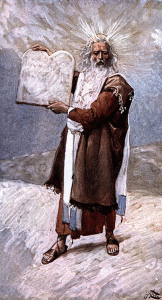
Moses' shining face

On another note, does the Christian “Jesus” who, it is taught by many church leaders, broke the Sabbath and came to do away with the Torah-law of Moses fulfill this prophecy? Didn’t Moses say that the prophet would speak only the words that Elohim would give him (and the implication is that those words would not contradict what was given at Mount Sinai)? So did Yeshua come to do away with the Torah-law or not? (Read Matt 5:17–19.) In commissioning his disciples in Matthew 28:20, didn’t Yeshua tell them to do and to pass on to others all that he had commanded them? Didn’t Paul tell us to, “Follow me as I follow the Messiah” (1 Cor 11:1)? So how is it that so many people in Christianity believe otherwise about Messiah Yeshua and Paul relative to their teachings on the Torah-law? The point we are trying to make here is that the “Jesus” of the Sunday church who, it is taught, came to annul the Torah, does not fit the criteria of this prophecy of Deuteronomy 18:15–19. Either the Torah prophecy is wrong and Christian tradition is correct or it is the other way around. We choose the former to be the truth, not the latter!


Book of Joel Overview & End Times Prophecy

Analysis of the Book of Joel
Joel 1:1–20 chronicles the physical and spiritual desolation that will exist in the land of Israel (1:6, 10) just prior to the day of YHVH, the destruction of the Almighty (1:15). Israel’s pitiable condition is due to external forces (symbolized by worms, caterpillars and the lion, 1:4, 6, 7) coming against Israel laying her land waste. The prophet urges YHVH’s people to humble themselves and to call a sacred assembly fast (a probable prophetic reference to the forty days of repentance (Heb. teshuvah) leading up to the fall appointed time of the Day of Atonement (Heb. Yom Kippur).
Joel 2:1 opens by announcing the blowing of the shofar in Zion, and the sounding of the alarm (ruwa, Strong’s H7321, meaning “to shout, raise a sound, to cry out, give a blast, to shout a war-cry or alarm for battle, to sound a signal for war”) in Jerusalem. This is a clear reference to the fall festival of Yom Teruah, the Day of the Blowing of Shofars, or Day of the Shouting This is announced as a day when YHVH’s people are to tremble and to prepare for the coming of the day of YHVH, which is near.
The prophet next goes on to describe that day of YHVH as one of darkness (or obscurity) and gloominess (calamity or wickedness), heavy or thick dark cloudiness (2:1). On that day, a great army will swarm over the land with a devouring fire going before them while Continue reading →