What happens to you when you die?

Mark 12:27, The Elohim of the living. Some people have used this passage in an attempt to prove the immortality of the soul—that when a person dies, their soul immediately leaves their body and goes to heaven. After all, if Elohim is the God of the living, not of the dead then this must mean that the patriarchs are still be alive—in heaven. What is the real truth behind this verse from a whole Bible perspective?

This verse can actually be explained in several ways without subscribing to the non-biblical, non-Hebraic, pagan concept of the immortality of the soul. 

In truth, the Bible clearly teaches that the soul that sins dies (Ezek 18:4); it doesn’t go to heaven. When we understand what the soul really is from a biblical perspective, we will see that it is a man’s soul (his mind, will and emotions) that sins, for out of the heart proceeds all sorts of evil things (Matt 15:19), and the heart of man is desperately wicked (Jer 17:9). Because a man sins through his soul, this is why Yeshua’s sinless soul had to become an offering for man’s sin (Isa 53:10). 

Moreover, when Yeshua died, his body and soul went into the grave, and his spirit went to heaven (Luke 23:46). The same thing happens to a man when he dies, except that those who have died in Messiah are awaiting the resurrection of their bodies at the second coming of Yeshua (1 Thess 4:16) where their spirits will be rejoined with their resurrected souls and bodies. Therefore, when Yeshua states that YHVH isn’t the Elohim of the dead, but the living, he could have meant that in the mind of Elohim, a righteous person isn’t technically dead, since his name is written in the Book of Life and legally he has inherited eternal life, and the body and soul are merely sleeping in the grave awaiting the resurrection. 

What happens to our spirit when we die? After all, the Bible teaches that human’s are composed of spirit, soul and body (1 Thess 5:23)?

When a person dies, their spirit goes to heaven, even as Yeshua’s spirit did (Eccl 12:7; Acts 7:59; Luke 23:46). Now whether or not one’s spirit is conscious when it is in heaven, the Scriptures don’t say. So we won’s speculate about this.

So what is Elohim’s perspective on the death of a saint? Simply this. Even though a person may be physically dead or “sleeping” in the grave (in numerous places, the Scriptures call death “sleep”) for years, in the mind of Elohim, which isn’t bound by the limitations of time, and where a thousands years is like a day and vice versa, when a righteous person dies, to Elohim that person is still alive, for his name is written in the Lamb’s Book of Life, and he will be resurrected the next day, so to speak. Moreover, a person’s spirit waits in heaven to be reunited with their physical body at the resurrection of the saints at Yeshua’s second coming.

By viewing Yeshua’s statement in Mark 12:27 from this more expanded, whole Bible, Hebraic perspective, we are able to reconcile the Bible’s various statements about what happens to a person after they die without having to interject into Scripture the unbiblical and pagan concept of the immortality of the soul. 


What can we learn from Yeshua’s involvement with money?

Mark 12:15, Bring me a denarius.Yeshua was totally disinterested with, unaffected by and uninvolved with money.  Money didn’t have a control over him in the least.

In fact, when people donated money to his ministry, there is no record that it even touched his hands. Someone else carried his money for him or handled his financial affairs (John 12:6; 13:9). 

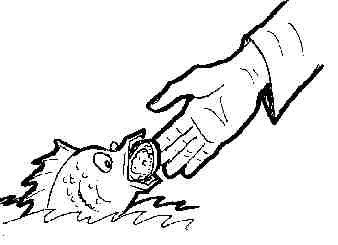
Moreover, when Yeshua needed some money, even for illustration purposes, he wasn’t able just to whip a coin out of his pocket. Rather, he had to find a coin elsewhere. In this case, he asked someone in the crowd for a coin. When he needed to pay the temple tax, he found a coin in a fish’s mouth (Matt 17:24–27). 

What can we learn from our Savior’s attitude toward money?

Yeshua’s approach to money is rare among Bible-preaching ministers today. The lesson here is that those in the ministry should care nothing about money, nor should they be involved in ministry money matters. Others should handle the financial affairs of the ministry. A man (or woman) of Elohim should only be concerned about preaching the gospel.


Joseph—A Profile in Courage and Faith

Do you think that things are going badly for you in your life? Take heart. The Bible is full of encouraging stories of faith of people going through circumstances often much worse than what we have encountered, but who overcame their circumstances and prevailed because of their faith in Elohim. Yes, it is true that some people died for their faith, but because of their faith in YHVH-Yeshua and the promises of Elohim, they have waiting for them resurrection into eternal life and the glorious heavenly rewards that will accompany that life.

Genesis 41:9–10, The chief butler spoke. Here the chief butler is recounting the events to Pharaoh of how he ended up in prison as if Pharaoh weren’t aware of these facts. It is quite possible that this was a new Pharaoh, and the Pharaoh who had put the butler in prison was now dead. If so, then this new Pharaoh was very young, since in Genesis 45:8 Joseph, who by now would have been at least in his late 30s, refers to himself as “a father to Pharaoh.”

YHVH’s timing is perfect. Do you have the trust in YHVH to believe that for your life? Had the chief butler remembered Joseph prior to this how would things have been different for Joseph? Would he have had the chance to interpret Pharaoh’s dream? Would he have returned to Canaan? How would the history of the nation of Israel been different? Would YHVH’s purposes have been fulfilled?

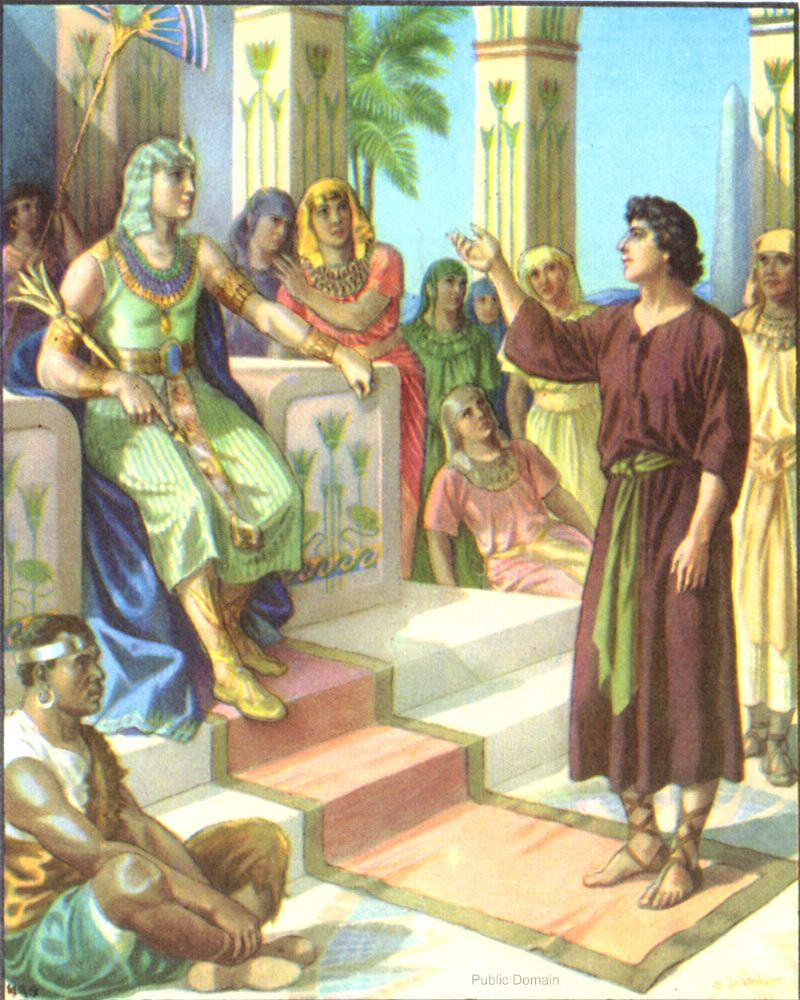
Genesis 41:16, Elohim. By this time, Joseph had endured multiple false accusations, murder attempts, enslavement and imprisonment on false charges. A man of lesser spiritual stature than Joseph might have lost his faith in Elohim along the way. What can we learn from Joseph?

In this verse, what is the evidence that he hadn’t given up hope in his Heavenly Father, and that he had not lost sight of the dreams and promises that YHVH had made to him many years earlier? Simply this. Even though Joseph was standing before a king who had the power of life and death over him, he still had faith that Elohim would give him the interpretation to the king’s dream. Not only did Joseph believe this, but openly declared his faith to Pharaoh. 

As a form of witnessing to those around you, do you give honor to YHVH whenever you can—even to strangers and potential enemies as Joseph did? 

The fact that Joseph was able to proclaim his faith in Elohim in front of one of the most powerful monarchs of his day is evidence of his strong and abiding faith in and fear of YHVH even in spite of years of mistreatment and false accusations. Joseph is a powerful and encouraging example to the down-trodden saints of the world, who have been persecuted for the their faith. Joseph is proof that it is possible to maintain faith in YHVH even in spite of dire, even life threatening circumstances.


Blog Scripture Readings for 12-22 Through 12-28-19

Aside

Parashat Miketz — Genesis 41:1 – 44:17
Haftarah — 1 Kings 3:15 – 4:1 | Zech 2:14 – 4:7; Numbers 28:9-15**
Prophets — 1 Samuel 18:1 – 24:22
Writings — Psalms 70:1 – 76:12
Testimony — Mark 11:19 – 14:52

Our new annual Scripture Reading Schedule for 2019-2020 with daily readings is available to download and print. If you are still working through 2018-2019’s Scripture Reading Schedule, the link will still be available on the right sidebar under “Helpful Links”. If you are using a mobile device or tablet, the link may be below, meaning you’ll need to scroll down instead.

Most of this week’s blog discussion points will be on these passages. If you have general comments or questions on the weekly Scripture readings not addressed in a blog post, here’s a place for you to post those. Just use the “leave a reply” link or the “share your thoughts” box below.

The full “Read Through The Scriptures In A Year” schedule, broken down by each day, can be found on the right sidebar under “Helpful Links.” There are 4 sections of scripture to read each day: one each from the Torah, the Prophets, the Writings, and from the Testimony of Yeshua. Each week, the Torah and haftarah readings will follow the traditional one-year reading cycle.

** A different Haftarah is read when it is a special sabbath in Jewish tradition. This week it is Shabbat Rosh Chodesh Chanukah on the traditional calendar with Zech 2:14 – 4:7 and special reading Numbers 28:9-15. Otherwise, 1 Kings 3:15 – 4:1 would be read.

Weekly Blog Scripture Readings for 12/22/19 through 12/28/19.


25 Reasons I Don’t Celebrate Christmas

1—Christmas is not the day on which Yeshua the Messiah (Jesus Christ) was born. He was likely born in the autumn during the biblical Feast of Tabernacles. In ancient times, December 25 was considered the birthday of the demon-sun god by many heathen religions. This was definitely not the birthday of Yeshua!

2—There’s no biblical command to celebrate Christmas.

3—Christmas has become a pagan substitution for YHVH’s true biblical holidays or festivals, which are listed in Leviticus 23. These are the same biblical festivals that Yeshua and his apostles celebrated. They never celebrated the Messiah’s birth.

4—Christmas is the Christianization of various ancient pagan sun god, sex-worship rituals having to do with the winter solstice. “Cleaning up” a pagan custom is contrary to the biblical truth of turning away from the practices of the heathen and having nothing to do with them after one chooses to follow Elohim and his Word as found in the Bible.

5—Christmas is laced with heathen and Satanic rituals and traditions. These are things the saints should have nothing to do with!

6—The Bible forbids placing any trees or tree-like objects near an altar (or in a church building), since this is a heathen practice (Deut 16:21).  Most Christians violate this command when they place Christmas trees in their church sanctuaries near their altars every year at Christmas.

Continue reading →
 

Christmas—The Rest of the Story (just the facts, nothing more)

How and When Christmas Came Into the Church

Did you ever wonder how the non-biblical holiday called “Christmas” came into the mainstream Christians church? What follows is the backstory to Christmas—the rest of the story.

Christmas was not among the earliest festivals of the Church. Irenaeus and Tertullian omit it from their lists of feasts; Origen glancing perhaps at the discreditable imperial Natalitia, asserts (in Lev. Hom. viii in Migne, P.G., XII, 495) that in the Scriptures sinners alone, not saints, celebrate their birthday; Amodbius (VII, 32 in P.L., V, 1264) can still ridicule the “birthdays” of the gods. (The Catholic Encyclopedia, “Christmas”)

Saturnalia was an ancient Roman festival in honour of the god Saturn, held on 17 December of the Julian calendar and later expanded with festivities through to 23 December. The holiday was celebrated with a sacrifice at the Temple of Saturn, in the Roman Forum, and a public banquet, followed by private gift-giving, continual partying, and a carnival atmosphere that overturned Roman social norms: gambling was permitted, and masters provided table service for their slaves. (https://en.wikipedia.org/wiki/Saturnalia)

Saturnalia may have influenced some of the customs associated with later celebrations in western Europe occurring in midwinter, particularly traditions associated with Christmas, the Feast of the Holy Innocents, and Epiphany. (ibid.)

The popularity of Saturnalia continued into the 3rd and 4th centuries AD, and as the Roman Empire came under Christian rule, many of its customs were recast into or at least influenced the seasonal celebrations surrounding Christmas and the New Year. (ibid.)

According to The Catholic Encyclopedia, Christmas is not included in Irenaeus’s nor Tertullian’s list of Christian feasts, the earliest known lists of Christian feasts. The earliest evidence of celebration is from Alexandria, in about 200, when Clement of says that certain Egyptian theologians “over curiously” assign not just the year but also the actual day of Christ’s birth as 25 Pachon (May 20) in the twenty-eighth year of Augustus. By the time of the Council of Nicea in 325, the Alexandrian church had fixed a dies Nativitatis et Epiphaniae. The December feast reached Egypt in the fith century. In Jerusalem, the fourth century pilgrim Egeria from Bordeaux witnessed the Feast of the Presentation, forty days after January 6, which must have been the date of the Nativity there. At Antioch, probably in 386, St. John Chrysostom urged the community to unite in celebrating Christ’s birth on December 25, a part of the community having already kept it on that day for at least ten years. 

Continue reading →
 

On Celebrating Birthdays (including that of the baby Jesus)

This week much the world (me excluded) will be celebrating Christmas, the supposed birthday of Jesus (Yeshua) the Messiah. Let’s talk about the pros and cons of celebrating birthdays from a biblical perspective and briefly touch on the Christmas issue as well.

Genesis 40:20, Pharaoh’s birthday. The is the first of three references to birthdays in the Bible. The second one is to Job’s children who were killed on, presumably, one of their birthdays (Job 1:4, 18–19).The third reference to King Herod, who had John the Baptist beheaded on his birthday (Matt 14:6–12). Because of the fact that birthdays are associated with calamity in the Bible, some people refuse to celebrate birthdays, even though there is no direct or indirect prohibition against honoring a loved one once a year on the day of their birth.  

Though I respect a person’s right to disagree with me on this issue, it is my opinion that celebrating birthdays is neither inherently evil nor a pagan thing to do. It is merely honoring and respecting a loved one on the day marking their debut into this world. What’s evil about that? “Oh, it’s a pride thing,” someone might respond. If so, then answer me this: How is honoring and showing love by telling someone that you’re glad they were born and that they’re special to you “a pride thing”?  And if it’s pride, then pride on whose part? The Bible teaches that there is a wrong and sinful kind of pride and right kind of pride, but that’s another discussion.

Now what about celebrating Yeshua’s birthday on Christmas? Is that wrong or evil? No, not inherently, unless we mix satanic and pagan traditions into the mix, and do it on the same day that the ancient pagans honored their demon sun-god. Of itself, there’s nothing evil about recognizing the coming of the Messiah in human form to this earth. To be sure, this is something to be celebrated in one way or another. The problem is that in so doing, most people have not only mixed in pagan traditions with their celebrations, and have secularized out of it the real purpose of the day, and have chosen to celebrate the Messiah’s birth on the totally wrong day. Perhaps, worst of all, they have rejected or made of non-effect the clear word of Elohim that commands all the saints to celebrate the seven biblical feasts. Instead, men have substituted Christmas and Easter (et al) for Passover, Unleavened Bread, Pentecost, Trumpets, Atonement, Tabernacles and the Eighth Day. This is not only wrong, but it is, by biblical definition, sinful, for it violates the laws of YHVH Elohim (1 John 3:4).

Yeshua addressed religious leaders’ sinful, rebellious and prideful proclivity to substitute their man made doctrines and traditions for the Word of Elohim.

He answered and said unto them, Well hath Isaiah prophesied of you hypocrites, as it is written, This people honoureth me with their lips, but their heart is far from me. Howbeit in vain do they worship me, teaching for doctrines the commandments of men. For laying aside the [Torah] commandment of Elohim, ye hold the tradition of men, as the washing of pots and cups: and many other such like things ye do.… Making the word of Elohim of none effect through your tradition, which ye have delivered: and many such like things do ye. (Mark 7:6–8, 13)