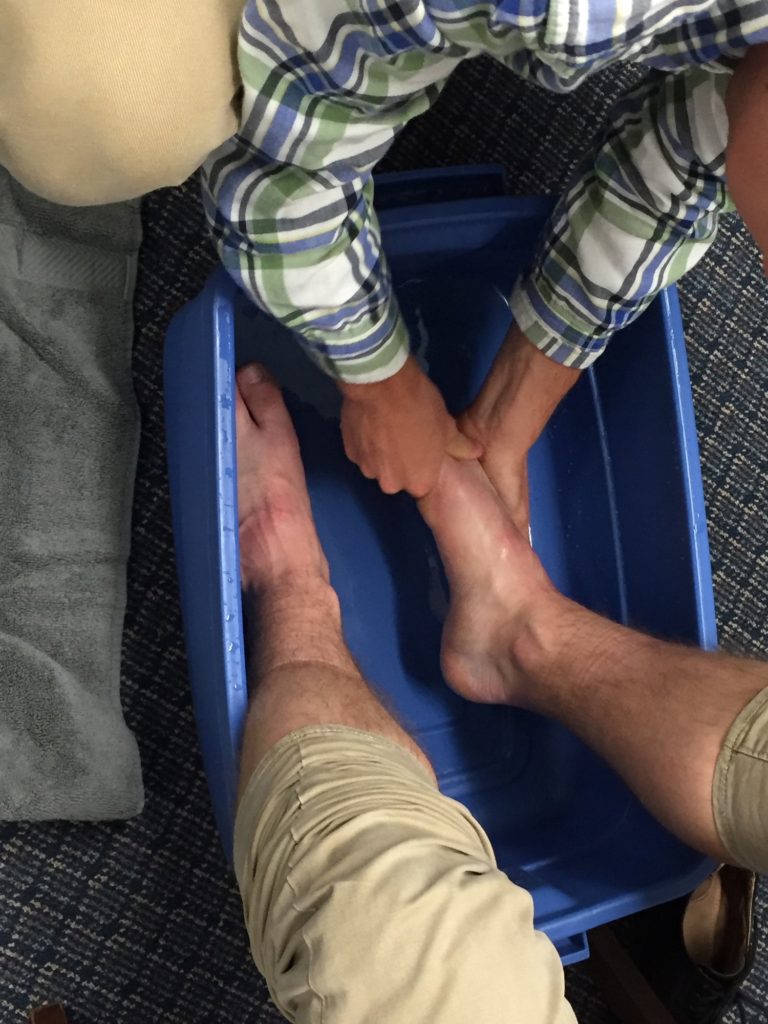
When was the last time YOU “washed” someone’s feet?

John 13:8, You will never wash. Peter rejected Yeshua’s washing his feet not because of human obstinateness, but because of his honor for Yeshua. Washing the feet of one’s guests was an act of hospitality on the part of a host and was usually performed by a servant, not the host. Peter considered it to be demeaning for the Master to be performing the task of a servant, yet this is exactly what Yeshua was attempting to demonstrate. As the Messiah, he came to lay down his life in loving service for his disciples and not to be served (Matt 20:28; John 10:15; 15:13). Yeshua then made the point that his disciples should following his example in serving one another (vv. 12–17). 

John 13:14–15, You also ought to wash. Yeshua is giving a simple and clear command here for the saints to wash one another’s feet. How many Christian churches who claim to be followers and imitators of Yeshua actually wash each others’ feet? If Christian leaders in most churches are teaching their people to obey this command, now many other of Yeshua’s other commandments are they not teaching and obeying?

John 13:35, By this all will know. Love was to be the identifying mark of a disciple of Yeshua. The Bible defines love in several ways. We love Yeshua by keeping his (Torah) commands (John 14:15; 1 John 5:1–3). Yeshua defines the Torah as loving Elohim with all of our heart, soul mind and strength and loving our neighbor as ourself (Mark 12:28–31). Paul says that all the laws of Elohim can be summed up in love (Rom 13:8–10). Yeshua said that the greatest expression of love is to lay one’s life down for another as Yeshua did for us (1 John 3:16; 4:11). Without love, all the good—even religious works—we may do YHVH counts as nothing (1 Cor 13).

It’s important to note that most disciples of Yeshua (including Christians) believe this principle, but, sadly, when it comes down to reality, many fail to live out the identifying principles of love. How easy it is to view our religious works as the main identifying marks of our relationship with Yeshua. We may pride ourselves in the fact that we keep the Sabbath or the biblical holidays, practice full water baptism, speak in tongues, believe in the baptism of the Holy Spirit, practice the gifts of the Spirit, identify ourselves with the teachings of notable religious leaders, are Torah-obedient, eat or don’t eat certain types of foods, or other external practices and identifying marks. In truth, Yeshua looks less at these than the heart condition of the disciple. Does one have a heart of love, and is he obeying his Master and his neighbor as himself out of love to the best of his ability according to the light of the truth he has been given? This is the most important issue.

It’s interesting to note what Yeshua didn’t say in this verse. He didn’t say that all men will know that you’re my disciples because you have the right Bible version, pronounce the name of Elohim (i.e. YHVH) using the correct ancient pronunciation, observe the biblical Sabbath and feasts, follow every jot and tittle of the Torah perfectly, or dress a certain way. Yet, sadly, these prescriptions and strictures often become those things by which people identify themselves, and that end up keeping people separated from each other into exclusivistic tribal clan-like groups who will have nothing to do with anyone outside their group. Acting in this manner is not the heart of Elohim! In reality, in we’re not careful, our obedience issues can become points of pride—something YHVH hates (Prov 6:6–19). 

Once again, Yeshua, in this succinct teaching, pulls the rug out from the religious hypocrites and the deceived who focus on the legalistic and religious externals of what the Bible teaches, but miss the heart and spirit that Yeshua indicates should be the spiritual force driving our obedience—what he calls the weightier matters of the Torah-law, which are justice, mercy and faith (Matt 23:23).

 

What’s so special about the Shabbat and how to keep it so

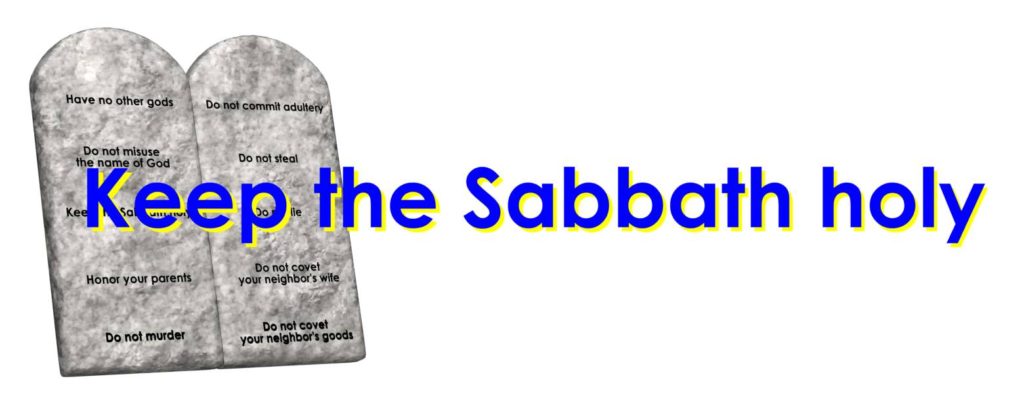
Exodus 31:13–17, My Sabbaths you shall keep. Note that Sabbaths is plural. This is a reference not only to the weekly Sabbath, but to the feast day Sabbaths as well. However, the seventh day Sabbath remains central to YHVH’s spiritual economy for his people. In fact, it was so central to the spiritual life and YHVH’s people that he designated it to be a visible and outward sign of the special relationship between him and his people. Let’s explore this idea.

Why did YHVH designate it as a sign (“signal, distinguishing mark, banner,” Exod 31:12) between him and Israel? As YHVH’s set-apart people, Israel was distinguishing itself from the surrounding nations who did not keep the Sabbath. What distinguishes the saints today as YHVH’s set-apart people from the non-believing heathen around them? Certainly our love for one another is a distinguishing mark, according to Yeshua (John 13:35). Yeshua also said that if we love him we will keep his Torah commandments (of which the Sabbath is the fourth of the ten commandments, John 14:15; Exod 20:8). John was inspired to write that those who say they know Elohim and don’t keep his Torah-commandments (of which the Sabbath is a foundation stone) are liars and the truth is not in them (1 John 2:3–6). And finally, Yeshua told those who were Torahless (i.e. workers of iniquity or lawlessness) to depart from him, that he didn’t know them even though they claimed to be his followers and had done many religious works in his name (Matt 7:21–23). Although the Sabbath and the biblical feasts may not be the exact sign of the Renewed Covenant, Elohim’s Sabbaths are foundation stones of the Torah, and the keeping of them remains to this day for the saints of Elohim (Heb 4:9).

The ArtScroll Stone Edition Tanach translates verse 15 as follows:

For six days work may be done and the seventh day is a day of complete rest, it is sacred to [YHVH] … (emphasis added)

What is complete rest? What is the connection between “complete rest” and the idea of sacredness or being set-apartness or kadosh? The people of YHVH are called to separate the kodesh from the common or profane:

Her priests have violated my Torah, and have profaned my set-apart/kodesh things: they have put no difference between the kodesh and profane [common, polluted] neither have they showed difference between the unclean and the clean, and have hid their eyes from my Sabbaths, and I am profaned among them. (Ezek 22:26)

And [the priests] shall teach my people the difference between the kodesh and profane, and cause them to discern between the unclean and the clean. (Ezek 44:23)

What is common or profane is that which is commonly done on the other six days of the week.

Exodus 31:14, Sabbath…profanes it.Profaning or polluting the Sabbath with secular activities is a sin. Sabbath desecration is as much a capital offence in YHVH’s eyes now as it was then. The wages of sin is still death (Ezek 18:4; Rom 6:23). 

Exodus 31:18, Written with the finger.The Sabbath was ordained by Elohim and written by his finger. How dare men subsequently declare that the Sabbath was changed and that what YHVH wrote with his finger in tablets of stone is now irrelevant or passé! What hubris and arrogance on men’s part to counter the will and laws of Elohim with silly, specious and vacuous justifications for man-made and unbiblical teachings. Such edicts of men will not stand, but will blow away like dust in the wind, will be burned to ashes in the fiery judgment of Elohim, and will fall by the wayside like all the other traditions of men, which have dared to make the word of Elohim of no effect!


What is “The Last Great Day of the Feast”?

John 7:37–41, On the last day. Haggai 2:1 is occurred on Hoshana Rabbah, the Last Great Day. In Haggai 2:7, the coming Messiah is referred to as the “Desire of All Nations,” and the prophet assures the Jews of his time that who were building the second temple, that though it was inferior in physical glory to Solomon’s Temple, it would experience a greater glory than even the previous temple. This is because the promised Messiah would be coming to that second temple.

Indeed, Yeshua come to the second temple and glorified it with his presence, but that temple is now long gone. The Testimony of Yeshua teaches us that the saints are now the temple of Elohim, since they are the temple of the Set-Apart Spirit (1 Cor 3:16; 2 Cor 6:16). The saints become that temple when the Spirit fell on them on the Day of Pentecost as recorded in Acts 2, and when the Spirit falls on and inhabits each saint subsequently. This is the glory of Elohim coming on individuals—Yeshua inhabiting the temple of his body. And this is only the beginning of the heavenly glory that the saints can hope to experience as 1 Cor 2:9 tells us, for a greater, and incomprehensible glory is yet coming to the overcoming saint (see also Isa 4:3–6 and 1 John 3:1–3).

In verse 37, Yeshua invites those who thirst spiritually to come to him. How thirsty are we for the spiritual waters of salvation that he has to offer? As Ps 118:24, the Hoshana Rabbah psalm, notes, we must cry out to the Messiah for salvation by declaring, “Hoshianah!” or “Save us now O Great One!” Similarly, we must come to the wells of salvation (Heb. Yeshua) and drink deeply (Isa 12:3) if we are to experience heaven’s blessing.

In verse 38, Yeshua declares that only those who believe in him will experience heaven’s outpouring of spiritual water for the thirsty soul. Each saint needs the glory of YHVH to fill his temple, so that the rivers of living water can flow out of us onto others. When we are baptized in the Set-Apart Spirit, our spiritual cup will be filled and will run over onto others, and we will become a river of life to those around us.

In verse 39, Yeshua explains that this river of life will flow once he has been glorified and the Spirit of Elohim has been poured out. Yeshua has been glorified and the Spirit poured out on the saints. This is what the second temple water pouring ceremony prophetically prefigured and hoped for—something that has already occurred. Therefore, at Sukkot, when we do the water pouring ceremony, we also need to realize that the Spirit has already been given. Therefore, it behooves the saint on the Last Great Day to present himself as an empty vessel to YHVH and let him fill us anew so that we can be a river of life to those around us.

Interestingly and related to verses 37 to 39, in verses 40 to 41, the gospel records that there was theological division and strife among the people pertaining the work and person of Yeshua. This juxtaposition of concepts implies that division and strife in the body of Yeshua prevents the outpouring of the Spirit. The glory of Elohim can’t fall on the body or temple of Yeshua’s body unless it is together in one place and in one accord as the saints were on the Day of Pentecost. This is a serious warning and a call for saints to put away strife and division and to come together in one accord, so that YHVH may glorify his temple by the outpouring of his Spirit thus empowering the saints to be a river of life to those around them.

John 7:37–38, On the last day. This was the last day of the seven-day long Sukkot (Feast of Tabernacles) celebration known as “the Last Great Day” (in Heb. Hoshana Rabbah). On this day, a joyous festival occurred called the Water Pouring Ceremony, where the Jews prayed for rain for the upcoming agricultural season resulting in a bountiful harvest. These rains were referred to as the former (fall) and latter (spring) rains, and were necessary to bring the crops to fruition. The Jewish people also believed that these rains were prophetic of a great outpouring of the Set-Apart Spirit that would occur during the Messianic Age (or Millennium), to which Sukkot was a prophetic allusion resulting in a great harvest of souls (again relating to the fall harvest season during which the feast of Sukkot occurred each year). During the Water Pouring Ceremony, the Jews would joyously sing Isaiah 12:2.

Behold, God (Heb. El) is my salvation [Heb. Yeshua]; I will trust, and not be afraid: for the LORD [Heb. Yah] JEHOVAH [Heb. Yehovah] is my strength and my song; he also is become my salvation [Heb. Yeshua].

Here, in typical Jewish poetic style using encrypted Hebraisms, Yeshua is claiming to be deity and the Messiah, and to be source of salvation or living waters without overtly saying it.


Davidic Dance—An Expression of Joy and Praise

Psalm 149:1, 3, In the assembly of the saints…dance. (On the dance, see Ps 150:1, 4.) Hebraic worship dance should be an aspect of praise and worship in the congregation of the saints according to the Psalms. Certainly, at the very least, dancing should be occurring on the three pilgrimage feasts or chagim: the Feast of Unleavened Bread, the Feast of Weeks and the Feast of Tabernacles. The Torah refers to each of these three appointed times (Heb. moedim) as chag meaning “festival.” The root word of chag is chagag meaning “to celebrate, keep a solemn feast or holy day, to move or go around in a circle, march in a sacred procession, to reel to and fro in a giddy manner.” Indeed Davidic dancing at joyous celebrations such as the biblical feasts has been a Hebraic tradition since time immemorial.


The Significance of Table Fellowship

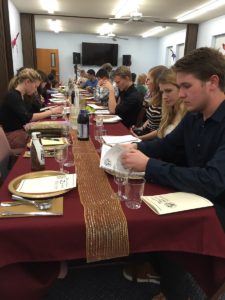
Luke 24:30, He sat at the table. (See also vv. 41–43; John 21:12–13). In Bible times, when a covenant of friendship had been broken, as had occurred when the disciples forsook Yeshua prior to his apprehension, the broken relationship would be restored by eating together. After his resurrection, Yeshua had at least three meals with his disciples in order to renew loving covenantal relationship with them (Manners and Customs, pp. 78–79). 

In Hebraic thought, one’s table is a sort of sacred altar where familial and spiritual communion occurs. You don’t just break bread with anyone—only your close friends. Additionally, when a prayer of thanksgiving is made over a meal, YHVH’s Presence is invoked making the meal a sort of spiritual act where heaven and earth commune together. This is one reason why the Passover seder meal is of such serious significance. Only those of one’s spiritual family are to gather together at the seder where together they meet with Elohim. Furthermore, this is why Paul states in 1 Cor 5:9–11,

I wrote to you in my epistle not to keep company with sexually immoral people. Yet I certainly did not mean with the sexually immoral people of this world, or with the covetous, or extortioners, or idolaters, since then you would need to go out of the world. But now I have written to you not to keep company with anyone named a brother, who is sexually immoral, or covetous, or an idolater, or a reviler, or a drunkard, or an extortioner—not even to eat with such a person. (emphasis added)


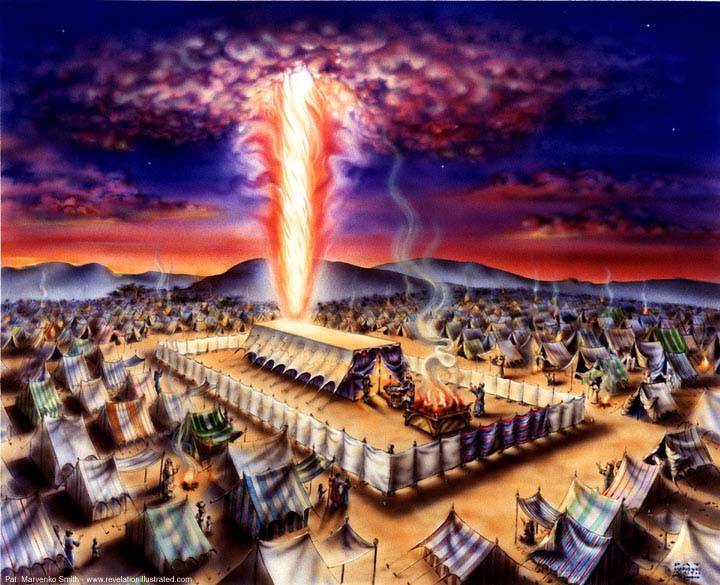
Tabernacle of Moses Resources

If I didn’t post anything more on this blog until we’re finished with Exodus, the resources posted below would be sufficient to keep most people busy for a while. That’s how much there is to learn about the Tabernacle of Moses!

Written teachings by Natan: https://www.hoshanarabbah.org/teaching.html#tabernacle

See my video play list on the Tabernacle of Moses on my YouTube channel at https://www.youtube.com/HoshanaRabbah

Happy studying. There’s enough to keep you busy here for a few days. The Tabernacle of Moses is one of my most popular video series on our YouTube channel.

Please enjoy and be blessed!


Why gather together for the three pilgrimage feasts?

Exodus 23:14–19, Three times you shall keep a feast. The Scriptures teach us that during the three biblical pilgrimage festivals of Passover/Unleavened Bread, Pentecost and Tabernacles all Israelites were to leave their places of individual isolation and were to go up to where the presence of Elohim of Israel was. This sacred rendezvous was to occur according to the festival cycle or circle (Heb. chag) around the common sanctuary (where YHVH had chosen to place his name, Deut 16:2, 11, 15). 

In fulfilling this command,each Israelite would become conscious in a real way that he was connected to all the other members of the nation of Israel, with YHVH Elohim, and with the Torah (The Pentateuch—Deuteronomy, p. 310, by S. R. Hirsch). 

In biblical times, the Israelites would gather wherever the tabernacle had been placed. When the temple was built in Jerusalem, this city became the destination point for the Israelite pilgrims during these three biblical feasts. 

For the saints who celebrate the biblical feasts now, there is no temple in Jerusalem to gather around. The saints are now the spiritual temple of the Spirit of Elohim (1 Cor 3:16). Moreover, Yeshua has promised to be in the midst of his people when they gather together (Matt 18:20). In light of these spiritual realities, YHVH’s people need to pray and seek his face to find out where he wants them to gather for his feasts, and then obey him in faith believing that he will be with them.

Continue reading