
Genesis 47

Genesis 47:28–49:28, Jacob’s end times prophecy. The Jewish sages recognize that this final portion of Genesis chronicles Jacob’s wish to reveal to his sons some prophetic understandings pertaining to Israel’s long and numerous exiles, culminating in “the Final Redemption” or “the Second Exodus” (i.e., the return of Israel [all twelve tribes, not just the Jews] from its long exile in the “Babylon” of this world at the end of the age just prior to and after the return of Messiah [q.v., Isa 11:11; Jer 16:14–15; 23:7–8] at which time the two houses of Israel will be reunited under Messiah Son of David [q.v., Ezek 37:15–28; Jer 30:1–11; Hos 3:4–5]).
Jacob states the timing of his prophecies regarding his sons in Genesis 49:1 when he predicts what will befall them “in the last days.”
The Jewish sages believe that prior to the establishment of the Messianic Age (or Millennium), all Israel will go into a time of darkness, gloom and exile.
The sages ascertain the timing and tenor of this prophecy from the fact that the Torah scroll fails to place the customary nine spaces between the last word of the previous parashah (or Torah portion), which ends in verse 27 and the next parashah, which begins in verse 28. There is only a one space gap in the Hebrew letters between these two Torah portions, which the sages say predicts the “closing in” of Israel as they go into exile and captivity in Egypt.
The sages believe that these prophecies not only predicted Israel’s first exile into and redemption from Egypt but also a latter, end times exile because biblical history often repeats itself. This is evident by the fact that some of these prophecies were not fulfilled until Messiah came the first and will not be fulfilled until he comes the second time at the end of this present age.
Genesis 48
Genesis 48:5, Ephraim and Manasseh. Here Jacob gives Joseph’s two sons the first born status and blessing. Reuben and Simeon were disqualified because of sins they had committed (see 1 Chr 5:1–2).
Genesis 48:6, Your two sons…are mine. Here Jacob was literally adopting Joseph’s two sons as his own, who, in effect, replaced Joseph as Jacob’s heir. In this way, Joseph received the double portion, firstborn blessings, since a tribal inheritance was bequeathed to each of his sons. Additionally, they were to be numbered among the twelve tribes effectively turning the twelve tribe nation into a thirteen tribe one, since the tribe of Joseph was split into two tribes.
Genesis 48:14 and 16, Jacob’s Prophecy Over Ephraim and Manasseh
While prophesying over Joseph’s sons, Ephraim and Manasseh, Jacob crossed his hands over their heads making the symbol of the Paleo-Hebrew letter tav (like the letter t or x in our alphabet), which resembles a cross and in that ancient Hebraic script, and according to some Hebrew scholars pictographically means “sign of the covenant.” Jacob then spoke of the Heavenly Messenger (the Hebrew word malak mistranslated as “angel” in most Bibles) of YHVH (i.e., the preincarnate Yeshua) who had redeemed him from all evil (see Gen 31:11–13). Jacob then prophesied that the descendants of Ephraim and Manasseh would become like “fish in the midst of the land” (literal translation of Gen 48:14–16; see The ArtScroll Stone Edition Tanach).
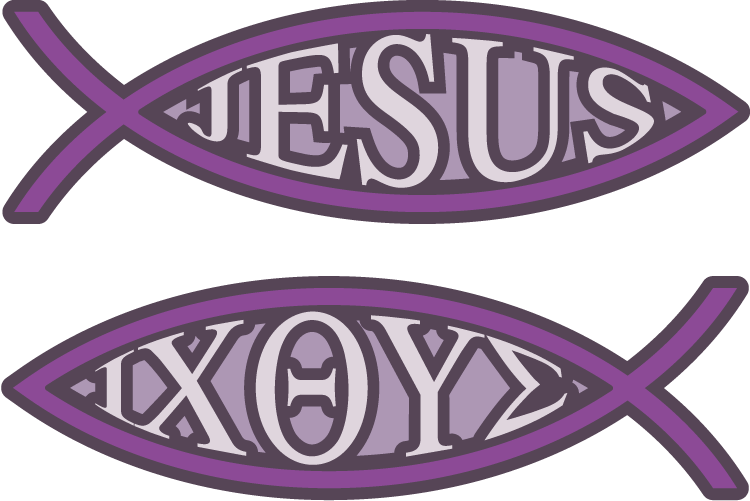
In light of this prophetic symbolism, which present day religious group qualifies as having fulfilled Jacob’s prophecy as to who the descendants of Ephraim and Manasseh would eventually become? Which religion on earth uses the fish as their symbol, speaks of a Messenger from YHVH as their Redeemer, and has the sign of the Paleo-Hebrew letter tav, which looks like a cross? The answer should be obvious. It is not Buddhists, the Moslems, the Hindus and not even the Jews. No! Only Christianity fits this enigmatic symbolic criteria. Many Christians are without a doubt the literal descendants of Ephraim and Manasseh. Those who are not, according to the Paul the apostle, once they come to saving faith in Yeshua, in some unique sense they become the descendants of Abraham (e.g., Gal 3:7, 29). Many of these unsaved descendants of Abraham will recognize Yeshua their Messiah on the day that he returns to Jerusalem (e.g., Zech 12:10).
Which nation on earth is without a doubt still the greatest Christian nation? It is the United States of America. Having an understanding of how Jacob’s prophecy to Ephraim and Manasseh was fulfilled may well be the first piece of the puzzle in identifying America in Bible prophecy.
Genesis 48:15–16, Elohim…the Angel/Messenger. The Angel or Heavenly Messenger is here being equated with Elohim. This truth is confirmed in Hosea 12:3–4 where we find similar parallel verbiage used.
Genesis 48:20, May Elohim make you. Many Jewish fathers pronounce this blessing over their sons every erev Shabbat (in Heb. this phrase means “entering the Sabbath,” i.e., Friday evening) to this day. If the descendants of Ephraim and Manasseh became the Christians (of which there are presently about two billion on earth, see notes at Gen 46:14, 16), then what are these Jewish fathers unwittingly asking of Elohim when pronouncing this blessing over their sons? That they become believers in the Christian Messiah (i.e., Jesus or Yeshua)!
Genesis 48:16, Let my name. The descendant of Ephraim and Manasseh would be known historically as the house of Israel.
Multitude in the midst of the earth. The ArtsScroll Stone Edition Tanakh translates this verse as follows:

‘May the angel who redeems me from all evil bless the lads, and may my name be declared upon them, and the names of my forefathers Abraham and Isaac, and may they [Ephraim and Manasseh] proliferate abundantly like fish within the land.’ Onkelos renders this verse as follows: ‘And like the fish of the sea may they multiply among the children of men on earth’ … The literal translation of VDS/dagah refers to procreation … [and] the word essentially denotes fish. (The ArtScroll Bereishis/Genesis Commentary, p. 2117, emphasis added)
What religious group on earth today has spread out across the face of the earth into all nations and has proliferated a message of Redemption pertaining to a Messenger of YHVH involving a cross-symbol resembling the ancient Paleo-Hebrew letter tav and uses a fish symbol as their symbol? Obviously, this can only be a prophetic reference to Christianity.
Genesis 48:19, Multitude of nations. Here is what the ancient Jewish sages say about this prophetic verse pertaining to the descendants of Ephraim:
Many nations will descend from him (i.e. the word [melo], fullness, connotes abundance, the phrase meaning: And his seed will become the abundance of the nation [Neter; Karnei Or].) (quote by Ibn Ezra;TheArtScroll Bereishis/Genesis Commentary,p. 2121).
The expression denotes abundant profligacy to a point that they will have to inhabit lands of other nations. It is an allusion to Ephraim’s expansive territory (quote by R. Avraham b. HaRambam; ibid.).
This refers to the Exile when the lands of others will be filled with his scattered descendants… See also Hosea 7:8: “Ephraim shall be mingled among the nations. (a quote by Radak; ibid.)
What kind of blessing was this prediction that one day his descendants—the Ten Tribes—would be scattered among the nations? R. Munk explains: while it is true that the dispersion was caused by the unfaithfulness and sinfulness of Ephraim’s descendants (Hos 7:8ff), Jacob’s blessing was not in vain for “they will return to God” and will have their share in the world to come (Sanhedrin 110b). And R. Eliezer adds: “Even the darkness in which the Ten Tribes were lost will one day become as radiant as the day’ (according to the version of Avos d’Rabbi Nosson 36). And in the perspective of history, did not these exiled children of the Patriarchs enlighten the nations among whom they were scattered? They did so by teaching their conquerors the fundamental ideas of the knowledge and love of God, ideals they had never forsaken. Hence they too have a messianic vocation and their Messiah the. …Messiah son of Joseph (Succah 52a), also called Messiah son of Ephraim (Targum Yonasan on Exod 40:11), will play an essential role in humanity’s redemption, for he will be the precursor of the… Messiah Son of David…” (ibid., pp. 2121–2122).
Ibn Ezra declares that many nations will descend from Ephraim, since the word many in this verse is the Hebrew word melo meaning “fullness,” and connotes abundance. The phrase literally means “and his seed will become the abundance of the nation” ([Neter; Karnei Or]; ibid. p. 2121)
R. Avraham b. HaRambam somewhat similarly states that the expression denotes abundant profligacy to a point that they will have to inhabit lands of other nations it is an allusion to Ephraim’s expansive territory (ibid.).
Can you better see in Jacob’s prophecies over the sons of Joseph and the resulting rabbinic interpretations of those prophecies, in a broad sense, that he is foretelling the Messianic or Hebrew roots movement (within the Christian church) of the final days? This movement will be instrumental in bringing Christians (many of whom are descendants of Joseph’s sons) back to their spiritual Hebraic (or the Book of Acts) roots as part of the restoration of all things before Messiah Yeshua, the Son of David, returns (Acts 3:21). The Book of Revelation also prophesies the last days Hebraic roots movement when it declares that the saints of the end-times will be those who have the message of the gospel or the faith and testimony of Yeshua the Messiah and who keep YHVH’s Torah-commandments (the Torah or instructions of YHVH given to Moses and Israel at Mount Sinai, Rev 12:17 and 14:12).
Genesis 49
Genesis 49
Genesis 49:1–28, Jacobs last words to his sons. In this chapter on his deathbed, Jacob prays a prophetic blessing over his sons pertaining to that which would befall their descendants “in the last days” (Gen 49:1). In our teaching article located on our ministry website entitled “Scripture Prophesies the Return of the Lost Sheep of the House of Israel—What Scriptural, Linguistic, Secular Historical & Rabbinic Sources Reveal on the Subject,” we discuss what happened to the twelve tribes of Israel after they were removed as captives out of the land of their inheritance and scattered across the earth as YHVH predicted through his prophets.
The subject of the dispersion and return of the lost ten tribes of Israel is one of the most overlooked biblical topics but is an important one in view of the numerous Bible prophecies that relate to it. One reason this subject is ignored is because over the years some false teaches have developed some wildly speculative and even racist ideas pertaining to this subject. We want nothing to do with such nonsense! We deal with the facts of the Scriptures, the wisdom of the ancient Jewish Bible scholars as well as hard evidence from renown secular scholars.
In this brief treatise, we examine some of the voluminous writings of the biblical prophets on the subject of the lost sheep of the house of Israel, and review what the Jewish sages, in line with the biblical prophets, have written on this subject over the centuries. Furthermore, we look at linguistic, historical and archeological evidence from some of the world’s leading scholars on these subjects. After examining the evidence, the reader is free make up their mind as to what happened to the lost ten tribes of Israel and whether they will return to the land of Israel in the last days to fulfill biblical prophecy. You can read the entire article by going to http://www.hoshanarabbah.org/pdfs/migrations.pdf.
Genesis 49:1, Last days (NKJV)/End of days (The Artscroll Chumash)/In the aftermath of days (Hirsch)/In the aftertime of days (Fox)/In the future days (Friedman)/In the days to come (NAS)/In days to come (NIV).Looking at Jacob’s last prophetic words over his sons, and viewing them in the light of past history, it seems that the nature of these prophecies favors a translation more along the lines of “in the days to come” rather than “in the last days.”
Genesis 49:7, I will scatter/divide them.For Simeon, this prophecy was fulfilled in that they had an inheritance both in the area Judah and among the region of northern tribes. For Levi’s part, his descendants were given the priesthood and were scattered in 48 cities throughout Israel (Num 35:7). YHVH put this tribe’s passion against evil to good use. Levi’s vengeful anger against Shechem for raping Dinah (Gen 38) was excessive and outside the bounds of Torah-law. However, this passion for righteousness and justice became further evident as Levi’s descendants were the ones who stood up against the rebellious Israelites at the golden calf. Moses used this tribe to execute YHVH’s judgment against the golden calf worshippers (Exod 32:25–29). This time, Levi acted in accordance to and within the bounds of the Torah as prescribed by Moses. For this, they were granted the priesthood and as such, were scattered throughout Israel (in fulfillment of Jacob’s prophecy) to better accomplish their priestly duties to their fellow Israelites. They became responsible for teaching Israel YHVH’s Torah and for acting as judges of the law (Deut 33:10; 24:8; Lev 24:10–11). The beauty of this story is that YHVH can take the flawed character traits or misguided and even carnal passions of an individual or of a family or a society and redeem them by redirecting them along righteous lines in accordance with Torah principles. Zeal and passion are wonderful character attributes, but they need to be channeled in a godly and righteous direction. To the Laodicean saints in Revelation, YHVH said he would rather they be hot or cold in their passions (Rev 3:15–16). He had no use for lukewarmness and apathy. One who is spiritually cold and dead is waiting to be awakened spiritually. One who already possesses a hot passion for YHVH simply needs spiritual direction. One who is lukewarm and apathetic doesn’t even care enough to go one way or the other.
Genesis 49:8–9, Hand…neck…enemies…lion’s cub.Judah was bold. This is exemplified in the person of David who was a bold and daring warrior from his youth. This is why the tribe of Judah led the Israelites into battle, and was given the kingship. Yeshua is the Lion of the tribe of Judah and is returning as the warrior king to place his hand on the neck of his enemies and to destroy them.
Genesis 49:10–12, The scepter. Below is my commentary on these verses.
The Genesis 49 Prophecy of Yeshua’s Redemptive Work at the Cross
Few verses are reveal so about YHVH’s plan of redemption relating to Yeshua the Messiah so tersely as Jacob’s prophecy over Judah in Genesis chapter 49. These three verses are easily read over without much thought by most people, but when the poetic imagery is unearthed, Jacob’s enigmatic and symbolic prophecy yields a rich trove of treasure and is eye-poppingly pregnant with deep spiritual implications that involves every disciple of Yeshua the Messiah. Here is the prophecy:
The scepter shall not depart from Judah, nor a lawgiver from between his feet, until Shiloh come; and unto him shall the gathering of the people be. Binding his foal unto the vine, and his ass’s colt unto the choice vine; he washed his garments in wine, and his clothes in the blood of grapes: His eyes shall be red with wine, and his teeth white with milk. (Gen 49:10–12)
This passage is a clear reference to the Messiah and the Messianic Age (the time when Messiah would come to rule the earth) and has been so recognized by the Jewish sages from time immemorial (The ArtScroll Stone Edition Chumash, p. 279). “The general consensus (with few exceptions) of Rabbinic interpretation is that this phrase [Until Shiloh arrives] refers to the coming of the Messiah…” (The ArtScroll Bereishis/Genesis Torah commentary, p. 2152). In fact, Onkelos [a second-century scholar who translated the Torah (or Pentateuch) into Aramaic] in his Aramaic version of the Torah translates this version as follows: “Until the Messiah comes, to whom the kingdom belongs” (ibid.). Rashi (b. ad1040 and recognized by Jewish scholars as probably the preeminent Torah commentator of the modern era) “concurs and similarly comments: Until the King Messiah will come…, to whom the kingdom belongs. According to the Midrash, הילש [shiloh] is a composite of יש and יל, [meaning] “a gift to him”—a reference to King Messiah to whom all peoples will bring gifts. See Isaiah 18:7; Psalms 76:12” (ibid., p. 2153). It should not be difficult to see the fulfillment of this rabbinic understanding in the magis’ giving of gifts to the young child Yeshua (Matt 2:11).
Are there any illusions here to the incarnation or virgin birth of the Messiah? Of the incarnation we read the following in The ArtScroll Bereishis/Genesis Torah commentary:
Midrash Tanchuma preserves an opinion that הילש [shiloh] is derived from הילש [shil-yah] meaning “little child, (lit. the amniotic sac in which the fetus is formed: comp. Deut 28:57).” Thus, the passage means: “Until his scion(i.e., Messiah) comes” (ibid., p. 2153).
Of course these Jewish commentators in the same passage, while readily admitting that Messiah will be born naturally of a woman, are quick to disavow themselves of any implications of his deity (i.e., the incarnation; ibid.).
There was no question in the minds of the Jewish sages that all the poetic metaphors in this verse point to the Messiah. For example, the donkey tethered to the vine foresaw how Messiah’s kingdom of peace would dwell amidst Israel, a nation compared by the sages to a vine (Chullin 92a): “For the vineyard of YHVH of Legions is the house of Israel” (ibid., p. 2151).
Additionally, Jewish scholar Samson Raphael Hirsch (an eminent nineteenth-century Orthodox Jewish Torah commentator) similarly observes how Jacob visualizes the Messiah, conqueror of humanity, not on a steed, but on a young donkey. The donkey is the biblical beast of burden that always represents peace, well-being, and national greatness, whereas the steed represents military might. Accordingly, the Jewish conception of royal power is not represented by the number of horses, for it is forbidden for the king to accumulate many horses (Deut 17:16). Evidently, what Hirsch, a non-believing Jew, fails to realize is that Messiah Yeshua fulfilled this prophecy in Matthew 21:5 at his first coming and will return the second time astride a military steed (Rev 19:11 ).
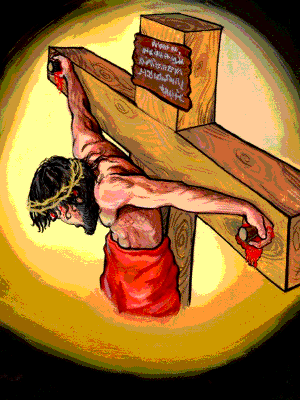
Consequently the future Redeemer of Jewry and humanity appears here in connection with the donkey, symbolizing the twofold prophetic vision of peace and material well-being. For to tie up his animal—especially a donkey’s frisky colt—to the vine, implies a greatly increased development of nature (the vine being as strong as a tree) and extraordinary abundance (see Zech 9:9; ibid., p. 2155). Rashi sees similar Messianic implications in the poetic and prophetic language of this verse and further sees that “the vine represents the righteous, and the vine branch represents ‘those who engage in Torah.’ The righteous will congregate around the Mashiach, while ‘those who engage in Torah’ will study with him (The ArtScroll Sapirstein Edition Rashi Bereishis/Genesis commentary, p. 545). Interestingly, in the Testimony of Yeshua, the Master likens himself to a vine with his believers as branches attached to that vine (John 15:1–5). Likewise, Jewish scholars refer to the donkey, upon whom Messiah will ride, as being tied to the vine which has now become as thick as a tree. As we shall discuss in more detail later, this is an allusion to the cross to which Yeshua was tied by the Romans.
Let’s now examine the phrase “he washed his garments in wine, and his clothes in the blood of grapes”to see if this phrase yields any clues about the virgin birth. Let’s read the following biblical passages as they relate to the verses in question:
Wash you, make you clean; put away the evil of your doings from before mine eyes; cease to do evil; Learn to do well; seek judgment, relieve the oppressed, judge the fatherless, plead for the widow. Come now, and let us reason together, saith the YHVH: though your sins be as scarlet, they shall be as white as snow; though they be red like crimson, they shall be as wool. (Isa 1:16–18)
For the life of the flesh is in the blood: and I have given it to you upon the altar to make an atonement for your souls: for it is the blood that maketh an atonement [of sin] for the soul. (Lev 17:11)
And from Yeshua the Messiah, who is the faithful witness, and the first begotten of the dead, and the prince of the kings of the earth. Unto him that loved us, and washed us from our sins in his own blood. (Rev 1:5)
And I said unto him, Sir, thou knowest. And he said to me, These are they which came out of great tribulation, and have washed their robes, and made them white in the blood of the Lamb. (Rev 7:14)
And he took the cup [of the vine], and gave thanks, and gave it to them, saying, Drink ye all of it; for this is my blood of the new testament, which is shed for many for the remission of sins. (Matt 26:27–28)
Whom Elohim hath set forth to be a propitiation through faith in his blood, to declare his righteousness for the remission of sins that are past, through the forbearance of Elohim. (Rom 3:25)
In whom we have redemption through his blood, the forgiveness of sins, according to the riches of his grace. (Eph 1:7)
In whom we have redemption through his blood, even the forgiveness of sins. (Col 1:14)
I am the true vine, and my Father is the husbandman. Every branch in me that beareth not fruit he taketh away: and every branch that beareth fruit, he purgeth it, that it may bring forth more fruit. Now ye are clean through the word which I have spoken unto you. Abide in me, and I in you. As the branch cannot bear fruit of itself, except it abide in the vine; no more can ye, except ye abide in me. I am the vine, ye are the branches: He that abideth in me, and I in him, the same bringeth forth much fruit: for without me ye can do nothing. (John 15:1–5)
In these Scripture references, we begin to see a common theme emerging. The Messiah is likened to a grape vine. Grape juice is a biblical symbol of blood the shedding of which remits or atones for sin. Sin causes one’s spiritual garments to be stained red. From the Testimony of Yeshua we learn that the blood of Yeshua the Messiah cleanses the spiritual garments of sinful individuals, which is symbolic of the spiritual cleansing of sin out of one’s life.
How does the “blood of the grapes” reference in Genesis 49:12 (cp. Deut 32:14 where the same Hebrew expression is used) portend the virgin birth of the Messiah? Quite simply this. Had Messiah’s blood been tainted by the sin-stain of Adam’s “fall” causing the separation of spiritual relationship with YHVH-Elohim occasioned by his sin resulting in death, which passed on to all of Adam’s (Rom 5:12–14), then Messiah could not have been the perfect, sin-free sacrificial lamb atoning for the sins of the world. Since spiritual inheritance, in this case, the curse of death brought on by the sin of Adam, is passed on down through the father’s lineage (Jer 32:18) then in order not to inherit the taint of sin resulting in the sting of death (1 Cor 15:56)—death being the result of sin which is the transgression of the Torah-law of Elohim (Ezek 18:4; 1 John 3:4)—Messiah could not have contained the life blood of a physical father. This is poetically alluded to in the verse under analysis in this section: Genesis 49:12—“he washed his garments in wine, and his clothes in the blood of grapes.” This verse indicates that the source of Messiah’s blood would be other than that of a man. It express a corollary idea to that expressed in Genesis 3:15 where Elohim prophesies that the woman’s seed will crush the serpent’s head. (Since women do not have “seed” or spermatozoon—only men do—this is understood to be an allusion to impregnation of Mary by YHVH Elohim and not by man.) In this regard it is interesting to note what Yeshua said in the Gospel accounts of John 6:53–56 and Matthew 26:27–28,
Then Yeshua said unto them, Verily, verily, I say unto you, Except ye eat the flesh of the Son of man, and drink his blood, ye have no life in you. Whoso eateth my flesh, and drinketh my blood, hath eternal life; and I will raise him up at the last day. For my flesh is meat indeed, and my blood is drink indeed. He that eateth my flesh, and drinketh my blood, dwelleth in me, and I in him. (John 6:53–56)
And he took the cup [of the vine], and gave thanks, and gave it to them, saying, Drink ye all of it; for this is my blood of the new testament, which is shed for many for the remission of sins. (Matt 26:27–28)
Some readers may view John’s account of Yeshua’s teachings as a gross reference to cannibalism or some other such abominable and anti-Torah practice. But in reality, Yeshua is speaking symbolically of the fruit of the vine as representing his blood—the blood of the atonement. Did Yeshua pull this poetic symbolism out of thin air without any textual basis from the Tanakh? Absolutely not. We have already seen that both Moses (Deut 32:14) and the patriarch Jacob in the Torah, while prophesying about the future Messiah (Gen 49:11), made reference to the typology between blood and grapes.
This imagery in the Scriptures was not lost on Justin Martyr (a.d. 100a.d. to 169a.d.), an early church father, who wrote the following (in reference to Deut 32:15 and Gen 49:11) in Dialogue With Trypho, a Jew (ca. a.d.160):
“… [O]f whose blood, Moses…, when speaking in a parable, said, that He would wash His garments in the blood of the grape; since His blood did not spring from the seed of man, but from the will of Elohim” (Dialogue, chap. 63).
Despite our entire discussion above, there may still remain a question in the reader’s mind as to how exactly Genesis 49:11 (“ Binding his foal unto the vine, and his ass’s colt unto the choice vine; he washed his garments in wine, and his clothes in the blood of grapes”) perfectly foreshadows the redemptive work of Yeshua the Messiah as outlined in the Testimony of Yeshua. For example, it appears that the Messiah is washing his own garments with his blood and not the garments of his people. What is going on here? Allow me to present to you an expanded rendering from the Hebrew of what this verse is actually saying and see if some of the confusion doesn’t clear up. Here is our Scripture verse under consideration again:
Genesis 49:1, ([listed with Strong’s Concordance reference numbers] “Binding (631) (8802) his foal (5895) unto the vine (1612), and his ass’s (860) colt (1121) unto the choice vine (8321); he washed (3526) (8765) his garments (3830) in wine (3196), and his clothes (5497) in the blood (1818) of grapes (6025).”
Now here is my amplified version of this passage based on a study of the meanings of the Hebrew words:
He (Judah or Shiloh/Messiah) binds his young donkey or burden-bearer unto the vine tree and his she ass’s (i.e., apostate Israel, see Isa 1:3–4; Jer 2:24) son to the vine of the choicest, reddest, richest grapes; he (Judah or Messiah) washed by treading like a fuller (a fuller is one who shrinks and thickens woolen cloth by moistening, heating and pressing) his garments or vestures in wine; his robes in the blood of grapes or wine.
The imagery in this verse is very poetically rich and prophetic. It is also a poetic picture of the redemptive work of Messiah who, as a son from the tribe of Judah, would bear the sin burden (Isa 53:4; Matt 11:28–30) on his back like a donkey for his apostate and adulterous people of Israel. He would be tied to a vine tree (the cross, even as Isaac was tied to the altar on Mount Moriah in Gen 22:9) from which the blood of the grapes would flow. He would become sin for his people (2 Cor 5:21; John 3:14) and with his choicest, richest, reddest blood of his grapes (untainted by the sin of Adam because of his virgin birth)—a wine reminiscent of Yeshua’s first miracle of turning the water into richest wine at the Cana of Galilee wedding feast (John 2:1–11)—he then takes the sins of the people upon himself and cleanses them from their sins, like a fuller (see definition above of what a fuller does) whereby, though their sins be as scarlet, through his shed blood and the redemptive work at the cross, the sins of Israel would be trod out and pressed rendering his people spiritually white as wool (Isa 1:18). The prophet Malachi alludes to this very idea in his messianic prophecy:
But who may abide the day of his coming? and who shall stand when he appeareth? for he is like a refiner’s fire, and like fullers’ soap: And he shall sit as a refiner and purifier of silver: and he shall purify the sons of Levi, and purge them as gold and silver, that they may offer unto the YHVH an offering in righteousness. (Mal 3:2–3)
Truly, after all of this, it could be said of Israel, “These are they which…have washed their robes, and made them white in the blood of the Lamb” (Rev 7:14). For this reason, these people have every reason to proclaim jubilantly:
Let us be glad and rejoice, and give honour to him: for the marriage of the Lamb is come, and his wife hath made herself ready. And to her was granted that she should be arrayed in fine linen, clean and white: for the fine linen is the righteousness of saints. (Rev 19:7–8)
Genesis 49:24, Shepherd…Stone of Israel. This is yet another irrefutable prophetic reference to the Messiah of Israel whom Scripture refers to in various places as “the Stone the builders rejected,” “the Chief Cornerstone,” “Precious Cornerstone” and “the Rock of our Salvation” (Ps 118:22; Isa 28:16; Mark 12:10; Eph 2:20; 1 Pet 2:6–8). Yet this verse appears to be saying that this Messiah is coming from the tribe of Joseph. At the same time, Jacob’s prophecy to Judah contains another classic Messianic prophecy in the reference to the Shiloh-figure who was to come (Gen 49:10). These two prophecies led some Jewish sages to believe that two Messianic figures would arise out of Israel’s tribes—one from Judah and other from Ephraim.
What kind of blessing was this prediction that one day his descendants—the Ten Tribes—would be scattered among the nations? R. Munk explains: while it is true that the dispersion was caused by the unfaithfulness and sinfulness of Ephraim’s descendants (Hos 7:8ff), Jacob’s blessing was not in vain for “they will return to God” and will have their share in the world to come (Sanhedrin 110b). And R. Eliezer adds: “Even the darkness in which the Ten Tribes were lost will one day become as radiant as the day’ (according to the version of Avos d’Rabbi Nosson 36). And in the perspective of history, did not these exiled children of the Patriarchs enlighten the nations among whom they were scattered? They did so by teaching their conquerors the fundamental ideas of the knowledge and love of God, ideals they had never forsaken. Hence they too have a messianic vocation and their Messiah the. … Messiah son of Joseph (Succah 52a), also called Messiah son of Ephraim (Targum Yonasan on Exod 40:11), will play an essential role in humanity’s redemption, for he will be the precursor of the… Messiah Son of David…” (The ArtScroll Bereishis/Genesis Commentary, pp. 2121–2122).
How do we explain this seeming contradiction in view of the facts that there was only one Messiah, and his name was Yeshua, and he came from the tribe of Judah? These two Messiahs are explained in Yeshua’s two comings. In his first coming, he was like Joseph, a suffering servant who then become a king after enduring great hardships (see Isaiah chapter 53). When he comes back the second time, he will be like David, the conquering, triumphant or warrior king, where he will rule over the world and a united Israel (Rev 19:11–16). The Jewish sages had a concept of these two messiahs, as well, but were unclear as to whether they would be the same person or two different individuals, and how much time would separate these two comings. With perfect 20-20 hindsight, we can now look back and see how Yeshua fulfilled this prophecy as the Messiah Son of Joseph (figuratively speaking) at this first coming, and how he is yet to come as the Messiah Son of David at his second coming where, and as the Conquering King, he will defeat all of his enemies and destroy the end times Babylon the Great New World Order system and establish his earthly millennial kingdom where he will rule as King of kings (Rev 19–20).
Genesis 49:16, Dan. See notes at Matt 16:13.
Genesis 50
Genesis 50:11, Beyond the Jordan. Beyond is the Hebrewword eber meaning “across.” This was the roundabout way of reaching Machpelah. The Jewish and Christian commentaries I have studied don’t give a good reason for Jacob’s burial entourage taking this most indirect route to the burial cave of the patriarchs. It is possible that Jacob was, out of faith in the promises of Elohim, prophetically tracing the steps that his descendants would take several generations later in entering the Promised Land. It is almost as if Jacob was showing the future generations of Israelites the route he wanted them to take from Egypt to the Promised Land to fulfill biblical types and shadows.
If Jacob’s intent was to show future generations of his descendants the preferable route to enter the Promised Land, this begs a question for us. Do you have righteous parents? How about righteous spiritual fathers—the fathers of our faith such as the biblical apostles and prophets, Yeshua himself, and, of course Moses and the patriarchs? They have laid out the route for us to take to reach the eternal Promised Land of our spiritual inheritance or the kingdom of Elohim. Are we following this path, or have we chosen another path that leads to who knows where?
Malachi was the final prophet who closed out the Tanakh before the coming of the promised Messiah. He uttered a strong warning to all who have ears hear and a heart to understand lest the fiery judgments of YHVH Elohim come upon you and your ashes be trampled under the feet of the righteous.

Remember the Torah-law of Moses, My servant, Which I commanded him in Horeb for all Israel, With the statutes and judgments. Behold, I will send you Elijah the prophet Before the coming of the great and dreadful day of YHVH. And he will turn The hearts of the fathers to the children, and the hearts of the children to their fathers, Lest I come and strike the earth with a curse. (Mal 4:4–6)
These are the final warning words and wise admonitions with which the Tanakh ends. Let’s heed these wise words and turn our hearts back to the righteous fathers of our faith. Maybe they knew something that we don’t—the way to Elohim!
Genesis 50:19–21, You meant evil. The words of Joseph here are prophetic of Yeshua, Messiah Son of Joseph, the Suffering Servant. Yeshua’s murderers meant him evil, but Elohim meant it for good that Yeshua, like Joseph, “might save many people alive” out of the midst of spiritual Egypt (v. 20). Verse 21 reveals Joseph’s tender heart of love for his brethren in desiring to provide for their needs and to comfort them. This is the same heart that Yeshua our Messiah has shown to each of us if we will receive him.
Blessed be the Elohim and Father of our Master Yeshua the Messiah, the Father of mercies and Elohim of all comfort, who comforts us in all our tribulation, that we may be able to comfort those who are in any trouble, with the comfort with which we ourselves are comforted by Elohim. (2 Cor 1:3–4)
