

Exodus 21
Exodus 21–23, YHVH lays out for his people the basic principles of morality and righteousness.
YHVH’s Method of Teaching His Children His Divinely Revealed Truth
After having given the ten statements (or ten commandments), which forms the basic cornerstone of the YHVH’s whole Torah-law and out of which all of his other commandments emanate, YHVH now expanded on these basic principles in chapters 21 to 23. These scriptures contains the fundamental principles of how to love YHVH Elohim wholly and one’s neighbor as oneself (otherwise known as “the golden rule”).

Exodus chapters 20 to 23 contain the basic laws and principles for a society to function smoothly at a high level spiritually. They form the foundation of societal governance, which the new nation of Israel needed in order to survive without falling into anarchy while remaining in right relationship with their Elohim as a holy or set-apart nation surrounded by heathen nations.
It is also interesting to note that YHVH did not give Israel all 613 Torah laws at once, but introduced them to his people little-by-little on an as-need basis so as not to overwhelm them too quickly. He led and taught the children of Israel as loving and patient parents teach their children them little-by-little in small doses so as not to overwhelm them. This is the same method that the Spirit of Elohim use to this day to teach new disciples of Yeshua about the Truth of the Bible little-by-little and step-by-step. In this same manner, wise and godly Bible teachers will teach their disciples the principles of godly living.
YHVH started with the ten statements of Exodus 20, then expanded these ten into the basic laws in chapters 21 through 23, and he then goes from there instructing the Israelites in ways of righteous living. This teaches us another truth about how YHVH operates with his human children: he reveals himself to those who seek him slowly and methodically over time. He and his ways are too transcendently great and expansive for the mind of man to encompass all at once.
For my thoughts are not your thoughts, neither are your ways my ways, saith YHVH. For as the heavens are higher than the earth, so are my ways higher than your ways, and my thoughts than your thoughts. (Isa 58:8–9)
This measured and progressive method of divine truth revelation is exactly how the apostles chose to reveal YHVH’s truth to the new Gentile converts in Acts 15—little by little. First they heard the gospel message and came to Messiah, then they were given basic rules to follow in order to enter into the fellowship of the saints, then they would learn the laws of Moses over time each Sabbath in the instructional setting of the local synagogue.
Learning the divinely revealed truths of Elohim and his ways of righteousness as found in the Bible is a step-by-step process that will last a lifetime as each of us grows up from spiritual childhood into mature, adult sons and daughters of YHVH Elohim.
Exodus 21:1, These are the judgments [mishpatim]. Mishpat (pl. mishpatim) means “judgment, justice, ordinance, sentence, legal decision or seat of judgment.” Most of these laws (as listed in chapters 21 through 23) are civil in nature and govern our relationship with our fellow man as summarized by the phrase in the shema, “you shall love your neighbor as yourself” (Lev 19:18), or by “golden rule” of Yeshua: “Therefore, whatever you want men to do to you, do also to them, for this is the Law and the Prophets” (Matt 7:12). Thus, most of these laws would correspond to the second half (the fifth through tenth) of the ten statements of Exodus 20. Some, however, relate to the first four commandments, which show man how to love Elohim including prohibitions against worshiping idols and pronouncing the names of pagan deities as well as instructions regarding the seventh day Sabbath, tithing, obeying the Messenger of Elohim, and celebrating YHVH’s feasts).
In reality, chapters 21 to 23 are simply an expansion or extension of the fundamental principles laid down in YHVH’s ten statements of chapter 20. This then makes the ten statements a remez or “a hint” suggesting that there are additional laws that form the larger body of YHVH’s Torah. The ten statements of Exodus 20 are simply springboards that point man toward the larger body of YHVH’s legal structure that is laid out in his full Torah. The ten statements are like the cornerstone of the building of Torah. Each of these judgments can be traced back to a fundamental principle laid out in the ten statements. For example, the laws pertaining to servitude are to prevent men from stealing from his neighbor via debt and the consequences of one’s inability to pay one’s debts. The laws pertaining to physical violence against one’s neighbor are an extension of the law against murder, fornication. The law against bestiality is an extension of the law against adultery. The law prohibiting sorcery is an extension of the law against idolatry, while not afflicting the widows or fatherless is from the law against theft. The prohibition against slander comes is an extension of that against lying, and the biblical feasts or annual sabbaths spring out of the weekly Sabbath. Being obedient to the Messenger of YHVH comes out of the first and second statements about YHVH being the Elohim of Israel and following no other gods. Moreover, the death a person by someone’s animal is an expansion of the “thou shalt not murder” command. The charging of usury on loaned money is an expansion of the commands not to covet or steal. The land sabbath and annual sabbaths (i.e., YHVH’s appointed times or moedim) are an expansion of the weekly Sabbath.
It should be obvious to see how all of YHVH’s Torah commands can easily be expanded out of the original ten, which form the foundation for the rest of the Torah. Additionally, the approximately 1056 imperative commands found in the Testimony of Yeshua all spring from the original 613 commandments found in the Torah. YHVH’s Word would be in opposition to itself if any of the 1056 were to contradict or nullify any of the Torah’s 613. If they did, that would make YHVH into a liar and his word inconsistent with itself. This cannot be (Mal 3:6; Heb 13:8; John 10:35)!
Exodus 21:6, Bore his ear. The servant who of his own freewill and out of love for his master chose to remain in his maser’s household forever (i.e., the rest of his life) was permanently marked in this manner to signify that he was willing to hear and obey all his master’s commands punctually. This is a spiritual picture of the disciples of Yeshua who chose to become his bond servants (e.g., Rom 1:1; Gal 1:10; Col 4:12; Tit 1:1; Jas 1:1; Jude 1; Rev 1:1; 15:3). Not only do the true disciples of Yeshua accept him as their Savior, but they submit to him as their Lord or Master. They accept the fact he has purchased them with his blood, and that they now owe their lives to him. They have willingly chosen to dwell in his spiritual house forever, to serve him and to hear and to do all that he commands of them. Yeshua is, after all, not only the saint’s Savior but also his Lord or Master. Why? Because the saint was”bought with a price” (1 Cor 6:20; 7:23); that is, “you were not redeemed with corruptible things, like silver or gold, from your aimless conduct received by tradition from your fathers but with the precious blood of Christ, as of a lamb without blemish and without spot” (1 Pet 1:18–19).
Forever. The Hebrew word olam translated as “forever” throughout the Scriptures means “as long as the conditions exist” and not necessarily “for eternity” as the meaning of the English word “forever” often implies. In this verse, forever obviously means “as long as the servant shall live” and not “for eternity.” When the Hebrew word v’ad translated as “and ever” is added to olam (forever), the concept of eternity is connoted (e.g., YHVH’s reign as king is for eternity, Exod 15:18; Ps 10:16; the resurrected righteous will live for eternity, Pss 21:4; 45:6; Dan 12:3; during the millennium, righteous redeemed Israelites will walk with YHVH for eternity, Mic 4:5; the righteous will keep YHVH’s Torah for eternity, Ps 119:44; the righteous will praise YHVH for eternity, Ps 145:1, 2, 21).

Exodus 21:10, Takes another wife. Polygamy (also colloquially referred to as plural marriage or patriarchal marriage) is neither prescribed nor proscribed in the Bible. In biblical times, its practice was infrequently occasioned out of necessity usually because of the barrenness of a man’s first wife. A man occasionally needed to take a second wife to bear him a son to carry on the family tribal or kingly lineage or for the purpose of political alliances. However, in every instance where polygamy is recorded in Scripture, it is accompanied by marital and familial jealousy, rivalry, strife and division (e.g., Abraham, Jacob, Samuel’s parents, David and Solomon). Thus, one cannot look to polygamy as a biblically embraced ideal marriage situation. Rather, YHVH gave Adam one wife (not two or more), and commanded him to procreate with her. One wife for life is the biblical ideal. However due to less than ideal circumstances, human weakness or outright carnal reasons, YHVH allowed for a man to take another wife, and if done, he was commanded to not favor his second wife over his first as this verse states.
Exodus 21:22, Hurt a woman with child.The Bible on the Sanctity of Life and Abortion This passage is one of the strongest pro-life, anti-abortion verses in the Scriptures. Clearly, this passage teaches us that life begins in the womb. The penalty for a man who is responsible for the death of an unborn child is death (v. 23.) Could any clearer statement be made about how the Creator feels about the sanctity of life? Here are some statistics about abortion:

- 42 million abortions occur worldwide each year (that’s 115,000 per day).
- In 2008, 1.21 million abortions occurred in the U.S.
- From 1973 to 2008, 50 million legal abortions occurred in the U.S.
- 22 percent of all U.S. pregnancies end in abortion.
- In 2007, 84% of all abortions were performed on unmarried women.
At current rates, nearly one-third of American women will have an abortion.
(Sources of information: abortionno.org/Resources/fastfacts.html; guttmacher.org/pubs/fb_induced_abortion.html; abort73.com/abortion_facts/us_abortion_statistics/ — this is now a dead link).
Thankfully, as of this writing, the abortion rate in the US is slowly, but steadily dropping. In 2000 according to the National Right to Life (NRL), 1.36 million babies were aborted. The Center for Disease Control (CDC) puts the number at 857,475. In 2014 according to the NRL the number of abortions in the US dropped to 926,240. According to the NRL the total number of abortions performed in the US from 1973 to 2013 was nearly 58.6 million, while the CDC puts the number at nearly 51.9 million.
The murder of the innocent children is perhaps the greatest sin that a nation can commit. Abortion is a form of child sacrifice, which is something many ancient cultures practiced (e.g., the Aztecs, Incas, Phoenicians, pre-Islamic Arabs, and the biblical Canaanites). In the Bible, YHVH condemns the practice of the heathens and apostate Israelites who made their children pass through the fire in the worship of the demon-god Moloch (see Lev 18:21; 20:2–5; Deut 12:30–31; 18:10). YHVH placed on the nation of Israel a severe judgment for sacrificing its children to Moloch (or Chemosh). He promised that their cities would be destroyed, that their nation would be conquered by foreigners, and that the Jews would be taken captive (see Jer 7:30–34; 32:35–36).
Exodus 21:22 clearly delineates the Creator’s position that human life begins at conception (see also Ps 139:13–16; Jer 1:5; Luke 1:15, 41, 44), not at birth as he so-called Pro-Choice deceivers aver.
Exodus 21:26–27, Eye…Tooth. This is the well known “eye for an eye and tooth for a tooth passage.” This is a remez meaning that these verses lay out a principle that is broadly applicable to many situations. That is to say, what this verse is teaching us is that justice is properly served when the crime fits the punishment or when the criminal is himself deprived of that which he deprived his victim. To be sure, such a punishment is a strong deterrence to criminality! In the case of one causing another person an injury for which one cannot recompense the victim (in the case of a loss of an eye or tooth), the criminal must suffer the same fate as his victim. In the case where a criminal causes harm to another (such as theft), which can be repaid, it is the criminal’s responsibility to make restitution.
Exodus 22

Exodus 22:16, If a man entices a virgin…and lies with her. The Bible on Premarital Sex. Although fornication (premarital sex) is forbidden in Scripture, the fact is that it was not then even as is the case today an infrequent occurrence especially among people whose youthful hormones are typically roiling ferociously. The biblical ideal for sex is within the contextual confines of marriage. This is the ideal situation in which to birth and raise children. However, when premarital sex occurs, this constitutes marriage according to the Word of Elohim, and thus the young man is commanded to take the woman he has impregnated as his wife. If he refuses to do so, the Torah imposed upon him a stiff penalty as a deterrence to other young men who might be thusly inclined. Were sexual activities among moderns taken as seriously as in Bible times, the occurrence of illegitimate births, abortions, single-parent families, fatherless children and all of the other attendant consequences thereof such as suicides, impoverishment, drug abuse, alcoholism, mental health disorders and criminality to name a few would be greatly reduced if not all but eliminated. Wise people will view YHVH’s Torah-strictures regarding illicit sexual activity as benefiting and not hurting man. To step over the legal lines that YHVH has drawn in his Torah is to invite unimaginable curses not only upon one’s own head but upon that of future generations as well.
Exodus 22:26, Take your neighbor’s garment. The standard clothing for a Hebrew peasant farmer was a tunic and loincloth. A cloak was added for colder weather and doubled as a sleeping blanket. These articles of clothing may have been the only ones a peasant possessed, since the Torah mandated that a cloak taken from a man in pledge by a creditor had to be returned to him by day’s end, so he would have a blanket with which to cover himself at night (also see Deut 24:12–13, 17).
Exodus 22:28, Curse a ruler. The TWOT notes that in Hebrew there are six words that are all translated into the English word curse in the KJV. Each word has a different connotation, which the English word curse fails to convey. In this verse, the word curse is a translation of the Hebrew word arar meaning “bind with a spell, to hem in with obstacles, render powerless or to resist.” This word is used for Elohim cursing the serpent and the earth (Gen 14, 17), Cain for the murder of Abel (Gen 4:11), and Balak for hiring Balaam to curse Israel (Num 22:6ff). In the majority of times, the Scripture’s use of arar falls under three broad categories: (a) the declaration of punishments (Gen 3:14, 17); (b) the utterance of threats (Jer 11:3; 17:5; Mal 1:14); (c) the proclamation of curses for violation of Elohim’s laws (Deut 27:15; 28:16–19; ibid.). Thus, cursing one’s ruler is much more than simply speaking a negative word; it goes far beyond that.
Exodus 23

Exodus 23:1, You shall circulate a false report. In Hebrew, the phrase false report literally means “a report that is vain, empty, a lie or nothing.” The colloquial term for this is “the evil tongue” or in Hebrew, lashon hara. This involves gossip, slander, false accusations, lies, rumors and tale bearing. All these lead to strife and division among brothers. The Scriptures say that hatred stirs up strife and that love covers all sin (Prov 10:12; 1 Peter 4:8). YHVH hates and calls an abomination the sowing of discord among brethren (Prov 6:16, 19).

Exodus 23:2, Follow a crowd to do evil. This command has far reaching implications that are not to be passed over lightly or quickly, and that can apply to all areas of life including religion, philosophy, politics, traditions, cultural practices, theology, morality and belief systems of all types. The majority opinion an any subject must be carefully and critically scrutinized. Quite often, if not typically, the majority is usually wrong on most things. How is this and why? Because the majority of people seldom base their actions or beliefs on the Bible, the Word of Elohim. At the very best, the majority viewpoint on anything will be an admixture of good and evil. So the wise person will always “Prove [or test] all things; hold fast that which is good” (1 Thess 5:21).
Exodus 23:10–12, Rest. The sabbath-rest principle relates to more than just the weekly or seventh day Sabbath (in Hebrew called the Shabbat). Here we see the rest command as it relates to the land sabbaths and annual sabbaths as well as YHVH’s annual feasts (moedim).
Exodus 23:12, Six days you shall do your work.This is the first half of the commandment to rest on the seventh day Sabbath that is too easily overlooked. On cannot rest from what one is not doing. Therefore, one cannot properly keep the Sabbath unless one is working the six days prior.
Exodus 23:13, Make no mention of the name of other gods, neither let it be heard out of your mouth. (Also see Ps 16:4.) Not only is YHVH against the worship of pagan deities and wants their names to be destroyed (Deut 12:3), but he says that he will take from the lips of his people the names of pagan deities (Hos 2:17), and eventually, he will restore a pure language (i.e., presumably Hebrew which will be devoid of pagan names) to his people (Zeph 3:9).
Obeying this Torah principle today is difficult, since so many common words such the days of the week and some of the months of the year are named for pagan deities making normal communication without using these names difficult. Nevertheless, the redeemed righteous of YHVH will endeavor to be mindful of this command and speak as cleanly as possible.
Since this commandment immediately follows those regarding the weekly Sabbath and the biblical feasts, which are times YHVH has commanded his people to assemble, this is a clear remez or hint that YHVH’s saints should guard against mentioning the names of pagan gods when they gather together to worship Elohim. To mention the names of pagan deities is a slap in the face of the one and only true Elohim!
If one trains one’s mind and mouth to use the biblical Hebrew names of “God,” then one will be fulfilling this command. Here is a list of the common English names for deity and their biblical Hebrew equivalents:
- God = Elohim or El (for short)
- LORD = YHVH (pronounced Yud Hey Vav Hey) or Yah (for short). After more than 40 years of research based on the work of the world’s leading Jewish linguistic scholars and evaluating ancient Hebrew biblical manuscripts, I believe that the YHVH should be pronounced as Yehovah.
- Lord = Adonai
- Jesus = Yeshua
- Christ = Mashiach (or Messiah)
Exodus 23:14–19, Three times you shall keep a feast. The Scriptures teach us that during the three biblical pilgrimage festivals of Passover/Unleavened Bread, Pentecost and Tabernacles all Israelites were to leave their places of individual isolation and were to go up to where the presence of Elohim of Israel was. This sacred rendezvous was to occur according to the festival cycle or circle (Heb. chag) around the common sanctuary (where YHVH had chosen to place his name, Deut 16:2, 11, 15).
In fulfilling this command, each Israelite would become conscious in a real way that he was connected to all the other members of the nation of Israel, with YHVH Elohim, and with YHVH’s Torah-Word (The Pentateuch—Deuteronomy, p. 310, by S. R. Hirsch).
In biblical times, the Israelites would gather together wherever YHVH’s tabernacle had been placed. When the temple was built in Jerusalem, this city became the destination point for the Israelite pilgrims during these three biblical feasts.
For the saints who celebrate the biblical feasts now, there is no temple in Jerusalem to gather around. The saints are now the spiritual temple of the Spirit of Elohim (1 Cor 3:16). Moreover, Yeshua has promised to be in the midst of his people when they gather together (Matt 18:20). In light of these spiritual realities, YHVH’s people need to pray and seek his face to find out where he wants them to gather for his feasts, and then obey him in faith believing that he will be with them.
But there is much more to this spiritual dynamic if we add Yeshua the Messiah of Israel into the picture. This is because each of the three feasts point directly to him. Passover and the Feast of Unleavened Bread, the Feast of Weeks or Pentecost, and the Feast of Tabernacles all point to Yeshua, since the first two festal periods point to Yeshua’s first coming, while the last four fall feast points to his second coming. Each of these feasts represent milestones in the spiritual journey of the redeemed believer from one’s initial redemption to their ultimate immortalization and glorification as adopted children of YHVH Elohim and members of his eternal kingdom.
The three feasts also spiritually represent the three sections in the Tabernacle of Moses (Heb. mishkan). These three tabernacle partitions are the outer courtyard, the holy place and the holy of holies. They correspond with the three parts of man, which are his spirit and soul and body (1 Thess 5:23). The feasts of Passover (Heb. Pesach) and Unleavened Bread (Heb. Chag haMatzot) are the first two feasts that the righteous believers are commanded to celebrate in the spring. They represent the first steps in a new believer’s spiritual walk and corresponds with the outer courtyard, which has to do with spiritual cleansing from the filth of sin. This relates to the outer parts or body of a man. It is here that one begins their spiritual walk and relationship with Yeshua, who is the Word of Elohim. The Feast of Weeks or Pentecost (Heb. Shavuot) is the next step one takes in their spiritual walk as one enters the tabernacle of Moses. The tabernacle’s holy place symbolizes bringing one’s soul (i.e., the mind, will and emotions) into submission to the will of YHVH as one advances in their spiritual walk and grows in the fruits and gifts of the Spirit of Elohim. This readies the redeemed Israelites to move into a place of worship and praise before the Almighty.
Finally, the holy of holies corresponds to the Feast of Tabernacles (Heb. Chag haSukkot) and the spirit part of man. This section of the tabernacle points to man’s ultimate spiritual relationship with Elohim. It is here that man communes in the deepest Spirit-led level with Elohim, who is a Spirit (John 4:24; 1 Cor 2:10–13). The holy of holies, which is an earthly picture of YHVH’s holy or kadosh presence and throne room prophetically points to man’s ultimate destiny as glorified beings in the New Jerusalem as adopted members into the family of Elohim (John 1:12; Rom 8:14–15, 23; 9:4; 2 Cor 6:18; Gal 4:5–6; Eph 1:5; 1 John 3:1; Rev 21:7).
Exodus 23:16, The end of the year.(Also see Exod 34:22.) This “end of the year” scripture is referring to the end of the civil year or the yearly agricultural cycle which ended with the fall harvest, and is not referring to the sacred calendar which begins in the spring 14 days prior to Passover (Exod 12:2). YHVH’s biblical feasts are calculated from the first month in the spring, not the seventh month in which fall biblical feasts fall. Based on this scripture, the Jews start their calendar year at this time (i.e., on the first day of the seventh month, which is Yom Teruah or the Day of Trumpets), and they traditionally refer to this day as Rosh Hashana which is a non-biblical term.
Exodus 23:17, Three times in the year. Three times a year at the three pilgrimage feasts—the Feast of Unleavened Bread, Feast of Weeks (Pentecost) and Feast of Tabernacles—Elohim commands that all men appear before him at the place where he had chosen to place his name (Deut 16:2, 6, 11, 15, 16). At these three times, Israelites would gather wherever the tabernacle or temple of Elohim was located to celebrate before Elohim with their fellow Israelites.
On these three occasions, YHVH commands that all males bring with them a feast offering; they were not to appear before YHVH empty-handed, but they were to bring an offering as they were able according to how YHVH had blessed them materially during the year (Deut 16:16). This was not a tithe, but a freewill love offering in addition to their regular tithes. Through Malachi the prophet, YHVH accused backslid Israel of robbing him by not giving to him their tithes and offerings (or contributions). Because of this negligence, Elohim declares that Israel had been cursed with a curse,whereupon he promised to reverse the curse, rebuke the devourer that had destroyed their prosperity, to open the windows of heaven over them so that the would not be able to contain the prosperity of YHVH (Mal 3:8–12).
Some people may insist that this offering no longer applies to those who are “under the new covenant.” However, Yeshua declares that not one jot or tittle of the Torah has been annulled (Matt 5:18), and those who follow the eternal principles of the Torah will be blessed (Matt 5:19). Although, we may not be able now to fulfill all aspects of YHVH feast laws, YHVH expects us to love him and to keep all of his commandments the best that we can (John 14:14; 1 John 2:3–6). To not obey his Torah-commands is sin (1 John 3:4), and on judgment day, Yeshua promises to reject those who were Torahless (workers of iniquity), despite their professed religiosity (Matt 7:21–23).
Giving financially to those who are doing the ministry of Yeshua and who are feeding and caring for us spiritually is a spiritual principle that is immutable, universal and is part of the walk of the righteous redeemed (Prov 3:9–10; Phil 4:14–17; 1 Tim 5:17–18; 1 Cor 9:13–14; Gal 6:6).
Exodus 23:19, The first of the firstfruits. This is the first place that giving to YHVH is commanded in the Torah. Though the word tithe is not mentioned here, giving a tenth of one’s increase is assumed. The question is this: does the tithing principle still apply to us today? This verse specifically mentions giving of the firstfruits of ones agricultural products. Some people assume that if one is not a farmer who lives in the land of Israel, then tithing doesn’t apply to them. However Abraham tithed on the spoils of war (Gen 14:18–20), and Jacob tithed on all that YHVH blessed him with while he lived in Babylonia (Gen 28:22). Not only that, but Solomon instructs us to tithe not only on the increase of our agricultural products, but on the firstfruits of all our increase (Prov 3:9–10). (For more on this subject, see notes at Prov 3:9–10).
Boil a young goat. The traditional rabbinic interpretation of this verse is that the Torah forbids eating meat with dairy products. Thus, eating the all-American classic cheeseburger is off the menu. The problem with this rabbinic interpretation is that Abraham served the Messengers of YHVH meat and milk together, and they willingly ate it (Gen 18:6–8). Some have conjectured that this verse, instead, prohibits cooking a young animal in its mother’s milk. This interpretation is unlikely too since the Hebrew word for boil can also mean “to bake or roast”—a cooking process that does not require the meat to be cooked in a liquid. The third interpretation of “boiling a kid in its mother’s milk” is the most logical. This would be the prohibition against killing and eating a kid or calf that is still nursing, and has not yet been weaned, or “is still in its mother’s milk.” There may be some health reasons for this of which this author is unaware. If so, that does not answer the question why this passage is placed in the context of the festival sacrifices. One explanation for this could be that since all the sacrifices of Levitical system pointed to Yeshua, to sacrifice an unweaned (or juvenile) kid or calf would not be a proper prophetic shadow picture of Yeshua, who was crucified as a mature, adult male.
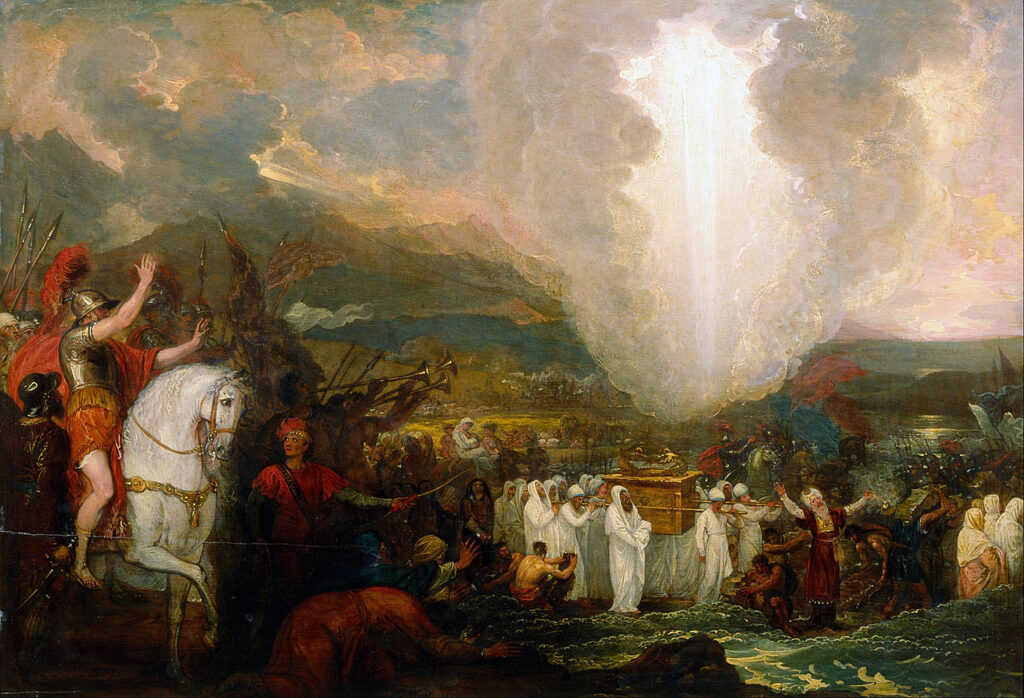
Exodus 23:20–21, Behold, I send a Messenger before you to keep you in the way. The pre-incarnate Yeshua was this Messenger [Heb. Malak] from YHVH Elohim (see 1 Cor 10:4 and Acts 7:37–38). He is the Word of Elohim that would later become flesh (John 1:1, 14).
Exodus 23:33, They shall not dwell. Israel did not have an open border policy with its heathen neighbors. Even though earlier YHVH instructed the Israelites not to oppress the stranger who was dwelling among them (v. 9 and 22:21), this was not a carte blanche suggestion that anyone could cross Israel’s border and dwell within the land of Israel. The strangers had to meet certain conditions (or legal citizenship requirements) including being circumcised and keep the Passover (Exod 12:48). Foreigners living in Israel also had to follow the Torah (Exod 12:49), which was the law of the land. Beyond that, Israel was to have nothing to do with the heathens around them including worshipping their gods, even mentioning the names of their gods, practice their customs (Exod 23:13, 24). Moreover, YHVH forbad the Israelites from entering into any legally binding covenantal agreements (including business and marriage relationships) with the heathens (v. 32). Heathens and illegal aliens were not permitted to dwell in the land of Israel (v. 33). Period. Laws and borders are for the protection of a nation, even as skin and cell walls protect living organisms from infectious disease, and fences protect livestock and people from predators and criminals, and walls protect cities from being overthrown, and an army protects a nation from foreign invasion.
Exodus 24
Exodus 24:1–2, Worship you from afar…shall come near. YHVH stipulated that Aaron, his sons and the elders of Israel were permitted to worship him, but from afar, while at the same time he would allow Moses to come near to worship him. Concurrently the people of Israel were allowed to worship YHVH from their camp at the base of the mountain, which was further removed from the presence of Elohim. Each of these three location indicates a higher location on the mountain of YHVH Elohim—an earthly symbol of his heavenly throne room. Where are you in your personal relationship with YHVH in this metaphorical picture? Let’s be honest with ourselves: most of us are at the foot of the mountain, a few are on the mountain but at the lowest level, while even fewer are actually climbing higher toward the top. These three locations of relationship with and worship of YHVH portend the three subdivisions of the Tabernacle of Moses: namely the outer courtyard, the holy place and the holy of holies. This points to the fact that different people are in different places in their spiritual journey toward or walk with Elohim, and where they are at in that upward trek determines the level of intimacy that they can experience with our Father in heaven.
In biblical Hebraic and ancient religious cultures and mythologies, mountains have traditionally symbolized heavenly abode of Elohim or that of the mythological gods (think of Mount Olympus and Delphi in ancient Greece), and ascending mountains is a picture of drawing close to deity. This is why churches, temples (including the temple in Jerusalem) and other religious shrines are often located on hills or mountains, so that people have to go up to them as if ascending to heaven.
Exodus 24:1, Worship you far off. This verse reveals to us that man can approach to worship YHVH only on the basis of the blood of the Passover lamb, but not on the basis of his own works of YHVH’s Torah-law, since YHVH had not yet given the full Torah to the Israelites (that would occur later at Mount Sinai in Exod 24:12).
That is not to say that the works of the Torah are not essential in one’s spiritual walk. Rather, they simply are not the basis of our salvation, but rather a guide to lead us in the paths of righteousness once we are saved (redeemed from the penalty of sin); they help to keep us on the path of righteousness until we die (Eph 2:8–10).
For by grace you have been saved through faith, and that not of yourselves; it is the gift of God, not of works, lest anyone should boast. For we are His workmanship, created in Messiah Yeshua for good works, which Elohim prepared beforehand that we should walk in them.
Furthermore, Yeshua taught that our works will determine our level of rewards in his kingdom (Matt 5:19 cp. Matt 16:27; Rom 2:6; 2 Cor 5:10; Eph 6:8; 1 Pet 1:17; Rev 2:23; 19:8; 20:12; 22:12), though not our initial salvation.
Many Christians have misunderstood the teachings of Paul to mean that since we are not saved by keeping the law, we therefore YHVH Torah-law is of little or no relevance to the “New Testament Christian.” This is not what Paul taught! In numerous places in Paul’s writings, he upheld the validity of the Torah in the life of the redeemed believer, and even confessed that he was obedient to but was zealous for YHVH-laws (Acts 21:20, 24; 24:14; 25:8; 28:17; Rom 3:3; 7:12, 14; 1 Cor 7:19).
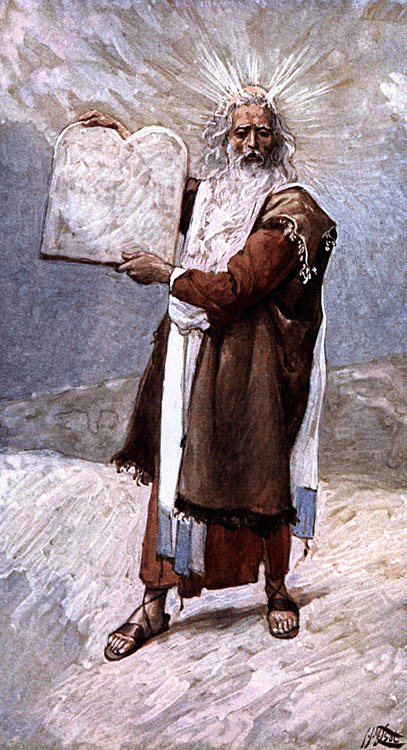
Exodus 24:2, Moses alone shall come near YHVH. This passage shows that Moses was as a prophetic foreshadow of Yeshua’s future ministry in that he was acting as a mediator between YHVH and the Israelites. Similarly, presently Yeshua is acting as our Mediator representing us to the Father in heaven (Eph 2:18; 1 Tim 2:5; Heb 7:25–26; 8:1–2, 5–6; 9:11–22; 10:19–22; 1 John 2:1).
Exodus 24:5, Young men. Here the young men were fulfilling priestly duties of offering sacrifices to YHVH. Eventually, this responsibility was transferred to the Levitical priests after the golden calf incident. The young men were acting in accordance with the standards under the Melchizedek priesthood, which stipulated that each man be the priest of his own family.
Exodus 24:7, We will do. Israel says, “I do” once again to YHVH. They said it a total of three times (see also Exod 24:3 and 19:8). As they were entering into a marital covenant agreement with YHVH, they witnessed against themselves three times. According to the Torah, the Israelites were witnessing against themselves in a legally binding agreement or contract (see Num 35:30 and Deut 17:6; 19:15). Also, the word obedient (KJV) in verse seven is the Hebrew word shema meaning “to hear and to do or obey.” Compare the usage of shema in this passage with the well-known Shema prayer passage of Deuteronomy 6:4–9 where the word hear in verse one is shema.
The Book of the Covenant. This was the Torah as it first appeared in a codified form, which became known as the Law of Moses.
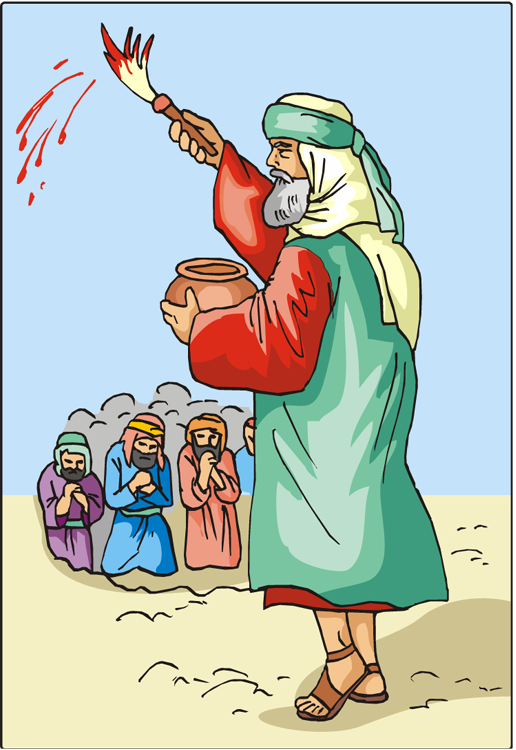
Exodus 24:8, Moses took blood. Moses sprinkled blood on the people and called it “the blood of the covenant.” This act was prophetically symbolic of Yeshua shedding his blood while on the cross (see Heb 9:18–20).
Exodus 24:10, Body of heaven. The word body is the Hebrew word estsem meaning “bone, essence, substance, body, limb, members, external body, substance, self.” It appears that the elders of Israel were given a vision of the “Godhead” in heaven.
Exodus 24:10–11, Saw Elohim…they ate and drank. This is a prophetic picture of the matrimonial supper of Yeshua the Messiah’s upcoming wedding to his redeemed and glorified saints. This event is referred to as “the marriage of the Lamb” (Rev 19:9), and the autumnal biblical Feast of Tabernacles prophetically pictures this momentous event.
Exodus 24:12, Commandments which I have written. This was YHVH’s Torah-instructions, which up to that time had been in an oral form and had been passed on down from one generation of righteous saint to another. Now that Israel was a physical nation, it needed a law in written or codified form to which kings, rulers, priests and judges could refer when making judicial decisions or when teaching the people the ways of Elohim. This Torah in codified form became known in Scripture as “the law of Moses.” But this code book had its origin here on Mount Sinai from Elohim himself, and which he himself actually wrote with his own finger as this verse plainly tells us (also see Exod 31:18).
Exodus 24:17, The glory of YHVH…consuming fire. The writer of the Epistle to the Hebrews say something similar: “For our God is a consuming fire” (Heb 12:29). Some context here would be helpful.

See that ye refuse not him that speaketh. For if they escaped not who refused him that spake on earth, much more shall not we escape, if we turn away from him that speaketh from heaven: whose voice then shook the earth: but now he hath promised, saying, Yet once more I shake not the earth only, but also heaven. And this word, Yet once more, signifieth the removing of those things that are shaken, as of things that are made, that those things which cannot be shaken may remain. Wherefore we receiving a kingdom which cannot be moved, let us have grace, whereby we may serve Elohim acceptably with reverence and godly fear: for our Elohim is a consuming fire. (Heb 12:25–29)
Regardless of the view that many Christians have of YHVH Elohim as being their cosmic Sugar Daddy in the sky who continually winks at their casual view of him and their continual sinning, he is not to be toyed with or taken lightly! The Bible has much to say about the fear of Elohim, which encompasses much more than just a reverential awe of him, but includes a healthy does of dread. Just ask the Egyptians, Nadab and Abihu, Korah and his crew, Canaanites, the enemies of Israel, and Ananias and Sapphira in the Book of Acts to name a few. Isaiah had a healthy respect for and fear of Elohim as did Paul when preaching the gospel to unbelievers.
For all those things hath mine hand made, and all those things have been, saith YHVH: but to this man will I look, even to him that is poor and of a contrite spirit, and trembleth at my word. (Isa 66:2)
Knowing therefore the terror of the Lord, we persuade men; but we are made manifest unto Elohim; and I trust also are made manifest in your consciences. (2 Cor 5:11)
Yeshua summed it up this way:
And fear not them which kill the body, but are not able to kill the soul: but rather fear him which is able to destroy both soul and body in hell. (Matt 10:28)
Exodus chapter 24, YHVH finalizes his marriage contract with Israel. In this chapter, we see YHVH making official his contractual agreement (or ketubah) with the Israelites. This agreement is commonly referred to as the Mosaic or Sinaitic covenant. YHVH was “marrying” his people (see Ezek 16:1–14). But like with any contractual agreement, there were terms and conditions. Here are the aspects of a modern contract:
A contract is an agreement made by two or more persons that is enforceable by law. It consists of voluntary promises to do or not to do certain things. When persons make a contract, their promises become legal obligations.… The making of a contract usually involves two important acts, (1) making an offer and (2) accepting the offer. The acts may be verbal or in writing.…Before a contract is formed, the parties usually negotiate terms of the agreement. One party makes one or several offers. As soon as the other party accepts an offer, the negotiations are over.…Most contracts are enforceable only if all parties get something out of the agreement.…A contract is said to be discharged after the obligations of the agreement have been fulfilled. If either party violates the agreement, a breach of contract occurs. In that case, a court ordinarily awards money, called damages, to the other party. (The World Book Encyclopedia, vol. 4, article entitled “Contracts,” 1969)
After reading this, we can see how a modern contractual agreement compares with the covenantal agreement between YHVH and his people. Modern contracts as well as that which YHVH made with his people have at least two parties who make a mutual agreement where terms are established, the contract or covenant is ratified (there is a signature, handshake, or an oral agreement), there are witnesses, and there is also a penalty clause if the contract is breached or broken.
