

Exodus13
Exodus 13:18, 21, But Elohim led the people…and YHVH went before them…to lead the way. The Bible records that YHVH speaks to his people in various ways, and still does to this day. He communicates with his people…
- Through his written word (Ps 119:105).
- By his Holy Spirit who leads YHVH’s people to into all truth (John 16:12).
- Through his divinely appointed leaders (Eph 4:11–16).
- By directing the steps (through life’s circumstances) of a righteous man (Ps 37:23–24; Prov 16:9).
- By directing the hearts of men (Prov 21:1).
- Through prophetic words (Num 12:6).
- Through dreams and visions (Num 12:6).
- Through wise counselors (Prov 24:6).
- Through Divine Messengers from heaven (e.g., Judg 6:11–14; 13:3).
Exodus 14
Exodus 14:13–15, And Moses said. The first four statements that Moses makes in these two verses presupposes the four fear responses that the Israelites would naturally have had when trapped between the Egyptian army and the Red Sea. What were the Israelites’ reactions? Maybe we can learn something about our own responses when faced with dire situations.
To those who felt hopeless and depressed and essentially wanted to commit suicide by fleeing, which meant certain death since there was nowhere to go: fleeing meant certain death either by drowning in the sea or by Pharaoh’s army, Moses said, “Do not be afraid. Stand still and see the salvation [Heb. Yeshua] of YHVH.”
To who longed for the good old days of their past lives back in Egypt, Moses said, “The Egyptians whom you see today, you shall see no more.”
To those who wanted to fight, Moses said, “YHVH will fight for you.”
To those who wanted to just complain to Moses and YHVH about their plight, Moses said, “Hold your peace.”
When faced with similar impossible situations, we typically have the same responses as that of the children of Israel, when all we have to do is to stand still in faith and wait on YHVH to supernaturally deliver us. But there’s more. Faith isn’t passive. It’s active. This is where the fifth statement—this one made by YHVH—comes into play.
YHVH command the Israelites to “Go forward” in faith! YHVH expected Moses, the leader, to lead the way. YHVH told the Israelites to confront their fears including the fear of death and to step into the Red Sea. Only when the people’s leader stepped forward in faith and placed his foot into the Red Sea did the sea part and the deliverance of YHVH became evident.
Note what Moses told Israelites in this first statement: “Stand still and see the salvation [Heb. Yeshua] of YHVH.” As already noted previously, the pre-incarnate Yeshua the Messiah was the Messenger of YHVH who was with the children of Israel in the fire cloud positioned between the Israelites and the Egyptians. When Yeshua the Messiah is in your camp, there is nothing to fear! This was a lesson in faith that the Israelites had to learn—and one we have to learn as well. Let’s not forget the words of the apostle:
I can do all things through Messiah which strengthens me. (Phil 4:13)
Nay, in all these things we are more than conquerors through [Messiah] that loved us. (Rom 8:37)
What shall we then say to these things? If Elohim be for us, who can be against us? (Rom 8:31)
Exodus 14:13, Salvation. The word salvation here is the Hebrew word Yeshua. Think about this for a moment in light of the context in which this word appears in this story, and the implications for your own life when you are confronted with difficult situations.
Exodus 14:19, Angel [or Messenger] of YHVH. This is divine entity was none other than the preincarnate Yeshua—the Messenger or Word of Elohim before he was made flesh (John 1:1, 14).
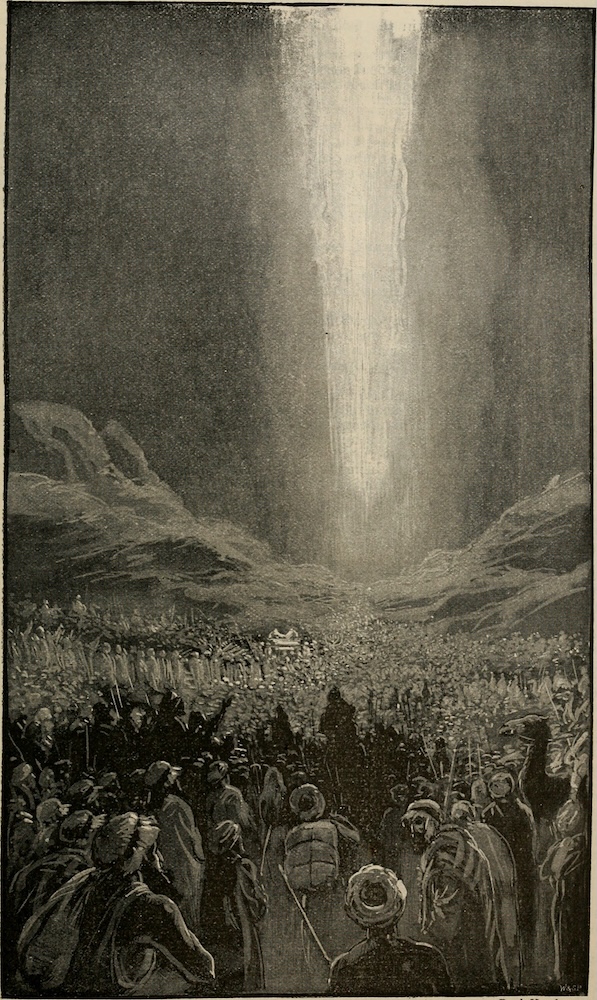
Went behind them. Fire does two things. It both destroys and purifies substances depending on the durability of their composition. It consumes that which is flammable (e.g., wood, hay and stubble) and refines or purifies that which is inflammable (e.g., gold, silver and precious stones; see 1 Cor 3:12–15). To those people whose lives are characterized by wood, hay and stubble (spiritually speaking, this refers to sin and the works off the flesh), fire is a threat and terror. On the other hand, to those whose lives are like gold, silver and precious stones (spiritually speaking, this refers to works of righteousness and the fruit of the Spirit of Elohim), fire is welcomed, since they have nothing to fear. This is because fire will only refine, not destroy them spiritually.
Moreover, fire creates light. To those whose lives are characterized by light (i.e., truth and righteousness), fire is a positive thing, since it exposes sin and gives them light by which to go forward spiritually. To those people who live in spiritual darkness (i.e., the world, the flesh and the devil), as was the case with Pharaoh and Egypt (a symbolic picture of Satan and the world), and those who love sin and hate Elohim and his righteousness (John 3:19–20), fire and light are feared because it will not only expose their evil deeds, but will consume them through divine judgment (see Rev 20:15).
Therefore, the fiery flame that separated the Israelites from the Egyptians was a good thing and a blessing for the former and a horrific thing, a curse and a terror for the latter. In fact, in Exodus 15:7, in poetic terms, the Egyptians (a biblical metaphor for rebellious and unrepentant sinners) are likened to stubble that YHVH destroys in his wrathful judgment. This same thing will occur again on a global scale when the earth is burned with fire and the wicked become ashes under the sole’s of the feet (Mal 4:1–3) of the righteous after the white throne judgment (Rev 20:11–15).
What is your life comprised of? Wood, hay and stubble, or gold, silver and precious stones:
For no other foundation can anyone lay than that which is laid, which is Yeshua the Messiah. Now if anyone builds on this foundation with gold, silver, precious stones, wood, hay, straw, each one’s work will become clear; for the Day will declare it, because it will be revealed by fire; and the fire will test each one’s work, of what sort it is. If anyone’s work which he has built on it endures, he will receive a reward. If anyone’s work is burned, he will suffer loss; but he himself will be saved, yet so as through fire. (1 Cor 3:11–15)
Exodus 14:22, The children of Israel went. According to Jewish tradition (e.g., see The ArtScroll Stone Edition Chumash commentary on verse eight), the Red Sea crossing occurred on Nisan 21 (or the month of the Abib, which is the first month of the biblical calendar occurring in the early spring, Exod 13:4), which is the last day of the Feast of Unleavened Bread, even though the Scriptures does not explicitly state this. The Jewish sages deduce this from the chronology of events leading up to the crossing. On the fifteenth day of the first month, they reason, Israel left Egypt and traveled from Rameses to Succoth. On the sixteenth day, they traveled from Succoth to Etham, and on the seventeenth from Etham to Pi-hahiroth. Then on the eighteenth it was reported to Pharaoh that Israel had been gone for three days. On the 19th and 20th Pharaoh mustered his army and pursued Israel, and on the twenty-first day of the first month Israel crossed the Red Sea, which was the last day of the Feast of Unleavened Bread.
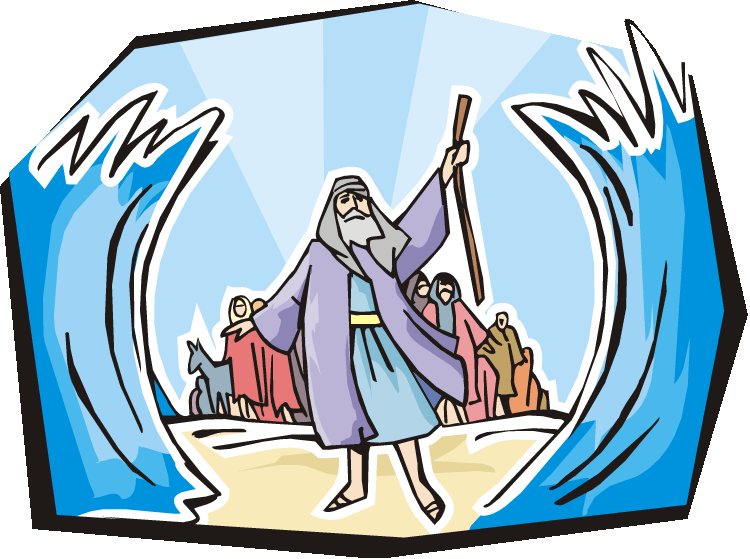
The [Red] Sea. The Israelites went through the midst of the Red Sea. Like the killing of the Passover lamb and the painting of his blood on the door posts, the crossing of the Red Sea prophetically pointed forward to the message of the gospel and the steps a disciple of Yeshua must take in his spiritual journey. Paul states in his letter to the believers in Corinth,
Moreover, brethren, I would not that ye should be ignorant, how that all our fathers were under the cloud, and all passed through the sea; and were all baptized unto Moses in the cloud and in the sea; and did all eat the same spiritual meat; and did all drink the same spiritual drink: for they drank of that spiritual Rock that followed them: and that Rock was Messiah. (1 Cor 10:1–4)
The Israelites going through the Red Sea is a prophetic picture of baptism for the remission of sins of the new believer. Red reminds us of the blood of Yeshua that cleanses sinners of sin. Moreover, sea water is salty and salt is a biblical symbol representing cleansing, purification, preservation and eternity and all of which point to the efficaciousness of Yeshua’s atoning blood on behalf of the redeemed saint.

Now let’s look at Israel’s Red Sea passage in light of its larger gospel message context. While back in Egypt, YHVH sent Moses the evangelist to the Israelites with the message of redemption from their Egyptian slave masters. To be spared from Eloim’s judgments against sin, all the Israelites had to do was to believe the evangelist (i.e., the preacher of the gospel message), when he instructed them to kill a lamb and to put its blood on the doorposts of their houses (i.e., have faith in the shed blood of Yeshua the Messiah who died on the cross to set us free from the penalty of our sins). Those who obeyed these instructions were spared Elohim’s judgment against sin.
Next, the Israelites were told to put leaven (i.e., a picture of sin) out of their houses (a symbol of their lives), eat unleavened bread (i.e., a picture of accepting Yeshua unconditionally and living a sin-free life from that point forward) and to leave Egypt (i.e., a picture of leaving behind the world’s ways and lifestyles).
After that they went through the Red Sea (i.e., a picture of baptism for the remission of sins).
These were merely the initial steps that the Israelites had to take on their journey to the “Promised Land.”
After that, they came to Marah, then to the desert oasis of Elim, then they received manna from heaven and water from the rock.
Through these steps, the Israelites learned about sin, redemption, the Messiah, how to have faith in Elohim, and how to overcome the triple headed enemy of the world, the flesh and the devil.
For those readers who can discern the code, the gospel message is encrypted in the steps that the Israelites took while traversing the wilderness (a biblical metaphor for our physical life on earth) en route to our own promised land as immortalized and glorified children of Elohim in his eternal kingdom. What the Israelites went through, how they reacted and the consequences of their actions can act as a sort of spiritual road map to aid modern saints in guiding them forward in their own spiritual journey toward inclusion in the kingdom of Elohim as his glorified children. The wise saint will learn from both the mistakes and triumphs of the Israelites. So may we all study the Bible to show ourselves approved, and may YHVH help us to learn our lessons well, so that we may overcome the world, the flesh and devil and be included in YHVH’s everlasting kingdom. Amein!
Chapter 15
Exodus 15:1, This song. This Song of Moses may be more aptly titled, “The Song of the Redemption,” for it is a song about our Heavenly Redeemer, as we shall now discover.
I will sing. Will this Song of Moses be sung again in the future? In Revelation 15:3, we see that the glorified bride of Yeshua will be singing the Song of Moses. Why is she singing this joyous song? Because YHVH has delivered her from his judgments of wrath that he is pouring out upon a wicked end times world, and has delivered her from her enemies and brought judgement against them. These same redeemed Israelites are those whom YHVH has brought out of Babylon the Great as part of the second exodus of redeemed Israelites from the nations where they have been long scattered and spiritually enslaved. The Song of Moses here (in Rev 15:3) also relates to the Song of the Lamb. As we shall see next, the Song of Moses in Exodus 15 does relate to Yeshua the Lamb.
Exodus 15:2, The LORD [Heb. Yah]. Yah is the shortened form of YHVH (or Yehovah). This verse goes on to say “that [Yah] has become my salvation [Heb. Yeshua].” What this is literally saying is that YHVH has become Yeshua! This is yet another prophecy in the Tanakh pointing to and confirming the deity of Yeshua some 1,500 years before his advent as a human.
Salvation. Heb. Yeshua
I will praise him. The KJV translates this phrase as “I will prepare him a habitation.” The ArtScroll Stone Edition Tanach has, “I will build him a sanctuary.” Couple this with verse 17, which speaks of “the sanctuary [Heb. miqdash],” which YHVH has made for his dwelling, and we have a clear reference to the Tabernacle of Moses, which YHVH would shortly thereafter instruct the Israelites to build, so that he could dwell among them (Exod 25:8), and commune with them (verse 22). What’s more, everything in the tabernacle pointed to Yeshua, the salvation of YHVH, and to his death on the cross to redeem man from sin and bring him into close communion with the Father in heaven!
Exodus 15:3, The LORD is his name. This a lie! The Lord IS NOT his name! His name is YHVH (Yehovah) Elohim. Christian churchianty dishonors the Creator by refusing to use true name. Most people do not like to be called by a name that is not their own; they prefer to be called their actual name. It is a way to show a person honor and respect. Why can’t humans give YHVH Elohim the same courtesy? Satan’s Hebrew name haSatan is virtually the same in English. Yet Bible translators have substituted the name “Yehovah Elohim” for “the LORD God” and “Yeshua” for “Jesus.” Why? It makes no sense. It only reveals the deep-seated rebellious and stubborn nature of man to ignore Scripture by refusing to use the Creator’s true name. He clearly states what his name is nearly 7,000 times in Scripture. Here are several scriptures that emphasize this point:
As for our Redeemer, YHVH of hosts is His name, the Holy One of Israel. (Isa 47:4)
For they call themselves after the holy city, and lean on the Elohim of Israel; YHVH of hosts is His name…(Isa 48:2)
But I am YHVH your Elohim, Who divided the sea whose waves roared—YHVH of hosts is His name. (Isa 51:15)
For your Maker is your husband, YHVH of hosts is His name; and your Redeemer is the Holy One of Israel; He is called Elohim of the whole earth. (Isa 50:34)
The Portion of Jacob is not like them, for He is the Maker of all things, and Israel is the tribe of His inheritance; YHVH of hosts is His name. (Jer 10:16)
In His days Judah will be saved, and Israel will dwell safely; now this is His name by which He will be called: YHVH OUR RIGHTEOUSNESS. (Jer 33:2)
Their Redeemer is strong; YHVH of hosts is His name. (Jer 54:34)
The Portion of Jacob is not like them, for He is the Maker of all things; and Israel is the tribe of His inheritance. YHVH of hosts is His name. (Jer 51:19)
For behold, He who forms mountains, and creates the wind, Who declares to man what his thought is, and makes the morning darkness, Who treads the high places of the earth—YHVH Elohim of hosts is His name. (Amos 4:13)
He made the Pleiades and Orion; He turns the shadow of death into morning and makes the day dark as night; He calls for the waters of the sea and pours them out on the face of the earth; YHVH is His name. (Amos 5:8)
He who builds His layers in the sky, and has founded His strata in the earth; Who calls for the waters of the sea, and pours them out on the face of the earth—YHVH is His name. (Amos 9:6)
Exodus 15:6,12, Your right hand. Three times this phrase is found in the Song of Moses. Who is the outstretched arm or YHVH? It is Yeshua (Isa 53:1 cp. Isa 52:10; 40:10; Ezek 20:34–35) who is presently at the right hand of Elohim (e.g., Rom 8:34; Col 3:1; etc.). This is confirmed in verse 2 where the Hebrew for the word salvation is Yeshua.
Exodus 15:12, The earth swallowed them. Even as the earth (or seas) swallowed up Pharaoh (a picture of Satan) who was attempting to destroy YHVH redeemed people, the earth will come to the rescue of the end times saints who have fled into the wilderness after leaving the Babylon the Great world system (Rev 12:16).
Exodus 15:17, Sanctuary. Heb. miqdash. Israel—both the land and the people—would become a dwelling place for Elohim. In other words, the people of Elohim are the miqdash (another name for temple) are the temple of Elohim as Paul states in 1 Cor 3:16 and 2 Cor 6:16.
Exodus 15:23–25, Marah. After the mountain top thrill and joy of victory over her enemies, Israel now finds herself in the valley of despair leading to their murmuring and bitterness against YHVH and Moses. The children of Israel were thirsty and their hopes for water were dashed when they came to the bitter, non-potable waters of Marah. This was the first of many tests of Israel’s faith in YHVH: would they trust their Creator and Redeemer to provide for them in all circumstances or resort to doubt, unbelief, fear and faithlessness? As proof of his faithfulness, YHVH instructs Moses to throw a tree into Marah’s toxic waters, which when he did, and they became drinkable. The lesson is that instead of murmuring when facing trials, privation or needs in our lives, as we encounter life’s adversities, YHVH is teaching us to turn to Yeshua for healing, and he will give us fresh water to drink from his wells of salvation (Isa 12:3). He will turn our mourning into dancing (Ps 30:11), our tears into joy (Ps 126:5; Isa 61:3), and our ashes into beauty (Isa 61:3).
Exodus 15:26, I will put none of the diseases. Some Bible teachers quote this verse to mean that a Christian is immune from all sickness and disease. Is this what this verse is really saying?
On the contrary, the Bible teaches us that sometimes YHVH puts judgments upon people either to bring them to repentance from sin, or because they are so evil, reprobate and past redemption, that he is forced to impose the death penalty upon them.
Other times, people put judgments such as sickness upon them because of their own wrong choices. Such judgments are the consequences of their own actions; it is a function of the laws cause and effect.
Sometimes sickness comes upon people because YHVH takes his hand of protection away from them and they are left open as victims of the consequences of their own wrong doings resulting in spiritual attacks from Satan or evil people.
Finally, according to the Scriptures and the laws of biology, every person will eventually die. Sometimes healthy people simply die quietly in their sleep. Most times, people die of sickness or disease as their body grows old, runs down and finally wears out.
What this verse is saying is that YHVH will not put diseases upon his people as a judgment against sin if they obey his commandments. However, if they obey him, but have an unhealthy diet, live an unhealthy life, have a negative attitude, make foolish life decisions that open them up to suffering the negative consequence (or curses) brought on by their own foolish decisions, this is not YHVH putting the consequences of their action on them, but the consequences of their own folly.
I am YHVH that heals you. This is the first place in the Scriptures where YHVH promises to heal his people of sickness. Here is a partial list of other biblical verses containing similar promises: Deut 7:12 and 15; Pss 30:2–4; 34:18–19; 41:1;91 (entire chapter); 103 (entire chapter); Isa 40:28–31; 53:4–5; Jer 17:13–14; Mal 4:2; Mark 11:23–24; Luke 10:19; John 14:13; 15:7; 15:16; 16:23–24; Rom 8:31; 8:37; Phil 4:13; Jas 5:14–16; 1 Pet 2:24. Read these Scriptures when you are sick and believe YHVH’s promises for your divine healing.
Notice the stipulations that YHVH makes for his promise of healing to be fulfilled upon his people. His people must “diligently heed” [Heb. shema meaning “to hear and to do”] the voice of YHVH by doing “what is right [Heb. yashar meaning “upright, righteous, correct or straight”] in his sight” by obeying his Torah.
Is There a Connection Between Sin and Sickness?

Is there a connection between the sins we commit and the sicknesses and diseases that come upon us? In many cases, the answer is yes, The Bible has much to teach us on this subject.
Let’s first establish some basic truths.
Everyone will eventually die, so not all sickness is a result of sin (Heb 9:27).
Some sickness is not due to sin, but comes on us so that YHVH might be glorified when the person is miraculously healed (John 9:2–3).
The purpose of some sickness is for spiritual our refinement to bring us to a higher level spiritually as was the case with Job.
In a general sense, pain, suffering and death came upon all men because of Adam and Eve’s initial rebellion against YHVH Elohim in the Garden of Eden. As a result of the “fall of man,” all men have come under this curse and suffer as a result.
Unto the woman [Elohim] said, I will greatly multiply thy sorrow and thy conception; in sorrow thou shalt bring forth children; and thy desire shall be to thy husband, and he shall rule over thee. And unto Adam he said, Because thou hast hearkened unto the voice of thy wife, and hast eaten of the tree, of which I commanded thee, saying, Thou shalt not eat of it: cursed is the ground for thy sake; in sorrow shalt thou eat of it all the days of thy life; thorns also and thistles shall it bring forth to thee; and thou shalt eat the herb of the field; in the sweat of thy face shalt thou eat bread, till thou return unto the ground; for out of it wast thou taken: for dust thou art, and unto dust shalt thou return. (Gen 3:16–19)
Some sickness is a direct result of disobeying YHVH’s commandments; that is to say, it is YHVH’s judgment against that sin. For example, in Exodus 15:26, YHVH speaks about not putting the diseases of Egypt upon his people if they will follow his commandments.
And said, If thou wilt diligently hearken to the voice of YHVH thy Elohim, and wilt do that which is right in his sight, and wilt give ear to his commandments, and keep all his statutes, I will put none of these diseases upon thee, which I have brought upon the Egyptians: for I am YHVH that healeth thee.
The Torah further makes the connection between sin and sickness when it lists the curses for Torah disobedience in Deuteronomy 28:21–22.
YHVH will make the plague cling to you until He has consumed you from the land which you are going to possess. YHVH will strike you with consumption, with fever, with inflammation, with severe burning fever, with the sword, with scorching, and with mildew; they shall pursue you until you perish.
In Deuteronomy 7:15, YHVH again mentions not afflicting his people with the sicknesses of Egypt if they will obey his Torah-commandments.
And YHVH will take away from thee all sickness, and will put none of the evil diseases of Egypt, which thou knowest, upon thee; but will lay them upon all them that hate thee.
Elsewhere, the Bible shows that there is a direct relationship between sin and healing in Psalm 103:3,
Who forgiveth all thine iniquities; who healeth all thy diseases…
“Leprosy” or the infectious skin disease the Torah refers to as tsaraat (Lev 14:34) was a judgment from YHVH against several specific sins.
When ye be come into the land of Canaan, which I give to you for a possession, and I put the plague of leprosy in a house of the land of your possession…
In several instances in the Scriptures, we read that tsaraat was the consequences of a specific sin. In the case of Miriam, it was the sin of pride and rebellion against spiritual authority and using her tongue in an evil manner against YHVH’s spiritual authority (Num 12:1, 9–10). In the case of Gehazi, he became leprous because of greed and lying (2 Kgs 5:20–27). Uzziah, the king of Judah, became leprous because of his pride and rebellion against YHVH when he dared to violate the Torah by burning incense in the temple (2 Chron 26:16–23).
Envy can bring on bone diseases. Envy can also refer to “jealousy and sexual passion.”
A sound heart is the life of the flesh: but envy the rottenness of the bones. (Prov 14:30)
Sexually transmitted diseases are a direct result of sexual promiscuity and idolatry, and is a judgment from Elohim against those who engage in such ungodly practices.
For this cause Elohim gave them up unto vile affections: for even their women did change the natural use into that which is against nature: and likewise also the men, leaving the natural use of the woman, burned in their lust one toward another; men with men working that which is unseemly, and receiving in themselves that recompense of their error which was meet. (Rom 1:26–27)
Yeshua, on several occasions, equates sin and healing. That is to say, he viewed forgiveness of sin and the healing of a disease as synonymous concepts. To him, the sickness was a result of sin.
Whether is easier, to say, Thy sins be forgiven thee; or to say, Rise up and walk? (John 5:24)
Yeshua shows that illness can be a direct punishment for sin, as well, when he states that a man whom he had just healed was sick because of his sin.
Afterward Yeshua findeth him in the temple, and said unto him, Behold, thou art made whole: sin no more, lest a worse thing come unto thee. (John 5:14)
YHVH’s laws of judgment against sin are still in operation even in the so-called “New Testament era of grace.” YHVH struck down and killed Annaias and Sapphira because they lied to the apostles and to the Spirit of Elohim (Acts 5:1–11).
Paul confirms the truth that there is still a correlation between sin and sickness when he states that some within the body of Yeshua get sick and die because of sin. Illness is a direct punishment for sin. Paul teaches that this can occur when a believer doesn’t have the proper fear and respect for YHVH Elohim and those things which are set-apart of kadosh such as blood and body of Yeshua as symbolized in the Passover communion service by the bread and the wine.
For I have received of the Master that which also I delivered unto you, that the Master Yeshua the same night in which he was betrayed took bread: and when he had given thanks, he brake it, and said, Take, eat: this is my body, which is broken for you: this do in remembrance of me. After the same manner also he took the cup, when he had supped, saying, This cup is the new testament in my blood: this do ye, as oft as ye drink it, in remembrance of me. For as often as ye eat this bread, and drink this cup, ye do shew the Master’s death till he come. Wherefore whosoever shall eat this bread, and drink this cup of the Master, unworthily, shall be guilty of the body and blood of the Master. But let a man examine himself, and so let him eat of that bread, and drink of that cup. For he that eateth and drinketh unworthily, eateth and drinketh damnation to himself, not discerning the Master’s body. For this cause many are weak and sickly among you, and many sleep. For if we would judge ourselves, we should not be judged. But when we are judged, we are chastened of the Master, that we should not be condemned with the world. (1 Cor 11:23–32)
When trials of our faith fall on us including sickness and disease, Scripture instructs us to receive it with joy realizing that this is occurring for our spiritual refinement. Then we are told to ask YHVH for wisdom presumably to help us to understand why the trial is occurring, so that we can repent of sin and learn from our mistakes.
My brethren, count it all joy when ye fall into divers temptations; knowing this, that the trying of your faith worketh patience. But let patience have her perfect work, that ye may be perfect and entire, wanting nothing. If any of you lack wisdom, let him ask of Elohim, that giveth to all men liberally, and upbraideth not; and it shall be given him. (Jas 1:2–5)
Let us not forget that whom our Father in heaven loves he chastens. Sickness often is a form of loving chastisement or discipline from YHVH Elohim,
And ye have forgotten the exhortation which speaketh unto you as unto children, My son, despise not thou the chastening of YHVH, nor faint when thou art rebuked of him: for whom the YHVH loveth he chasteneth, and scourgeth every son whom he receiveth. If ye endure chastening, Elohim dealeth with you as with sons; for what son is he whom the father chasteneth not? But if ye be without chastisement, whereof all are partakers, then are ye bastards, and not sons. Furthermore we have had fathers of our flesh which corrected us, and we gave them reverence: shall we not much rather be in subjection unto the Father of spirits, and live? For they verily for a few days chastened us after their own pleasure; but he for our profit, that we might be partakers of his holiness. Now no chastening for the present seemeth to be joyous, but grievous: nevertheless afterward it yieldeth the peaceable fruit of righteousness unto them which are exercised thereby. Wherefore lift up the hands which hang down, and the feeble knees; and make straight paths for your feet, lest that which is lame be turned out of the way; but let it rather be healed. (Heb 12:5–13)

Exodus 15:27, Elim. The name of this oasis in the wilderness where the Israelites found refreshment is rich in meaning and prophetic significance. Elim is the plural of ayil meaning “porch, vestibule or hall” and probably refers to the large and imposing porch that existed in front of the main entrances of some ancient middle eastern temples including that of Solomon’s Temple. These porches were often supported by two large pillars. In the case of Solomon’s Temple, these two pillars were named Yachin (meaning “he will establish”) and Boaz (possibly meaning “fleetness” or “established in strength”) (see 1 Kgs 7:21). Elsewhere ayil can refer to temple pillars (e.g., Ezekiel’s temple, Ezek 40–41), which sometimes featured palm tree ornamentation (Ezek 40:31). Ayil can also mean “mighty leader, ram, or a terebinth tree, which grows in the Middle East and was likely the Pistacia terebinthus (or turpentine tree) or perhaps the Pistacia palaestina. This short (30 feet mature height), stout, thick-trunked tree is sometimes translated in the Bible as oak, which is a different species of tree altogether and is not related to the pistacia or terebinth tree. As we can see from this brief word study, elim is rich in meaning, and primarily refers to something which envisions strength (e.g., a ram or a stout tree), and which supports something else (like a pillar that supports a building).
The word Elim and the oasis by this name is rich in spiritual significance with its 70 palm trees and 12 wells of water. Seventy is the number of nations listed in Genesis chapter ten, and the number of Israelites YHVH sent to live in Egypt with Jacob to evangelize that nation (Exod 1:5). Seventy is also the number of the elders that Moses chose to help him lead Israel (Exod 24:1; Num 11:16), and which eventually became the Jewish Sanhedrin (a.k.a as “the Great Assembly”), which, under the Romans, ruled Israel in the time of Yeshua. Yeshus himself, chose 70 disciples to evangelize Judea (Luke 10:1,17), who later became the founders and leaders of the apostolic church or kehilah. It was these same seventy evangelists along with the twelve disciples who Yeshua commissioned to take the gospel to the seventy nations listed in Genesis chapter ten.
The twelve wells of water at oasis Elim may signify the twelve tribes of Israel and latter the twelve apostles, which YHVH commissioned to take the water (and the light and truth) of his Torah-word and the gospel to the nations (Deut 4:6; Matt 28:19; Acts 1:8). Water is a biblical metaphor for YHVH’s Torah or the word of Elohim (Deut 32:2; Eph 5:26), and Isaiah likens the message of the gospel or salvation to water from a well (Isa 12:3).
Israel’s arriving at Elim, therefore, could be viewed as a prophetic vision of their future YHVH-ordained spiritual destiny as the people through whom YHVH would bring the fresh water of his Torah-word (including the good news of the Messiah, who was the Living Torah-word of Elohim incarnate) to a world dying of thirst and starvation in the midsts of the bleak wilderness of this physical human existence. As such, YHVH expected his people to stand firm like pillars or trees, and resolutely strong like a ram in the face of great adversity and resistance as they fulfilled their divine commission to evangelize the world. Those who fulfill this mission, YHVH promised, as their reward for faithful duty, to make pillars or
elim in the spiritual and eternal temple of the soon-coming New Jerusalem (Rev 3:12).
From Egypt to Elim to provision in the wilderness. In this portion of Scripture, we see a prophetic picture of what new believers must go through when leaving enslavement to Pharaoh (Satan) and coming out of Egypt (the world). After leaving Egypt, Pharaoh pursued the Israelites not wanting to lose any of his enslaved subjects. YHVH then led the Israelites through the Red Sea, a picture of baptism for the remission of sins. The Israelites then murmured against YHVH because of the bitter waters of Marah, which they were unable to drink. Moses, a prophetic picture of Yeshua, healed the waters when he cast a tree (a picture of Yeshua’s death on the cross) into the waters making them sweet and potable. This story shows us that as believers we must learn to put off the bitterness, unforgiveness, anger and our carnal man before we can expect to receive a blessing from YHVH, and healing in our lives. From there, the children of Israel came to the desert oasis of Elim where YHVH nourished them in a most refreshing way. Elim is a prophetic picture of coming into a bit of heaven on earth and the provisions of YHVH in the midst of our wilderness journey called life after having overcome our bitterness of past sin through the cross of Yeshua. Immediately after this, YHVH began reigning manna down on the Israelites—a picture of Yeshua, who is the spiritual bread of life. This whole story teaches us that when we finally overcome the sins of bitterness and complaining through the power of Yeshua’s death, we can experience healing, physical nourishment, refreshment along with ongoing supernatural provision for our spiritual journey toward the Promised Land of YHVH’s eternal and heavenly kingdom.
Exodus 16
Exodus 16:4–30, The importance of the Sabbath.This chapter chronicles YHVH’s efforts to literally force a secular, carnal, irreverent, unruly and disobedient nation into keeping the seventh day Sabbath. Since humans have changed not at all from then until now, the saga of an ungodly people coming into with the laws and commandments of the Creator—for their own blessings, good and well-being—remains a cogent lesson for each of us.
Observance of the seventh day Sabbath was one of the first things YHVH taught his people after coming out of Egypt. This shows the importance of this commandment in the eyes of the Creator. Egypt is a biblical metaphor for this world, Passover is a picture of salvation and coming through the Red Sea is a picture of baptism for the remission of sins. This teaches us that Sabbath observance is one of the first acts of obedience that YHVH expects a new believer to do after “being saved.” All arguments to the contrary—about how the Sabbath was done away with or exchanged for Sunday—are meaningless, irrelevant and antibiblical deceptions that have been propagated by liars, deceivers, false teachers and the biblically ignorant. Period and end of discussion.
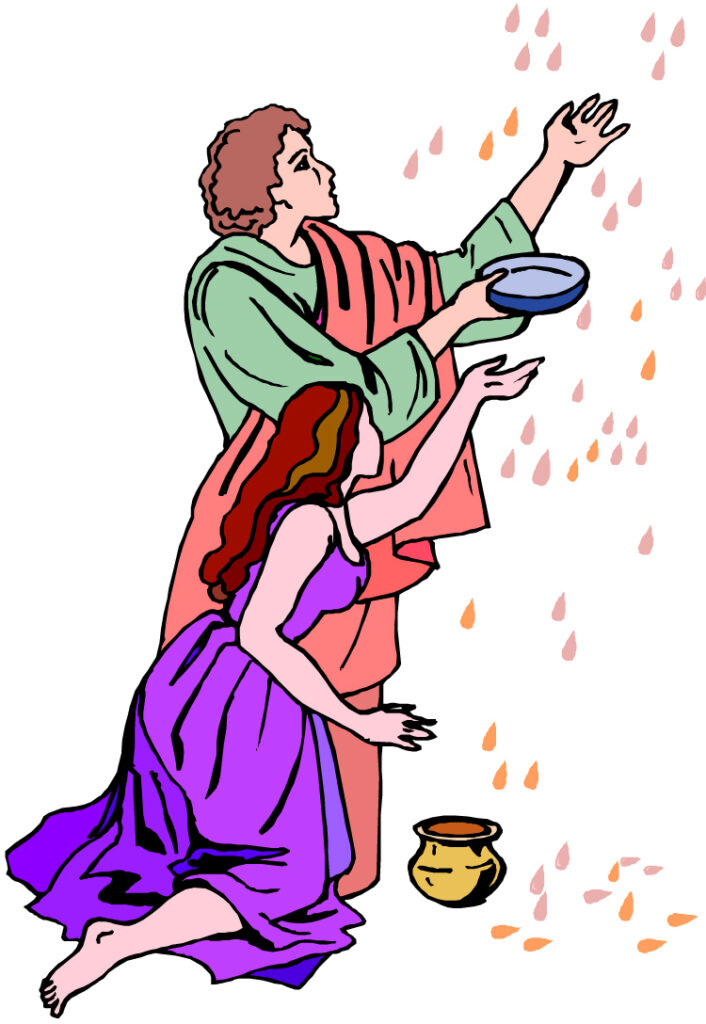
In this chapter, YHVH endeavored to teach the Israelites the importance of the Sabbath in a most poignant way and pragmatic way—through the blessing of an abundance of food or the lack thereof resulting in hunger. There is a spiritual lesson in this as well to be learned. This is because the seventh day Sabbath is an open door that leads to a veritable spiritual feast of additional layers of divine revelation as it brings the Bible alive leading one to a higher walk and into closer relationship with YHVH Elohim.
In the story YHVH teaching Israel the importance of the seventh day Sabbath, it is as if YHVH were instructing the stiff-necked and rebellious Israelites that if they refused to follow his Sabbath instructions, they would literally go hungry: “If you do not obey me, you will not eat.” Again, there is both a literal physical and spiritual application to this truism.
Moreover, this reveals the gravity that the Creator places on the Sabbath command. Yet despite these clear instructions, most in the Babylonian (Rev 18:4) mainstream church today, like the rebellious children of Israel of old, refuse to obey YHVH’s clear instructions regarding the Sabbath. Instead, they prefer to believe the doctrines of men proffered to them by their spiritual leaders that purport to invalidate the Sabbath command. Paul’s sage observation in Romans 8:7 describes the situation perfectly: “Because the carnal mind is enmity against Elohim: for it is not subject to the [Torah] law of Elohim, neither indeed can be.” In our day, the same question can still be asked of followers of Yeshua that YHVH asked of the Israelites at that time, “How long do you refuse to keep my commandments and my laws?” (Exod 16:28).
Not only this, but by forcing the Israelites to gather manna each day, YHVH was teaching them to work six days for their daily bread (see Exod 20:8–11). Although the manna came from heaven and YHVH was its source, he still required his people to work each day by going out and gathering it. There is no free lunch; if do not work, you do not eat (2 Thess 3:10). However, when we obey YHVH we will be under his divine favor and blessings and the work will be easier. To be certain, even though YHVH supernturally provided for the children of Israel, the nation of Israel was not a welfare state empowering lazy freeloaders! Again, the Bible is clear: if a man refuses to work, neither should he eat.
The Sabbath command in Exodus 20 not only prescribes resting on the Sabbath, but this presupposes that one has followed the preceding command to work the previous six days. Humans are naturally inclined to laziness. If one does not have to work, they probably won’t. YHVH worked for six days creating everything in the universe, and then he rested on the seventh day. YHVH created humans in his image and expects us to follow his example of working and then resting.
Moreover, this chapter is almost entirely dedicated to instructions pertaining to preparing for the Sabbath. This shows the priority that YHVH places on Sabbath observance for his people.
Also note that these instructions are given many weeks before the official giving of the Torah (or law of Moses) at Mount Sinai. This is but one of the many examples of YHVH revealing key aspects of his Torah-law long before he gave his Torah-law to the Israelites in one legal codified corpus at Mount Sinai.
Exodus 16:4, On the sixth day…prepare. (Also note verse 23.) The sixth day of the week was to be a day of preparation for the Sabbath, so that the Sabbath rest could be complete allowing for man to fully focus on being spiritually edified in the presence of his Creator without the distractions of food preparation and the other mundane duties of life.
Exodus 16:29, Let every man remain.The essential point of this prohibition is to not go out and gather manna on the Sabbath, but to rest on this day from the routine work of supporting one’s family.
This command did not prohibit the Israelites from gathering together on the Sabbath for purposes of teaching, worship, prayer, fellowship or spiritual edification or else YHVH’s command for the Israelites to gather together on the Sabbath for a “holy convocation” (Lev 23:2) would be contradictory. Were this command merely an injunction not to leave one’s dwelling place on the Sabbath, then Yeshua and the apostles visiting synagogues on the Sabbath would have been a violation of this Torah command.
Isaiah 58:13 could be viewed as the corollary passage to Exodus 16:29. There YHVH instructs his people not to profane the Sabbath by doing their own pleasure, not doing their own ways, and not speaking their own words on this day. Instead, it is a holy day to YHVH, and a day to focus on and to honor him.

Exodus 16:34, Testimony. Heb. edah or pl. edut. This Hebrew word literally means “reminder or warning signs.” The testimonies or edut of Elohim form one the three subdivisions of YHVH’s Torah along with the statutes and judgments (Deut 4:45). This word is used in reference to the testimony of Elohim as well as to the Tabernacle of Moses (Exod 38:21 and Num 1:50; i.e., the tabernacle of the testimony), since the holy of holies (Heb. d’veer meaning “oracle”) compartment of the tabernacle is where Moses received the word, Torah instructions or oracles of Elohim. Edut is also used in reference to the ark of the covenant (Exod 13:64; 27:21; 30:36; Lev 16:13) which housed the two tablets of stone on which were written the ten words (or ten commandments) of Elohim. These two tablets or tables of the covenant represented the covenant and signified the covenantal agreement that YHVH made with Israel (Exod 34:28; Deut 9:9, 11, 15; 1 Kgs 8:9; 2 Chron 5:10; Heb 9:4). They were not only a proof of that covenant to which Israel agreed, but were also a written warning of the consequences that Israel would suffer if they broke their covenant with him. The TWOT in its lexicon on the word edut notes that the “law of God is his testimony because it is his own affirmation relative to his very person and purpose.” It also observes that in Psalms 19 and 119, David uses this word in close conjunction and synonymously with YHVH’s overall Torah-law (Pss 19:7; 119:14, 31, 36, 88, 99, 111, 129, 144, 157).
Exodus 17
Exodus 17:5, Struck the river. Moses’ striking was the first plague on Egypt that Moses performed when he struck the Nile River with his rod and its waters became blood (Exod 7:20). There may be a reason YHVH relates the rod, the river and the blood with the rock, which when struck became a source of drinking water. This may be a cryptic reference to the death of Yeshua on the cross and his becoming a river of life when he, who is the Rock of our salvation (Deut 32:15; 2 Sam 22:47; Pss 62:2, 7; 89:26; 95:1; Isa 17:10), was struck and killed and the river of life (the Nile was a physical river of life to the Egyptians in that it irrigated their fields and brought them grain to eat) comprising of blood and water flowed from him bringing salvation for thirsty, weary men.
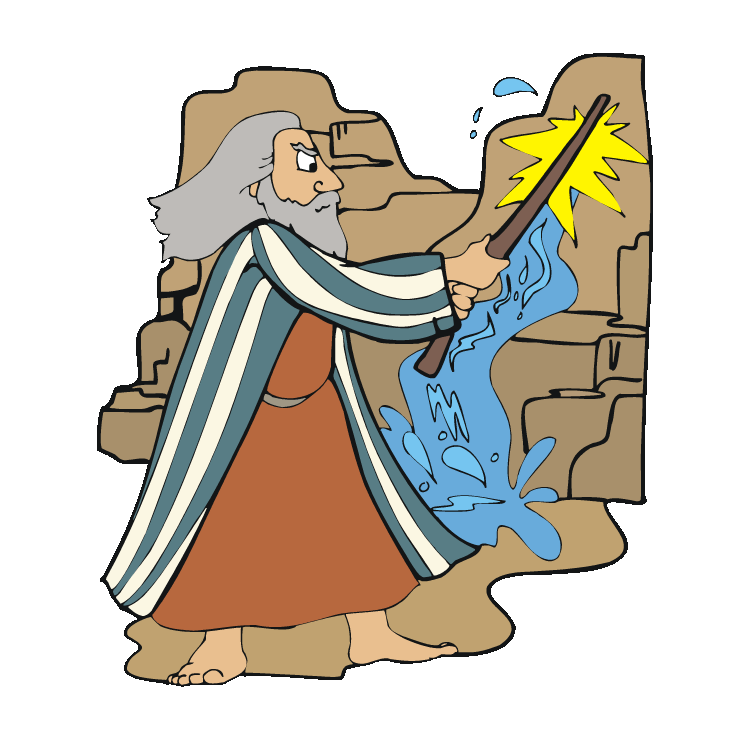
Exodus 17:6, Strike the rock. This is a prophetic picture metaphor of Yeshua, the spiritual Rock of our salvation (1 Cor 10:4), who would be struck by the rod of YHVH’s judgment on account of his bearing on himself the penalty of men’s sins. As when Moses struck the rock and water flowed out, when the Roman soldier’s spear pierced Yeshua’s side, blood and water flowed out, which are symbols of our redemption (1 John 4: 6, 8).
Exodus 17:8, Amalek. (See notes at Deut 25:19.) Amalek wasEsau’s son (Gen 36:12), and his descendants (the Edomites) became perpetual enemies of Israel. They obviously carried in their national consciousness a hatred for the people of Israel which had been passed on down from one generation to another even to this day in the minds of many Palestinians and Moslems to this day. The entire Book of Obadiah chronicles Edom’s hatred for Israel (this was written hundreds of years after the exodus) as do several other biblical prophets (e.g., Ezek 35; Mal 1:4). The name Amalek means “I am king.” As the children of Israel had to fight Edom (a metaphor for the forces of the spirit of antichrist), similarly after the saint is saved out of his own spiritual Egypt, he still must confront the fierce enemy of the world, flesh and the devil as he treks through the wilderness of life en route to the Promised Land of his spiritual inheritance. This enemy wants to be the saint’s new Pharaoh and rule over his life. Like Amalek, it will attack the Christian’s weak areas and try to defeat him in those areas. Only through one’s relationship with Yeshua and by acknowledging his death on the cross and with his help can one overcome this fierce and merciless enemy. This is the greater lesson for end times Christians in this classic Old Testament story.
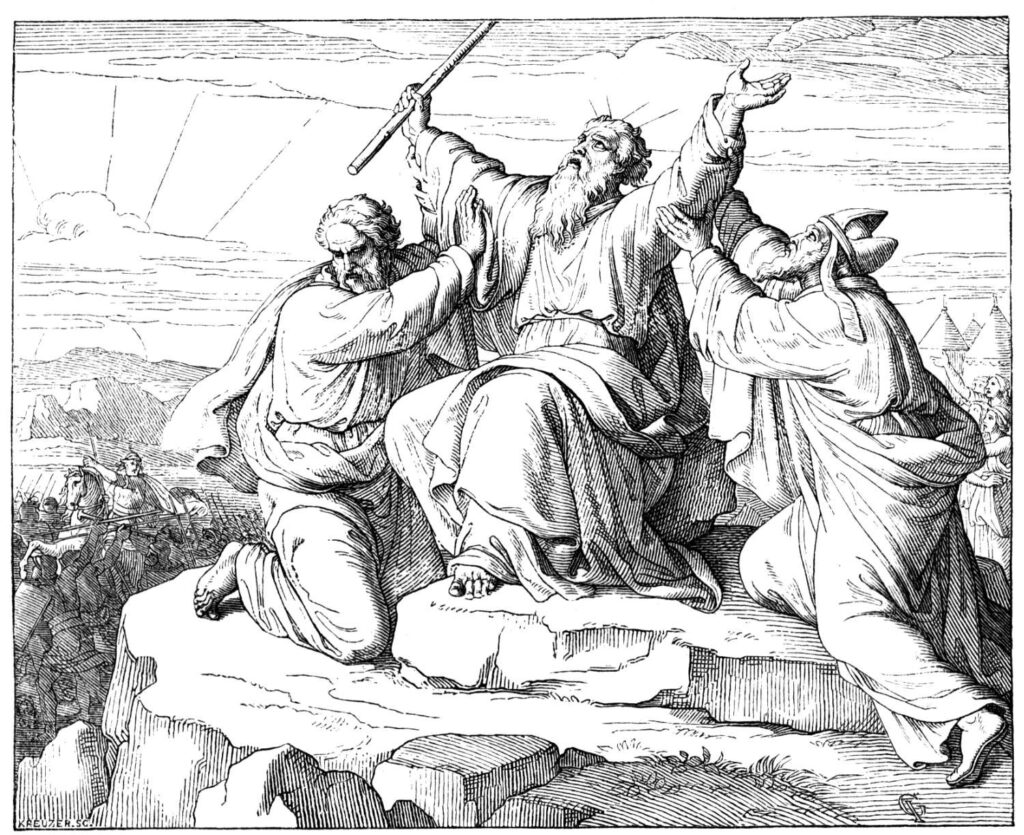
Exodus 17:11, Moses held up his hands. Here Moses goes to the top of the hill with his rod in hand and raises his arms as in surrender (to YHVH, not to the enemy). As long as his arms are raised, the Israelites under Joshua prevail over Amalek. Finally Moses’ arms become weary and the arms hang down supported by rocks, so that with his rod in his hands now resembles Yeshua outstretched arms as he hung on the cross. Meanwhile, Joshua (Heb. Yehoshua or Yeshua) leads the Israelites to victory over the Amalekites. This is a spiritual picture of the saint surrendering to Yeshua at the cross, who then leads us to victory over our enemies. In the end times, Yeshua is returning to this earth on a war stallion to judge the wicked to once and for all defeat his enemies who have tried assert itself as king (Amalek means “I am king”) over his people.
This is also a picture of prayer and intercession. Battles are not won so much by men and weapons as they are through prayer. As with Moses, fighting spiritual battles through prayer can become fatiguing and wearisome, yet the spiritual warrior must press onward beseeching heaven in mountain-moving faith to gain victory over one’s enemies. Often the weary spiritual warrior will need to enlist other soldiers-believers to assist and support him in his spiritual battles.
