

Genesis 37
Genesis 37:3, Israel loved Joseph more. Parent’s who show demonstrable favoritism toward some of their children over their other children are not wise, for it invariably produce rivalry and jealousy among siblings (v. 4). True, a parent may secretly prefer one child over another, but it is wise to keep that to oneself, for fear of alienating one’s other children. Granted, it is natural for a godly parent to have a kindred spirit with a godly child more than he does for a child who is a rebellious sinner and ambivalent if not apathetic toward Elohim. Similarly, it is true that even though our Father in heaven loves the whole world (John 3:16), nevertheless he loves his own saintly children differently and in a deeper manner. This why Scripture declares the YHVH loved Jacob and hated Esau who was a wicked and carnal man (Mal 1:3).

Tunic [coat] of many colors.The Hebrew here indicates a tunic—a long undergarment with long sleeves (the same word is used in 2 Sam 13:18). The working class usually wore a short-sleeved tunic, while the upper class wore a tunic similar to what Jacob made for Joseph. This tunic distinguished Joseph above his brothers thus inciting their jealousy toward him (Manners and Customs, p. 92).
Genesis 37:5, Joseph had a dream. Joseph was a prophetic child (like Samuel) and YHVH communicated with him, even has he had with his father, grandfather and great grandfather. Sometimes, prophetic gifts transfer generationally. The same can be said of demonic spirits that transfer down through family lineages. As the blessings from YHVH for obedience to him can be passed on down through successive generations, so can the curses of sin resulting from demonic influences.
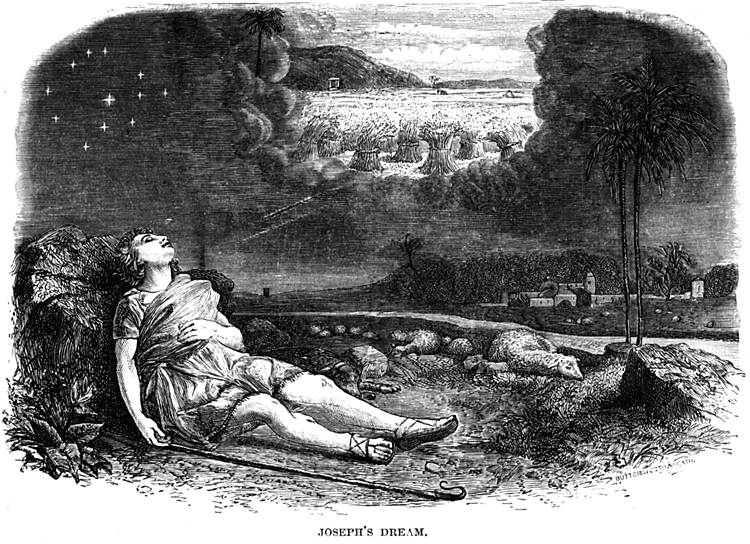
And told it to his brothers. Just because one receives a prophetic word from Elohim does not mean that he has given us permission to share it with others! A word from heaven may be for one’s own personal benefit alone, and it may not be beneficial for others to hear it as Joseph found out the hard way.
To often prophetic people want to share everything they have heard from Elohim. Often the motives for doing this are carnal as if one were saying, “Look at me. Look what Elohim has revealed to me. Look how special I am.” Anything done out of impetuosity, assumption, much less arrogance and for self-aggrandizement purposes is never a good thing. It is better to wait patiently for instructions from above before proceeding!
Genesis 37:12, Shechem. Upon coming into the Promised Land from Haran, Jacob had previously bought land in Shechem from the Canaanites (Gen 33:19), but then had to move from that area to Bethel for his safety (Gen 35:1) after the Shechem and Dinah affair. Jacob later moved further south to Hebron (Gen 37:14). It was likely to Jacob’s property in Shechem, where Joseph’s brother were pasturing their flocks, that Jacob sent Joseph to check on his brothers.
Genesis 37:18, Let us now kill him. Nowadays, carnal people may not necessarily kill one who brings the word of Elohim to him, but they will murder with their mouths through mockery, scorn, ridicule, character assassination, libel, slander or malicious gossip. People are no different now than they were then; they do not want their evil deeds brought to the light lest their sins be exposed. Instead of repenting of sin, they attack the one bringing the light of truth. Isn’t this the same treatment that Yeshua and all of the prophets experienced at the hands of the people to whom they were sent?
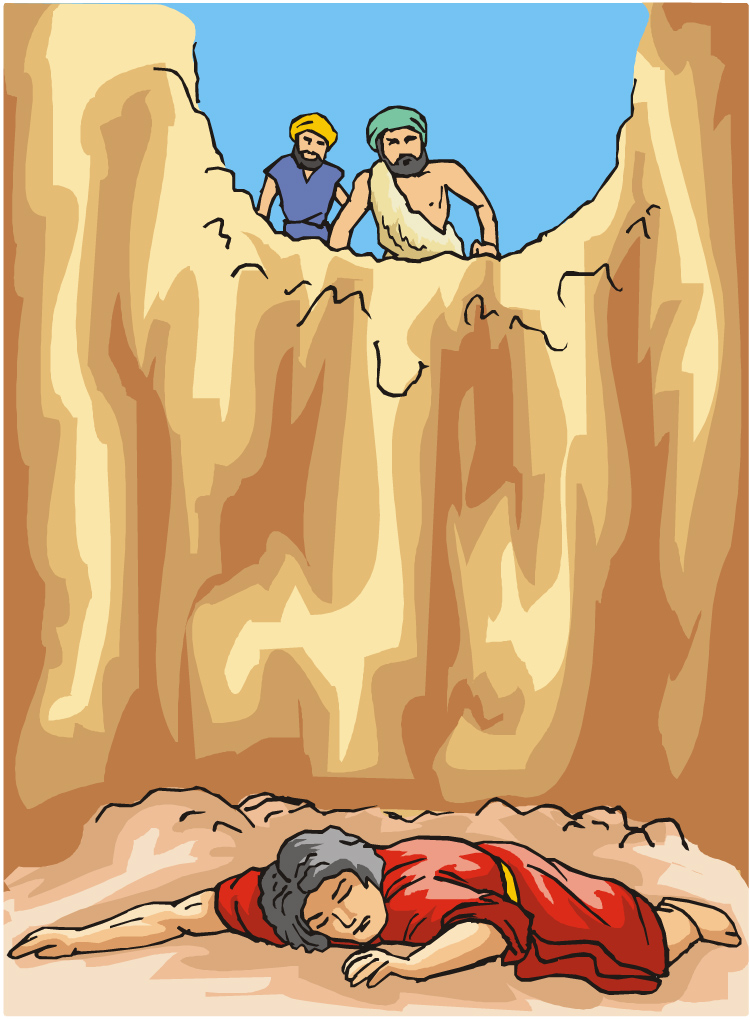
Genesis 37:25, 27, 28, 36, Ishmaelites…Midianites.To whom did Joseph’s brothers sell him: to the Ishmaelites or the Midianites? Some disparagers of the Bible view this passage as proof that Scripture contradicts itself and cannot be trusted as being divinely inspired. So what is really going on here? Why the seeming disparity in the facts?
The explanation is not difficult. Keil and Delitzsch in their commentaries point out these people-groups were referred to in ancient cultures as Arabs due to the geographical proximity of their two countries and were easily confounded by outsiders not only due to their close association socially and culturally, but due to their resemblance, and due to the fact that the Midianites and Ishmaelites shared a common ancestry as descendants of Abraham. This is because likely the traders in this story were in a caravan comprised of different tribes or ethnics groups (e.g., Ishmaelites and Midianites), as Adam Clarke suggests in his commentary, and were traveling together for safety. That two nationalities would unite in their journey to Egypt is not far-fetched, since the land of Midian and Edom (the country of Ishmael) were contiguous—the former was located south of the latter. The Midianites would have had to travel northward toward Edom to get around the Gulf of Aqaba in order to traverse the Sinai Peninsula en route to Egypt. Therefore, it is not inconceivable that these two groups of traders could have converged and joined together in their trek to Egypt. Thus the apparent discrepancies in this story neither invalidates the correctness of the Bible nor proves that this narrative derives from the convergence of two separate oral traditions that were later written down as some modern biblical scholars suggest (e.g., The Language and Imagery in the Old Testament, pp. 38–39, by J.C.L. Gibson).
Genesis 37:28, Twenty shekels of silver.This was the price that Moses later fixed to the value of a boy between the ages of five and twenty (Lev 27:5), while the average price for a male adult slave was 50 shekels of silver (Exod 21:32). An adult female was valued at 30 shekels of silver (Lev 27:4). This price was based on the value of work an individual could produce in a year. To slave owners, humans slaves were a mere commodity.
Genesis 38
The story of Judah and Tamar is inserted here likely to show the background and origins of the kingly Jewish lineage that produced the Yeshua the Messiah.
Genesis 38:10, The thing which he did. Onan refused to perform his levirate responsibilities likely because of greed. As second of three sons, he would have received only one fourth of Judah’s inheritance with the double portion going to the firstborn son. With the first born son dead, Onan stood to receive two thirds of the inheritance, since now he was the firstborn son. However, by raising up a son to take Er’s place, this would have given that son one-half of Judah’s inheritance and dropped Onan back down to one fourth of the inheritance again. Onan stood to gain financially by not performing his levirate responsibilities and rasing up a son to his older, deceased brother. Therefore, it appears that Onan spilled his seed on the ground because of greed, which is the real reason YHVH killed him. Bluntly speaking, YHVH did not kill him because he masturbated as is often supposed. Rather, he withdrew himself during coitus and ejaculated on the ground. That is to say, he enjoyed the sensual pleasure of sex without fulfilling his responsibility—a totally selfish, self-serving act, and therefore an illegal act of fornication.
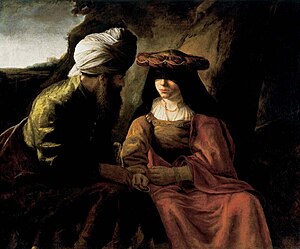
Genesis 38:16–19, The power of the sex drive in men causing them to act foolishly. The desire (or need) for sexual fulfillment is a powerful force in men that must be mastered, channelled or contained. It not, then unscrupulous women can use it to their advantage as Tamar did here, and as Solomon warns men against in the first few chapters of the Book of Proverbs. The need for sex can cause men to do foolish things and allow them to slip into compromising situations even resulting in their being blackmailed, as was the case with Tamar vis-à-vis Judah. It was foolish of him to give his personal items to an unknown stranger, yet he acquiesced to this unwise act due to his inability to control his sex drive. Instead of him ruling it, it ruled him. He failed to follow the advise that Elohim gave to Cain in Genesis 4:7. “And if you do not do well, sin lies at the door. And its desire is for you, but you should rule over it.” Wise men will immediately flee youthful lusts (2 Tim 2:22)!
Genesis 38:25, Signet…cord…staff. The bracelet or necklace was of twisted cord or thread. The wooden staff signified tribal or patriarchal authority. The signet was likely a ring with a seal on it signifying regnal authority. With the seal, he would have signed legal documents.
Genesis 38:26, He never knew her again. This phrase confirms that Judah repented of his sin. There is no repentance without change of heart with corresponding action, that is, ceasing the sin.

Genesis 38:29, Pharez [Heb. Peretz]. This name means “breach” or “breaking through by pressing forward.” It is from the root word meaning “breach, gap, bursting forth, outburst or a broken wall.” Yeshua is from this branch of Judah. Peretz received his name because of the violent nature of his birth. He was born before his twin brother, Zerah. The Peretz family line was the more prominent of the Peretz-Zerah family lineages.
Matthew Henry in his commentary notes that it is a wonder that off all the tribes Yeshua should proceed from this family lineage considering its incestuous origins and YHVH’s displeasure over such sin. Yet Henry goes on to say that YHVH chooses human instruments not because of their merits, but out of grace, and that Yeshua came into the world to save sinners, even the chief of sinners, including those of his own family. Moreover, the worthiness of the Messiah was not to be found in any meritorious moral qualities of his ancestors, but in himself alone. It is a wonder that the Jews boast at all about their lineage in light of its incestuous origins. As Jeremiah warns, a man should not glory in anything he is or has done but only that “he understands and knows me, that I am YHVH which exercise lovingkindness, judgment, and righteousness, in the earth, for in these things I delight” (Jer 9:23–24).
The inclusion of the accounts of Judah, Tamar, Pharez and Zerah further confirms the divine origin of the Scriptures. It is the generally accepted tradition in both Jewish and Christian circles and the opinion of conservative biblical scholars that Moses wrote the Torah (the first five books of the Bible). Genesis 38 gives important background information about the founding of the tribe of Judah and, more importantly, about the origins of the Messiah who was born out of this tribe. Other than a couple of oblique prophecies, there is no overt indication in the Torah that the Messiah, the Redeemer of Israel, would could come from the tribe of Judah, yet Moses included the inglorious details of the founding of this tribal family therein for no apparent reason. Those of us looking back in history at the Messiah’s birth can see how Genesis 38 fits perfectly into the overall biblical redemption story, but those in times past looking forward to the Messiah would have likely been hard pressed to see this. From our vantage point, this is yet another proof of the hand of the Divine Providence in the writing of the Scriptures.
Genesis 38:30, Zerah [Heb. Zerach]. This name means “rising” and is from the word meaning “shining or dawning.” The root of this word means “to rise, to come out or appear.” Zerah’s hand first exited the womb and a scarlet cord was placed on it, although he pulled his hand back in and his brother was the first to be born.
The tying of the scarlet cord onto the hand signifies the seriousness the ancient patriarchal communities placed upon the position of firstborn as primogeniture. The firstborn was the head elder of the family, and it was his duty to care for his younger sibling. Presumably, the first born also become the family’s head priest or cohen before the tribe of Levi was given that responsibility (q.v., Lev 24:5). Hence, he was given a double portion of the father’s inheritance, so he would have the extra resources to help the others should the need arise. Although the hand of Zerah was the first to exit the womb, Pharez’s head crowned first, and so he is considered to be the firstborn and he is listed first in the several instances in the Scriptures where their names are mentioned together.
Genesis 39
Genesis 39:1, Down to Egypt…down there.
Down to Egypt (or “Hell”) or Up to the Jerusalem (or “Heaven”)?
There are more than twenty references in the Bible to “going down to Egypt,” coming “up from Egypt” or words to this gist. Egypt can be taken as a biblical metaphor for the secular world and all that is in it that is in opposition to YHVH’s Truth and path of righteousness. Egypt represents “the highway to hell,” so to speak, or the way of following the world, the flesh and the devil that is evil and that leads to death and separation from Elohim, while the Promised land, and specifically Jerusalem, is a metaphor for the spiritual highway of truth, righteousness and godliness that leads to eternal life. This is why the Bible speaks of “going down to Egypt” and “going up to Jerusalem.” The former takes you down spiritually while the latter is the upward path that leads to Elohim.
Each person has only two choices in life on how they will conduct their lives. Each must make a choice whether intentionally or inadvertently. They can choose the proverbial downward path or the highway to hell or the upward path or the highway to heaven. Everyone chooses one path or another, even if they are not aware of the conscious decision to do so. To not make a choice is, by default, to choose the downward path.
Most people are somewhere in the middle between heaven and hell, good and evil, which is a vast grey area. They neither choose one path or the other. The majority of people choose just enough of the upward path to alleviate their guilt, but not enough of it to radically change their lifestyles. They still want enough of the downward path to satiate the lust of the flesh, the lust of the eyes and pride of life.
So what did Yeshua have to say about those who choose this wide, well-traveled middle road?
I know your works, that you are neither cold nor hot. I could wish you were cold or hot. So then, because you are lukewarm, and neither cold nor hot, I will vomit you out of My mouth. (Rev 3:15–16)
To those who find themselves on this path, Yeshua is standing outside of the door of their spiritual house and saying,
Behold, I stand at the door and knock. If anyone hears My voice and opens the door, I will come in to him and dine with him, and he with Me. (Rev 3:20)
To those who respond positively to his invitation, he promises them a place in the Promised Land of his everlasting kingdom or the New Jerusalem, which is coming down from heaven.
For here have we no continuing city, but we seek one to come. (Heb 13:14)
For he looked for a city which hath foundations, whose builder and maker is Elohim. (Heb 11:10)
Him that overcometh will I make a pillar in the temple of my Elohim, and he shall go no more out: and I will write upon him the name of my Elohim, and the name of the city of my Elohim, which is New Jerusalem, which cometh down out of heaven from my Elohim: and I will write upon him my new name. (Rev 3:12)
To him who overcomes I will grant to sit with Me on My throne, as I also overcame and sat down with My Father on His throne. (Rev 3:21)
And I John saw the holy city, new Jerusalem, coming down from Elohim out of heaven, prepared as a bride adorned for her husband. (Rev 21:2)
For those who have an upward view and are on the proverbial highway to heaven, what should be their demeanor? What wise admonitions can be given that will help them to stay on the straight and narrow path, so that we will be faithful to the end—until the object of their faith arrives (Heb 11:1)? Peter, the disciple of Yeshua, offers the serious followers of the Messiah some wise advice.
Wherefore gird up the loins of your mind, be sober, and hope to the end for the grace that is to be brought unto you at the revelation of Yeshua the Messiah; as obedient children, not fashioning yourselves according to the former lusts in your ignorance: but as he which hath called you is holy, so be ye holy in all manner of conduct; because it is written, Be ye holy; for I am holy. And if ye call on the Father, who without respect of persons judgeth according to every man’s work, pass the time of your sojourning here [on earth] in fear: forasmuch as ye know that ye were not redeemed with corruptible things, as silver and gold, from your vain conversation received by tradition from your fathers; but with the precious blood of Messiah, as of a lamb without blemish and without spot: who verily was foreordained before the foundation of the world, but was manifest in these last times for you, who by him do believe in Elohim, that raised him up from the dead, and gave him glory; that your faith and hope might be in Elohim. Seeing ye have purified your souls in obeying the truth through the Spirit unto unfeigned love of the brethren, see that ye love one another with a pure heart fervently: being born again, not of corruptible seed, but of incorruptible, by the word of Elohim, which liveth and abideth for ever. (1 Pet 1:13–23, emphasis added)
Genesis 39:2, 21, 23, YHVH was with Joseph. This phrase is repeated three times in this chapter to emphasize an important spiritual principle. Even in the midst of Joseph’s unfair persecution first as a slave then as a prisoner, his faithfulness to YHVH insured heaven’s divine protection and favor in these adverse circumstances.
The Bible is full of many inspiring examples of people who were unjustly treated and found themselves in almost impossible situations. Yet, because of their faith in Elohim, they not only survived their circumstances, but thrived. The story of Joseph is another such example. Be encouraged and inspired as you read is story of spiritual victory and triumph over the forces of evil.

Many are the afflictions of the righteous, but YHVH delivers him out of them all (Ps 34:19), and YHVH promises to accompany his people through the floods and fires of adversities (Isa 43:2). Joseph’s prevailing through adverse and unjust circumstances with YHVH’s help should be a great encouragement for every believer.
Although YHVH was with Joseph, at the same time, he was no indolent slacker. Obviously Joseph was dutiful, responsible and attentive in all that he did, so that YHVH could bless his actions, which were then noticed by those around him. Had Joseph been indolent and irresponsible, YHVH would not have been able to bless Joseph with success. Indeed, though not a biblical quote, YHVH does help those who help themselves. This is the golden rule and the law of reciprocity in action. What goes around comes around. To put it in modern, secular terms: Joseph had good karma.
Joseph…a successful man. Even as a slave, YHVH blessed and prospered Joseph. YHVH can prosper his children in any life situation in which they find themselves—even if they are not much better off than a slave. If we will simply apply ourselves to work hard and diligently, while staying faithful to YHVH as Joseph did, YHVH will prosper and promote us. Laziness, greed, theft, covetousness and irresponsibility has never gotten anyone anywhere in any employment or other life situation.
Genesis 39:10, Or to be with her. Joseph determined to flee youthful lusts (2 Tim 2:22) by abstaining from all appearances of evil (1 Thess 5:22). Except in rare and unavoidable situations, a wise man should never be alone with a woman that is not his wife unless it is a family member or an elderly woman who is past the age of being a sexual temptation.
Genesis 39:13–18, She called to the men. Wicked people who are caught in the act of sinning seldom if ever admit their guilt much less take personal responsibility for their evil actions. Rather, they project their sin onto others and blame others for the sins for which they themselves are guilty. Obfuscation, deceit, lies and blame-shifting is a classic defense tactic of unrepentant sinners. In this regard, human nature and the tactics of carnal, lust and sin driven humans has not changed in thousands of years. The spots of the leopard of collective humanity has never changed from antiquity until now.
Genesis 40
Genesis 40:1–23, Joseph’s prophetic gifts. Joseph came from a long lineage of prophetic individuals. His great grandfather, Abraham, was a prophet (Gen 20:7). On several occasions, Isaac received prophetic words from Elohim as did Jacob who also had visions and received prophetic words several times. This event was Joseph’s third prophetic encounter after those mentioned in Genesis 37. Joseph’s prophetic gifts were instrumental in determining the path of his life and help to guide him to greatness in Egypt. “A man’s gift maketh room for him, and bringeth him before great men” (Prov 18:16).
Genesis 40:20, Pharaoh’s birthday.
On Celebrating Birthdays

The is the first of three references to birthdays in the Bible. The second one is of Job’s children who were killed on, presumably, one of their birthdays (Job 1:4, 18–19).The third reference is of King Herod, who had John the Baptist beheaded on his birthday (Matt 14:6–12). Because of the fact that birthdays are associated with calamity in the Bible, some people refuse to celebrate birthdays, even though there is no direct or indirect biblical prohibition against honoring a loved one once a year on the day of their birth.
Although I respect a person’s right to disagree with me on this issue, it is my opinion that celebrating birthdays is neither inherently evil nor a pagan thing to do. It is merely honoring and respecting a loved one on the day marking their debut into this world. What’s evil about that? “Oh, it’s a pride thing,” someone once told. If so, then answer me this: How is honoring and showing love by telling someone that you’re glad they were born and that they’re special to you “a pride thing”? And if it’s pride, then pride on whose part? The Bible teaches that there is a wrong and sinful kind of pride and right kind of pride, but that’s another discussion.
Now what about celebrating Yeshua’s birthday on Christmas? Is that wrong or evil? No, not inherently, unless we mix satanic and pagan traditions into the mix, and do it on the same day that the ancient pagans honored their demon sun-god. Of itself, there’s nothing inherently evil about recognizing the coming of the Messiah in human form to this earth. To be sure, this is something to be celebrated in one way or another. The problem is that in so doing, most people have not only mixed in pagan traditions with their celebrations, and have secularized out of it the real purpose of the day, and have chosen to celebrate the Messiah’s birth on the totally wrong day. Perhaps, worst of all, they have rejected or made of none effect the clear word of Elohim that commands all the saints to celebrate YHVH’s seven biblical feasts. Instead, men have substituted Christmas and Easter (et al) for Passover, Unleavened Bread, Pentecost, Trumpets, Atonement, Tabernacles and the Eighth Day. This is not only wrong, but it is, by biblical definition, sinful, for it violates the laws of YHVH Elohim (1 John 3:4).
Yeshua addressed religious leaders’ sinful, rebellious and prideful proclivity to substitute their man made doctrines and traditions for the Word of Elohim.
He answered and said unto them, Well hath Isaiah prophesied of you hypocrites, as it is written, This people honoureth me with their lips, but their heart is far from me. Howbeit in vain do they worship me, teaching for doctrines the commandments of men. For laying aside the [Torah] commandment of Elohim, ye hold the tradition of men, as the washing of pots and cups: and many other such like things ye do.…Making the word of Elohim of none effect through your tradition, which ye have delivered: and many such like things do ye. (Mark 7:6–8, 13)
How many Christians ignore Yeshua’s warnings and do the very thing that he forbad?
