

Exodus 35
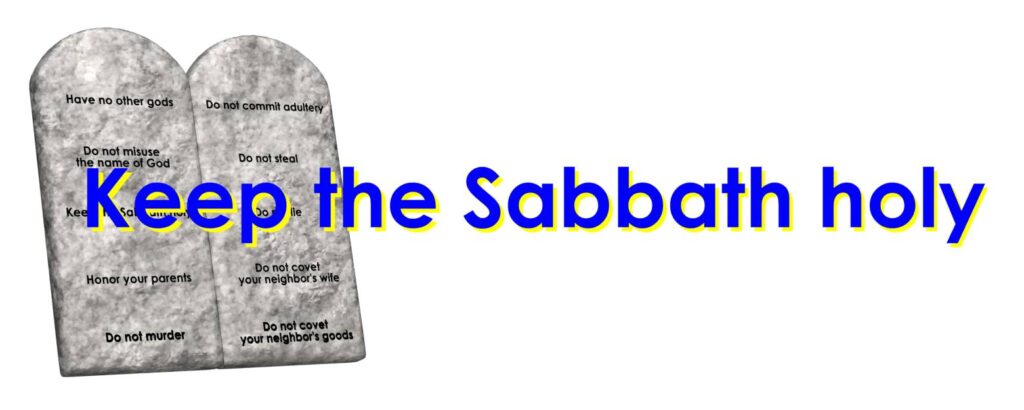
Exodus 35:2, The seventh day…shall be…a set-apart day. In our journey through the Torah, YHVH keeps interjecting instructions concerning the seventh day Sabbath. Why is this? Obviously this an important subject to YHVH, and was to be pivotal component in the life of his people—one that could be easily overlooked, forgotten or profaned.
When YHVH instructed his people in Exodus 20:8 to “remember the Sabbath day to keep it set-apart (Heb. kadosh),” he was reminding the Israelites so they would not forget it! But this command has two parts: first, do not forget the Sabbath, and second, do not profane it, that is, keep it holy or set apart or holy by not polluting it with secular activities such as work and normal routine and daily activities. This day is to be special and different from all other days.
But there’s more.
With each reminder to keep the Sabbath, the Creator gives additional instructions about how to keep the Sabbath set-part (see Gen 2:2–3; Exod 16:23–30; 20:8–11).
In this passage, YHVH adds to the list of forbidden Sabbath-day activities not to kindle a fire as a requirement for properly observing the seventh day Shabbat. But the fire YHVH mentions here was not was not just any kind of fire, but a certain type of fire, as we will discuss below. Additionally, keeping the Sabbath was so important to the spiritual welfare of YHVH’s people that he prescribes the death penalty for those who worked on this day. And work is the operative issue, here, when it comes to not building a fire on the Sabbath.
Why is Sabbath-observance so important to YHVH? This is because keeping the Sabbath is a crucial element in helping YHVH’s people to maintain a right relationship with their Creator. Those who observe Sunday as the “Lord’s day” and fail to rest on the seventh day are oblivious to this truth sadly to their own loss and detriment. Sabbath observance, if done according to Scripture, demands that one stop their weekly work routine, take a selah moment (that is to pause and to reflect), and to look heavenward for an entire 24-hour period. This is hardly the case for the majority of Sunday-keepers, who go to church for a couple of hours on that day and for the rest of the day it is more or less business as usual as they indulge in their carnal pursuits.
Much more could be said about the critical value of the Sabbath that helps to keep YHVH’s people lined up spiritually with him and one’s fellow saints, but we discuss this in more detail elsewhere. Suffice it to say here, YHVH never sanctified (made holy or set-apart) or blessed the first day of the week, only the seventh day Sabbath (Gen 2:3). This speaks volumes about the importance the Creator, who never changes, placed and still places on the Sabbath. This day is foundational and axiomatic to the life of YHVH’s people, and when it is neglected or totally forsaken, they deprive themselves of an invaluable gift that heaven has graciously and beneficently bestowed upon work-weary man for his restful rejuvenation and spiritual edification.
On the supreme importance of the Sabbath, the religious Jews have a poignant adage that speaks volumes concerning how this day acts as a spiritual glue that helps to affix YHVH’s people him as well to hold the nation together in the midsts of the swirling toilet bowl of this world. They say, “It’s not that the Jews have kept the Sabbath over the millennia; it’s that the Sabbath has kept the Jews.”
Exodus 35:3, Kindle no fire…on the Sabbath day.
Under What Circumstances Is Starting a Fire on the Sabbath Prohibited?
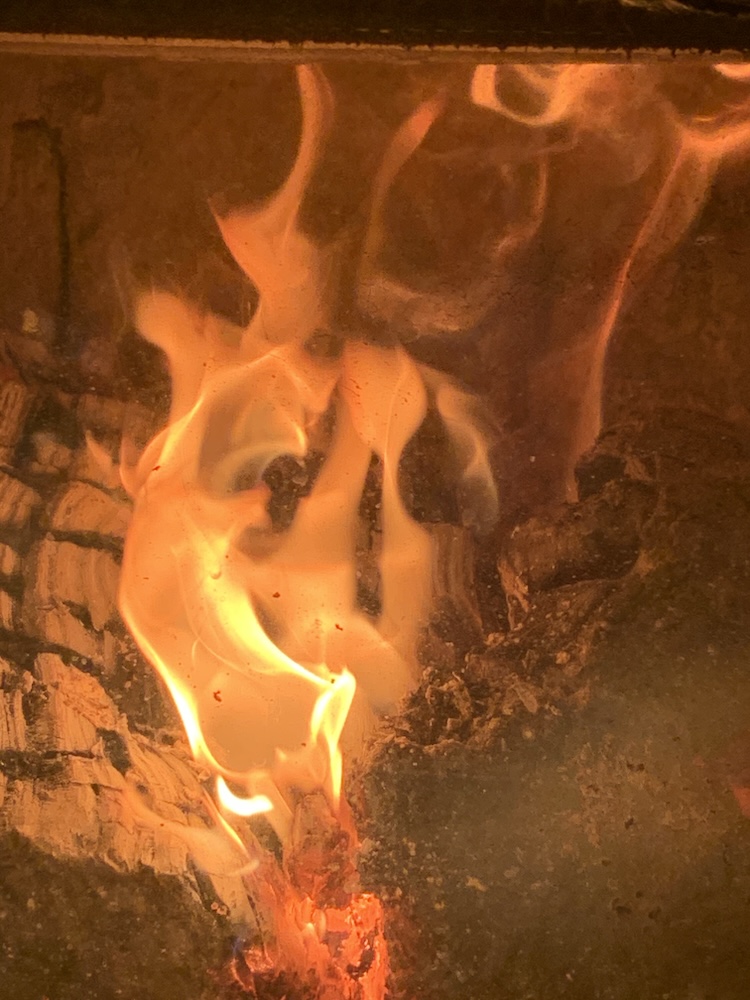
One of the Torah’s commands regarding the observance of the seventh day Sabbath is the proscription about building or kindling a fire on this day (Exod 35:3). There are several prevailing viewpoints as to the exact meaning of this passage. Let us now explore them and discover the true meaning of this important command.
The Orthodox Jews take to the furthest extreme the Torah’s prohibition to kindle no fire on the Sabbath. As such, many Jews refuse even to turn on a light switch or start their cars (i.e., fire occurs in the vehicle’s spark plugs as they ignite the fuel-filled cylinders). They also leave their stoves on for 24 hours, and unscrew the lights in their refrigerators on the Sabbath for fear of violating this command. As a counterpoint this view, the Torah commands the priest to light the menorah in the tabernacle each morning, the Sabbath not excluded (Exod 27:21–21; 30:7), and to prepare meat for the daily offerings to YHVH on the altar of sacrifice requiring a cooking fire. So, for ministry purposes, lighting a fire was not prohibited.
But interestingly, the command not to build a fire on the Sabbath (Exod 35:3) is followed directly by verse four where YHVH gives the Israelites initial instructions on building the tabernacle. What is the significance of the juxtaposition of these two passages as it relates to observing the Sabbath? Much. From this we learn an important truth. All Scripture must be viewed in the context in which it is found. This is a fundamental principle of logic and biblical interpretation. When a Scripture is cherry picked out of its context (called proof-texting), one can easily twist the Bible to make it say whatever one wants. The Bible often places one passage next to another without overtly connecting the two via the use of grammatical connector words. This is not a matter of the Bible throwing disparate and random subjects onto its pages haphazardly. YHVH is not the author of confusion. He is a God of order and purpose. Rather, YHVH teaches his people in ways that invites reflection, meditating, pondering and investigation. This involces a person’s engagement and interaction with the Word of Elohim. In so doing, a person is exploring the mind of Elohim and discovering hidden gold veins of truth and unearthing precious nuggets of understanding. For example, when we read Yeshua’s red-letter Gospel words, many of his ministry episodes and teachings appear to be placed in random order without any connection to each other. But upon closer contemplative, Spirit-led examination, one discovers that when the dots are connected, deeper truths and expansive and panoramic pictures emerge from the supposedly confusing Gospel narratives.
An example in the Torah of juxtaposing two seemingly disparate ideas is the prohibition against the consumption of alcohol and the death of Nadab and Abihu, who offered strange fire in the tabernacle (Lev 10:1–7 cp. Lev 10:8–9). This teaches us that these two sons of Aaron were intoxicated when ministering in tabernacle thus causing them to err in judgment concerning following the strict protocols for coming into YHVH’s presence. We find another example of the Torah jusxtaposing two seemingly disparate topics in Exodus chapters 31 and 32. And the end of the former chapter, YHVH reaffirms the importance of the Sabbath as a sign of his covenant with his people, where they promised to worship him only and follow all of his Torah commandments. Then in Exodus chapter 32, the Torah recounts the Israelite’s declension into golden calf worship resulting in idolatry, debauchery and sexual licentiousness. As we have proven elsewhere, the placing of these two scriptures back-to-back obliquely teach us that the day of their idolatrous revelling and rebellion against YHVH occurred on the Sabbath—a direct violation of YHVH’s Torah-law at multiple levels. Had they adhered strictly to the Sabbath command, they would not have fallen into golden calf worship. Similarly and today, how many Sunday Christians ignore YHVH’s command to keep his Sabbath, while they are involved in the golden calf worship of working on the Sabbath to earn money and pursuing their own, often licentious, pleasures on this sacred and set-apart day?
Thus, the juxtapositioning of Scriptures without an apparent grammatical connection between them is a clever way that the Bible teaches truth, while hiding the deeper understanding of Scripture from the casual and superficial observer, while at the same time rewarding those who expend the laborious and diligent effort to dig out the diamonds and precious stones that lie just beneath the surface. This is a biblical, Hebraic way of teaching deeper truths through human engagement and investigation, and heaven is keen on rewarding those who diligently seek YHVH Elohim (Heb 11:6).
Thus, the immediate context of the Exodus 34 Sabbath-fire passage concerns starting fires that pertain only to one’s trade or job. In Israel’s case, their job was to build the mishkan or Tabernacle of Moses. Fires would have been needed for tanning hides, working with metal, and possibly bending wood and dying cloth along with other activities.
This we know for certain. On the Sabbath, YHVH’s people are not to bake, cook or prepare food from scratch (Exod 16:23), but Scripture does not prohibit reheating food—something that is even permitted in Orthodox Jewish circles today. What is the bottom line issue here? We are to cease our creative activities on the Sabbath, even as YHVH set us an example when he rested on the first Sabbath after having completed his creation activities (Gen 2:1–3). From this we learn that cooking food from scratch (as opposed to reheating), which changes the chemistry of the food, and thus constitutes creating something (i.e., transforming something from its original state into another state) is forbidden on the Sabbath. Thus food must be prepared ahead of time on the sixth day, but can then reheated on the Sabbath.
Does the Torah forbid the lighting of fires for heat and light? Some people would say yes, since part of preparing for the Sabbath involves insuring that your fire for heat and light must stay burning through the Sabbath without having to relight them. But, in reality, was this always possible in ancient times? That is a question we will now explore.
One thing is certain. It is doubtful that YHVH would have expected his hapless people to sit in the cold darkness on the Sabbath were their fire to have gone out—especially in the winter months when the days are shorter and colder, and when snow and cold rain are realities, even in the land of Israel. This would result in the loss of the delight of the seventh day, which, in itself, is a violation the Sabbath (Isa 58:13).
The harsh realities of life in a primitive agrarian culture are evident. The ancient Israelites, obviously, did not possess electric lights or furnaces that lit and heated their homes at the push of a button. If YHVH’s Torah forbad the Israelites from lighting a fire for heat and light purposes, then they would have had to start a fire on Friday before sundown, and then keep it burning all night and through the Sabbath day. This means that if the fire happened to go out during the night because someone slept too soundly and failed to wake up to stoke the fire or add olive oil to their small terra cotta lamps (which burned only for a short time), then they would have been either forced to sit in the cold and dark on the Sabbath, or they would have to fetch some coals from a neighbor, whose fire had not gone out, in order to relight their fire. The Israelite who lived in town had another option as well. Often, there were public ovens built into the earth with clay cooking tubes for baking bread. For those who lived nearby, they could bring back some embers from these public ovens to restart their home fires (Manners and Customs of Bible Lands, pp. 47–48, by Fred H. Wight). Regardless, letting one’s fire go out would have been a great inconvenience and diminished the joy of the Sabbath day.
In modern times, for those who heat their homes with a wood stove, the most energy efficient home-sized wood stove will burn only for six to eight hours if one has access to hardwoods (like oak, maple or fruit wood) as fuel. Despite one’s best efforts to keep their wood stove burning all night to keep the house warm, at times the fire goes out. In most of the land of Israel, large hardwood trees are not prevalent. In ancient Bible times with several million Israelites constantly foraging for hardwood to keep their fires burning, the land would have quickly been depleted of trees—especially in that arid land where trees grow slowly. In reality, the Israelites were more likely to have used sticks (1 Kgs 17:10), thorn bushes, bundles of dried grass (Matt 6:30; Luke 12:28), coals (or charcoal?; John 18:18; 21:9) or dried dung for fire fuel (Ezek 4:15; ibid., p. 30). Furthermore, warming fires were often built in courtyards (John 18:18). Such fires did not burn long. At the same time, making fire would not have been an easy process either before the invention of matches, since this was accomplished by rubbing sticks together or by striking flint and steel (ibid. p. 31).
For sure we know that in days before matches, lighters, push-button furnaces, lights and stoves, starting and maintaining a fire was not a simple task. At the same time, it seems that YHVH would not have expected the Sabbath to end up becoming a miserable, weekly lesson in wilderness survival by having many of his servants forced to huddle together freezing in the darkness on this day of joyful rest because their lights and fires had gone out. He did, however, expect his people to make every possible effort to prepare for the Sabbath ahead of time to keep it from being just another day of laborious work (Exod 16:23). However, it seems hard to believe that the Torah forbids starting a fire for heat and light if necessary—especially during the winter months. Therefore, it is logical to believe that starting fires for work purposes was forbidden, but for heat and light purposes, if unavoidable, was permitted.
Exodus 35:5, Whosoever is of a willing heart. In Hebrew, the word nadiyb/CHSB translated as willing means “noble, inclined, generous.” The heart attitude of those contributing to the building materials of the tabernacle was obviously of paramount importance to YHVH. The Torah mentions it again several more times later in chapter (see verses 21–22, 26, 29).
Exodus 36

Exodus 36:5–6, The people bring much more. There are two ways to look at the children giving too large an offering of materials for the building of the tabernacle. There were, no doubt, those who contributed because of a willing heart to serve and obey YHVH. On the other hand, there were probably others who viewed this as a way to unburden themselves from some of the loot they took out of Egypt during the exodus. Consider the fact that all of this stuff had to be carted around the wilderness from one encampment to another, which was a lot of work. Gold and silver are heavy metals. So this may have been a good excuse to keep the loot you really wanted and to unburden oneself giving to a good. For these people, it was “charity” for personal convenience rather than a matter of the heart for the work of YHVH.
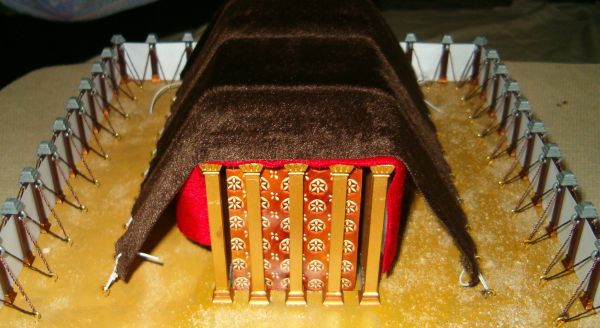
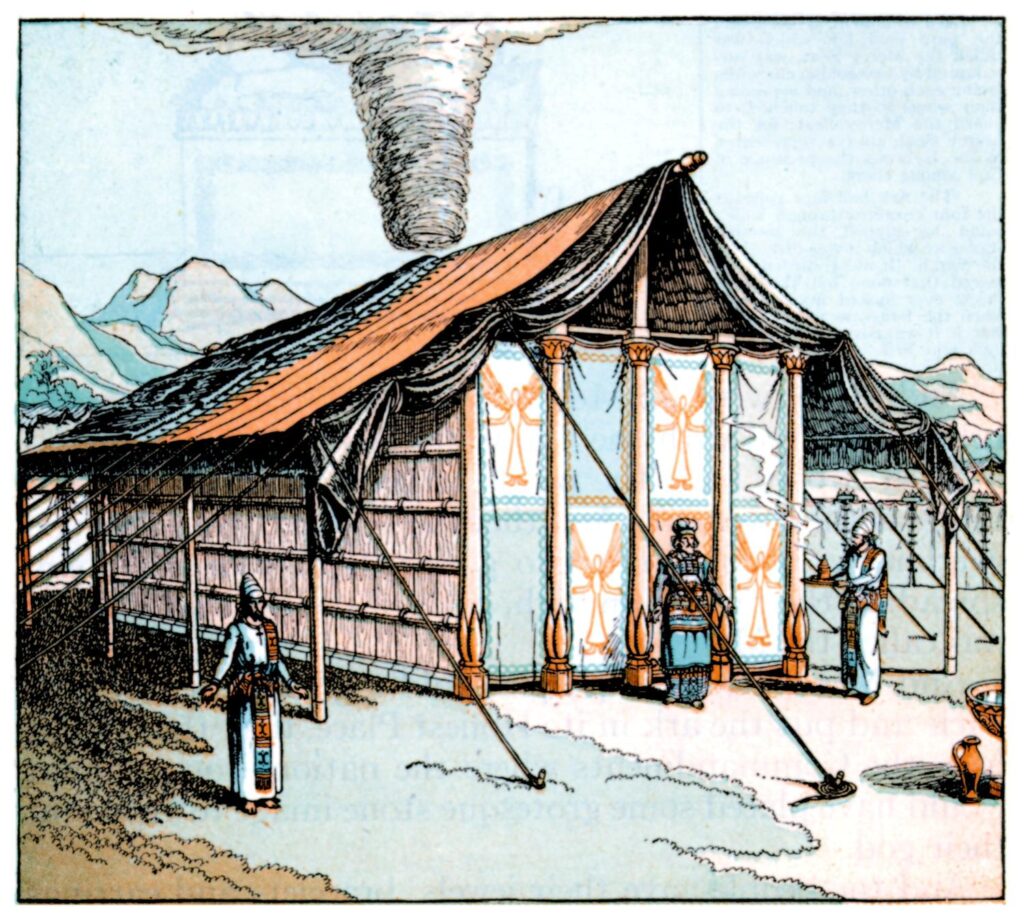
Exodus 36:19, Covering for the tent. The tabernacle had four outer coverings. The outermost covering was made of either seal or badger skin (Exod 26:14; 36:19). This covering was ordinary and unattractive. This draws our attention to the fact that Yeshua, the Redeemer, was of ordinary appearance and not overly attractive in physiognomy (Isa 53:2). Likewise, few people are attracted to the gospel message because it is appealing to them. In reality, most people are forced to reach rock bottom in their lives before they are open to hearing the gospel’s message much less acting upon it and making the requisite changes and commitments that it requires of a person. For many people, embracing the gospel message is analogous to a drowning man who frantically grasps a life ring that has been thrown to him from a nearby ship!
Another covering was made of goats’ skins (Exod 26:7–13). Again, this tent covering symbolically pointed atonement for sin and directly relates to the goat offerings made on the Day of Atonement (Lev 16). Another covering was made of rams’ skins dyed red (Exod 26:14; 36:19). Red is symbolic of the cleansing blood of Yeshua the Messiah (Isa 1:18; 1 Pet 1:18–19; Rev 13:8).
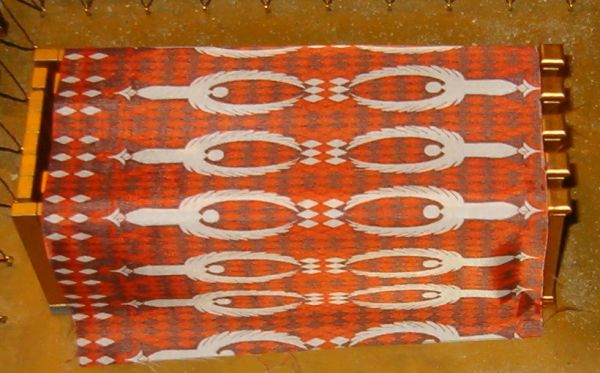
The inner most covering over the tabernacle (Exod 26:1–6) formed the ceiling of the tabernacle and was covered with embroidered cherubim. It was blue, purple, white and scarlet. Cherubim are mentioned in several places in the Scriptures (see Gen 3:24; Exod 25:18–22; Ps 18:10; 80:1; 99:1; Isa 37:16; Ezek 10:1–20). Cherubim point our attention to the throne of heaven and the glorious, divine and majestic presence of YHVH Elohim (Ezek 1:4–28; 3:13; 10:1–22; Rev 4:7). The Tabernacle of Moses was in reality an earthly copy of the one that exists in heaven (Heb 8:2; 9:11). The tabernacle was literally a piece of heaven on earth, or heaven’s embassy on this planet not only representing YHVH’s kingdom on earth, but an audible, visual and demonstrative theatrical presentation complete with actors and costumes to show man the way to their Father in heaven. The only thing is that this was not play-acting, but a matter of life and death—eternal life or eternal death based on a humans freewill choice. Either one accepted “the way of the tabernacle (Ps 77:13), which was a ladder to heaven through Yeshua the Messiah (John 1:51; 14:6; Acts 4:12).
Exodus 36:32, Five bars. The five horizontal bars holding the walls of the tabernacle in place can prophetically point to a two important things in Scripture that are indivisibly related. First, they can refer to the five books in the Torah, which contain the light of Elohim’s truth, and which point man to Yeshua the Messiah who is the Living Torah-Word of Elohim and the spiritual light of the world. Second, upon his ascension, Yeshua gifted his church with the fivefold ministry (apostle, prophet, evangelist, shepherd and teacher) to bring the saints into “the measure of the stature of the fullness” of himself (Eph 4:10–13). It is the duty of those who hold these ministry offices to reveal to the world the light of Yeshua the Messiah and to show people the way to him. Even as these five bars helped to hold up the tabernacle sanctuary containing the furnishings that pointed the way to a more intimate spiritual relationship with Yeshua, the Torah is the vessel that contains the truth that points the way to the Messiah, and he has commissioned his ministers to be anointed vessels, who contain the message of Yeshua and who have been divinely commissioned to proclaim him as the Savior of the world.
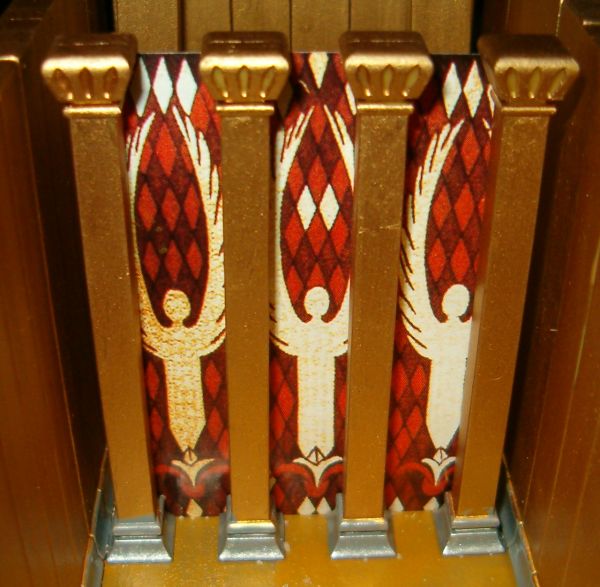
Exodus 36:35, He made a veil. There were three doors to the tabernacle or mishkan. In the previous chapter, two are mentioned (Exod 36:35–37; see also Exod 26:31–37). The three doors are the veil or parochet between the set-apart place and the most set-apart place, the outer door to the tabernacle and the door or screen to the tabernacle courtyard.Yeshua likened himself to a spiritual door that one must enter in order to saved and to experience an abundant life (John 10:7–10). As we have learned in our other studies on the Tabernacle of Moses, everything about it prophetically points to Yeshua the Messiah. The door to the most set-apart place of the tabernacle was held up by four gold-covered acacia wood pillars. These represent the four Gospels, which proclaim the good news of salvation through Messiah. Moreover, these four books of the Bible are the entry point through which most people come when first hearing the message of Yeshua.
Each of the three doors was blue, scarlet, purple and white. All three colors point to different aspects of Yeshua, his origin and mission (blue is for heaven, scarlet is for blood, white is for spiritual purity or righteousness, purple is for royalty or kingship). The four colors point to the four Gospels each of which highlights a different aspect of Yeshua’s life and ministry, and each of which are the doors through which one enters into a spiritual relationship with him.
The veil between the set-apart place and the most set-apart place was symbolic of the actual flesh of Yeshua, which was given as a sacrifice to make atonement for man’s sin. When it was ripped open through the tortures of crucifixion, the blood and water spilled out, and the way for man was opened for redeemed man enter into the presence of their Father in heaven (Heb 10:19–20). Until Yeshua’s death, no one except the high priest could pass through that veil into the most set-apart place without dying (Rom 3:23; 6:23; Ezek 18:4), and then only once a year on the Day of Atonement (Lev 16:11ff). Now the redeemed disciples of Yeshua have access to the Father through the veil of Yeshua’s flesh (Heb 10:19–22). To graphically illustrate these glorious truths, at the time of Yeshua’s death on the cross, the actual veil in the temple was rent open from top to bottom as proof that the way to the Father had now been made (Matt 27:51).
Exodus 37
Exodus 37:10, Table of acacia wood.
Exodus 38
Exodus 38:21, This is the sum of the Tabernacle. Compared to the gold and silver used in the temples of Solomon and Herod, the amounts listed here in the construction of the Mishkan of Moses are insignificant. Both temples fell into enemy hands and were looted and destroyed. This was not the case with the mishkan. Additionally, the mishkan surpassed both temples in sanctity showing that YHVH places his presence not necessarily where there is wealth or in the things in which man places value (e.g., power, prestige, knowledge, acclaim, accolades or credentials). In fact, he has little or no regard for the things of men. He places his presence where there is holiness, righteousness and where men fear, worship and obey him. Everything else is vanity of vanities as Solomon in his sad saga of a life without Elohim as he recounts in Ecclesiastes.
So what are your heart motives, priorities and orientation for serving YHVH—for wanting to be a spiritual temple or tabernacle for him to dwell in? Are you seeking to be set-apart and righteous out of a sincere and humble heart or out of a desire for power, prestige, wealth and acclaim, while merely using “sanctification” as an outward facade to look good to others? In 1 Corinthians 1:26–29 we read,
For you see your calling, brethren, how that not many wise men after the flesh, not many mighty, not many noble, are called, but Elohim has chosen the foolish things of the world to confound the wise; and Elohim has chosen the weak things of the world to confound the things which are mighty; and base things of the world, and things which are despised, has Elohim chosen, yes, and things which are not, to bring to nought things that are: that no flesh should glory in his presence.
Exodus 39
Exodus 39:1, The holy garments for Aaron.
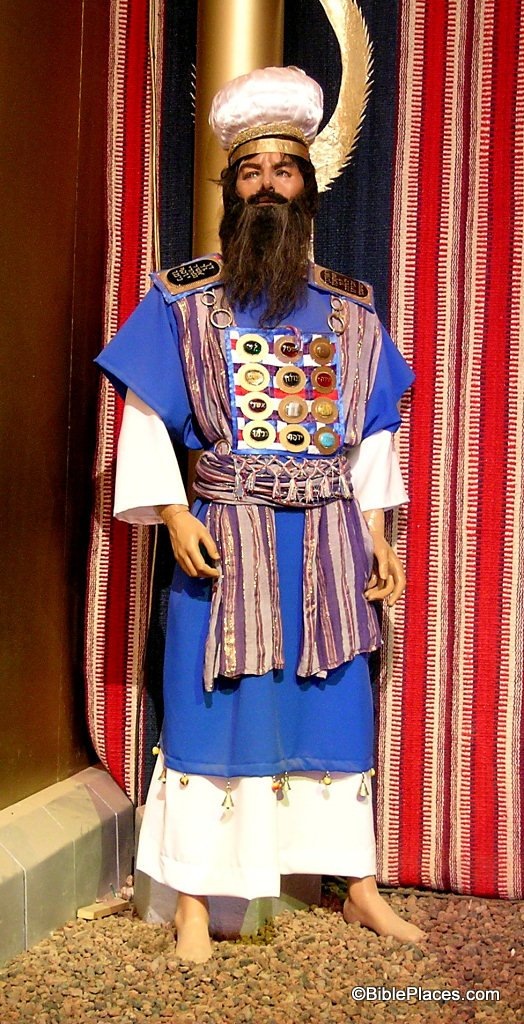
The vestments of the high priest (Heb. kohen hagadol) are symbolic of the robes of righteousness that saints should be wearing in preparation for the return of the Messiah.
Gold symbolizes purity of heart.
Blue symbolizes heaven and spirituality.
White linen pictures robes of righteousness, purity or sinlessness.
Red represents blood—the blood of Yeshua that cleanses man from sin.
The high priest wore a belt that represented truth according to Paul (Eph 6:14).
The white linen pants represented sexual purity.
The white turban represented purity of thought and humility (the opposite of conceit).
The high priest also wore a gold crown inscribed with the words, “Kadosh l’YHVH” meaning “Holiness to YHVH.”
The dangling pomegranates attached to the hem of the priest’s robe symbolically represented the saint manifesting the fruit of the Holy Spirit as they “walk in the Spirit” of Elohim (Gal 5:16, 22–25). The golden bells, also attached to the hem of his robe, jingled when the high priest walked. These symbolized the righteous walk of the saint; that is, people should hear and see the saint’s good spiritual fruit. The saint’s “walk” and not merely his “talk” define who he really is. Also, Yeshua taught that our words reveal the true condition of our heart (Luke 6:45). How, then, do people really view us? What are we like when we are alone with regard to our thought or secret life? Is there a discrepancy between our secret and public lives? If so why? In reality when we analyze the sum total of who we are, how set apart and righteous are we—from YHVH’s perspective?
If YHVH has called us to be his holy or set-apart priesthood, then we need to get busy cleaning up our spiritual lives and start acting like one.
Jewish tradition tells us that a rope was tied to the leg of the high priest in Second Temple times, so that while ministering in the innermost sanctuary of the temple if he entered therein in an impure state and YHVH struck him dead (as happened to Nadab and Abihu, the sons of Aaron, when they offered up strange fire) the corpse could be dragged out by the rope. This teaches us that we should view being righteous and set apart seriously. Remember Hebrews 12:14 which instructs us to, “Follow peace with all men, and holiness, without which no man will see the Master.” Eventually, being holy is a matter of life and death.
As YHVH commanded Moses. In chapter 39, please observe the fact that all the work of the tabernacle was done “as YHVH commanded Moses” (or phrases similar to this), and these statements are repeated ten times in this chapter. YHVH gave specific instructions concerning the construction of the tabernacle and expected these instructions to be followed to the letter. The tabernacle was the means by which the Israelites were to approach YHVH. Though the physical tabernacle is long gone, it still serves as a blueprint or pattern showing man the steps to be reconciled with his Creator. There is no other way to be reconciled to YHVH except through the steps of redemption outlined in the mishkan. Furthermore, YHVH never gave any human the prerogative to add or subtract from his instructions. Consider the implications of this with regards to your spiritual walk before our Heavenly Father. How important is it to follow all of his instructions in righteousness? How often do we mitigate his instructions and reshape them to accommodate our own likes, dislikes, rebellion, pride, prejudices, biases, cultural background, religious tradition, and the deeply embedded idols in our life that have supplanted obedience to YHVH’s commandments? Isn’t this what the serpent cunningly persuaded Adam and Eve to do at the tree of knowledge, that is, to question, doubt, distrust the word of Elohim and eventually rebel against it, which is how sin entered the world?
Exodus 39:22–42, The priestly garments. See notes at Exodus 28.
Exodus 39:30, A crown of pure gold. Why were the words “Holiness to YHVH” written on the golden crown that the high priest wore? To answer that question, think of this: what one word best describes who YHVH is? Most Christians would say that love is YHVH’s chief attribute. But is this what the Scriptures teach? Is there an attribute of YHVH’s that is even higher than love? Consider this truth: what are the six-winged seraphim declaring about YHVH Elohim day and night before his throne? They are continually proclaiming to YHVH Elohim his holiness (Isa 6:5; Rev 4:8), not his love.
Now consider this. YHVH made man in his own image (Gen 1:26), and wants man to become like him in character (note Lev 11:44,45; 19:2; 20:7). Now read Revelation 14:1 and compare this with Revelation 7:3. YHVH put his name on the foreheads of his end-times servants as a mark of approval and ownership upon that which he loves and are his. Next, what are the two noteworthy characteristics of YHVH’s end-time saints? (See Rev 12:17; 14:12.) They love him and keep his commandments and have the faith or testimony of Yeshua. In other words, they are Torah-obedient Christians. This is clear and unmistakable. Thus anyone who denies his Torah or Yeshua the Messiah is walking on dangerous ground and may well be rejected by YHVH Elohim (e.g., Matt 7:121–23). Holiness, Torah-obedience and a faith in Yeshua all go hand-in-hand.
Now let’s bring this brief discussion full circle. As the high priest of old wore a gold crown inscribed with the words “Holiness to YHVH.” YHVH expect the same of his end-time saints, for his standards of righteousness have never changed (Heb 12:14; 1 Pet 1:15). Peter call the saints of the Holy or Kadosh One of Israel “holy priesthood” (1 Pet 2:9). In Yeshua’s millennial kingdom, the resurrected and glorified saints will be serving as kings and priests (Rev 1:6; 5:10; 20:6). Now is the time for YHVH’s people to be preparing for their future auspicious role.
The word holiness (Heb. kadosh) as used in the Scriptures simply means “set-apart or the state of that which belongs to the sphere of the sacred, and which is distinct from the common or profane.” Elohim as the Creator is transcendent above his creation or that which is profane, earthly or worldly.
Being kadosh is not only a positional consideration, but an ethical one as well. The Torah is a reflection of the ethical or moral qualities of Elohim, and is also man’s ethical code book showing him how to be holy, set-apart or kadosh as Elohim is. Holiness in the Torah involves what we think, what we say, and what we do. This code of holiness which is a pathway to a relationship with our Father in heaven teaches us how to worship (or love) Elohim, and how to treat (or love) our fellow man.
Yeshua, the Living Word or Torah of Elohim (John 1:1, 14) showed us how to walk out the Torah perfectly, and he then empowers his disciples through his Holy Spirit to live out the Torah’s holiness code.
Exodus 39:43, Moses did look. We read that, “Moses did look upon all the work, and, behold, they had done it as YHVH had commanded, even so had they done it: and Moses blessed them.” Here Moses is acting as the mediator between Elohim and man (foreshadowing the work of Yeshua). He blessed Israel for the excellent work they had accomplished in executing YHVH’s instructions in building the mishkan. Similarly, Yeshua will judge all of us, his servants, as to the work we have done in helping to build his spiritual tabernacle and advancing his kingdom on earth, and will give rewards on the basis of our faithfulness. Have you been a profitable servant? Are you doing everything within your power to serve him, or are you still distracted by the cares of this life from being about your Father’s business? (Read Rev 22:12; 1 John 2:28 and Matt 25:13–30.)
Exodus 40
Exodus 40:1, You set up the tabernacle. This verse implies that Moses set up the tabernacle single-handedly without any help. This prototypically points to the coming Messiah Yeshua who was to become the builder of his own spiritual house whose house the saints are (Heb 3:3–6). Please pause and reflect for awhile on this exciting fact. Yeshua is custom building and shaping each of his disciples individually and collectively as a body into a glorious house or temple “if we hold fast the confidence and the rejoicing of the hope firm to the end (Heb 3:6).
Exodus 40:2–7, Set up the tabernacle. YHVH’s instructions to Moses to set up the furnishings in the tabernacle followed a particular order. In fact, if one traces Moses’s footsteps in doing so, it forms an interesting geometric pattern that is highly significant spiritually. What is this pattern and what does it have to do with you?
In placing the furnishings in the tabernacle, Moses first started in the holy of holies where he set up the ark of the covenant. After this, he went into the holy place and over to the right or the west side of the holy place where he set up the table of show bread. He then moved across to the left or the east side of the holy place and set up the menorah. Next, he moved to the center of the holy place in front of the curtain or veil separating the holy place from the holy of holies. There he set up the altar of incense. After this, Moses made a straight line and exited out of the tabernacle itself into the outer courtyard where he set up the altar of sacrifice. Having done this, Moses then set up the bronze laver, also in the outer courtyard just in front of the door leading into the tabernacle sanctuary itself. If you trace Moses’ steps and make a line in the dirt, what is the outline?
The outline of Moses’ movements makes a triangle on a cross with the base of the triangle forming the arm of a cross. The base of cross corresponds to the altar of sacrifice, while the apex of the triangle corresponds to the altar of incense and the top of the cross, which extends past the apex of the triangle. This is where the testimony or the ark of the covenant in the holy of holies is located. Why did YHVH instruct Moses to set up the tabernacle’s furnishings in this order, and not another order? What is the spiritual significance of this particular pattern? How does it relate to you and me? Let’s unpack this.
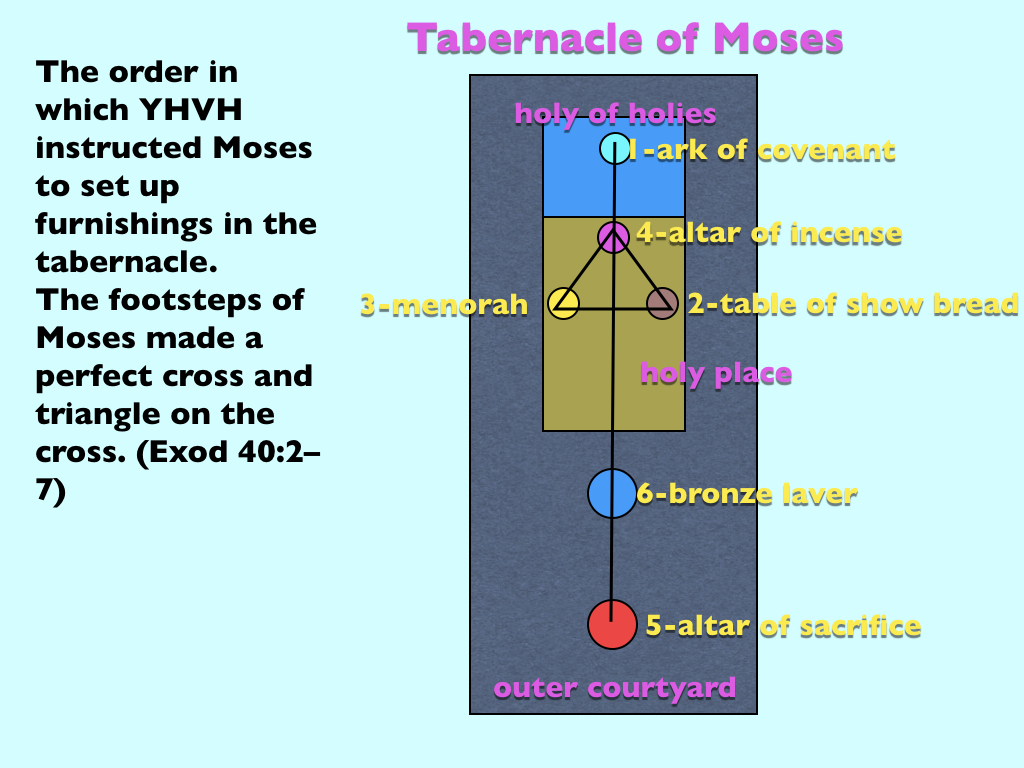
The base of this arrow is at the altar of sacrifice representing Yeshua’s death on the cross atoning for man’s sins. Next, the arrow points to the bronze laver picturing a believer’s next step in his spiritual walk which is baptism for the remission of sins and legally identifying with Yeshua’s death, burial and resurrection, as well as receipt of Elohim’s Holy Spirit, and the washing of our lives by the water of the Word of Elohim. Next we come to the menorah picturing the Spirit of life in Yeshua the Messiah as the new believer begins to manifest evidences of the redeemed life, which is the fruit and gifts of the Spirit, which shine like a light into the dark world around us. Next we come to the table of the showbread picturing the regathering and unification of the tribes of Israel around the table of Yeshua’s body in sweet fellowship and covenantal relationship with him. Through the Messiah of Israel, the scattered tribes of Israel, along with those Gentiles who have been grafted into the tribes, will be regathered. After this regathering, the tribes will move together in one accord to the place in the tabernacle of pray and worship which is the altar of incense. There they prepare to enter into the eternal kingdom of YHVH Elohim’s presence as pictured by the holy of holies under the glory cloud.
The way to Elohim through Yeshua the Messiah is laid out in the Tabernacle of Moses (Ps 77:13) making the outline of a cross and an arrow that points heavenward. By starting in holy of holies and going outward toward the altar of sacrifice, this is a clear message that heaven is reaching downward toward sinful man, and is inviting him to come up to meet his Father in heaven by way of the cross of Yeshua the Messiah.
Conversely, when the tabernacle is viewed from the outside looking in, it is revealing to man the way upward to the Father through Yeshua the Messiah. So as those humans who are seeking the way upward, at the same time, our Father in heaven is reaching downward beckoning his wayward children back to him.
This demonstrates to us that the tabernacle is, in reality, a giant gospel tract that shows sinful man the way of salvation leading to his glorification as immortal sons and daughters of YHVH Elohim, our Father in heaven. As we read in Psalms,
Your way, O Elohim, is in the sanctuary; who is so great a El as our Elohim? (Psalm 77:13)
Exodus 40:31–32, Wash their hands and their feet. Personal hygiene was a prerequisite for coming into the presence of Elohim. Washing the hands and feet symbolizes walking in purity before YHVH in all that we do and wherever we go. This teaches us that the Creator is neither keen on physical or spiritual filthiness. Cleanliness is, indeed, next to godliness!
Exodus 40:34, The glory of YHVH filled the tabernacle. The glory cloud that covered the tabernacle signaled YHVH’s approval of the work that had been done to construct for him a place in which to dwell among his people. Had the Israelites not followed all of YHVH’s construction instructions down to the last detail, it is unlikely that he would have inhabited the tabernacle. Is there not a lesson to be learned from this? Could YHVH’s anointing on our lives be greater if we were more dutiful, faithful and obedient to follow his Torah-instructions?
Exodus 40:36, Whenever the cloud was taken up. This is for our learning and admonition and is an example for us upon whom the ends of the earth have come (1 Cor 10:11; Rom 15:4). As we trek through the wilderness of our physical life, the Spirit of YHVH either leads us or not in all that we do, say and think. The more that we are led by YHVH’s Spirit, the greater the glory of YHVH will be resting on the tabernacle or temple of our life. Amein and amein!
