

Exodus 10
Exodus 10:2, Tell in the hearing of your son…the mighty things I have done in Egypt. YHVH commanded Moses to record the story of Egypt’s judgment and fall for the Israelite’s future posterity. The Israelites were then to pass this story down orally and in written form to succeeding generations. The Passover seder is the fulfillment of this Torah command in that it reenacts the exodus story. In other words, YHVH is commanding parents to pass the gospel message of redemption downward to each new generation via the seder. The Passover seder is literally a gospel tract involving a dramatic presentation where the participants act out the story of Israel’s redemption which is the basis of the message of the gospel.
Exodus 10:3, Thus says YHVH Elohim of the Hebrews. It is true that Moses did would be similar in our day to going to the president of the U.S., who is the head of the most powerful and advanced nation on earth, and saying, The Elohim of the people of El Salvador says to you do this or that. How much impact would such a demand have on the U.S. president? Little or none. However, when YHVH deputizes a person for a divine mission, YHVH, the Creator of the universe, and just one person make a majority! The size of the country of the messenger no longer means anything.
How long will you refuse to humble yourself before me? Pharaoh was about to learn a hard lesson at the hands of YHVH Elohim. The sovereign Creator ultimately demands that everyone submits to his will and purposes. Those who refuse to do so imperil themselves. The Scriptures record that in addition to Pharaoh YHVH also held other political leaders accountable for exalting themselves against him and for refusing to humble themselves before him. These include Nebuchanezzar (Dan 4:19ff), Belshazzar (Dan 5:22), Zedekiah (2 Chron 36:12), Lucifer (Isa 14:13ff) and Herod (Acts 12:21–23).
Furthermore, those who put their trust in false gods will come under the judgment of the one supreme and true Elohim—the Mighty One of the Bible. Elohim uses men’s false gods or idols as a judgment against sinners to help them to see the futility of their idolatrous delusions and to bring them to repentance (e.g., Isa 66:4–5; Prov 10:24). As Elohim judged the false gods of Egypt one by one and brought that arrogant nation down, he will do the same in the end days with Babylon the Great and the idolatrous gods of this world. We see some striking parallels between the plagues YHVH brought upon Egypt and those he will bring upon the rebellious inhabitants of earth just prior to Yeshua’s second coming. For example, the seventh plague of hail (Exod 9:13ff) and the seventh vial with its 75 pound hailstones (Rev 16:17–21) is an ultimate expression of the fierceness of Elohim’s wrath upon a rebellious and still blaspheming world. When the earth is quaking and deadly hailstones are raining down from heaven, there will be no hiding place from Elohim’s wrath. Additional end-time plages that replicate those of Egypt include grievous sores to come upon men (Rev 16:2), the seawater and fresh water turning to blood (Rev 16:3–4), and darkness upon the earth (Rev 16:10). After this, Babylon the Great will fall (Rev 18:2), even as ancient Egypt fell under the severe blows of YHVH’s judgment.

Psalm chapter two summarizes the rebellious arrogance of men, and their conspiracy against the Creator in their attempt to keep control of their earthly kingdoms. Elohim will laugh at them from heaven and will then send his Son to judge them and to break their kingdoms in pieces with his rod of iron. NOW is the time “to kiss” Messiah the Son and to worship him if one desires to escape these divine judgments upon the wicked rebels (v. 12)!
What gods or idols do we have in our lives that we are holding on to? Each of the plagues against Egypt was a direct strike against one of the many gods of Egypt (Exod 12:12; Num 33:4). Elohim will destroy all pretenders and imposters who dare to challenge his sovereignty. (See notes at Exod 7:14.) The god of human pride and self will is the most powerful false god each human will ever face!
Exodus 10:8–10, We will go with our young and our old, with our sons and daughters…we must hold a feast [Heb. chag] unto YHVH. Egypt and Pharaoh (a spiritual metaphors for the world and Satan) wanted to destroy and divide families, which are the bedrock of YHVH physical and spiritual order and the center of Torah community, but Moses insisted on keeping families together when exodusing Egypt and going out to serve YHVH. In YHVH’s order of things, families must always stay together. YHVH’s feasts or chaggim (the plural of chag) along with the weekly seventh day Shabbat are the glue that helps to hold the families of YHVH’s people together. When we gather together in unity with a common purpose and focus to worship the Elohim of Israel and to celebrate his feasts, these events create strong familial, cultural and spiritual ties between families and all of YHVH’s people in general. Besides that, they are just plain fun to do and deeply significant spiritually.
Exodus 10:19, Red Sea [Heb. Yam Soof]. Is the Yam Soof referring to the Gulf of Suez or the Gulf of Aqaba that is located between the Sinai Peninsula and the modern country of Saudi Arabia?This verse tells us that YHVH brought up a strong wind that blew the locust plage eastward out of Egypt that blew them into the Red Sea. Where is the Red Sea? The Gulf of Suez or the Gulf of Aqaba? In 2012, a record plague of locusts originated in Egypt and made its way across the Sinai and over the Negev. So it is not impossible for locusts to travel long distances, and how much more so with the help of the wind?
Without getting lost in the weeds, let’s now discuss the definition of the word soof which is apparently of Egyptian origin and means “a reed, especially the papyrus, water plant or weed. This word can also refer to seaweed that grows along seashores everywhere. The TWOT admits that Yam Soof can refer to the “Sea of Reeds”—a definition which is not limited to the marshy, papyrus laden to either the Bitter Lakes or Lake Timash areas of the Gulf of Suez, but can also take on a broader geographical area that includes the Gulf of Aqaba as per 1 Kings 9:26. This latter definition is how the LXX translators interpreted the phrase Yam Soof when they preferred the term Red Sea over Sea of Reeds.
Exodus 10:23, But all the children of Israel had light in their dwellings. YHVH protected the children of Israel from the most severe plagues that fell upon Egypt (Exod 8:22; 9:4, 6; 10:23; 11:7; 12:13). Similarly, YHVH spared Noah and Lot from the utter destruction that fell in their days. In the last days, YHVH promises to protect his remnant people in the great tribulation, from the wrath of Satan, and from the day of his fierce wrath (Rev 7:3; 9:4; 11:15–18; 12:13–17) either by removing them from the scene of destruction (e.g., Noah and Lot), or by placing a mark on them that distinguishes them from those targeted with destruction (see Rev 7:3–4; 9:4 cp. 22:4; Ezek 9:4). It is interesting to note that the invisible mark that the angel placed on the heads of the righteous just before the destruction of Jerusalem (Ezek 9:4) was the Paleo-Hebrew letter tav (t) that resembled our English letter “t” or “x.” Could the divine mark or a seal that will be written on the heads of the end times saints (Rev 7:3–4) be related to YHVH’s command for his people to place (literally or figuratively) on their arms and foreheads his commandments as symbolic sign of remembrance for them to be faithful to his commandments and the covenants (Deut 6:8; 11:18; Exod 13:19)? The resurrected and glorified saints who will be granted entrance into the New Jerusalem will also have YHVH’s name written on their foreheads as a divine seal, mark of ownership and as a sign that their hearts and minds are submitted to and in alignment with him and his Torah-Word (Rev 22:4). Let us not forget that the Book of Revelation identifies the end times saints as those who keep his Torah commandments and also have the faith or testimony of Yeshua the Messiah (Rev 12:17; 14:12). Only these will also have tickets to enter into the New Jerusalem and to eat of the tree of life. Why? Because they “do his commandments” (Rev 22:14)! What happens to the rest who claim to know YHVH but refuse to keep his commandments? Yeshua answers this question:
Not every one that saith unto me, Lord, Lord, shall enter into the kingdom of heaven; but he that doeth the will of my Father which is in heaven. Many will say to me in that day, Lord, Lord, have we not prophesied in thy name? and in thy name have cast out devils? and in thy name done many wonderful works? And then will I profess unto them, I never knew you: depart from me, ye that work iniquity [lit. lawlessness]. (Matt 7:21–23)
Exodus 11
Exodus 11:2, Silver…gold. These were the wages the Egyptians owed the Israelites for their years of servitude and eventual enslavement to that nation. History will repeat itself in the future when the wealth of the Gentile nations will come to YHVH’s people, but unlike Pharaoh and the Egyptians, this time the people of the nations will be coming to faith in Yeshua the Messiah (Isa 60:5, 11).
Exodus 12

Exodus 12:2, Month. Month is the Hebrew word chodesh/חדש, which, according to the world’s best scholars, lexicons and Bible translators, means “the new moon, month, monthly, the first day of the month, the lunar month.” It is found in the Tanakh (Old Testament) 276 times and is translated in the King James Version as “month” 254 times, “new moon” (20 times), and “monthly” (1 time). We see that from these definitions that the terms “month” and “new moon” are synonymous. It has been understood for millennia that the ancient Israelites began their month with the new moon. Both the biblical and secular historical records are in unanimous agreement on this point. Many of the pagan nations including the Egypt and Babylon also started their months using the new moon. This, however, in not proof of the pagan originations of sighting the new month in this manner. To say it is would be the same as saying that because pagans believe the 2 + 2 = 4, the saints cannot accept this mathematical truth. Of course, it is obvious that such reasoning would illogical nonsense by intelligent and critically thinking people! Therefore, we reject the spurious notion that sighting the new moon to determine the month’s beginning is pagan.
Why was it important for the Israelites to know when the new moon occurred and when the month began? The dates of the annual biblical festivals that YHVH gave to Israel and instructed them to observe were determined based on when the new moon occurred (Lev 23:5, 6, 24, 27, 34). Thus, sighting the new moon was central to Israel’s spiritual and cultural life, and ensured that they were able to fulfill the biblical commands to celebrate YHVH’s feasts at the correct times.
Unlike in ancient times, the month on our modern calendar does not begin at the first appearing of the crescent new moon after it has been in its dark phase for one to three days. For modern astronomers the term “new moon” means something different than it did to the ancients, including those who YHVH inspired to write the Bible. Ancient calendars were determined by the moon, while modern ones are not. Some biblical expositors teach that the new moon begins when the moon is in conjunction or in line with the earth and the sun and is in its dark phase. Others believe that the month begins just after the moon has moved out of its dark phase and begins to show a sliver of light, which is called the visible or crescent new moon. Who is right?
Some Bible teachers claim that there is no place in the Scriptures that specifically states that the new moon begins at the first visible sliver after being dark for several days. Therefore, they reason, it is an assumption to say that it does, and therefore, the new moon should be determined from its conjunction with the earth and sun while it is in its dark phase. While on the surface, this may seem like a valid argument, one important verse in the Scriptures, however, and some simple logic quickly disproves this theory. It is Genesis 1:14.
And Elohim said, “Let there be lights in the firmament of the heaven to divide the day from the night; and let them be for signs, and for seasons [moedim/biblical festivals], and for days, and years.”
In this verse we see that the sun and the moon are “signs” for seasons, days and years. The word “sign” is the Hebrew word owt/אות meaning “sign, signal, mark, token, emblem, signboard, standard.” In the Tanakh, owt describes such visible (not invisible) signs as Noah’s rainbow (Gen 9:12–13, 17), Cain’s mark (Gen 4:15), circumcision (Gen 17:11), and the Sabbath (Exod 31:13, 17; Ezek 20:12). In addition, owt is used some 80 times in the Tanakh to refer to miraculous signs. These include the plagues of Egypt (Exod 7:3; Deut 4:34, etc.), the sign of the virgin birth of the Messiah (Isa 7:11, 14); YHVH miraculous signs to Gideon (Judg 6:17) and King Hezekiah (2 Kgs 20:9; Isa 38:7). In addition, Aaron’s rod that budded was a sign or token (Num 17:25). Many more examples could be given.
What do all these examples of how the Bible uses the Hebrew word owt have in common? Each was a visible sign that one could see. This is the definition of the word owt and how it is used in the Hebrew Scriptures. Simply stated, the visible sliver of the new moon fits the definition of owt as used in Genesis 1:14, while the astronomical conjunction (when the moon is in its dark phase and is invisible to the eye because the earth is between the moon and the sun) does not. Psalm 104:19 is definitive biblical proof that the moon’s purpose is to determine the biblical feasts when it says YHVH “appointed the moon for seasons [Heb. moedim, which means ‘appointed times’ or ‘biblical holidays’].” The moon cannot be a visible sign to determine seasons or biblical festivals if it is hidden or dark.
The fact that the ancient Israelites determined the new moon based on sighting with the naked eye the moon’s sliver or crescent has been substantiated repeatedly by historians and religious scholars over the past 2000 years as we note elsewhere in our more lengthy treatise on this topic.
This month. The Torah states that the new year starts when the new moon is sighted, which marks the first day of the month after the barley was found to be “green in its head” (Heb. aviv, or abib, Exod 9:31; 12:1–2; 13:4). This determines the entire calendar for the upcoming year including when to observe YHVH’s commanded annual feasts or holidays (Lev 23). Therefore, the moon and the barley acting together determine the start of the biblical new year. Furthermore, we learn in Psalm 104:19 that the moon’s purpose is to determine the biblical feasts when we read that YHVH “appointed the moon for seasons [Heb. moedim, which means “appointed times” or “biblical holidays”].” So the moon, in conjunction with the barley, determines the beginning of the new year, and establishes the timing of the biblical holidays.
In ancient Israel, the new moon was determined by visible sighting with the naked eye. When the first sliver or crescent of the new moon became visible after its dark phase, this marked the beginning of the first day of the month. There is absolutely no doubt that this is how the Israelites marked the beginning of the new month. The leading historical records and expert scholars are dogmatic and unanimous on this subject.
There are 12 and sometimes 13 new moon sightings in any given year, so how do we know which new moon is the beginning of the year? The Bible doesn’t leave us guessing on this point. It gives us one indicator, and one indicator only: the barley. This is not guess work or supposition, for the Word of Elohim is clear on this point, as we read in Exodus 12:2,
And YHVH spoke unto Moses and Aaron in the land of Egypt, saying “This shall be unto you the beginning of months: it shall be the first month of the year to you.”
This month occurred immediately after Scripture notes that “the barley was in the head” (Exod 9:30).
If we read further in Exodus 12, we will see that this first month occurred at the time of the Passover and Feast of Unleavened Bread, with Passover beginning on the fourteenth day of the first month (verse 18). But how do we know which month is the first month? Again, the ripening barley grain was the agricultural indicator of this.

In Exodus 13:4, we see that YHVH makes a connection between the barley and the first month of the year. He literally tells us which month in the spring is to be reckoned as the first month of the year. There we read, “This day you came out in the month of the Abib.” The word month here is chodesh (the Hebrew word for “month”), and the word abib/אביב (sometimes transliterated as aviv) means “fresh, young barley ears or literally green in the ears.” So literally, when YHVH called the first month by the name Abib, he is using specific and unmistakably clear nomenclature that anyone living in that region of the world would understand that means “green barley ears.” Here YHVH clearly reveals in when the new year begin and in which month this was to occur. The new moon immediately following this agricultural occurrence marked the beginning of the new year. In Deuteronomy 16:1, YHVH issues this command to the Israelites, “Observe the month of the Abib, and keep the Passover unto YHVH your Elohim, for in the month of the Abib YHVH your Elohim brought you forth out of Egypt by night” (see also Exod 23:15 and 34:18).
Exodus 12:3–4, Every man take for himself. The requirement concerning the exact amount of lamb for a specific number of people who will be eating it teaches us that the sacrifice of Yeshua is exactly sufficient for the number of people who choose to accept his redemptive death.
Exodus 12:6, At twilight [Heb. beyn erev, or between the evenings]. This phrase can have several meanings. Loosely speaking, according to first century Jewish tradition, this would have been the time from high noon when the sun is at its zenith to when it starts to descend toward the horizon and until approximately 6 PM when it disappears behind the horizon (The Life Time of Jesus, by Alfred Edersheim, p. 813; Hednrickson, 2002). But from 12 noon onward is not the literal meaning of the Hebrew word erev though. According to The TWOT, erev means “dark or evening and refers to sunset or evening” and applies to the actual darkening of the skies at twilight as the sun is beginning to sink behind the horizon. But evenings plural, not singular; therefore, Scripture is referring to more than one erev or evening. Therefore, between the evenings can must mean “between the evening of the 13th day of the first month going into the 14th day of the first month and the 14th day going into the 15th day.” That is to say, the entire daylight portion of the 14th day or the entire daylight portion Passover day could be the period between the two evenings. With this understanding, it is not difficult to see how Yeshua and his disciples keeping the Passover or Lord’s Supper at the beginning of the 14th day could, by biblical definition, still be called “the Passover” in the Gospels, even though the majority of the Jews traditionally ate the Passover meal at the end of the 14th going into the 15th, which is when the children of Israel observed in prior to leaving Egypt.
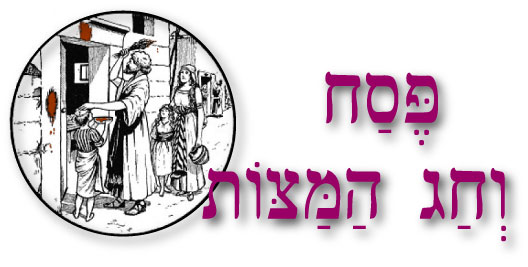
Exodus 12:7, Take of the blood and strike it on the two door post. The bloody marks made on the door frame made a perfect outline of the blood Yeshua shed while hanging on the cross.
He bled from the head (the crown of thorns), which corresponds to the door’s lintel. He bled from his hands, which corresponds to the two side posts of the door. He then bled from his back, sides and feet. All of this blood would have run down his body and dripped off of his feet and onto the ground. When the Israelites painted their door lintels with blood, some would have dripped onto the floor or threshold below. Here we have a one-to-one correlation with the pattern the blood made around the door with that made while Yeshua hung on the cross.
Can there be any question in one’s mind that the Passover lamb is a perfect prophetic picture of Yeshua’s death on the cross? Could Yeshua have orchestrated his death to be such a perfect pattern of the lamb’s blood on the door? Only by the sovereign hand of the Almighty Elohim could this have been possible.
The outline of the lamb’s blood on the Israelites’ doorpost is yet one more in a long line of irrefutable proofs that Yeshua was the foreordained Messiah to come—the Lamb of Elohim, slain from the foundation of the world to redeem man from sin and death!
Exodus 12:9, Head…legs…entrails. This is a picture of the whole body of the lamb. This symbolizes Yeshua—his whole body—on the cross.
Exodus 12:10, Let none of it remain. This illustrates and punctuates the fact that Yeshua was crucified in one day and once and for all time and for all people. It was a one time event.
Exodus 12:11, Belt…sandals…staff. The spiritual lesson here is that once one has been redeemed by the blood of Yeshua the Lamb, one must immediately make a spiritual exit from the world (symbolized by Egypt); they are on a spiritual journey toward the promised land of their spiritual inheritance. This is because the redeemed of Elohim are no longer of this world, though they are still in the world (John 17:11, 14). This is because they are now a new spiritual creation (Gal 2:20; 2 Cor 5:15), they have set their affections on heavenly things (Col 3:1), are no longer minding earthly things (Phil 3:19), their citizenship is in heaven (Phil 3:20), they are seated with Yeshua in heavenly places (Eph 2:6), they are seeking first the kingdom of Elohim and his righteousness (Matt 6:33), and they are now pilgrims and strangers on this earth (Heb 11:13), who desire a heavenly country (v. 16), and a better place than this earth (v. 40). The life and walk of the redeemed saint is a spiritual path—an upward journey toward a better, unearthly destination
Passover. The Hebrew word pesach refers, in part, to the sacrifice of the Passover, the animal victim of the Passover, and the festival of Passover. The root word of pesach is pawsach meaning “pass over, spring over, to skip, to limp or to be lame.” This is exactly what YHVH did when he killed he first born of the Egyptians; he skipped or passed over the houses of the Israelites because of the lamb’s blood on the doorposts. This points to Yeshua’s shed blood that saves us from the wages or penalty of our sin, which is death. Death, sins penalty, passes over those who have been redeemed by the blood of Yeshua, the Lamb of Elohim.
Exodus 12:14,You shall keep it a feast. The key elements of the Passover celebration or the seder which memorializes the events relating to the exodus and Israel’s deliverance from Egypt. This celebration includes eating lamb (Exod 12:8), eating bitter herbs (Exod 12:8), eating unleavened bread (Exod 12:8), telling one’s children the story of the exodus (Exod 10:2), celebrating (Passover is a chag or celebratory feast, Exod 12:14), and, keeping the day set-apart. Passover combined with the first day of Unleavened Bread is a set-apart convocation or a time when YHVH’s people are to gather together (Exod 12:16).
This verse also tells us when the Israelites actually ate the Passover meal. The meal was called a feast (Heb. chag) and was a celebratory event. Passover day (the 14th day of the first month on the biblical calendar) technically is not a chag. However, the Feast of Unleavened Bread (in Hebrew Chag haMatzot)is a feast and it starts on the 15th day of the first month (Lev 23:6). Therefore, the Israelites slaughtered and prepared the Passover lamb on the 14th day of the first month and ate it at the beginning of the 15th day, which is the evening portion of the Feast of Unleavened Bread. This is likely why, in Yeshua’s day, Passover and the Feast of Unleavened Bread were synonymous terms that were used interchangeably for each other. The two events overlapped; the end of Passover occurred at the beginning of the Feast of Unleavened Bread. Elsewhere, Passover is also called a chag (Exod 34:25).
Exodus 12:11–12, Eat it in haste. Why the haste? Because the Israelites were eager to leave Egypt—a place of bondage and enslavement. Since Egypt is a biblical metaphor the world and Pharaoh is a picture of Satan the devil, once one accepts the call to follow Yeshua, one should be anxious to leave one’s spiritual Egypt behind and move forward in one’s spiritual journey toward freedom and blessings in Elohim. Moreover, today is the day of our salvation, not yesterday, and not tomorrow (2 Cor 6:2). NOW! The midnight hour of Elohim’s judgment against sin knocks at each or our doors continually. Life is like a silver cord that easily snaps (Eccl 12:6), and each person is but one mere heart beat, breath or footstep away from eternity. No one is guaranteed of tomorrow, only today.
Exodus 12:12, Strike all the firstborn…against the gods…judgment. From the beginning of time, YHVH had commissioned the firstborn males to lead their families in his ways of truth and righteousness. This was spiritual role of the patriarch. Instead, the firstborn of Egypt had led their families into paganism and devil worship. YHVH’s judgement against sin and dereliction of spiritual responsibility was long in coming to the firstborn males of Egypt. He had given them space to repent and turn to him from Pharaoh on down, but they refused. The gavel of the righteous Judge in heaven had finally fallen and the sentence of death was the result of his divine verdict.
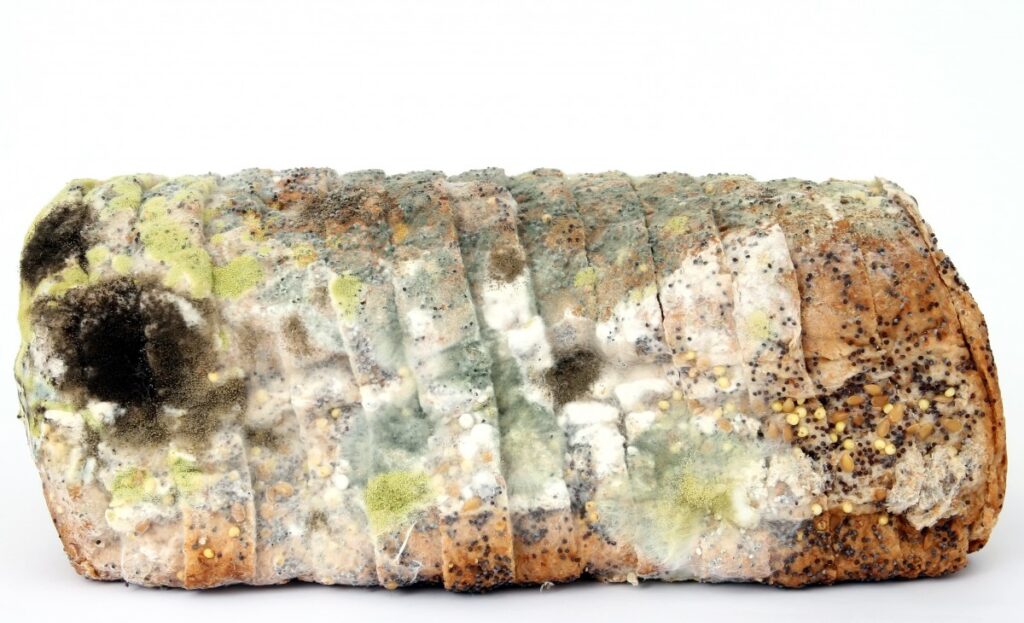
Exodus 12:15, Remove leaven from your houses. Leaven is a biblical metaphor for sin. As YHVH commanded the Israelites to remove the physical leaven from their homes, there is a vivid spiritual lesson in this annual commanded activity. Now that the redeemed of YHVH have been delivered from the penalty of death because of sin, they must continue to rid their lives of the spiritual leaven of sin. This is an ongoing, lifelong process, which is too easily overlooked and forgotten. The annual celebration of the Passover and the Feast of Unleavened Bread are annual reminders of our need to be continually deleavening the houses of our lives of hidden sin.
Exodus 12:15, 18, Cut off. “Eating sin” (i.e., leavened bread) causes one to be cut off from the presence of Elohim and his people. The wages of sin is death (Rom 6:23). This is an eternal and everlasting principle for all generations, for all people, and for all time. Christians who over look the commandments of YHVH do so at their own peril.
Exodus 12:16, No manner of work. No work was to be done on the night of the fifteenth day of the first month, except for food preparation, which is when the Passover meal occurs. This is also the first day of the Feast of Unleavened Bread, a high holy day or high Sabbath day, and the time Yeshua died and was laid in the grave (John 19:31).
Exodus 12:22, Hyssop. Literally, this is a reference to the herb oregano, not hyssop. The essential oil from this plant is what was offered to Yeshua before his death on the cross. (See notes at Ps 51:7; John 19:29.)
Exodus 12:23, Pass over. Heb. pasach/חספ meaning “to skip over, limp, to be lame,” and hence, the Hebrew name for Passover, which is Pesach. The word pesach refers to both the lamb that was sacrificed on Passover day, and to the day itself.
Exodus 12:23, 27 cp. 6:6 (also Deut 5:15; 7:19), The destroyer…who passed over…he smote the Egyptians cp. Will redeem you with an outstretched arm. Who is the outstretched arm or YHVH? It is Yeshua (Isa 53:1 cp. Isa 52:10; 40:10; Ezek 20:34–35), who is at the right hand of Elohim (e.g., Rom 8:34; Col 3:1; etc.). We know that the preincarnate Yeshua, the Malak (mistranslated in most Bibles as Angel) or Messenger of YHVH led Israel through the wilderness. Likely, the preincarate Yeshua was the arm of YHVH’s judgment against Egypt’s firstborn, even as he will be the hand of Elohim’s judgment against the wicked in last days and at his second coming (Rev 19:15, 21).
The destroyer. This is the Hebrew word shachath meaning “to destroy, corrupt, go to ruin or decay.” According to The TWOT this refers to the messenger entrusted by Elohim to execute his vengeance upon Israel’s enemies, the Egyptians, who was likely the preincarnate Yeshua (see previous notes just above).
Exodus 12:29,YHVH struck. In the last days at the end of the age, Elohim will strike Satan (symbolically pictured by Pharaoh in this story) along with those who align themselves with him (i.e., those who take the mark the beast), even as he struck Pharaoh and the Egyptians.
Exodus 12:31, 33, Rise up, get you forth. YHVH was leading Israel out of Egypt, while Egypt was, at the same time, thrusting Israel out of that nation.
This verse marks the beginning of Israel’s exodus from Egypt. The later biblical prophets speak about end times Israel being scattered and enslaved in the nations of the world (i.e., Babylon the Great). However, as a result of a series of miraculous events and YHVH’s judgments against their captor nations, end times Israel will finally be set free. Released, they will return to the Promised Land of Israel where Yeshua the Messiah will rule and reign over them. Many biblical prophets predict this glorious event happening, and the Jewish sages have tenaciously clung to this hope for two millennia. This event (actually, a series of events) has euphemistically been referred to as “the second exodus.” Many biblical prophets (e.g., Isa 11:10; 12:6; Jer 16:14–15; 23:7) refer to this event when they prophesy of another exodus of Elohim’s people to occur in the last days which will be much larger in scope and will involve many more nations than the first exodus from Egypt.
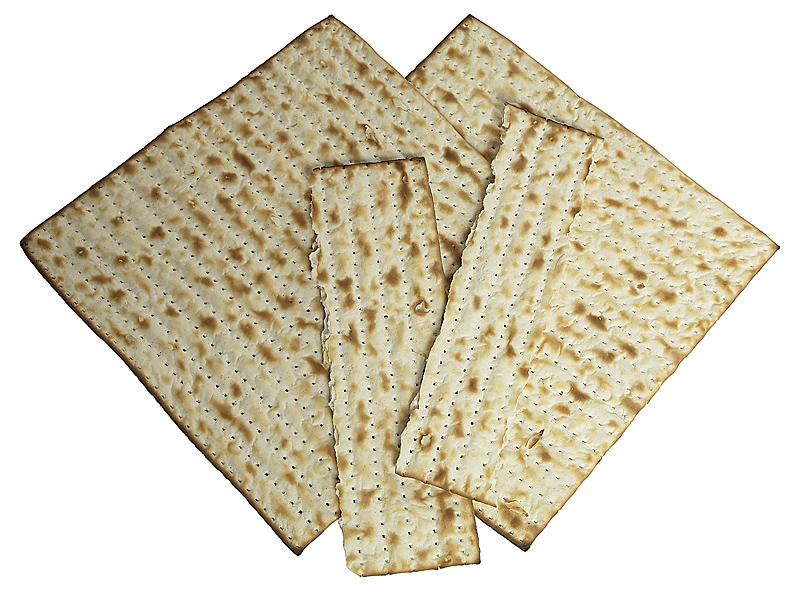
Exodus 12:34, Before it was leavened. Israel exited Egypt in a deleavened or sin-free state. This teaches us that everyone who places their faith in Yeshua and receives initial salvation becomes instantly sin-free; their past sins have been forgiven, they have been justified because Yeshua’s righteousness has now been imputed to them. However, from this point onward, it is up to the person not only to leave Egypt (the world, the flesh and the devil), but to continue in that sin-free as he treks through the wilderness of life in route to his ultimate salvation, the redemption and glorification of his body and the receipt of eternal life in the Promised Land of the kingdom of Elohim.
Exodus 12:35–36, They plundered the Egyptians. Israel left Egypt with great wealth, which was appropriate financial compensation considering Israel’s years of forced labor at the hands of their slave-masters. This same scenario will again play out in the end times for redeemed Israelites when they leave the countries of their spiritual captivity via the wilderness of the people’s (Ezek 20:33–38) with great wealth en route to the Promised Land as part of the second or greater exodus prophesied to occur (Isa 60:4–6, 11; 61:6).
Exodus 12:37, The children of Israel journeyed. Israel left Egypt at the end of the Passover and on the first day of the Feast of Unleavened Bread, and made their first encampment outside of Egypt at Succot (Exod 12:37). Will a similar scenario play out in the end times at the second exodus of redeemed Israelites from Babylon the Great? Is the second exodus a seven month long process starting at Passover in the spring and ending at the Feast of Tabernacles (Heb. Succot) in the fall? After that, the saints will spend three-and-one-half-years in the wilderness (Rev 12:14), and will enter the Promised Land before or on Succot at the second coming three-and-half years latter from the Passover when they first left. To leave on a Passover (in the first month of the biblical year) plus three and one half years would bring you to the approximate time of the Feast of Succot (in the seventh month of the biblical year). Only time will tell if this scenario will prophetically repeat itself.
Exodus 12:38, The mixed multitude. There will always be tares and false converts among the saints of Elohim as Yeshua’s Parable of the Wheat and Tares teaches us.
In the end times, the wheat and chaff or tares will be separated from each other in the wilderness of the peoples (Ezek 20:35–38). Yeshua discusses this purging process in his parable by the same name (Matt 13:24–30).
This verse states that there was a “mixed multitude” of non-Israelites that exodused Egypt with the Israelites. Later, this same mixed multitude were a thorn in Israel’s side (Num 11:4; see also Lev 24:10–11). In Nehemiah’s day, the mixed multitude of foreigners again caused problems (through intermarriage) for the Israelites by leading them astray spiritually (Neh 13:3).
The Hebrew word for mixed in both Exodus 12:38 and Nehemiah 13:3 is ereb. It is also the same word that the Torah uses when forbidding the mixing of certain fibers when weaving garments (Lev 13:48, 49, 52, 56, 58, 59). What is the point here? Certain things just do not go together in that they do not assimilate well with other things; that is, they are unholy mixtures that will cause weakness and instability.
Is there a spiritual connection between the Hebrew word ereb and the word Arab? I don’t know, but the similarity and spiritual connections between the two words is interesting to note. One thing is certain, the Arab-Muslim culture does not mix well with other cultures. In modern times, Islam has proven to be the most violently aggressive and least tolerant of Judaism and Christianity of all religious cultures on earth (besides communism), and is, perhaps, the most outward and aggressive religion leading the spirit of Antichrist in the world today. The Moslem Arabs along with some of their fellow travelers are still leading this crusade against YHVH and his people.
Exodus 12:40, In Egypt…four hundred thirty years. The LXX says “Egypt and Canaan.” This corresponds with the rabbinic tradition that the 430 years exile and slavery of Israel began when Abraham immigrated to Canaan where he was an exile in his own land awaiting his inheritance. Interestingly, some biblical authors state that Israel dwelt in Egypt for 430 years as this passage states (also Gal 3:17), while others believe that the time was only four hundred years (Gen 15:13; Acts 7:6). Which passages are correct? The discrepancies could be the result of a translation error as noted, or both numbers could be correct, depending on when one started the counting. For example, shortly after Abraham migrated to Canaan, he immediately translocated to Egypt for a season before returning to Canaan. Not only that, at times during its long history, Egypt, because of its regional economic and military might, exercised hegemony and, at times, outright control over the regions of Sinai and Canaan. As such, when the Israelites were living in Canaan it could have been tantamount to living in Egypt.
Exodus 12:42, Solemn observance. Passover night is a solemn observance, a vigil, a night to be remembered because of its past, present and future memorialistic significances to the redeemed believer.
Exodus 12:43, No foreigner. Passover is only for saved converts—not spiritual foreigners or aliens who are outside the faith of the Israel of Elohim!
Exodus 12:46, Nor shall you break one of its bones. The only way to cook a lamb for eating without breaking any of its bones is to cook it whole on a rotisserie over a fire. This requires inserting a skewer through the entire lamb from one end to the other and then slowly rotating the lamb over the fire so that the meat cooks evenly. This is a gruesome yet perfect picture of Yeshua’s death on the cross where the upright part of the cross to which he was attached, like the lamb on a skewer, ran the length of his body from one end to the other. In this way, none of the bones of either the lamb or Yeshua were broken as the psalmist foretold.
Many are the afflictions of the righteous, But YHVH delivers him out of them all. He guards all his bones; not one of them is broken. (Ps 34:19–20)
For these things were done that the Scripture should be fulfilled, “Not one of his bones shall be broken.” (John 19:36)
Exodus 12:48, Native of the land [as one that is born in the land, KJV] for no uncircumcised person shall eat it. Circumcision was a proof of citizenship, like a passport, in the physical nation of Israel. Christians are no longer citizens of a physical-spiritual nation, only a spiritual one. This is because they are temporarily passing through the physical nation in which they now live and are merely pilgrims and sojourners, for, in reality, their citizenship belongs to that of a spiritual kingdom. Thus, physical circumcision is longer needed as a rite of passage or proof of citizenship; rather, the proof of a Christian’s citizenship in the kingdom of heaven is circumcision of the heart to which physical circumcision always pointed. The spiritual circumcision applies to both men and women equally.
Therefore circumcise the foreskin of your heart, and be stiff-necked no longer. (Deut 10:16)
And YHVH your Elohim will circumcise your heart and the heart of your descendants, to love YHVH your Elohim with all your heart and with all your soul, that you may live. (Deut 30:6)
Circumcise yourselves to YHVH, And take away the foreskins of your hearts, you men of Judah and inhabitants of Jerusalem, lest My fury come forth like fire, and burn so that no one can quench it, because of the evil of your doings.” (Lev 26:41; Jer 4:4 cp Jer 9:26; Rom 2:28–29; Phil 3:3)
In Him you were also circumcised with the circumcision made without hands, by putting off the body of the sins of the flesh, by the circumcision of the Messiah. (Col 2:11)
Exodus 12:44, 48, On circumcision being a requirement for keeping Passover. Is circumcision a requirement for male believers keeping the Passover today?

To answer this question, I have a simple answer: Context, context, context! We must understand every command in the Bible in its historical and cultural context. Some biblical commands are of an eternal nature and transcend all cultural contexts down through the ages, since the contextual factors have remained the same from then till now. For example, the seventh day Sabbath. The weekly cycle is still in effect, humans still must work to earn their bread and need to from their labors, and so the Sabbath is still in effect. Nothing has changed. Another example is homosexuality, which is still a sin, since men and woman and sex hasn’t changed from then till now.
Now let’s look at circumcision. Abraham was “saved” 24 years before he was circumcised. Obviously, this rite is not a precondition for salvation. This point is clearly reinforced by Paul the apostle in Galatians, for example, and by the other apostles at the Jerusalem Council in Acts 15.
However in the context of ancient Israel, circumcision as a requirement for the male Israelites was a way to preserve the spiritual integrity of that physical nation, so that foreigners wouldn’t come in with their idolatrous practices and destroy the nation spiritually from within. Having to be circumcised in order to become a citizen was a huge deterrent to spiritual wolves who wanted to join themselves to the nation of Israel simply for their personal physical gain or for malevolent purposes. Only those who truly had a heart to join with Israel in serving and obeying YHVH Elohim would be willing to endure the invasive, painful and humiliating procedure of physical circumcision.
The disciples of Yeshua are now members of a spiritual nation, so physical circumcision doesn’t hold the same import as in ancient Israel. To Paul and the other apostles, they were indifferent about physical circumcision (1 Cor 7:19; Gal 5:6; 6:15). Circumcision is now a heart issue, which is unrelated to any anatomical appendage. In reality, it was a heart thing in ancient times as well, since three times in the Torah Moses refers to heart circumcision as being the ultimate goal pertaining to spiritual conversion (Lev 26:41; Deut 10:16; 30:6). So Paul did not originate the idea of circumcision of the heart; it was the will of Elohim for his people (for both men and women) from the beginning.
Now, to add a prophetic dimension to this discussion, consider the fact that both physical and heart circumcision will be required to enter the temple that will be constructed during the millennial reign of King Yeshua the Messiah (Ezek 44:9). This teaches us that YHVH still desires both physical and heart circumcision, although only the latter is required for salvation. The former, when done, shows great devotion and commitment to YHVH even as does baptism for the remission of sins, although this rite is not a precondition for salvation; rather, it is an act of loving obedience. The same is true of physical circumcision.
Moreover, who wants to volunteer to be the circumcision inspector at your next Passover seder by checking all the men at the front door? Any volunteers? Didn’t think so.
What can we take away from this discussion on physical versus heart circumcision? Simply this. If one is circumcised in heart that is sufficient. However, physical circumcision is additional evidence of one’s commitment to go all the way in serving YHVH Elohim, which is pleasing to him since it is evidence of a “sold out” heart.
Exodus 12: 49, One law. (Other “one law” passages include Lev 24:22; Num 9:14; 15:16, 29.) The context of this verse regards the observance of Passover (also Num 9:14). There was to be only one law pertaining to the observance of the Passover for both the native Israelite and for the stranger who sojourns with the Israelite. Leviticus 24:22 says that there is one law for the Israelite and the stranger in the areas of blasphemy, murder, slaying another man’s animal, and harming one’s neighbor in any way. Pertaining to the law about the various offerings for sin (i.e., despising the instructions or Torah of Elohim, verse 31), Numbers 15:15–16 and 29 states there is one law for both the Israelite and the sojourner forever throughout their generations.
Some will say that these “one Torah-law for everyone” passages pertain only to the specific Torah laws mentioned in these passages. However, this view ignores many other scriptures where YHVH commanded Israel to take the Torah (i.e., the whole Torah) to the nations of the world, not just parts of the Torah (e.g., Deut 4:6–8; Isa 60:1–3; Zech 8:22–23; Matt 28:18–20; Luke 24:47). Moreover, during the Messianic Age (or Millennium), the Torah will go forth to all the nations (Isa 2:3; Mic 4:2). What’s more, there are numerous places in the Testimony of Yeshua that speak of Torah as the standard of righteousness for all believers for all time (e.g., Matt 5:17–19; John 14:15; Rom 3:31; 7:12, 14, 22; 1 John 2:3–6; 3:4; Rev 22:14). Hundreds of more scripture passages could be added to this list from the apostolic writings alone!
So the Torah was not only for Israel, but ultimately was to be for all the peoples of the earth till heaven and earth pass away (Matt 5:18). That is forever and this includes you and me.
Exodus 13
Exodus 13:2, Consecrate…the firstborn. Elohim immediately established and consecrated a priest class comprised of the firstborn males of each family whose duty it was to teach and perpetuate onward his divinely mandated truths and observances. YHVH did not want the Israelites to repeat the mistakes of Egyptians where the firstborn males failed to teach their families YHVH’s ways, or repent of their sins when confronted with divine truth (as presented to them by Moses to Pharaoh). For this failure, YHVH brought divine judgment against Egypt’s firstborn males.
Later in the chapter, we learn that those consecrated were the firstborn males (vv. 12–13, 15). Prior to the formation of the Levitical priesthood, the firstborn males were the physical and spiritual leaders of their families, and therefore were responsible for teaching their families the ways of YHVH. This is something that the firstborn of Egypt failed to do, and were thus severely judged for it. They refused to acknowledge YHVH’s sovereignty, even though the finger of YHVH was clearly demonstrated to all the Egyptians from Pharaoh on down as YHVH poured out his plagues upon that nation (Exod 8:19).
Exodus 13:3, Remember this day.It would be the sacred responsibility of the firstborn males who had been consecrated to YHVH to convey to successive generations the story of the exodus.
Went out of Egypt…no leavened bread. What is the spiritual connection between coming out of Egypt and the memorial (v. 9) of eating unleavened flat bread? The keeping of the Feast of Unleavened Bread and the command to eat flat bread was to be an object lesson for successive generations Israelites as a sign and a memorial of what YHVH did against Egypt and of Israel’s deliverance (vv. 8–9). As the strong right arm of YHVH’s judgments (v. 3) pressed down upon proud and exalted Egypt until it was flattened as a nation, even so, YHVH’s judgment against the sin and idolatry in our lives demands that we become flattened, deleavened and contrite before him. He desires to squeeze or press out of us all the leaven of sin and pride that we have inherited from spiritual Egypt. In the Scriptures, since leavening puffs up and sours bread, it is a biblical metaphor for sin, which does the same to the human heart and mind. It causes bitterness, pride, insincerity, hypocrisy and giving rise to false teachings and doctrines of men. We must put out the leaven of sin from our lives and from our spiritual assemblies, as Paul admonishes. The Feast of Unleavened Bread pictures this process. The saints are to keep the feast not with the old leaven of malice and wickedness, but with the unleavened bread of sincerity and truth (i.e., the Torah, 1 Cor 5:8, read vv. 1–11 for context).
Exodus 13:4, Month abib. See notes at Exod 12:2.
Abib. (For a definition of the Hebrew word abib, see my notes at Exod 12:2.) What are the facts about the green in the ear or abib barley? Barley was cultivated as a grain crop in ancient Egypt, as well as in Israel, and is ubiquitous in that region growing like a wild to this day in fields, along roads and in vacant areas. Several passages in the Scriptures witness to the fact that the barley was the indicator of which month was to be the first month of the year.
Observe the month of Abib, and keep the Passover unto YHVH your Elohim: for in the month of Abib YHVH your Elohim brought thee forth out of Egypt by night. (Deut 16:1, emphasis added)
Please notice, the definite article the proceeding the phrase “month of Abib” (see also Exod 23:15; 34:18). This indicates a specific month. It is not so much the name of a monthas it is a description of the month and what occurs agriculturally during that month. Below are listed the other three places in the Scriptures where this phrase is found.
What does the word abib in the phrase “the month of the Abib (or Aviv)” mean? Is this some undefinable Hebrew word the meaning of which has escaped us, leaving us clueless about when the beginning of the biblical new year is? That is hardly the case, as we shall now see.
The Hebrew word abib is found only eight times in the Bible and is transliterated into the English (in the KJV) as “abib,” meaning “in the ear,” or “green ears of grain.” The Theological Wordbook of the Old Testament, defines the word abib or aviv as follows:

This noun refers to barley that is already ripe, but still soft, the grains of which are eaten either rubbed or roasted. The ASV and RSV agree (but see Lev 2:14). The seventh plague brought ruinous hail upon Egypt’s barley crop at least two weeks before it was fully ripened and ready for harvest (Exod 9:31). Abib was also the early name (later, Nisan) of the first month of the Jewish calendar (the month of Passover). In that month the barley came to ear, but the usual time of harvest was the second month (Iyyar). According to Lev 2:14 the grain offering was to consist of the firstfruits of abib.
The remaining biblical passages where the word abib is used are the following:
And the flax and the barley was smitten: for the barley was in the ear (abib), and the flax was bolled [in the bud]. But the wheat and the spelt were not smitten: for they were not grown up. (Exod 9:31–32)
And if you offer a grain offering of your firstfruits unto YHVH, you shall offer for the grain offering of your firstfruits green ears [abib] of corn dried [kalui, which means “grain which is parchable”] by the fire, even corn beaten [carmel, which means “barley that is past abib state, like Indian corn; referring to grain that is hard enough to be crushed; abib grain is like corn on the cob, while carmel grain is like Indian corn. Abib grain one can eat raw, while dried corn is milled for corn meal. For abib grain to be ground into flour, one must first dry it (so it won’t gum up the grinding stones).] out of full ears. (Lev 2:14)
The standing grain refers to grain that is in its dry or carmel state and ready to be harvested for the omer offering. Crushable or grindable grain occurs about two weeks after abib is found.
On this day in the month of Abib, you are about to go forth. You shall observe the Feast of Unleavened Bread; for seven days you are to eat unleavened bread, as I commanded you, at the appointed time in the month Abib, for in it you came out of Egypt. …And none shall appear before Me empty-handed. …You shall observe the Feast of Unleavened Bread. For seven days you are to eat unleavened bread, as I commanded you, at the appointed time in the month of Abib, for in the month of Abib you came out of Egypt. …Observe the month of Abib and celebrate the Passover to the LORD your God, for in the month of Abib the LORD your God brought you out of Egypt by night. (Exodus 13:4; 23:15; 34:18; Deuteronomy 16:1, NAS95)
Here are some more insights from an expert about the abib barley.
Abib indicates a stage in the development of the barley crops. This is clear from Exodus 9:31–32 which describes the devastation caused by the plague of hail:
And the flax and the barley were smitten, because the barley was abib and the flax was giv’ol. And the wheat and the spelt were not smitten because they were dark [afilot].
The above passage informs the reader that the barley crops were destroyed by the hail while the wheat and spelt were not damaged. To understand the reason for this we must look at how grain develops. When grains are early in their development they are flexible and have a dark green color. As they become ripe they take on a light yellowish hue and become more brittle. The reason that the barley was destroyed and the wheat was not is that the barley had reached the stage in its development called abib and as a result had become brittle enough to be damaged by the hail. In contrast, the wheat and spelt were still early enough in their development, at a stage when they were flexible and not susceptible to being damaged by hail. The description of the wheat and spelt as “dark” (afilot) indicates that they were still in the stage when they were deep green and had not yet begun to lighten into the light yellowish hue which characterizes ripe grains. In contrast, the barley had reached the stage of abib at which time it was no longer “dark” and at this point it probably had begun to develop golden streaks.
We know from several passages that barley which is in the state of abib has not completely ripened, but has ripened enough so that its seeds can be eaten parched in fire. Parched barley was a commonly eaten food in ancient Israel and is mentioned in numerous passages in the Hebrew Bible as either “abib parched (kalui) in fire” (Lev. 2:14) or in the abbreviated form “parched (kalui/ kali)” (Lev 23:14; Jos 5:11; 1 Sam 17:17; 1 Sam 25:18; 2 Sam 17:28; Ruth 2, 14).
While still early in its development, barley has not yet produced large enough and firm enough seeds to produce food through parching. This early in its development, when the “head” has just come out of the shaft, the seeds are not substantial enough to produce any food. At a later stage, the seeds have grown in size and have filled with liquid. At this point the seeds will shrivel up when parched and will only produce empty skins. Over time the liquid is replaced with dry material and when enough dry material has amassed the seeds will be able to yield “barley parched in fire.” (from http://www.karaite-korner.org/abib.shtml)
So the barley being in its abib state eliminates the guesswork of determining which new moon begins the new year. The Scriptures are clear. It is the new moon that immediately follows the abib barley that determines the beginning of the year.
Let us not forget an important fact. Israel was an agriculturally based nation. Nearly all Israelites were farmers and were tied to agricultural for their survival. Bread was a main staple of their diet. No bread meant no food. Thus cultivating grain to make bread could be a matter of surviving or facing starvation. Unlike most modern people who purchase food from a grocery store, and who possess little knowledge of crops and their growing cycles, this was not the case with the ancient Israelites. They were intimately familiar with every aspect of their crops because their lives depended upon it. Too many times to remember I have heard Bible teachers when discussing the biblical calendar disparage the idea of looking to barley as a factor in determining the beginning of the new biblical year. Based on their lack of understanding of ancient biblical culture, they mock the notion that Scripture would look to the state of the barley for anything relating to calendrical significance. In so doing, they are revealing their ignorance of biblical cultural context as well as their lack of understanding of agricultural processes the importance it played in lives of the ancients in Bible times. When one views the Bible through the lens of a 21st century city dweller one is sure to miss much when it comes to understanding biblical truth!
After the abib barley was found and the first visible sliver of the new moon was sighted, this marked the first day of the first month of YHVH’s biblical calendar. From that point, one would 14 days to Passover (Pesach) with the Feast of Unleavened Bread (Chag HaMatzot) immediately following on the fifteenth day of the first month (Lev 23:4–6).
Then on the day after the weekly Sabbath that occurred during the seven-day Feast of Unleavened Bread, a sheaf of now-ripened barley was cut and waved heavenward by the high priest to be accepted by YHVH as the first of the first fruits offering of the upcoming barley harvest. I have written extensively on this subject in another teaching article relating to the spring feast days, which can be found on our website (http://www.hoshanarabbah.org/pdfs/firstfruits.pdf). This was a significant event prophetically. The barley that was lifted heavenward and waved was a prophetic picture of Yeshua the Messiah’s ascension to heaven after his resurrection where he was accepted by the Father as the perfect sin offering covering the sins of mankind. Fifty days later to the day is the Feast of Pentecost (Shavuot) picturing the ripening of the larger wheat harvest, which was a prophetic picture of all Israel and the peoples of the nations coming to faith in Yeshua from the first century until the present time (http://www.hoshanarabbah.org/pdfs/shavuot.pdf).
As you can see, an understanding of the abib barley is essential not only in setting the biblical calendar for the year, but for knowing when to keep the biblical feasts, and for gaining a fuller understanding of the salvific implications of the death, burial and resurrection of our Master and Savior, Yeshua the Messiah from a Hebraic perspective.
Exodus 13:6, 7, Unleavened bread…unleavened bread. This is the Hebrew word matzot. The first occurrence of this word in verse six is spelled defectively without the letter vav/ו or מצת. The second occurrence of this word in verse seven is spelled complete with the letter vav/מצות. This teaches us that YHVH desires that his people remove all leavening (a biblical metaphor for sin) from their homes and eat only unleavened bread during the Feast of Unleavened Bread, but he is gracious and knows that his people are imperfect. He realizes that despite our best efforts, it is unlikely that they will be able to adhere perfectly to this command to remove all the leaven from their homes. The spiritual lesson is that he expects us to remove sin from our lives, but this a difficult, if not an impossible feat to accomplish. He, nevertheless, expects us to do our best to fulfill his commands.
Exodus 13:13, Firstborn of a donkey. The donkey had to be redeemed with a lamb—an obvious prophetic picture of Yeshua the Messiah, the Lamb of Elohim who redeemed sinful man from the wages of sin which is death. The donkey, an unclean and stubborn animal, is a metaphor for the unrepentant Egyptians and, by extension, humans in general who fail to repent of sin and put their trust in the Messiah to redeem them from sin’s death penalty. As the sinful Israelites were saved from physical death by the blood of the lamb on the doorposts of their houses, even so those humans who put their trust in the Yeshua, Lamb of Elohim, can be saved from spiritual death. The redemption of a donkey with a lamb was a huge object lesson to the Israelites (and to us) to teach them about the concept of sin, death and redemption, which are fundamental aspects of the gospel message.
If the donkey (or any other unclean animal) could not be redeemed by a clean animal, then it was to be killed (by breaking its neck), which is a picture of YHVH’s judgment against sin and sinners. The dedication to YHVH of all the firstborn of men and animals was a memorial to the Israelites of YHVH’s judgment upon the Egyptians’ firstborn, and how he had graciously delivered them from his judgments against sin and passed over Israel’s firstborn (vv. 14–16). Moreover, this was to be an object lesson to the children of Israel to fear YHVH always and to be grateful for his merciful grace!
